Procurement Performance Management Framework With Focus Areas

Rating:
100%
Procurement Performance Management Framework With Focus Areas Procurement Performance Management Framework With Focus Areas
Slide 1 of 6

or

Favourites Favourites

Try Before you Buy Download Free Sample Product

Audience Impress Your
Audience
Editable 100%
Editable
Time Save Hours
of Time
The Biggest Sale is ending soon in
0
0
:
0
0
:
0
0
Rating:
100%
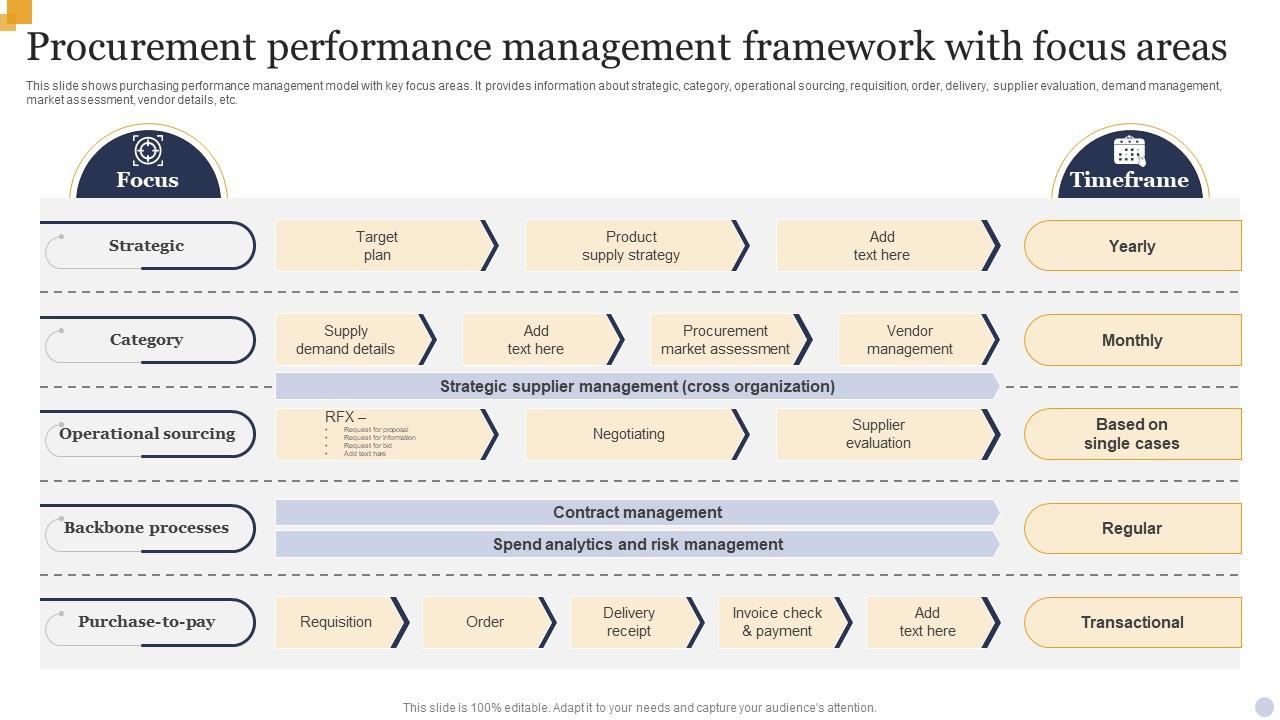
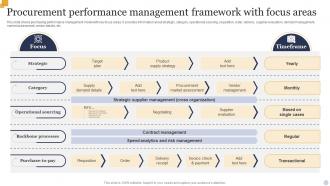
This slide shows purchasing performance management model with key focus areas. It provides information about strategic, category, operational sourcing, requisition, order, delivery, supplier evaluation, demand management, market assessment, vendor details, etc. Presenting our well structured Procurement Performance Management Framework With Focus Areas. The topics discussed in this slide are Operational Sourcing, Backbone Processes, Purchase To Pay. This is an instantly available PowerPoint presentation that can be edited conveniently. Download it right away and captivate your audience.

FAQs for Procurement Performance Management Framework

Key procurement KPIs include cost savings percentage, supplier performance ratings, contract compliance rates, procurement cycle time, and spend under management. These metrics enable organizations to streamline sourcing processes, enhance vendor relationships, and optimize resource allocation, with many companies finding that strategic KPI tracking delivers improved operational efficiency and competitive advantage.

Procurement performance management tools enhance supply chain decision-making by providing real-time visibility into supplier performance, cost analytics, and risk assessment metrics. These platforms enable procurement teams to identify bottlenecks, optimize vendor selection, and negotiate better contracts through data-driven insights, with manufacturing and retail organizations finding significantly improved operational efficiency and reduced procurement costs.

Technology streamlines procurement performance management through automated data collection, real-time analytics dashboards, AI-powered spend analysis, supplier performance tracking systems, and predictive forecasting tools. These solutions enable organizations to monitor KPIs continuously, identify cost-saving opportunities faster, and enhance supplier relationships, with many companies finding significantly improved procurement efficiency and strategic decision-making capabilities.

Organizations effectively benchmark procurement performance by establishing key metrics like cost savings, supplier performance, cycle times, and compliance rates, then comparing these against industry databases, peer networks, and third-party benchmarking services. Through strategic partnerships with procurement consortiums and consulting firms, companies can access comprehensive industry data while participating in anonymous benchmarking studies, ultimately identifying improvement opportunities and achieving competitive advantage in their procurement operations.

Data analytics transforms procurement performance management by enabling predictive insights, real-time spend visibility, supplier risk assessment, contract optimization, and automated compliance monitoring. Through advanced analytics platforms, organizations streamline vendor evaluations, identify cost-saving opportunities, and enhance supply chain transparency, with many procurement teams finding that data-driven approaches deliver significantly faster decision-making and improved strategic sourcing outcomes.

Common challenges in procurement performance management include inconsistent data collection, lack of standardized metrics, poor supplier communication, limited visibility into supply chain operations, and inadequate technology integration. These obstacles often result in delayed decision-making, reduced cost savings, and compromised supplier relationships, with many organizations finding that addressing measurement gaps and enhancing cross-functional collaboration ultimately delivers improved operational efficiency and competitive advantage.

Organizations ensure compliance and risk management in procurement performance measurement through automated monitoring systems, regular supplier audits, contract compliance tracking, risk assessment frameworks, and standardized reporting protocols. These approaches enable companies to identify potential violations early, assess supplier financial stability, monitor regulatory adherence, and maintain transparent procurement processes, ultimately delivering reduced operational risks and enhanced stakeholder confidence.

Strategies include establishing KPIs linked to business goals, implementing category management aligned with strategic priorities, developing supplier scorecards that reflect organizational values, and creating cross-functional procurement teams. These approaches streamline decision-making by connecting spend management to revenue targets, cost reduction to profitability goals, and supplier performance to customer satisfaction, ultimately delivering competitive advantage.

Stakeholder engagement improves procurement performance management by fostering collaboration between suppliers, internal teams, and end-users, ensuring alignment with organizational goals and requirements. Through regular communication and feedback loops, organizations streamline decision-making processes, enhance supplier relationships, and minimize procurement risks, while enabling better contract negotiations and ultimately delivering cost savings and improved service quality across the supply chain.

Organizations can implement regular supplier performance reviews, data-driven analytics for spend optimization, cross-functional collaboration between procurement and operations teams, automated contract management systems, and standardized KPI tracking across all categories. These practices streamline decision-making, enhance supplier relationships, and reduce costs, with many companies finding that systematic performance monitoring ultimately delivers greater operational efficiency and competitive advantage.

Strong supplier relationship management significantly enhances procurement performance by improving cost negotiation outcomes, ensuring consistent quality standards, reducing supply chain risks, and accelerating delivery timelines. Through collaborative partnerships and strategic communication, organizations streamline vendor coordination, minimize disruptions, and leverage supplier expertise for innovation, ultimately delivering enhanced operational efficiency and competitive advantage in increasingly complex markets.

Organizations can leverage feedback loops by implementing continuous supplier evaluations, real-time performance monitoring, stakeholder input collection, and data-driven adjustment mechanisms. Through these systematic approaches, procurement teams streamline vendor relationships, enhance cost efficiency, and accelerate decision-making processes, with many enterprises finding that regular feedback cycles ultimately deliver improved supplier performance and stronger competitive advantage.

Effective procurement performance tracking tools include enterprise resource planning (ERP) systems, specialized procurement analytics platforms, spend analysis software, supplier relationship management (SRM) solutions, and business intelligence dashboards. These technologies streamline monitoring by automating data collection, providing real-time visibility into spending patterns, and generating comprehensive reports, with many organizations finding that integrated platforms deliver enhanced operational efficiency and strategic procurement insights.

Organizations balance cost savings with quality and sustainability through strategic supplier partnerships, total cost of ownership analysis, and sustainable sourcing criteria that evaluate long-term value. By implementing comprehensive vendor assessments, performance scorecards, and collaborative supplier development programs, companies in manufacturing, retail, and healthcare achieve reduced operational costs while maintaining quality standards, ultimately delivering competitive advantage and enhanced brand reputation.

Training initiatives that enhance procurement performance include strategic sourcing methodologies, supplier relationship management, negotiation techniques, data analytics capabilities, and contract management systems. These programs streamline procurement processes by developing analytical skills, improving vendor negotiations, and enhancing supply chain visibility, with many organizations finding that comprehensive training ultimately delivers cost reductions and operational efficiency.

Ratings and Reviews

100% of 100
Review Form
Write a review
Most Relevant Reviews
  1. 100%

    by Claude Price

    Keep doing the good work guys. Surpass the needs and expectations always!!
  2. 100%

    by Derrick Rice

    “Ample and amazing variety of templates available, really helpful for making professional PPT for day to day workings.”

2 Item(s)

per page: