


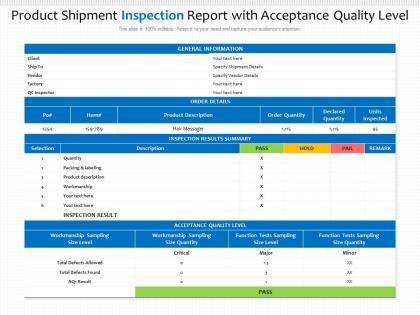
Product shipment inspection report with acceptance quality level




Try Before you Buy Download Free Sample Product
 Impress Your
 Audience
 100%
100% Editable
 Save Hours
 of Time


Our Product Shipment Inspection Report With Acceptance Quality Level are topically designed to provide an attractive backdrop to any subject. Use them to look like a presentation pro.
People who downloaded this PowerPoint presentation also viewed the following :
Product shipment inspection report with acceptance quality level with all 2 slides:
Use our Product Shipment Inspection Report With Acceptance Quality Level to effectively help you save your valuable time. They are readymade to fit into any presentation structure.
FAQs for Product shipment inspection report with
Start with the basics - SKU, how many you checked, when you did it. Document your testing methods and quality standards. Got defects? List them with photos if you can. Here's the thing though - don't write a novel. I've seen reports that go on forever but tell you nothing useful. Include pass/fail results and what caused any problems. Root causes matter. Don't forget corrective actions and get the inspector to sign off. Write it so anyone reading later knows exactly what went down and what needs to be fixed.
Dude, start by ditching those paper checklists - go digital first. AI image recognition is crazy good at spotting defects you'd totally miss. Automated measurement tools cut out human error, which honestly saves so much headache later. IoT sensors give you real-time monitoring throughout production. The consistency factor alone makes it worthwhile - no more "oh crap, did I check that?" moments. Machine learning actually improves over time too, learning from old inspection data. Then gradually add the automated detection stuff once you've got the basics down.
Don't let them get away with vague descriptions like "poor quality" - that's useless. You need specific measurements and photos of every defect they find. Honestly, I've seen too many companies using checklists from like 2019 that miss obvious safety issues. Make sure your inspection team actually knows what to look for before they start - sounds basic but you'd be surprised. Rush the sampling and you'll regret it later. Set up clear pass/fail criteria and stick to a standardized template. Photos aren't optional either, especially for defects.
So basically, ISO and ASTM standards completely control how you write these reports. They tell you what sections to include, how to document defects, terminology - the whole deal. Pretty annoying tbh but there's a reason for it. You'll need headings for test methods, acceptance criteria, how to classify problems, corrective actions. Oh and don't forget the documentation trails and signatures they want. My advice? Figure out which standards apply to your stuff first, then just build your template around those rules. Trust me, way easier than dealing with compliance issues down the road.
Honestly, turning your inspection reports into charts and graphs is a game changer. Instead of drowning in spreadsheets (been there, done that), you'll spot patterns and problem areas right away. Heat maps are clutch for this stuff. Your team can actually understand what's happening with defect rates and quality metrics without their eyes glazing over. Plus it's way easier to show progress over time - nobody wants to sit through a PowerPoint full of numbers. I'd start simple with bar charts for defect categories, then get fancy later.
Honestly, the biggest game-changer is getting everyone on the same page with checklists. Bob and Sarah can't be doing totally different things, you know? Digital templates help tons - way better than random notes scribbled everywhere. Train your inspectors properly so they're actually looking for the same stuff. Oh, and definitely have someone double-check reports before they go out the door. That'll save you so much headache later. Start by writing down what you're currently doing, then figure out where things get messy. Once you spot those problem areas, you can fix them.
Be super specific when you're documenting stuff - exact measurements, where it happened, good photos. I always use the same terminology so everyone gets it (though I still catch myself writing "looks weird" sometimes lol). Note if it's just ugly or actually broken, plus what standard got missed. Document how you tested it too. Honestly, the goal is writing it detailed enough that your coworker could make the same call without seeing the actual part. Short sentences work. But mix in some longer ones that flow naturally when you're explaining the process.
Create a separate follow-up section with all the specifics - who's doing what and by when. Always include how serious each issue is and reference back to your original finding numbers. Trust me on this one, because six months later when your boss asks for updates, you'll be scrambling if you didn't write it down properly. Note whether it's corrective action, prevention, or just keeping an eye on things. The whole point is being detailed enough that someone else could pick up your report and know exactly what to do next. Don't be vague or you'll regret it.
Honestly, traceability is like having receipts for everything - you'll thank yourself later when stuff hits the fan. If defects show up, you can pinpoint exactly which batches or suppliers caused the mess. Makes recalls way less of a nightmare. Regulatory folks love seeing proper documentation too, so that's a bonus. The trick is linking your inspection reports back to source info - batch numbers, dates, supplier details, all that good stuff. I've seen companies scramble when customers complain and they have zero clue where their products came from. Not fun.
Look, good inspection reports are honestly a game-changer for catching quality problems before they blow up your supply chain. You'll spot defective stuff early and avoid those nightmare recalls. Your suppliers will actually appreciate the specific feedback too - weird but true. I've watched companies literally save thousands by ditching bad suppliers based on inspection trends alone. The trick is keeping your report formats consistent so you can spot patterns across different vendors. Start tracking defect types systematically and you'll see pretty quick which suppliers are worth keeping around.
Honestly, hands-on workshops work best - have them dig into real reports and spot the problems. I always pair newbies with seasoned staff for mentoring, that's been a game-changer. Quick reference guides are clutch too, especially for red flags they should catch. Oh, and role-playing where they present to fake "management" really builds their confidence (sounds cheesy but it works). The main thing is keeping it interactive - nobody learns from boring lectures about formats. You'll want quarterly refreshers to keep everyone sharp.
So here's the thing - you want to compare what your inspection reports are catching with what customers actually complain about. Sometimes stuff that looks terrible during testing doesn't bother users at all. Weird, right? But then you'll have customers losing their minds over something you barely noticed internally. Cross-reference both sets of data to figure out what to fix first. Look for patterns between your internal catches and real complaints - that's where you'll find the good stuff. Then tweak your inspection process based on what you learn.
Honestly, the worst part is getting all your current systems to actually talk to each other. Inspection tools, databases, reporting stuff - they're usually a mess together. Your data needs to be super clean too, which is harder than it sounds. Oh and people will definitely pushback on changes (I get it though). The setup costs and training time are pretty brutal upfront. I'd say pick just one product line first, maybe something straightforward? Get that dialed in before you go crazy trying to automate everything. Way less headaches that way.
Inspection reports are actually gold for this stuff - dig into them monthly to spot what keeps going wrong. Same defect showing up from one supplier? Red flag. Production line B constantly messing up the same thing? Now you know where to look. I swear, teams catch problems way earlier when they actually review this data instead of just filing it away. Look for the real reasons behind repeat failures, then fix your training or switch suppliers if needed. It's honestly one of those boring tasks that pays off big time once you make it routine.
Yeah, cultural stuff totally affects how your inspection reports land. Germans and Japanese want every detail documented perfectly - super formal processes. But other places? They're more about relationships and just talking things through. Language barriers are the obvious issue, but honestly, what's "acceptable quality" varies wildly. Your report might come off way too harsh in some markets while seeming lazy in others. Different cultures have completely different tolerance for defects too. The communication styles alone can mess things up. You'll need to adjust your reporting style and standards based on where you're working, otherwise everyone ends up confused.
-
Great quality product.
-
Innovative and attractive designs.
-
Very well designed and informative templates.