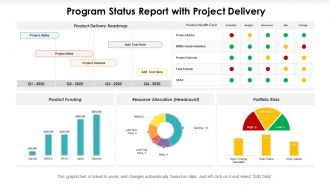
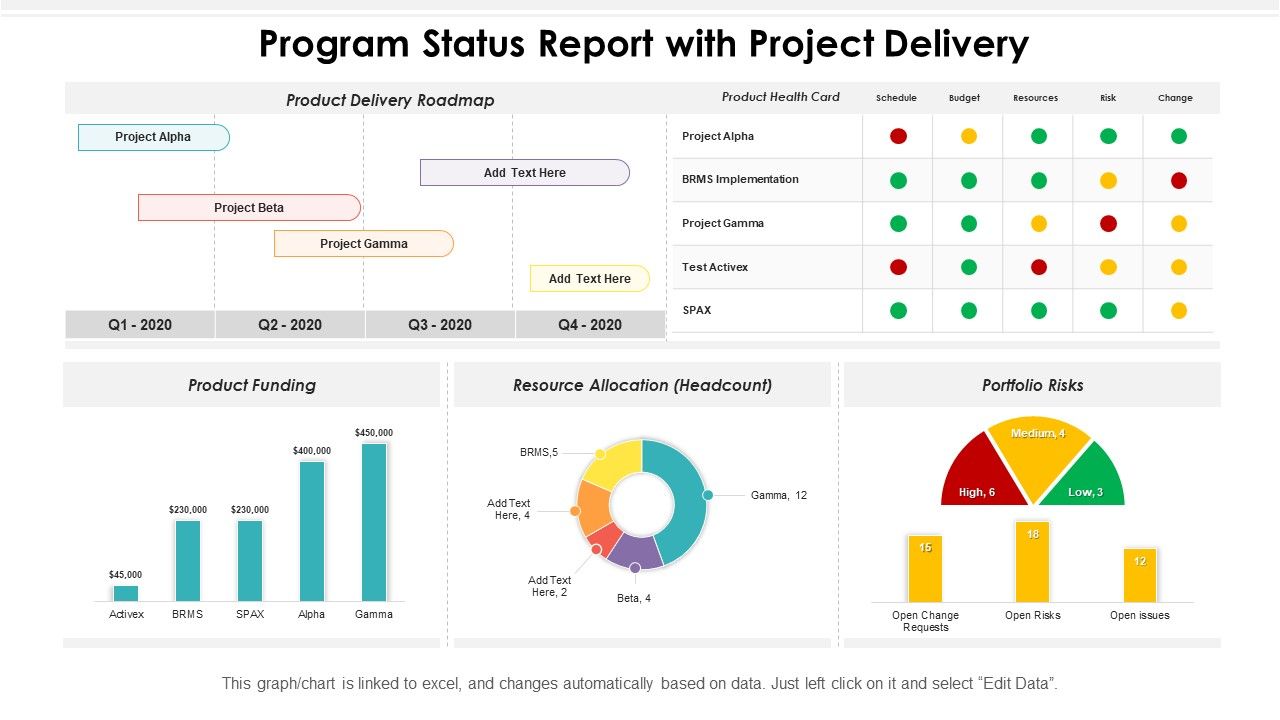
Program status report with project delivery
Try Before you Buy Download Free Sample Product
Audience
Editable
of Time
Our Program Status Report With Project Delivery are topically designed to provide an attractive backdrop to any subject. Use them to look like a presentation pro.
People who downloaded this PowerPoint presentation also viewed the following :
Program status report with project delivery with all 2 slides:
Use our Program Status Report With Project Delivery to effectively help you save your valuable time. They are readymade to fit into any presentation structure.
FAQs for Program status report
Honestly, just focus on the basics first. Are you hitting your deadlines? Staying on budget? Actually delivering what you promised? Those are your big three right there. Quality stuff matters too - like how many bugs you're dealing with or if people are actually happy with what you built. Oh, and don't sleep on just asking people how things are going. Sometimes everything looks fine on paper but your team is totally burned out. I'd say pick maybe 3-4 things max and check them weekly. You'll drive yourself crazy trying to track every little metric - been there!
Don't wait for people to bug you about updates - send weekly emails with progress percentages and what's coming next. Visual stuff like timelines work so much better than long paragraphs (seriously, who reads those?). Map out who needs what level of detail first. Brief check-ins for your VIP stakeholders are clutch. Flag problems early, not when everything's on fire. Oh, and whatever communication schedule you promise upfront? Actually stick to it or people lose trust fast.
Look, risk management sounds boring but it's honestly a lifesaver. You spot problems before they blow up your timeline or budget. Things like team members getting pulled onto other projects, tech issues, scope creep - the usual suspects. I learned this the hard way on a project that went sideways fast. Do a quick risk brainstorm at kickoff and get people to actually own monitoring specific risks. Short sentences work better than long ones here. Trust me, it beats scrambling when everything hits the fan later.
Monday.com or Asana are pretty solid for real-time tracking - they sync everything instantly so you can see where tasks actually stand. Dashboards are clutch here, especially if you connect them to tools your team already uses like GitHub or Slack. The progress bars are weirdly satisfying to watch fill up, not gonna lie. Just make sure people actually update their stuff regularly or you'll be staring at useless data. Jira works too but it's kinda clunky unless you're doing software dev. Pick one tool and get everyone logging daily progress there. Trust me, consistency matters way more than which platform you choose.
Ugh, delivery challenges are the worst - you'll mainly get hit with scope creep, resource issues, and stakeholder drama. Requirements always change halfway through but somehow your deadline doesn't budge. Teams stop talking to each other, creating these awful bottlenecks. Then surprise! Technical dependencies nobody saw coming. Budget gets tighter as deadlines loom, so you're stuck choosing between quality and speed (fun times). Oh, and communication breakdowns are inevitable. Build buffer time into your timeline - trust me on this. Also do weekly check-ins with stakeholders from day one to catch problems early.
Honestly, stakeholder feedback is everything when you're trying to figure out if your project's actually on track. Your dashboards might look perfect, but if stakeholders hate what you're building, those metrics don't mean much. They'll tell you whether you're solving real problems or just checking boxes. Plus they catch stuff your team misses - happens all the time when you're buried in the details. Don't wait for formal reviews either. Check in with them regularly so you can fix things before they blow up into major issues.
Honestly, most project disasters I've witnessed could've been prevented with better planning upfront. Nail down your scope early and set realistic timelines - sounds boring but it works. Regular check-ins with stakeholders are crucial too, though some will still find ways to surprise you. Breaking big deliverables into smaller chunks helps you spot problems before they get messy. Oh, and remove blockers fast when they pop up. Your team's skills matter, so invest there. Start by figuring out your biggest bottleneck right now and tackle that first.
Look, getting the right people on the right stuff at the right time makes all the difference. Junior devs handling complex features? That's asking for trouble. Overload your star players and everything bottlenecks fast. I've seen projects completely derail because someone thought they could just wing the resource planning part. Check in on your allocations way more than you think you need to - don't wait for those painful weekly meetings. Honestly, being quick to shuffle things around when problems pop up is half the battle. Sounds simple but it's surprisingly easy to mess up!
Don't wait around for people to bug you about updates - just send them regularly. I do a quick weekly thing covering what's done, what's coming up, and any problems I'm stuck on. Honestly the worst part is having to tell everyone when stuff goes wrong, but that's actually when they need to hear from you most. Visual dashboards work way better than long emails if you can swing it. Oh and definitely share the good stuff too, not just the disasters. Even if nothing major happened, just shoot a "we're still on track" message at the start of each week.
Honestly, good team collaboration is a game changer for hitting deadlines. You catch problems way earlier when people actually talk to each other instead of working in silos. Different people see different issues - I've literally saved projects because someone mentioned a concern during lunch. Quick decisions happen when you're not waiting forever for email threads to wrap up. Oh, and regular check-ins are crucial but they can't be those pointless meetings where nobody speaks up. People need to feel safe calling out problems before they explode. Short version: talk more, stress less.
So it depends on how big the issue is, honestly. Critical stuff? Hit up your PM right away or use that Slack escalation channel. For the paperwork trail, there's the variance report in the project system or that milestone form thing in SharePoint - though I swear SharePoint is always a pain to navigate. Email works but yeah, it totally gets lost in people's inboxes. Minor delays can just go through regular reporting. Oh, and whatever you do, don't forget to mention how it'll impact things and what you think might fix it.
Honestly, you can't go wrong with Asana, Monday.com, or Jira for project tracking. Real-time updates on everything - who's stuck, what's moving, team workload. Gantt charts still work great too, even though they feel ancient sometimes. My team actually loves them for seeing the big picture timeline. Zapier's clutch for connecting all your random tools so stuff syncs automatically. Nobody wants to update three different places. Oh, and set up some basic reporting dashboards that pull metrics without you having to do it manually every week. Start with just one platform everyone will actually use though. Better than buying five tools that collect dust.
Honestly, just go through your last few project post-mortems and look for the stuff that keeps biting you. Same issues pop up constantly - scope creep, resource problems, terrible communication. Once you spot the patterns, build guards against them into your next project plan. The trick is actually writing this stuff down somewhere you'll remember to check it (not buried in some random folder nobody opens). I usually review my last 3-5 projects first. Sounds boring but you'll find maybe 3 big lessons that could've saved you major headaches if you'd known them earlier.
Okay so agile basically chops your project into bite-sized pieces you can actually finish and test fast. Every 1-2 weeks you're getting feedback instead of waiting forever like with waterfall - seriously, finding out everything's broken at the end is the worst. You catch issues early when fixing them doesn't cost a fortune. Plus you tackle the most important features first, so if time runs short you've still got the good stuff done. I'd say start with your MVP and build that first sprint around it. Way less stressful than the old approach, trust me.
Honestly, a solid delivery plan is like having a roadmap before a road trip - you'll catch potential disasters way before they hit. Map out your timelines and dependencies early so you can spot where things might get messy. That way you can add buffer time to the sketchy parts. It also stops those awkward moments where everyone's pointing fingers about who was supposed to do what. I always tell people to build in realistic deadlines (none of this "we can totally do it in half the time" nonsense) and actually check in weekly with your team. Those regular checkpoints let you fix problems while they're still small instead of panicking at the deadline.
-
Perfect template with attractive color combination.
-
Editable templates with innovative design and color combination.
-
Illustrative design with editable content. Exceptional value for money. Highly pleased with the product.
-
Great designs, really helpful.
-
Very unique, user-friendly presentation interface.