


Product Strategy Roadmap Powerpoint Ppt Template Bundles





Try Before you Buy Download Free Sample Product
 Impress Your
 Audience
 100%
100% Editable
 Save Hours
 of Time


Introducing our comprehensive PowerPoint presentation on Product Strategy Roadmap. This meticulously crafted PPT guides you through the entire product lifecycle, from inception to launch. Explore the intricacies of Product Development, gaining insights into conceptualization, design, and refinement processes. Dive into strategic Marketing Strategies that ensure your product not only meets customer needs but also creates a lasting impact in the market. Unveil the secrets of successful Product Launches, from creating buzz to executing flawlessly. Our presentation also illuminates the significance of a well structured Marketing Roadmap, ensuring consistent brand messaging and customer engagement. Whether you re a seasoned professional or a budding entrepreneur, this PPT is your compass to navigate the intricate landscape of Production Strategy and achieve product success.
People who downloaded this PowerPoint presentation also viewed the following :
Product Strategy Roadmap Powerpoint Ppt Template Bundles with all 22 slides:
Use our Product Strategy Roadmap Powerpoint Ppt Template Bundles to effectively help you save your valuable time. They are readymade to fit into any presentation structure.
-
Product Strategy Roadmap
-
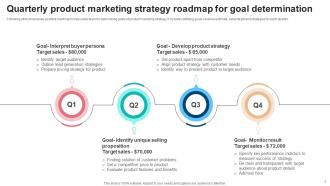
Quarterly product marketing strategy roadmap for goal determination
-
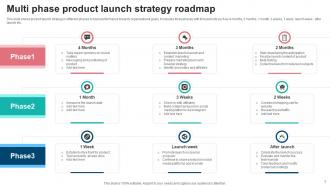
Multi phase product launch strategy roadmap
-
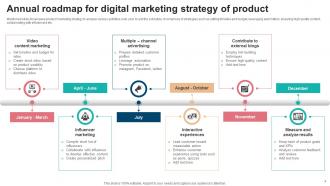
Annual roadmap for digital marketing strategy of product
-
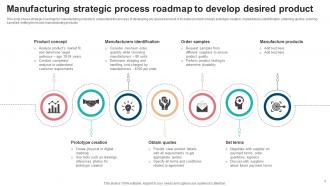
Manufacturing strategic process roadmap to develop desired product
-
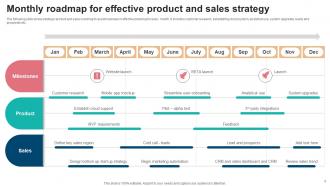
Monthly roadmap for effective product and sales strategy
-
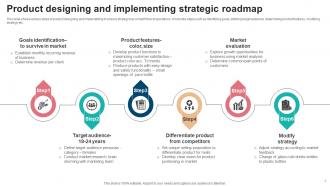
Product designing and implementing strategic roadmap
-
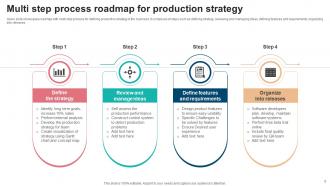
Multi step process roadmap for production strategy
-
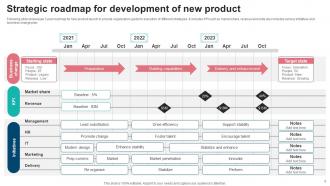
Strategic roadmap for development of new product
-
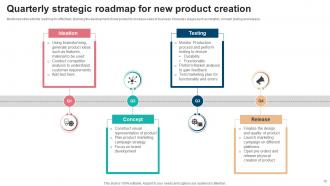
Quarterly strategic roadmap for new product creation
-
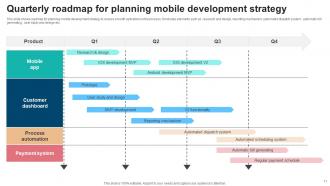
Quarterly roadmap for planning mobile development strategy
-
New product launch strategy roadmap icon
-
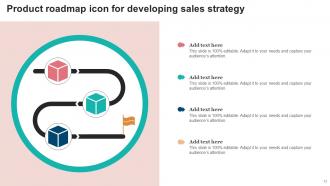
Product roadmap icon for developing sales strategy
-

Thank you for watching
-

-

-

-

-

-

-

-

FAQs for Product Strategy Roadmap Powerpoint
Honestly, start with getting everyone on the same page about your vision first - saves you so much headache later. You'll need four main things: that shared vision tied to actual business goals (not just "improve user experience" fluff), features ranked by priority, timelines that don't make your dev team want to quit, and ways to measure if you're actually succeeding. Map everything to realistic quarters based on what your team can handle. I've seen too many roadmaps built on pure optimism that crash and burn. Once you've got stakeholder buy-in on direction, the rest gets way easier to plan out.
Okay so honestly, start with three things: how much users actually need it, what it does for the business, and whether your devs can even build it without losing their minds. I score each feature on those - though it gets pretty messy when you're doing it for real. High impact stuff that makes business sense AND is doable? That's your priority right there. Oh and definitely loop in your engineering team early because they'll catch technical disasters you totally missed. Build some simple scoring system but don't be too rigid about it. Things change and you'll need to pivot when new info comes up.
Look, market research is basically your sanity check - stops you from building stuff nobody wants. It shows you what customers actually need vs what's living in your head. Use it to validate ideas, find gaps competitors missed, and figure out pricing that won't tank. Honestly, I've seen too many teams skip this step and regret it later. Bake research into every big decision, not just upfront planning. It'll help you prioritize features and nail your launch strategy. Trust me, a little research beats a lot of guessing every time.
Quarterly reviews work best, but honestly? Update it whenever something big happens in your business or market. I used to do monthly updates - total waste of time since no one read them anyway. Better to be flexible than stuck to some arbitrary schedule. Got major customer feedback? Competitor doing something crazy? Don't wait three months to adjust your roadmap. The thing should feel current, not like some relic gathering dust. Block out those quarterly sessions now, but tweak things as you go. Way more realistic than pretending you can predict everything months ahead.
Oh man, the worst thing you can do is get obsessed with features instead of actual outcomes. Also don't try pinning down exact dates months ahead - that's a recipe for disaster. I swear every team I've worked with throws everything into "must-have" which basically makes prioritization pointless. Make sure you're talking to sales, support, and engineering from the start instead of building it solo. Honestly? Skip the fancy roadmap tools - a simple timeline does the job just fine. Keep updating it based on what users are actually telling you, not what you think they want.
So basically, map every roadmap item back to your actual business goals - revenue, user growth, whatever you're chasing. I make this simple matrix showing how features connect to objectives. Saves me tons of headaches down the road. Stakeholders will change their minds constantly, so review priorities with them regularly. When resources get tight (and they always do), be super transparent about what you're trading off. Those quarterly alignment sessions are clutch - you can pivot the roadmap and actually show people how each thing moves the needle. Trust me, the "bigger picture" conversations get way easier when you have this stuff mapped out clearly.
Focus on metrics that actually matter - user engagement, revenue growth, customer satisfaction, feature adoption rates. Don't get stuck measuring just how many features you shipped. Honestly, teams obsessing over velocity alone drive me nuts... it's like flooring it without knowing where you're going. Leading indicators help too - user feedback trends, support ticket patterns, stuff like that. Set up a monthly dashboard with 3-5 metrics tied to your business goals. The trick is picking ones you'll actually look at regularly instead of letting them collect dust.
Map out your key people first - figure out what they actually care about and what keeps them up at night. Then do workshops where you build the strategy WITH them instead of just presenting some polished deck. People will fight for something they helped create, trust me. Set up regular check-ins to catch any drift early. Use a shared doc or dashboard so everyone can see how their input shaped decisions. Oh, and don't make stakeholder feedback an afterthought - weave it into your actual process from day one. The whole thing falls apart if people feel like they're just being informed rather than involved.
Know your audience first - execs want the big picture and business impact, but engineers need all the feature details. Visuals are everything here. Timeline charts, progress bars, basic slides with clear priorities. I'm weirdly obsessed with color-coding by confidence (green = committed, yellow = likely, red = just exploring). Monthly snapshots work great, and honestly, always explain what changed and why. People appreciate that. The biggest thing? Don't pretend you've got everything figured out. Being upfront about uncertainty beats fake confidence every time.
Honestly, customer feedback runs our whole priority system. Support tickets, user interviews, NPS stuff - we mine all of it for patterns. The weird thing is balancing complainers (who are super vocal) against quiet users who actually need help but never say anything. I weight everything by customer value plus how many people it hits. Short bursts work better than long ones, in my experience. Set up regular team reviews and maybe a simple scoring thing so you're not just going with gut feelings all the time.
Honestly, forget the rigid feature lists - go with quarterly themes instead. Way more flexible when you inevitably learn something that changes everything. Set up regular check-ins with customers and stakeholders, then actually listen to what they're saying (shocking concept, I know). That whole "fail fast" thing sounds cliché but it genuinely works for product planning. Keep your backlog tight and don't let scope creep sneak in - be brutal about cutting stuff. Oh, and prep your stakeholders that the roadmap's gonna change. It's more like a GPS route than a treasure map carved in stone.
So here's what works for me - pick like 3-5 main competitors and just track what they're shipping each month. Set up Google alerts or whatever, it'll save you so much time scrolling around. Then map their stuff against what you're planning to build. Look, don't just copy everything they do (that's lazy), but use it to figure out if you're missing something obvious or if there's a chance to do it way better. I do quarterly sit-downs with my team to go through everything - honestly these sessions can get pretty heated but they're worth it. Their moves basically validate what the market actually wants, which helps you prioritize the right features.
Short-term roadmaps are where you nail down the specifics - what features you're building, when they'll ship, all that concrete stuff. Usually 3-6 months out. Long-term is more your big vision and strategic direction, like 1-3 years. Honestly, don't stress too much about getting the long-term perfect since it'll change anyway. The real difference? How confident you should be. Short-term plans need to be solid, but long-term is more directional. Oh, and timing - I'd say review short-term monthly, long-term quarterly unless something crazy happens in your space.
Dude, never roll out new stuff to everyone at once - that's how you tank your whole app. I'd start with maybe 5-10% of users using feature flags or A/B tests. We literally broke checkout for our entire user base last year because we didn't do this (still cringe thinking about it). Watch your error rates and load times like a hawk when you're testing. Oh, and keep experimental features totally separate from your core stuff in the code - trust me on this one. Have a rollback plan ready before you ship. Sounds obvious but you'd be surprised how many people skip this step.
Honestly, I'd start with Productboard or Aha! since they're made for roadmaps specifically. Miro's solid too if you want more creative control - we use it all the time anyway. Analytics-wise, Amplitude and Mixpanel are clutch for understanding what users actually do vs what they say they do. Hotjar's great for feedback collection. Here's the thing though - don't go crazy with tools. Pick maybe 2-3 that actually talk to each other. I've seen teams burn out trying to manage like 8 different platforms. Start simple with what you know.
-
Top Quality presentations that are easily editable.
-
SlideTeam provides PPTs on every single topic. Their templates suit my job very well. I am very grateful!