


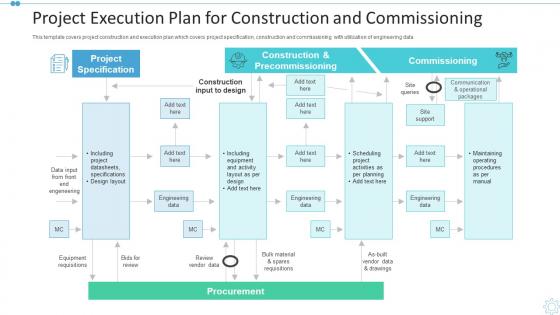
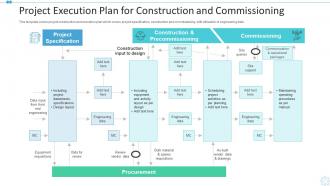
Project execution plan for construction and commissioning




Try Before you Buy Download Free Sample Product
 Impress Your
 Audience
 100%
100% Editable
 Save Hours
 of Time


Our Project Execution Plan For Construction And Commissioning are topically designed to provide an attractive backdrop to any subject. Use them to look like a presentation pro.
People who downloaded this PowerPoint presentation also viewed the following :
Project execution plan for construction and commissioning with all 2 slides:
Use our Project Execution Plan For Construction And Commissioning to effectively help you save your valuable time. They are readymade to fit into any presentation structure.
FAQs for Project execution plan for
Key components of an effective project execution plan include scope definition, resource allocation, timeline management, risk assessment, and communication protocols. These elements work together by establishing clear deliverables, optimizing team productivity, and maintaining stakeholder alignment throughout project lifecycles, with many organizations finding that comprehensive execution planning reduces project delays by 30% and enhances overall delivery success.
A project execution plan focuses specifically on the implementation phase, detailing task sequences, resource allocation, timelines, and delivery methods, while a project management plan encompasses the entire project lifecycle including planning, monitoring, control processes, and stakeholder management. Through strategic separation of these documents, organizations streamline operational efficiency, enhance team clarity, and deliver faster project outcomes, with many finding that this dual approach minimizes execution risks while maintaining comprehensive oversight.
Stakeholder analysis identifies key participants, their interests, influence levels, and potential impact on project outcomes, enabling targeted communication strategies and risk mitigation approaches. This systematic evaluation helps project managers prioritize engagement efforts, anticipate resistance or support patterns, and align execution strategies with stakeholder expectations, ultimately delivering smoother project implementation and higher success rates.
Effective communication strategies integrate into project execution plans through stakeholder mapping, regular reporting schedules, defined communication channels, escalation protocols, and feedback mechanisms. These approaches streamline project coordination by establishing clear information flows, minimizing misunderstandings, and ensuring timely decision-making, with many organizations finding that structured communication ultimately delivers faster project completion and enhanced team alignment.
Project execution plans should include schedule adherence, budget variance, quality metrics, scope completion rates, and stakeholder satisfaction scores. These measurements enable project managers to track progress systematically, identify potential delays early, and maintain resource allocation efficiency, with many organizations finding that comprehensive metric tracking ultimately delivers improved project outcomes and enhances team accountability across departments.
Risk management integration involves identifying potential risks, developing mitigation strategies, establishing monitoring protocols, creating contingency plans, and assigning risk ownership throughout project phases. These proactive measures streamline project delivery by minimizing disruptions, reducing cost overruns, and maintaining timeline adherence, with many organizations finding that structured risk frameworks ultimately enhance operational efficiency and stakeholder confidence.
Effective collaboration techniques include regular stand-up meetings, shared digital workspaces, cross-functional workshops, transparent communication channels, and collaborative project management tools. These approaches streamline coordination by establishing clear accountability, facilitating real-time updates, and breaking down silos, with many organizations finding that structured collaboration frameworks ultimately deliver faster project completion and enhanced team productivity.
Project execution plans should be reviewed weekly during active phases and monthly during stable periods, with immediate updates triggered by scope changes, resource shifts, or milestone deviations. These regular reviews enable project managers to identify risks early, reallocate resources effectively, and maintain stakeholder alignment, with many organizations finding that consistent monitoring reduces project delays by up to 30% while enhancing overall delivery success.
**INPUT**: What tools are available to facilitate the creation and implementation of a project execution plan? **OUTPUT**: Project execution plan tools include Microsoft Project, Asana, Trello, Monday.com, and Gantt chart software for comprehensive planning and tracking. These platforms streamline project management by enabling task scheduling, resource allocation, and real-time collaboration, with many organizations finding that integrated dashboards ultimately deliver enhanced visibility and operational efficiency.
Agile project execution plans emphasize iterative sprints, continuous stakeholder feedback, and adaptive scope management, while traditional plans focus on sequential phases, detailed upfront requirements, and change control processes. Many organizations find that agile approaches streamline software development and product launches through flexibility, whereas traditional methodologies enhance construction and manufacturing projects requiring predictable timelines, ultimately delivering structured outcomes suited to each project's complexity and stakeholder needs.
Alignment is achieved by mapping project deliverables to strategic business goals, conducting regular stakeholder reviews, and establishing clear success metrics tied to organizational KPIs. Through structured governance frameworks, project managers ensure resource allocation supports broader company priorities, while milestone assessments verify continued strategic relevance, ultimately delivering measurable value across departments.
Common pitfalls include unrealistic timelines, inadequate resource allocation, poor stakeholder communication, insufficient risk assessment, and lack of clear accountability structures. These oversights often derail projects by creating bottlenecks, budget overruns, and scope creep, with many organizations finding that thorough upfront planning and regular milestone reviews ultimately deliver better outcomes and higher success rates.
Resources should be allocated based on critical path activities, team member strengths, budget constraints, and timeline dependencies, while maintaining buffer capacity for unexpected challenges. Strategic allocation involves matching specialized skills to high-impact tasks, distributing workloads across peak periods, and ensuring adequate backup resources, with many organizations finding that flexible resource pools and cross-functional capabilities ultimately deliver faster project completion and reduced costs.
Change management ensures smooth implementation of project modifications by establishing clear communication protocols, stakeholder alignment processes, and structured approval workflows during execution. Through systematic change control, project teams minimize scope creep, maintain budget adherence, and preserve timeline integrity, while enabling necessary adaptations that enhance project outcomes, ultimately delivering greater stakeholder satisfaction and strategic value.
Lessons learned from previous projects can be incorporated by conducting thorough post-project reviews, documenting best practices and pitfalls, updating standard operating procedures, and creating knowledge repositories accessible to future teams. This systematic approach enables organizations to streamline project timelines, minimize repeated mistakes, and enhance resource allocation, with many companies finding that structured lesson integration ultimately delivers improved project success rates and competitive advantage.
-
Best way of representation of the topic.
-
Awesome use of colors and designs in product templates.
-
Great quality slides in rapid time.
-
Attractive design and informative presentation.
-
Great product with effective design. Helped a lot in our corporate presentations. Easy to edit and stunning visuals.