

Project Intake Process Flowchart Approval Implementing Requirements Information





Try Before you Buy Download Free Sample Product
 Impress Your
 Audience
 100%
100% Editable
 Save Hours
 of Time


Our Project Intake Process Flowchart Approval Implementing Requirements Information are topically designed to provide an attractive backdrop to any subject. Use them to look like a presentation pro.
People who downloaded this PowerPoint presentation also viewed the following :
Project Intake Process Flowchart Approval Implementing Requirements Information with all 11 slides:
Use our Project Intake Process Flowchart Approval Implementing Requirements Information to effectively help you save your valuable time. They are readymade to fit into any presentation structure.



FAQs for Project Intake Process Flowchart Approval
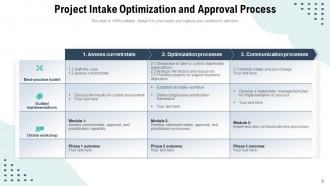
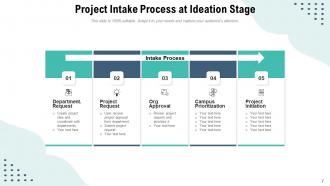
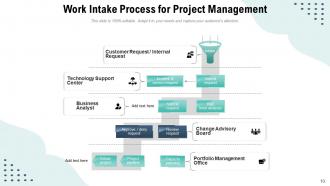
A successful project intake process includes initial request submission, stakeholder identification, requirements gathering, feasibility assessment, resource allocation planning, and formal approval workflows. These steps streamline project initiation by establishing clear scope boundaries, identifying potential risks early, and ensuring proper resource alignment, with many organizations finding that structured intake processes reduce project delays by 30-40% while improving overall delivery success rates.
Organizations can effectively prioritize project requests by establishing clear criteria including strategic alignment, resource requirements, potential ROI, urgency levels, and stakeholder impact during intake evaluation. Through standardized scoring matrices and cross-functional review committees, companies streamline decision-making processes, ensure transparent resource allocation, and ultimately deliver higher-value initiatives while maintaining operational efficiency.
Project intake management tools include Asana, Monday.com, Smartsheet, Wrike, and Microsoft Project, along with custom intake forms and workflow automation platforms. These technologies streamline operations by standardizing request submissions, automating approval workflows, and centralizing project data, with many organizations finding that integrated platforms reduce processing time while enhancing visibility and resource allocation efficiency.
Stakeholder involvement significantly enhances project intake effectiveness by ensuring comprehensive requirements gathering, early risk identification, and strategic alignment with business objectives. When key stakeholders from departments like finance, operations, and IT participate actively in intake reviews, organizations achieve better resource allocation, reduced scope creep, and higher project success rates, ultimately delivering initiatives that meet actual business needs.
Project evaluation criteria should include strategic alignment with business objectives, resource requirements and availability, expected ROI and timeline, risk assessment factors, and stakeholder impact analysis. These criteria enable organizations to prioritize proposals systematically, ensuring optimal resource allocation while maintaining project portfolio balance, with many companies finding that standardized evaluation frameworks significantly enhance decision-making speed and project success rates.
Organizations ensure project intake alignment with strategic goals by implementing structured evaluation criteria, mandatory strategic mapping requirements, and regular portfolio reviews that assess each project's contribution to business objectives. Through standardized scoring matrices and executive oversight committees, companies in sectors like manufacturing and healthcare can systematically prioritize initiatives, optimize resource allocation, and maintain strategic focus, ultimately delivering competitive advantage and measurable business outcomes.
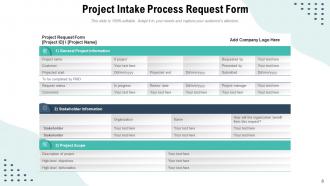
Documentation serves as the foundation for project intake by capturing requirements, stakeholder expectations, scope boundaries, timeline constraints, and resource allocations in standardized formats. This systematic recording enables project managers to maintain clear communication channels, track decision points throughout the intake workflow, and establish accountability frameworks, while ensuring all teams access consistent project information, ultimately streamlining approval processes and reducing costly misunderstandings.
Project intake processes vary significantly across industries based on regulatory requirements, risk tolerance, stakeholder complexity, and operational priorities. Healthcare organizations prioritize patient safety compliance and clinical evidence, while financial services emphasize regulatory approval and risk assessment, and manufacturing focuses on resource allocation and production feasibility, with many organizations finding that tailored intake frameworks ultimately deliver faster project approvals and better strategic alignment.
Common pitfalls include inadequate scope definition, insufficient stakeholder alignment, unrealistic timeline expectations, budget miscalculations, and poor resource assessment. These oversights often lead to project delays, cost overruns, and scope creep, with many organizations finding that thorough upfront planning and clear communication protocols ultimately deliver smoother execution and better outcomes.
Feedback from previous projects informs future intake processes by identifying recurring resource bottlenecks, clarifying scope definition gaps, and highlighting stakeholder communication patterns that impact success. Organizations systematically analyze completed project data to refine intake criteria, streamline approval workflows, and enhance initial requirements gathering, ultimately reducing project delays and improving resource allocation accuracy.
Establishing clear communication channels enhances project intake by streamlining stakeholder alignment, reducing miscommunication, and accelerating approval timelines through defined protocols and feedback loops. These channels enable organizations to capture requirements accurately, manage expectations effectively, and maintain transparency throughout evaluation stages, with many companies finding that structured communication reduces project initiation delays by significantly improving cross-departmental collaboration and decision-making efficiency.
Agile project intake processes emphasize iterative evaluation, rapid prototyping, and continuous stakeholder feedback, while traditional methodologies rely on comprehensive upfront documentation, detailed requirements gathering, and formal approval gates. Agile intake enables faster project initiation and adaptive scope management, with many organizations finding that this flexibility streamlines resource allocation and enhances responsiveness to changing business priorities.
Key metrics include intake volume and cycle times, approval rates, resource allocation accuracy, stakeholder satisfaction scores, and project success rates post-approval. These measurements enable organizations to streamline decision-making, enhance resource planning, and improve project outcomes, with many companies finding that tracking intake efficiency ultimately delivers faster project launches and better strategic alignment across departments.
Organizations create effective project intake cultures by establishing clear communication channels, standardized evaluation criteria, cross-functional collaboration protocols, and transparent decision-making processes. Through regular stakeholder training and feedback loops, companies streamline project prioritization, enhance resource allocation, and improve strategic alignment, with many finding that consistent intake methodologies ultimately deliver faster approvals and better project outcomes.
Training best practices for project intake teams include comprehensive process documentation, role-specific responsibilities, stakeholder communication protocols, evaluation criteria standardization, and hands-on simulation exercises. Organizations across industries find that combining formal workshops with mentoring programs, regular feedback sessions, and cross-functional collaboration training enables teams to streamline decision-making, reduce bottlenecks, and ultimately deliver more consistent project evaluations and faster intake cycles.
-
Enough space for editing and adding your own content.
-
Much better than the original! Thanks for the quick turnaround.
-
Best Representation of topics, really appreciable.
-
Best way of representation of the topic.
-
Presentation Design is very nice, good work with the content as well.
-
Great quality product.