


Project Management Framework In Logistics




Try Before you Buy Download Free Sample Product
 Impress Your
 Audience
 100%
100% Editable
 Save Hours
 of Time


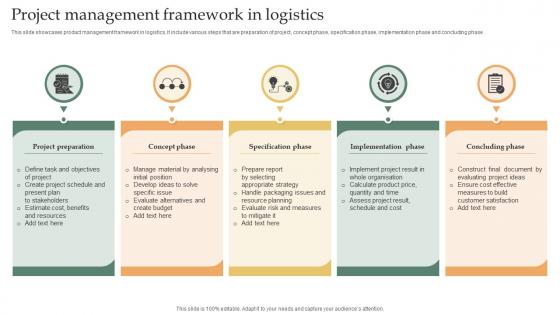
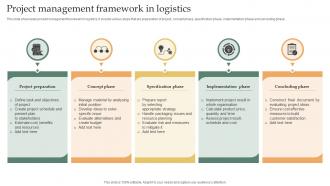
This slide showcases product management framework in logistics, It include various steps that are preparation of project, concept phase, specification phase, implementation phase and concluding phase.
People who downloaded this PowerPoint presentation also viewed the following :
Project Management Framework In Logistics with all 9 slides:
Use our Project Management Framework In Logistics to effectively help you save your valuable time. They are readymade to fit into any presentation structure.








FAQs for Project Management
Key components include supply chain mapping, resource allocation planning, transportation coordination, inventory management protocols, and stakeholder communication systems. These frameworks streamline logistics operations by integrating real-time tracking, optimizing route efficiency, and managing cross-functional teams, with many shipping companies and retailers finding that structured approaches ultimately deliver faster delivery times and reduced operational costs.
Stakeholder management significantly impacts logistics project success by ensuring alignment between suppliers, customers, regulatory bodies, and internal teams throughout project execution. Effective stakeholder engagement streamlines decision-making, minimizes delays from miscommunication, and enhances resource coordination, with many logistics organizations finding that proactive stakeholder collaboration reduces project risks and ultimately delivers faster implementation timelines.
Technology revolutionizes logistics project management by enabling real-time tracking, automated scheduling, predictive analytics, and seamless communication across supply chains. Through AI-powered platforms and IoT sensors, companies streamline warehouse operations, optimize delivery routes, and enhance customer visibility, with many freight and e-commerce organizations finding significantly improved efficiency and reduced operational costs.
Risk management strategies integrate into logistics project management frameworks through comprehensive risk assessment protocols, contingency planning matrices, and real-time monitoring systems that identify potential disruptions across supply chains, transportation networks, and warehouse operations. These frameworks enable logistics managers to proactively address delays, cost overruns, and service interruptions, while maintaining operational efficiency and customer satisfaction in an increasingly complex global marketplace.
Best practices for effective communication in logistics projects include establishing clear reporting structures, implementing real-time tracking systems, conducting regular cross-functional meetings, utilizing collaborative digital platforms, and maintaining transparent documentation protocols. These approaches streamline coordination by eliminating information silos, accelerating decision-making, and enhancing visibility across supply chain operations, with many logistics organizations finding that structured communication frameworks ultimately deliver faster project completion and improved operational efficiency.
Measuring logistics project management success involves tracking key performance indicators like on-time delivery rates, cost variance, inventory turnover, and customer satisfaction scores. Companies evaluate operational efficiency through metrics such as order accuracy, warehouse throughput, and transportation costs, with many logistics organizations finding that combining these quantitative measures with stakeholder feedback delivers comprehensive insights into project effectiveness and competitive advantage.
Supply chain optimization methodologies include Lean Six Sigma, Agile project management, Theory of Constraints, continuous improvement frameworks, and data-driven analytics approaches. These methodologies streamline operations by eliminating waste, accelerating response times, and enhancing visibility across distribution networks, with many logistics organizations finding that strategic combinations deliver reduced costs, faster delivery times, and improved customer satisfaction in increasingly competitive markets.
Project scheduling techniques improve delivery timelines by optimizing resource allocation, identifying critical path dependencies, and enabling proactive bottleneck management throughout the supply chain. Through methods like Gantt charts and milestone tracking, logistics companies streamline warehouse operations, coordinate transportation schedules, and enhance vendor coordination, with many freight operators finding that structured scheduling reduces delivery delays by up to 30% while improving customer satisfaction.
Global logistics project management faces challenges including complex multi-jurisdictional regulations, currency fluctuations, diverse cultural communication styles, unpredictable supply chain disruptions, and coordinating across multiple time zones. These complexities require strategic frameworks that enhance visibility, streamline cross-border compliance, and enable real-time coordination, with many international organizations finding that integrated technology platforms ultimately deliver operational resilience and competitive advantage.
Change management affects logistics project implementation by ensuring stakeholder buy-in, minimizing operational disruptions, and facilitating smooth technology adoption across complex supply chain networks. Through structured communication protocols and phased rollouts, organizations streamline warehouse transitions, transportation system upgrades, and inventory management changes, while reducing resistance and training costs, ultimately delivering faster project timelines and sustainable operational improvements.
Essential project management tools for logistics include transportation management systems (TMS), warehouse management software (WMS), enterprise resource planning (ERP) platforms, real-time tracking applications, and collaborative communication tools like Slack or Microsoft Teams. These technologies streamline operations by automating route optimization, inventory tracking, and cross-functional coordination, with many logistics companies finding that integrated software suites ultimately deliver faster delivery times, reduced operational costs, and enhanced customer visibility.
Performance metrics in logistics project management are effectively established by defining clear KPIs like delivery times, cost per shipment, inventory turnover, and customer satisfaction scores aligned with strategic objectives. These metrics are monitored through real-time dashboards and automated tracking systems, with many logistics companies finding that regular performance reviews and data-driven adjustments ultimately enhance operational efficiency and competitive advantage.
Regulatory compliance significantly impacts logistics project frameworks through mandatory documentation requirements, extended approval timelines, enhanced risk assessment protocols, and specialized stakeholder coordination processes. These compliance demands ultimately streamline operations by establishing standardized procedures, improving transparency across supply chains, and ensuring consistent quality controls, with many logistics organizations finding that robust compliance frameworks deliver competitive advantages and reduced operational risks.
Cross-departmental collaboration enhances logistics project management by aligning goals, streamlining communication, and eliminating operational silos that create delays and inefficiencies. Through integrated planning platforms and regular coordination meetings, organizations achieve faster delivery times, reduced costs, and improved customer satisfaction, with many logistics companies finding that collaborative frameworks ultimately deliver significant competitive advantage.
Training initiatives for logistics project managers include supply chain optimization, warehouse management systems, transportation planning, regulatory compliance, and risk assessment methodologies. These programs enhance operational efficiency by developing expertise in inventory control, vendor coordination, and technology integration, with many logistics organizations finding that cross-trained managers deliver faster project completion and improved cost management.
-
Great templates that you can use in your next keynote or conference. They are perfect for quick and visually-engaging delivery.
-
The content is very helpful from business point of view.