

Project Management In Healthcare Powerpoint Ppt Template Bundles





Try Before you Buy Download Free Sample Product
 Impress Your
Audience
 100%
Editable
 Save Hours
of Time


Our Project Management In Healthcare Powerpoint Ppt Template Bundles are topically designed to provide an attractive backdrop to any subject. Use them to look like a presentation pro.
People who downloaded this PowerPoint presentation also viewed the following :
Project Management In Healthcare Powerpoint Ppt Template Bundles with all 25 slides:
Use our Project Management In Healthcare Powerpoint Ppt Template Bundles to effectively help you save your valuable time. They are readymade to fit into any presentation structure.











FAQs for Project Management In Healthcare Powerpoint
Healthcare project management faces unique challenges including strict regulatory compliance requirements, patient safety considerations, complex stakeholder coordination across medical teams, and integration with existing clinical workflows. Unlike other sectors, healthcare projects must navigate HIPAA regulations, medical device approvals, and 24/7 operational continuity, with many organizations finding that successful implementations require extensive clinical staff training and phased rollouts to minimize patient care disruptions.
Project managers ensure effective communication among diverse healthcare teams by establishing standardized protocols, implementing collaborative digital platforms, conducting regular cross-functional meetings, and creating clear documentation processes. Through tools like integrated health information systems, teams across nursing, physicians, administration, and support services can streamline patient care coordination, minimize miscommunications, and ultimately deliver faster treatment responses while enhancing overall patient outcomes.
Regulatory compliance serves as a foundational framework in healthcare project management, ensuring projects meet FDA, HIPAA, Joint Commission, and state healthcare standards while maintaining patient safety and data security. These requirements streamline quality assurance, risk mitigation, and audit preparation processes, with many hospitals and medical institutions finding that compliance-driven project structures ultimately deliver faster regulatory approvals and enhanced operational efficiency.
Agile and Lean methodologies enhance healthcare operations by streamlining patient flow, reducing waste, and improving care coordination through iterative improvements and cross-functional collaboration. Healthcare organizations, from hospitals to clinics, successfully implement these approaches for faster patient discharges, reduced waiting times, and optimized resource allocation, ultimately delivering better patient outcomes while minimizing operational costs.
Managing stakeholder expectations in healthcare projects requires clear communication protocols, regular progress updates, defined roles and responsibilities, and transparent timeline management. Through structured stakeholder mapping and engagement plans, healthcare organizations streamline decision-making processes, minimize project delays, and ensure regulatory compliance, with many hospitals finding that proactive expectation management ultimately delivers improved patient outcomes and operational efficiency.
Technology enhances healthcare project management through electronic health records integration, real-time collaboration platforms, automated workflow systems, predictive analytics, and mobile communication tools. These digital solutions streamline resource allocation, minimize scheduling conflicts, and accelerate decision-making across departments, with many hospitals finding that automated tracking delivers faster project completion and improved patient care coordination.
Healthcare project risk management best practices include comprehensive stakeholder engagement, regulatory compliance planning, clinical workflow integration, data security protocols, and continuous monitoring systems. These approaches streamline project delivery by identifying potential disruptions early, ensuring patient safety standards, and maintaining operational continuity, with many healthcare organizations finding that proactive risk assessment ultimately enhances patient outcomes while reducing costly project delays.
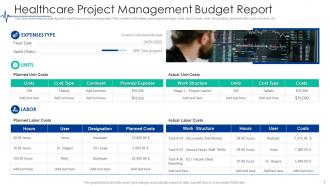
Healthcare organizations can measure project management success through key performance indicators like budget adherence, timeline compliance, quality metrics, patient satisfaction scores, and clinical outcome improvements. By tracking these metrics across projects, hospitals and medical facilities can demonstrate reduced costs, faster implementation of new technologies, improved patient care delivery, and enhanced operational efficiency, ultimately delivering measurable ROI and competitive advantage in an increasingly performance-driven healthcare landscape.
Effective methods include agile sprinting with weekly checkpoints, parallel task execution, stakeholder communication dashboards, risk-based buffer allocation, and cross-functional team integration. These approaches streamline project delivery by minimizing bottlenecks, enhancing transparency, and enabling rapid pivots, with many hospitals finding that structured flexibility ultimately delivers faster implementation and better patient outcomes.
Patient safety fundamentally shapes healthcare project planning through rigorous risk assessments, comprehensive stakeholder involvement, and extensive testing protocols before implementation. These safety requirements extend project timelines, increase resource allocation, and demand continuous monitoring throughout execution, with hospitals and medical facilities finding that thorough safety integration ultimately delivers better patient outcomes and regulatory compliance.
Healthcare project managers require clinical knowledge, regulatory compliance expertise, risk management skills, stakeholder communication abilities, and technology proficiency in healthcare systems. These competencies enable them to navigate complex hospital environments, manage interdisciplinary teams, ensure patient safety standards, and deliver projects that enhance operational efficiency while maintaining quality care standards.
Project managers facilitate change management during healthcare system upgrades by establishing clear communication protocols, conducting comprehensive stakeholder training, and implementing phased rollout strategies that minimize operational disruption. Through strategic planning and continuous feedback loops, hospitals and medical facilities can ensure staff adoption, maintain patient care quality, and achieve seamless technology integration, ultimately delivering improved clinical workflows and enhanced patient outcomes.
Data analytics informs healthcare project management through predictive modeling, resource optimization, risk assessment, performance tracking, and outcome analysis. These insights enable project managers to anticipate staffing needs, streamline workflows, and minimize delays, with many healthcare organizations finding that data-driven approaches ultimately reduce costs while improving patient care delivery and operational efficiency.
Cross-functional collaboration in healthcare improves through structured communication protocols, shared digital platforms, regular interdisciplinary meetings, and clearly defined roles across departments. These approaches streamline coordination between clinical teams, IT specialists, administrators, and external vendors, with many healthcare organizations finding that integrated project management systems ultimately reduce implementation timelines, enhance patient care outcomes, and minimize costly departmental silos.
Failed healthcare projects reveal critical lessons including inadequate stakeholder engagement, insufficient change management protocols, unrealistic timeline expectations, poor communication frameworks, and inadequate risk assessment strategies. These failures demonstrate that successful healthcare project management requires comprehensive planning, continuous stakeholder alignment, and robust contingency protocols, with many healthcare organizations finding that investing in upfront planning and stakeholder buy-in significantly reduces project failure rates.
-
Very well designed and informative templates.
-
Easily Editable.