


Project management maturity model powerpoint ppt template bundles




Try Before you Buy Download Free Sample Product
 Impress Your
 Audience
 100%
100% Editable
 Save Hours
 of Time


Our Project Management Maturity Model PowerPoint PPT Template Bundles are topically designed to provide an attractive backdrop to any subject. Use them to look like a presentation pro.
People who downloaded this PowerPoint presentation also viewed the following :
Project management maturity model powerpoint ppt template bundles with all 20 slides:
Use our Project Management Maturity Model PowerPoint PPT Template Bundles to effectively help you save your valuable time. They are readymade to fit into any presentation structure.









FAQs for Project management maturity model powerpoint
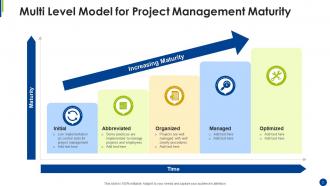
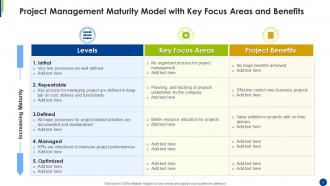
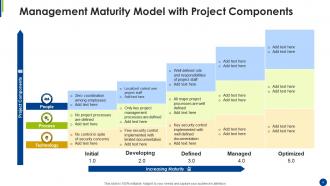
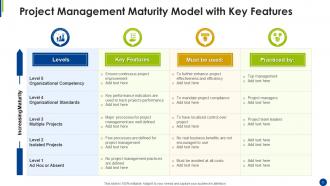
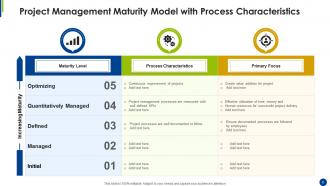
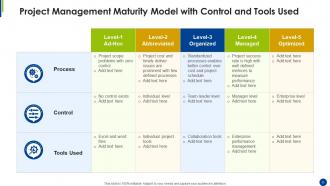
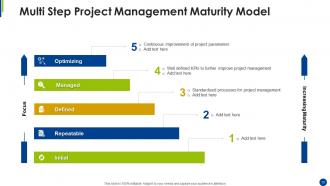
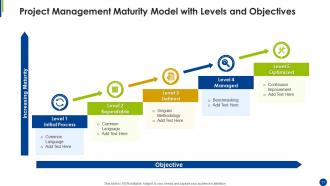
So the PMMM has five levels you move through. Level 1 is total chaos - no real process at all. At Level 2 you've got some basic stuff figured out. Level 3 is where most companies should honestly just stop and be happy - everything's standardized and working well. That's your sweet spot for ROI. Level 4 gets into all the metrics and data tracking. Level 5 is continuous improvement mode, but let's be real, most places don't need to go that far. I'd say shoot for Level 3 first - that's where you'll actually see results without going overboard.
Honestly, most companies think they're way more organized than they actually are. Start by documenting what you currently do - like, do you actually follow consistent processes or just figure it out as you go? Check your success rates and whether stakeholders are happy. There are formal frameworks like PMI's OPM3 that'll benchmark you properly, but begin with a basic self-assessment first. External consultants can give you the real talk if you want an unbiased view. I'd probably start there since internal teams tend to sugarcoat things.
Look, maturity models basically give you a roadmap to stop winging it with project management. Your success rates go up, outcomes become way more predictable, and when stuff inevitably hits the fan, you're not scrambling around like headless chickens. They help pinpoint exactly where your processes suck and which improvements to tackle first. Teams start using consistent methods, resources get allocated better, and - this is huge - stakeholders actually start believing your deadlines. First step though? Figure out where you really are right now. Most companies think they're killing it when they're... not. Be honest about it or you'll just waste time.
Look, the numbers don't lie - companies at maturity Level 4-5 hit like 80-90% project success rates while Level 1 orgs are stuck around 30-40%. Why? Because mature places actually have their shit together with standardized processes and solid risk management. I've watched too many teams think they can just figure it out as they go (spoiler: they can't). Once you've got repeatable processes down, you cut out most of the random chaos that torpedoes projects. Figure out where you're at on the maturity scale first, then work on nailing those basic processes before you try anything fancy.
Honestly, you can't really mature your PM processes without getting stakeholders involved - they're the ones who'll make or break any changes you try to implement. Get them helping you define processes and success metrics instead of just sending them status updates. They'll give you the real feedback on what's actually working (and trust me, some of it won't be pretty). The best organizations I've seen treat stakeholders like actual partners in improving how projects get done. Start by mapping out who your key people are and ask them how they want to help fix things. It's way more effective than trying to do it all yourself.
Honestly, don't try to jump ahead - that's where most people mess up. Do a real gap analysis first to see what's actually broken in your processes. Pick the biggest pain points that are holding you back. Training is absolutely critical (I can't stress this enough), but you also need leadership on board or you're fighting uphill. Start with small pilot projects before going company-wide. Document what works and what doesn't - sounds boring but you'll thank yourself later. Oh, and actually track your progress with real numbers, not just gut feelings. Build one level solidly before moving to the next.
You definitely want to mix numbers with gut-check stuff. Project success rates and budget variance are your bread and butter metrics. Schedule adherence too, obviously. But honestly, the soft stuff matters just as much - like whether your team actually feels confident or if they're just going through the motions with processes. Stakeholder satisfaction scores help, though sometimes people just say what you want to hear. Risk management effectiveness is huge but harder to measure. Don't fall into the trap of tracking everything though. Pick 3-4 things you can actually measure without drowning in spreadsheets, then build from there. Are lessons learned actually sticking? That's worth tracking.
Honestly, the maturity model pairs pretty well with Agile practices. Instead of telling you what processes to follow, it helps you figure out if your Agile approach is actually working. Higher maturity means you're getting smarter about tweaking your practices based on real results. Are your retrospectives creating actual change? Do teams self-organize effectively? How well are you handling customer feedback? It's like continuous improvement but more structured - though I know that sounds boring. The trick is measuring whether your Agile stuff delivers, not just checking boxes. I'd start by picking one practice and running it through the maturity framework.
Look, tech can seriously speed up your whole maturity process - mostly by handling the boring stuff automatically and giving you actual visibility into what's happening. Project management platforms are clutch for keeping everyone on the same page. Resource management tools help you stop wasting time and money. Analytics dashboards? Only worth it if they actually tell you something useful, not just look fancy. Oh, and don't go crazy buying everything at once. Pick one solid platform first, then add more as you go. Your team will thank you for not throwing ten new systems at them simultaneously. Make sure whatever you choose plays nice together too.
Honestly, most companies just rush the whole thing and treat it like checking boxes. Super common mistake. Don't try implementing everything at once - that's how you crash and burn. Leadership buy-in is huge too, otherwise your project dies halfway through when priorities shift. Oh and here's the thing people always mess up: they get obsessed with new processes but totally ignore the culture piece. Your team will just fake it or push back if they don't actually get why you're doing this. Start small, grab some easy wins first, then build from there.
So project management maturity totally changes how teams work. People start collaborating without being told to, and they actually admit mistakes instead of pointing fingers everywhere. The whole place becomes less chaotic - not rigid, just... organized? Teams stop waiting around for someone to tell them what to do. Instead of constantly putting out fires, you're planning ahead. Honestly, the culture shift is wild to see happen. Oh, and processes don't feel like bureaucratic nonsense anymore. Start small though - document what you're already doing and celebrate when teams actually follow through.
Oh totally! Generic maturity models are basically just templates - you gotta tweak them for your actual industry. Like, healthcare projects have completely different priorities than tech startups, you know? I'd grab something standard like PMI's OPM3 first, then figure out what matters most in your sector. Regulatory stuff might be critical if you're in pharma, but a creative agency probably cares more about other things. You can adjust the maturity levels, swap out processes that don't fit, or focus on whatever competencies actually move the needle for you. Makes way more sense than forcing some cookie-cutter approach.
So IBM's the classic case study everyone talks about - went from total project chaos to having solid PMO standards everywhere. Massive improvement in success rates. Siemens did something similar with governance frameworks. Microsoft's journey is interesting too, moving from random development approaches to actually structured methods. They all followed the same pattern though: assess first, then standardize processes, then scale it out. Honestly, if you're considering this, just pick one department to test it out first. Way easier than trying to overhaul everything at once.
Look, you can't skip steps with PM maturity - it's like trying to run a marathon when you've been sitting on the couch. Your team needs the right skills first. Start with whatever gaps you have at your current level. Maybe that's basic PM stuff, maybe it's risk management. I've seen too many companies try to jump straight to advanced processes without building up their people first - total disaster. Focus on targeted training that matches where you are now, then move up. The training creates the foundation that actually makes your process improvements work instead of falling apart.
When your PM processes get more mature, your risk management naturally gets way better too. Early-stage orgs are basically just firefighting - stuff breaks, you fix it, repeat. But once you hit those higher maturity levels, you're actually spotting risks before they bite you. You'll build proper risk registers, get decent early warning systems going. The whole approach shifts from reactive to proactive. Honestly, it's night and day compared to the chaos of level 1 organizations. Mature teams (think levels 4-5) bake risk management right into every project phase. They actually learn from past screw-ups and apply those lessons forward. Way more predictable outcomes. I'd start by figuring out where your current processes stand - that'll tell you what gaps need fixing first.
-
Designs have enough space to add content.
-
Amazing product with appealing content and design.
-
Design layout is very impressive.
-
Thanks for all your great templates they have saved me lots of time and accelerate my presentations. Great product, keep them up!
-
Commendable slides with attractive designs. Extremely pleased with the fact that they are easy to modify. Great work!