


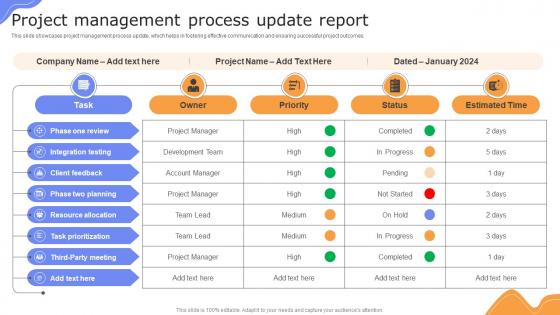
Project Management Process Update Report




Try Before you Buy Download Free Sample Product
 Impress Your
 Audience
 100%
100% Editable
 Save Hours
 of Time


This slide showcases project management process update, which helps in fostering effective communication and ensuring successful project outcomes.
People who downloaded this PowerPoint presentation also viewed the following :
Project Management Process Update Report with all 9 slides:
Use our Project Management Process Update Report to effectively help you save your valuable time. They are readymade to fit into any presentation structure.








FAQs for Project Management
You need five things sorted out: what you're actually building (scope), a realistic timeline with milestones, who's doing what plus budget stuff, how you'll handle risks, and - this one's critical - your communication plan. So many projects I've watched just implode because nobody talks to each other properly. Keep your scope super clear or you'll get that awful scope creep situation. Don't make your timeline overly optimistic either, trust me on that. Just throw it all in a shared doc to start - doesn't need to be fancy.
Honestly, daily standups are a lifesaver - everyone knows what's happening and can flag issues before they blow up. Sprint planning and retrospectives help too, way better than those endless waterfall projects we used to do. Breaking work into short sprints really kills the department silos thing. Kanban boards are clutch because people can actually see progress instead of wondering what the hell is going on. Oh, and don't try to change everything at once - pick one thing that fits how your team already works, then add more stuff as they get used to it. Much less painful that way.
Think of risk management as your project's radar system - it catches problems before they hit you. Most teams just ignore the warning signs and then act shocked when everything goes sideways. You'll want to identify what could go wrong, how likely it is, then prep your response. Budget blowouts, missed deadlines, scope creep - all preventable if you're paying attention. I know it sounds boring, but spend 15 minutes each week updating a simple risk list. Trust me, it beats scrambling when disaster strikes.
Oh man, Gantt charts are seriously helpful for this stuff. You get a visual timeline showing what needs to happen and when. Everyone can see who's doing what, so people can't really slack off without it being obvious. The best part? You'll catch problems early instead of scrambling later. My boss is obsessed with them because he can look at one chart and know exactly where we stand - honestly makes meetings way shorter. I'd just start simple with something like Asana or even throw one together in Excel first. Don't overthink it.
Honestly, just talk to your team way more than you think you need to. Daily standups work great, or at least weekly calls where everyone actually shows up. Project management tools are clutch - I like Asana but whatever keeps everyone on the same page. Figure out when your team overlaps timezone-wise for real collaboration time. Document literally everything since you can't just tap someone on the shoulder anymore. Oh and don't overthink it at first - start with these basics then tweak based on how your team actually works together.
Write a super detailed scope statement first - like, spell out exactly what you're doing AND what you're not doing. Get everyone to approve it before starting anything. Sounds boring, I know, but it's honestly a lifesaver. Then create a formal process for handling changes - document everything, get approvals, check how it affects your timeline and budget. Your project charter becomes your bible. When someone says "oh just one tiny addition" (and they will), you'll have a real process instead of just caving and watching everything fall apart.
Honestly, just talk to them regularly and don't make them hunt you down for updates. Map out who actually needs to be in the loop vs. who just wants occasional FYI's. Weekly check-ins work great, or monthly if it's a slower project. Visual dashboards are clutch - way better than boring email updates nobody reads. Listen when they talk (I know, revolutionary concept) and actually use their feedback when you can. Oh, and definitely loop them in on both the good stuff and problems early. Being upfront about issues beats having awkward conversations later. The whole thing's really about staying ahead of it instead of scrambling to catch up.
Dude, I can't stress this enough - good communication literally makes or breaks projects. Your team needs to know what's going on or you'll end up with everyone doing their own thing. I've watched way more projects crash from communication fails than money problems, which is kinda crazy when you think about it. Weekly check-ins are clutch. When stuff goes sideways (it always does), you can actually fix things fast instead of finding out about disasters three weeks later. Stakeholders won't be breathing down your neck either. Just set up a decent plan from the start and don't skip those team meetings.
Start with a solid budget baseline and check it weekly - seriously, most projects crash because people just set it once and walk away. I'd use earned value management to catch overruns before they kill you. Always pad it with 10-15% contingency because something will go wrong. Break everything down by work packages so you actually know where the money's bleeding out. Monitor constantly and don't let anyone change scope without proper approval - that's where budgets die. Oh, and set alerts at 80% of each category. Saves you from nasty surprises later.
Honestly, data analytics is a lifesaver for project decisions. Track stuff like budget burn rate and timeline slippage - you'll catch problems way earlier. The coolest part? You can actually predict delays using past project patterns. Sounds nerdy but it works. Real-time dashboards are clutch because then your team knows what's happening without constant check-ins (and stakeholders quit bugging you every day). Oh, and resource utilization tracking helps too. Just pick 3-4 metrics that actually matter for your specific project and stick with those. Don't overcomplicate it.
Ugh, scope creep is the absolute worst - like that friend who keeps asking for "just one tiny thing" until you're redesigning their entire website. Communication breakdowns happen way too often too. Oh, and you'll always be short on time or people, so just accept that now. What I do is set super clear boundaries from day one with detailed project docs. Build in 20% extra time because something will go wrong. Regular check-ins help catch problems early. Start every project by sitting down with your team and brainstorming what could blow up - trust me on this one.
Honestly, how you lead totally shapes your team's vibe. Be collaborative and open? People will actually speak up and share ideas. Go full autocratic and yeah, decisions happen fast, but you might crush creativity - though sometimes that's what you need, I guess. Democratic approaches usually keep everyone happier and more engaged. Laissez-faire works if your team knows their stuff, but newbies will feel completely lost. Just watch how your style affects the room's energy. Then tweak things based on what your specific people and project actually need right now.
Dude, you can't skip project initiation - I learned that the hard way on my last big project. Start by nailing down your objectives and getting stakeholders on the same page about what success looks like. Otherwise you're just winging it with no real plan. The scope needs to be crystal clear too, plus you need proper sign-off from whoever's funding this thing. I read somewhere that projects with solid initiation have like 70% better success rates, which honestly doesn't surprise me at all. Spending time upfront saves you from total chaos later when budgets start disappearing.
Honestly, I'd set up feedback checkpoints throughout your project - not just dump everything at the end. Weekly team check-ins work great, plus maybe some quick anonymous surveys so people actually speak up. I totally bombed a project once because everyone saw problems brewing but nobody said anything (classic, right?). Coffee chats are surprisingly effective too. The trick is making it feel low-pressure so your team won't clam up. Anonymous feedback tools help with that. Just pick one thing to try this week - even informal retrospectives can catch issues before they spiral. You'll be shocked what people share when it doesn't feel formal.
So Monday.com and Asana have gotten really smart lately - they're using machine learning to spot project risks before they hit you. Real-time stuff like Miro and Figma is pretty solid for remote teams too. The integration between tools now is honestly wild compared to a few years ago. Cloud dashboards give you that instant overview, plus automation handles boring tasks like status updates. Oh, and resource allocation gets way easier. My advice? Pick one tool that fixes your worst headache first. Don't try to change everything at once - that's a recipe for chaos.
-
I was never satisfied with my own presentation design but SlideTeam has solved that problem for me. Thank you SlideTeam!
-
Incredibly beautiful designs that will help you get noticed! These eye-catching templates are perfect for corporate presentations that can be altered to fit any occasion or taste.