

Project Management Progress Report Powerpoint Ppt Template Bundles





Try Before you Buy Download Free Sample Product
 Impress Your
Audience
 100%
Editable
 Save Hours
of Time


Our Project Management Progress Report Powerpoint Ppt Template Bundles are topically designed to provide an attractive backdrop to any subject. Use them to look like a presentation pro.
People who downloaded this PowerPoint presentation also viewed the following :
Project Management Progress Report Powerpoint Ppt Template Bundles with all 20 slides:
Use our Project Management Progress Report Powerpoint Ppt Template Bundles to effectively help you save your valuable time. They are readymade to fit into any presentation structure.
-

Project Management Progress Report
-

Website Development Project Management Progress Report
-

Real Time Project Management Dashboard to Track Progress Report
-

Weekly Project Management Progress Status Report
-

Project Management Progress Status Report
-
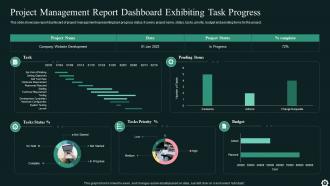
Project Management Report Dashboard Exhibiting Task Progress
-

Project Management Task Status and Progress Report
-

Project Portfolio Management Progress Status Report
-
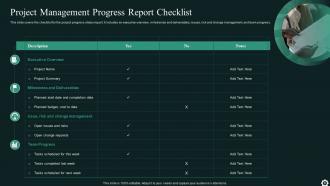
Project Management Progress Report Checklist
-

Project Management Revenue and Customer Progress Report
-

IT Project Management Progress Status Report
-

Gantt Chart Icon Exhibiting Project Management Task Progress Report
-

Dashboard Icon Showcasing Project Management Progress Report
-

Project Management Weekly Progress Report Icon
-
Thanks for Watching
-

-

-

-

-

FAQs for Project Management Progress Report Powerpoint
So there's basically five phases: initiation, planning, execution, monitoring, and closure. First you figure out what you're actually trying to accomplish and set your scope. Then comes planning - timelines, resources, all that stuff. Execution is where everything happens, and honestly? This is where projects either totally crush it or blow up spectacularly. While you're executing, you're constantly checking progress and tweaking things. Oh, and closure - that's wrapping up deliverables and documenting what went right (or wrong). Pro tip though: spend way more time planning than you think you need. Trust me, it'll save you so much stress when everything starts going sideways later.
Honestly, Agile's a game-changer because it breaks everything into those short sprints - usually 2-3 weeks. When requirements inevitably change (and they always do), you can pivot fast instead of being stuck with some giant plan that's already outdated. The daily standups actually get people talking, which sounds annoying but really isn't. You'll ship working software every few weeks rather than crossing your fingers on one massive launch. Plus stakeholders can see real progress and give feedback early, before you've built the wrong thing. I'd start small - just try daily check-ins and two-week sprints to see how it feels.
Honestly just go with Asana, Monday, or Trello - they're all pretty solid and your team won't hate learning them. I've watched people spend forever picking the "perfect" tool instead of just diving in. Jira's awesome if your team's already technical, but it might be way too much for basic stuff. Time tracking and decent reports are key if you're measuring performance though. Oh and whatever you pick, make sure it plays nice with what you're already using. The dashboard needs to be clean too - if it looks like a mess you'll never actually check it. Trust me on that one.
Start with a brain dump of everything that could tank your project - scope creep, budget cuts, key people leaving, tech failures, you name it. Rank each risk by how likely it is vs how badly it'd hurt you. High-priority ones get actual action plans: extra time buffers, backup contractors ready to go, cross-training so you're not screwed if someone quits. I'm probably paranoid, but I check my risk list every couple weeks since things shift constantly. Way better to have solutions ready than scramble when stuff hits the fan.
Dude, stakeholder communication can totally make or break your project. I've watched so many things crash and burn just because someone important got left out - then suddenly they're changing requirements at the last second or just not supporting you when stuff hits the fan. You'll want to be super proactive about updates instead of waiting for people to hunt you down asking what's going on (which gets awkward fast). Regular check-ins help you spot problems early and keep everyone happy. Honestly, the worst part is when executives feel ignored - they can tank your whole thing. Set up your communication schedule right from the start.
Honestly, you've gotta be way more upfront about expectations than you think. Daily check-ins are a lifesaver - can't just wander over to someone's cubicle anymore, right? Get everyone on Asana or something similar so nobody's confused about deadlines. Video calls work so much better than email chains for anything complicated, trust me. Oh and create shared docs for literally everything - saves you from the "wait, which version are we using?" chaos. Don't forget the human stuff though. Remote people get lonely fast, so maybe start meetings with quick personal updates before jumping into work.
Honestly, I always tackle whatever's blocking my teammates first - nothing kills momentum like people sitting around waiting. After that, focus on stuff with actual deadlines or anything that directly impacts your main goals. High-impact work should come next, but don't ignore how complex something is or if your team's already swamped. I'm a big fan of those simple urgency vs. importance grids (sounds nerdy but they actually work). Plot your tasks and hit the high-urgency, high-importance ones right away. Dependencies are huge too - if Task A needs to finish before Task B can start, well, that's your answer right there.
Honestly? Get your stakeholders involved from day one or you'll regret it later. I learned this the hard way on a project last year - thought I could just update people along the way. Big mistake. When people feel heard, they give you better requirements and don't randomly change scope halfway through. They'll actually warn you about problems before they blow up. Short check-ins aren't enough though. You need a real plan for who matters most and how often you'll connect. Trust me, these people become your biggest supporters when you need budget or resources approved.
Start with a detailed bottom-up estimate - break down every single task and cost. I'd use three-point estimation (optimistic, pessimistic, realistic) for buffers. Here's the thing though: most projects crash because nobody wants to have those awkward budget conversations. Track actual vs budgeted weekly, no exceptions. Set up earned value management to measure against time and cost baselines. You'll need a 10-15% contingency reserve for surprises. Clear change control processes are crucial or scope creep will destroy you. Oh, and review those numbers religiously - communicate any variances to stakeholders immediately. Trust me on this one.
So feedback loops are pretty much your safety net for catching problems before they blow up. Instead of waiting till the end when you're screwed, you get input from everyone - stakeholders, your team, users - throughout the whole thing. Daily standups work great, sprint reviews, weekly check-ins. Hell, even those random coffee conversations can save your butt sometimes. The trick is making these sessions structured enough that you actually get useful stuff out of them, not just people complaining. I'd say start with one regular check-in and see how it goes. You can always add more once you figure out what clicks with your team.
Ugh, scope creep is absolutely the worst thing you'll deal with - clients always want "just one more tiny change" that derails everything. Poor communication runs a close second though. Document literally everything from day one and set those boundaries hard. Break big projects into smaller chunks so you can pivot when things go sideways (they will). Regular check-ins help catch problems before they explode. Oh, and always pad your timelines with buffer room because something unexpected always pops up. A solid kickoff meeting where you spell out exactly what's happening saves so much headache later.
Don't wait until the end to check your work - that's a recipe for disaster. I made this mistake once and wow, what a mess that turned out to be. Define what "done" looks like before anyone starts working. Build in checkpoints throughout the whole timeline - peer reviews, testing phases, stakeholder meetings at key milestones. Honestly, catching problems early saves you so much headache later when everything's falling apart. Create checklists for each phase too. Way cheaper to fix stuff now than when you're scrambling at delivery.
Think of project scope like drawing a fence around what you're actually building. Document everything upfront - seriously, everything. Get people to sign off on changes, because they will ask for "quick additions" that'll wreck your timeline. I've seen too many 3-month projects drag on forever because nobody wanted to say no. When stakeholders want something new, flip it back on them: "Cool, what should we drop to make room?" That conversation usually sorts things out pretty fast. You'll thank yourself later.
Honestly, start with the basics - scope, timeline, budget stuff. Then figure out what's weird about your industry. Healthcare? You're drowning in compliance paperwork. Tech moves fast with all those sprints and constant changes. Construction has safety rules for everything plus you're always worried about rain screwing up your schedule (marketing campaigns don't have that problem lol). Each field has different stakeholders who care about totally different things. Best move? Find some experienced PMs in your area and ask what actually works. They'll tell you which frameworks they've modified and what tools aren't complete garbage.
Look, you've gotta track the obvious stuff - budget, timeline, scope. Did you actually deliver what you promised? But that's only half the battle honestly. Stakeholder satisfaction matters way more than people realize. Also check if your team performed well and whether the project hit its real business goals. Quality metrics are huge too - defect rates, user adoption, ROI after launch. Here's what I'd do: pick maybe 3-4 key metrics from the start and stick with them. Don't get lost in spreadsheet hell. Just make sure one of them measures actual business impact, not just "we shipped it on time."
-
The slides come with appealing color schemes and relevant content that helped me deliver a stunning presentation without any hassle!
-
“Slides are formally built and the color theme is also very exciting. This went perfectly with my needs and saved a good amount of time.”