


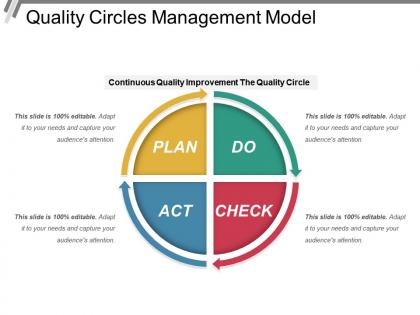
Quality circles management model




Try Before you Buy Download Free Sample Product
 Impress Your
 Audience
 100%
100% Editable
 Save Hours
 of Time


Avoid being irrelevant with our Quality Circles Management Model. Adhere to the facts that are applicable.
People who downloaded this PowerPoint presentation also viewed the following :
Quality circles management model with all 5 slides:
Bring the controversy to a close with our Quality Circles Management Model. End the dispute in an amicable fashion.


FAQs for Quality
Basically you get frontline workers to spot and fix quality issues themselves. The people actually doing the job usually know exactly where problems happen - plus they've got solid ideas for solutions. Has to be voluntary though, and you need to give them real training and authority to change things. Management actually listening is huge here, or it just turns into another useless meeting nobody wants to attend. I'd probably start with just one team as a test run. Collaborative problem-solving works when done right. Short bursts of focused effort tend to work better than these marathon sessions that drag on forever.
Honestly, Quality Circles are pretty solid for getting people actually engaged at work. Employees get to pick problems that genuinely annoy them and team up to solve stuff - way better than shouting into the void with suggestion boxes. The whole collaborative thing makes people feel like their opinions matter, you know? Plus you'll pick up skills along the way. Management actually backs the ideas that come out of these circles, which is huge. Oh, and if you're setting one up - let them choose their own problems to tackle. That autonomy piece is what makes it work.
Management can literally make or break your Quality Circles - I've seen it go both ways. They need to actually listen to suggestions and implement them, not just nod and ignore everything. Protected meeting time is huge too. Without real buy-in from the top, people won't feel safe speaking up about problems. Oh, and get clear timelines upfront for when ideas will actually happen - nothing's worse than watching your recommendations disappear into some corporate black hole. The resources and training matter, but honestly? Genuine commitment beats fancy budgets every time. Start there.
Honestly, just focus on the basics first. Count how many problems they're actually solving and what kind of savings you're getting - that's your real ROI right there. Participation rates matter too because nobody wants to sit in dead meetings forever. I'd also track how many of their suggestions actually get implemented, not just discussed to death. The timeline stuff is huge - if it takes months to act on simple recommendations, people will check out. Oh, and don't go crazy trying to measure everything at once. Pick maybe 2-3 things that matter most to your goals and start there.
Dude, manufacturing and healthcare are where Quality Circles really shine. Toyota literally built their whole thing around this approach - pretty wild when you think about it. Hospitals use them to cut down on medical errors and make patient care run smoother. You'll also see good results in hospitality and retail, especially when you're trying to improve customer experience stuff. But here's the thing - it only works if your frontline people are actually dealing with the process every day and you can measure the improvements. Otherwise you're just having meetings for no reason.
Honestly, Quality Circles are pretty solid for continuous improvement. Basically you get your frontline people together regularly to spot problems and brainstorm fixes. These folks know where stuff actually breaks down - they're dealing with it daily. The key thing is letting them actually implement their ideas, not just talk about them. When people can change how their own work gets done, they're way more invested. Plus all these little improvements start adding up over time. I'd probably start with just one team working on whatever's driving everyone crazy right now.
Look for your best communicators first - that's honestly half the battle right there. Problem-solving skills are huge since that's the whole point. You need people who dig deeper instead of just pointing at obvious stuff. Active listening matters too. Get folks who actually want to be there because nothing kills these sessions like bored people just going through the motions. Teamwork's essential obviously. Oh, and find people comfortable with feedback - both giving it and taking it without getting weird about it. Your natural analyzers and collaborators will set the right vibe for everyone else.
Yeah, training makes or breaks these quality circles honestly. Your team needs the actual problem-solving skills - root cause analysis, basic stats, facilitation techniques. Most people think they're good at brainstorming but proper training is night and day different. Data collection and process mapping are huge too. Oh, and presentation skills so they can actually sell their ideas to management (that's where a lot of good ideas die). I'd do like 2-3 days upfront, then quarterly refreshers. Keeps people sharp and you can throw in new tools as they get comfortable.
Honestly, start by making it totally voluntary - forced participation kills the whole vibe. Give them time during actual work hours instead of making it another thing to squeeze in. I'd rotate meeting times too so everyone gets a shot, not just the day shift people. Here's the thing though - management HAS to actually listen and act fast on suggestions. Cherry-pick some easy wins for the first groups so people see their ideas matter. Once word gets out that stuff actually happens (not just endless meetings), you'll have the opposite problem - people wanting in instead of running away.
So basically you grab like 6-8 people from your team and meet regularly to tackle problems everyone's actually dealing with. The cool part? You're not just venting - you use actual tools like root cause analysis to figure stuff out. Having different experience levels in the room is clutch because someone always sees something you missed. What I love about it is the people doing the actual work are the ones solving the problems, so you get way more realistic solutions. Oh and start with something your team already gripes about during coffee breaks - makes it way easier to get buy-in.
Honestly, getting leadership to actually follow through is the worst part - they get all pumped at first then ignore every suggestion your circle makes. Super demotivating. Scheduling regular meetings without messing up everyone's workflow is a headache too. Some people just don't want to collaborate or think it's pointless busywork on top of their real job. Oh, and if you don't have a solid process for implementing ideas, forget it. Start with people who actually want to participate. Makes such a difference when you've got buy-in from day one instead of dragging reluctant folks along.
Honestly, just bake the metrics right into your meetings from the start. Have your team track their own KPIs - defect rates, customer scores, cycle times, whatever fits their projects. Opening each session with current performance data works really well. People get genuinely pumped when they see their work actually moving the needle! Don't wait around for management reports though - let the circle members collect and analyze everything themselves. Gives them ownership plus real-time feedback on whether stuff's working. Simple charts or dashboards help too, nothing fancy needed.
Honestly, tech can make your Quality Circle way more effective. Use whatever collaboration tools you already have - Teams, Slack, whatever. Digital whiteboards are great for brainstorming sessions. Excel charts? They're pretty useless for spotting complex quality patterns - you'll want better data visualization tools. Project management software helps track your improvement projects (though half our team still forgets to update theirs). Survey tools work well for getting feedback from everyone else. The key is starting with platforms people already know how to use, otherwise you'll spend forever just getting buy-in.
So Quality Circles basically flip the script from "boss knows everything" to actually listening to your team. People get way more invested when their ideas aren't just ignored, you know? It breaks down those annoying corporate walls between management and regular employees. The whole collaborative thing builds real trust. Plus you end up with this momentum where everyone starts spotting improvements instead of just clocking in and out. Honestly, the change in energy is pretty obvious once it kicks in. I'd say try one small group first though - see how it goes before rolling it out everywhere.
Okay so first thing - pick 2-3 real problems that actually matter to your company. Cost issues, quality stuff, whatever's keeping your boss up at night. Don't just turn them loose or you'll get presentations about parking spots and vending machine snacks (trust me on this one). Circle leaders need to know these priorities from day one. Set up regular check-ins to see if their solutions actually address what you asked for. And here's the big thing - have a real process for rolling out their ideas. Nothing's more frustrating than spending weeks on something that just gets ignored. Start small with your biggest pain points.
-
Designs have enough space to add content.
-
Great quality product.