


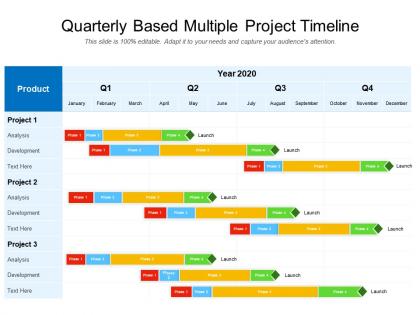
Quarterly based multiple project timeline





Try Before you Buy Download Free Sample Product
 Impress Your
 Audience
 100%
100% Editable
 Save Hours
 of Time


Our Quarterly Based Multiple Project Timeline are explicit and effective. They combine clarity and concise expression.
People who downloaded this PowerPoint presentation also viewed the following :
Quarterly based multiple project timeline with all 2 slides:
Give your audience a fulfilling experience. They will find our Quarterly Based Multiple Project Timeline elevating.
FAQs for Quarterly based
So there's basically five stages to any project: initiation, planning, execution, monitoring, and closure. First you define what you're actually doing and get buy-in. Then comes planning - mapping timelines, resources, all that stuff. Execution is where the real work happens (and where everything goes sideways, let's be honest). While you're executing, you're constantly checking progress and fixing things. Closure wraps it all up with reviews and final deliverables. One thing I learned the hard way - don't skimp on planning. I know it's boring, but trust me, you'll thank yourself later when you're not scrambling to figure out basic stuff mid-project.
Don't make my mistake - build risk planning into your timeline from the start instead of scrambling later. During initial planning, list out what could go wrong and score each risk by how likely/damaging it'd be. High-priority ones need specific response plans with someone assigned to watch them. Build extra time and resources into your schedule for the stuff that'll inevitably pop up (trust me on this). Weekly team check-ins should always include a quick risk review - honestly it's boring but saves your butt when things get crazy. Way better than firefighting constantly.
Dude, you've gotta stay on top of stakeholder communication - it literally makes or breaks projects. I've seen too many go sideways because someone important got blindsided or felt left out. Regular check-ins are your friend here. Don't wait until things blow up to loop people in. When stakeholders feel heard, they're way more likely to back you when you need resources or approvals. Plus you'll catch problems early and manage expectations before they become headaches. Trust me on this one - a little extra communication upfront saves you massive drama later.
So basically agile breaks everything into short bursts - like 2-4 week sprints where you build something, test it, get feedback. Traditional is more like waterfall where you plan the whole thing upfront and can't really change course. I've found agile way less stressful tbh because when stakeholders inevitably change their minds (and they will), you're not stuck with some massive outdated plan. You just pivot in the next sprint. Maybe try doing your next project in 2-week chunks? You'll be shocked how much more responsive you become.
Honestly? Just go with Asana, Trello, or Monday.com for task stuff. Trello's my personal favorite - super visual with those card things, though sometimes it's almost *too* basic. Asana's better if you've got complicated projects that need more structure. Slack's pretty much standard for team chat now. Bigger companies might push Microsoft Project or Jira on you, but those are honestly overkill unless you're doing something massive. Oh, and obviously Google Workspace for the boring file sharing stuff. Real talk though - just use whatever your team's already on. Fighting people to switch tools is such a headache.
Honestly, just be super clear about what you're doing from day one and don't budge. Get everything written down, make stakeholders sign off on it, then create some kind of formal process for changes. Trust me, they'll always want "one tiny addition" that somehow takes three weeks. Point back to your original scope and explain how it'll mess up the timeline. I learned this the hard way – saying no is scary but necessary. Teach your team to spot this stuff early and flag it right away. Oh, and always show the trade-offs. Want this new feature? Cool, what are we cutting then?
Honestly, start with quality stuff - defect rates, customer satisfaction, whether you actually delivered what they wanted. Budget variance is critical too because nobody cares if you're on time but spent twice what you planned. Team morale and stakeholder buy-in matter way more than people think. Happy teams just perform better, period. ROI and business value metrics are obvious but get forgotten - did this thing actually solve the problem it was supposed to? Oh, and define all this upfront with stakeholders so you're not arguing about success later.
Honestly, your team dynamics will either save your project or completely tank it. Good communication and trust? You'll actually hit your deadlines and ship quality stuff. But if people can't work together... yikes. I've watched perfectly good projects fall apart because nobody talked to each other or everyone was being territorial about their work. Conflicts that never get resolved just turn into endless meetings about feelings instead of getting actual work done. My advice? Figure out how your team communicates early on - like, really early. It's way easier than trying to fix dysfunction later when you're already behind schedule.
Dude, you basically have to overcommunicate everything or people will be lost. Daily check-ins are a lifesaver for keeping everyone on track. Get your tools sorted - Slack for quick stuff, some project management thing for tracking everything, video calls when it actually matters. The timezone thing is honestly such a pain but you adapt. Write down all the important decisions and share them so nothing disappears into the void. Oh and don't skip the casual stuff! Virtual coffee breaks or just chatting for a few minutes before meetings starts. Remote teams get weird and disconnected otherwise.
Set those quality standards right from the start and bake them into your budget. Both need constant tracking - trust me, scope creep destroyed my last project. Regular check-ins help you spot budget issues early, plus you've gotta have those awkward conversations with stakeholders about what's actually possible. When money gets tight, focus on your most critical quality stuff first. Look for process improvements instead of just cutting quality (that always backfires). Honestly, being upfront with everyone about realistic expectations given your constraints is half the battle. Your team will respect the honesty.
There are a bunch of different ways to tackle this. MoSCoW method is pretty solid - breaks everything into Must have, Should have, Could have, Won't have. Makes stakeholder conversations way easier. The Eisenhower Matrix is another good one for sorting urgent vs important stuff. Weighted scoring is honestly my go-to for complex projects though - you just assign points based on impact, effort, deadlines, whatever matters. RICE works too if you're juggling competing features. Real talk: pick one method and stick with it instead of bouncing around. I'd start with the Eisenhower Matrix since it's straightforward but actually works really well.
Dude, change management literally saves projects from imploding. You know how scope creep happens? Or when resources get shuffled around mid-project? That's where proper change processes come in clutch. I've watched entire projects crash because nobody had control over the constant tweaks and "quick additions." Set up a change control board from day one. Make sure everyone knows the approval process before requesting changes. When stakeholders actually understand how their requests impact timelines and budget, everything flows better. Trust me - having clear communication channels will keep your team from losing their minds when things inevitably shift.
Do it within 2-4 weeks max while people still remember what the hell happened. I'd set up different sessions - one with your team, another with stakeholders, maybe users too if they're willing. Look at three things: did you hit scope/timeline stuff, how'd the team work together, and were your processes actually useful. Getting people to show up is honestly the worst part since everyone's already chasing their next deadline. But fight for it because you'll get amazing insights. Write it all down somewhere future PMs can actually find it later. Trust me on this one.
Honestly, you've gotta bake reflection time right into your workflow. After each sprint or milestone, do quick retrospectives where people can actually say what sucked without getting roasted. We keep a wiki page for lessons learned - super basic but it works. Track real numbers too, like how long stuff actually takes vs. your estimates. Makes a huge difference having data instead of just guessing. Oh, and don't make these feel like blame-fests or people will clam up. Even 15 minutes asking "what would we change?" after finishing something can be eye-opening.
Dude, when projects go sideways, your team literally looks to you to figure out what's next. Stay calm - easier said than done, I know. You'll need to make the tough calls about what gets priority and what resources you actually have to work with. Clear communication is huge here, plus knowing when to escalate vs. when to just handle it yourself. Oh, and definitely have backup plans ready because something will go wrong. The worst leaders I've seen either panic or disappear when things get messy. Don't be that person.
No Reviews