


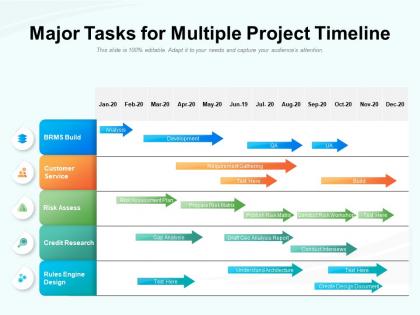
Major tasks for multiple project timeline





Try Before you Buy Download Free Sample Product
 Impress Your
 Audience
 100%
100% Editable
 Save Hours
 of Time


Our Major Tasks For Multiple Project Timeline are explicit and effective. They combine clarity and concise expression.
People who downloaded this PowerPoint presentation also viewed the following :
Major tasks for multiple project timeline with all 2 slides:
Give your audience a fulfilling experience. They will find our Major Tasks For Multiple Project Timeline elevating.
FAQs for Major tasks for
Honestly, start with nailing down your scope first - everything else flows from there. You'll need a solid timeline with actual milestones, not just random dates. Map out who's doing what because trust me, that "wait whose job is this?" conversation always happens at the worst time. Budget breakdown and resource allocation are obvious ones. Risk management planning too, though everyone hates doing it. Communication plan matters more than people think. Quality standards so you're not arguing about "good enough" later. Oh and definitely have a change management process ready - scope creep will find you no matter what. Stakeholder identification rounds it out.
Honestly, agile is pretty great for keeping teams productive. Breaking everything into short sprints stops that paralyzing "holy crap where do we start" moment. Daily standups catch problems before they turn into disasters, which I've learned the hard way at previous jobs. Your team actually sees stuff getting done each sprint - does wonders for morale. The whole self-organizing thing cuts out those annoying approval bottlenecks too. If you're considering it, maybe try one small project first? See how the sprint rhythm feels with your specific team dynamics.
Dude, stakeholder engagement will literally make or break your project. Get them involved early and you'll have allies instead of people working against you later. They give you the real requirements, not some watered-down version that doesn't work. Regular check-ins are huge - I learned this the hard way on my last project when I thought I could just update people via email. Map out who matters most first. Keep communication flowing both ways. When stakeholders feel heard, they'll actually fight for your project instead of throwing you under the bus.
Okay so first thing - write down literally everything you're gonna deliver, when, and what's NOT included. Get everyone to actually sign off on this before you start anything. The tricky part? Learning to say no when they inevitably ask for "quick additions." I swear people think scope creep is free. Just point back to your document and show how their "tiny change" affects the timeline or budget. Oh, and schedule regular check-ins to catch this stuff early - don't wait until you're drowning in extra requests. Treat that scope doc like it's legally binding, because honestly it should be.
Honestly, you gotta write this stuff down instead of trying to remember everything. Get your team together and brainstorm what could blow up your project. Then sort each risk by how likely it is and how bad it'd be - I make a simple grid thing because it's way easier to see what needs attention first. High-priority stuff needs actual plans, not just "we'll figure it out later." Assign someone to own each risk too. Oh, and don't just do this once at kickoff - that's where most people mess up. Quick risk check-ins during regular meetings work well so nothing catches you off guard.
Dude, these tools basically dump all your team stuff in one spot - no more digging through a million emails or trying to remember what Sarah said by the coffee machine. You can tag people on specific tasks and comment directly on things. Super handy for dodging those awkward "uh, what exactly did we agree on?" moments. The best part? You see project updates and can talk about them right there together. Cuts down on those endless status meetings that nobody wants anyway. My advice - just pick one tool and convince your main team to try it on a single project first. Don't overthink it.
So you'll want to look at the obvious stuff first - timelines, budget, scope. Did you actually deliver what you promised? But here's the thing, those numbers don't tell you everything. Stakeholder happiness matters too, plus how your team felt about the whole thing. Quality of what you shipped is huge. Oh, and whether it actually solved the original problem - sometimes projects "succeed" but don't really move the business forward, you know? My advice? Pick like 3-4 metrics at the start and stick with them. Otherwise you'll drown trying to measure everything.
Dude, seriously - document everything or you'll hate yourself later. I'm talking scope, timeline, budget, who's doing what, risks, the works. Can't tell you how many times I've watched projects completely implode when someone quit and took all the tribal knowledge with them. Super frustrating. Changes and lessons learned? Write those down too. Six months from now when your boss goes "remind me why we chose this approach," you'll actually have an answer instead of that deer-in-headlights look. Just grab a basic template and add to it as you go.
Honestly, collaboration tools are a lifesaver - they stop all that scattered communication madness. Instead of digging through a million emails (ugh), you get real-time updates and file sharing in one spot. Task assignments are crystal clear, so nobody's confused about who's doing what. The best part? Issues get caught early before they blow up into bigger problems. Everything's documented too, which means way fewer "wait, what did we decide last week?" meetings. I'd start with something that does both messaging and tasks - trust me, it'll change how your team gets stuff done.
Ugh, team drama is the worst. Jump on it fast before everyone starts picking sides and the whole vibe gets toxic. Listen to everyone first - don't judge, just let them vent because honestly that's half the battle. Keep bringing it back to work stuff instead of personal beef. If people don't know what they're supposed to be doing, nail that down since it causes like 90% of team fights anyway. Set some basic rules about how you'll communicate moving forward. Then - and this part's crucial - check in with people individually later to make sure they're actually cool and not just pretending.
Honestly, cultural stuff is way more challenging than time zones when you're working internationally. Some teams want super direct feedback, others take a roundabout approach - and if you don't know which is which, things get messy fast. Decision-making processes are totally different too. Like, some cultures need everyone's buy-in before moving forward while others just want the boss to decide. Research their norms beforehand if you can. Build extra time into everything because consensus takes forever in some places. Oh, and definitely get local team members involved early - they're lifesavers for avoiding those awkward miscommunications that derail projects.
Honestly, good timeline management is what separates successful projects from total disasters. Break everything down into smaller milestones first - makes it way less overwhelming. You'll catch problems early instead of scrambling at the last minute. Always build in buffer time because something will go wrong (trust me on this). Keep stakeholders updated with realistic expectations so they're not breathing down your neck constantly. The whole point is staying ahead of issues rather than just reacting to them. Oh, and update your timelines as you go - things change and your schedule should too. It's basically the difference between being in control vs everything falling apart.
Okay so first thing - grab the Eisenhower Matrix and sort everything by urgent vs important. That thing is honestly a lifesaver. Map out what depends on what, then tackle the high-impact stuff that actually moves your big goals forward. Don't get sucked into busywork that just feels urgent, you know? Also factor in what your team can realistically handle. Oh and timebox your planning sessions or you'll spiral into overthinking mode (been there). The whole trick is being brutal about what actually matters vs what's just noise.
Okay so first thing - don't sugarcoat bad news with stakeholders. Just be straight about risks and budget issues. Fair resource allocation matters too, obviously. Oh and watch out for conflicts of interest, that stuff gets messy fast. I know it's tempting to overpromise when everyone's breathing down your neck, but trust me, it always bites you later. Your team needs to feel safe speaking up about problems without getting thrown under the bus. Don't forget about broader impacts on communities either. Honestly? Set ethical ground rules from day one and you'll save yourself tons of headaches.
Honestly, you've gotta start doing lessons learned after every project. Yeah, I know - more paperwork when you're already drowning. But hear me out. Just dump everything in a simple doc: what worked, what was a total disaster, changes for next time. The magic happens when you actually READ this stuff before starting new projects. My old team used to hit the same communication issues over and over until we started checking our notes first. Now we catch problems early. Set up something dead simple - shared doc, basic database, whatever. You'll feel like a genius when you avoid repeating the same stupid mistakes.
No Reviews