


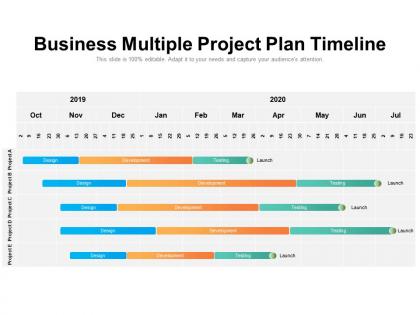
Business multiple project plan timeline





Try Before you Buy Download Free Sample Product
 Impress Your
 Audience
 100%
100% Editable
 Save Hours
 of Time


Our Business Multiple Project Plan Timeline are explicit and effective. They combine clarity and concise expression.
People who downloaded this PowerPoint presentation also viewed the following :
Business multiple project plan timeline with all 2 slides:
Give your audience a fulfilling experience. They will find our Business Multiple Project Plan Timeline elevating.
FAQs for Business multiple
Okay so you'll want these five things: scope definition, a timeline with milestones, resource allocation, risk management, and communication structure. Honestly, the scope part is huge - it keeps everyone on the same page about what you're actually building. Break your timeline into chunks with real deadlines. Map out who's doing what and when they're free (this sounds obvious but people forget). Always include risk assessment because something will go wrong, it just will. Oh and figure out how your team talks to each other and makes decisions. Start simple with a basic template, then tweak it based on how complex your project gets.
Figure out your critical path first - that's the stuff that'll actually blow your deadline if it gets delayed. Hit the dependencies early since everything else is just waiting around for those to finish. Honestly, I always pad my timeline because projects have this weird habit of taking way longer than you think. The MoSCoW thing works pretty well for ranking everything else (must have, should have, could have, won't have). Don't get sucked into perfecting tiny details right away - focus on the big, time-sensitive stuff. Make a simple priority matrix and tweak it weekly when things inevitably shift around.
Honestly, good communication can make or break your whole project. I've watched teams completely implode just because nobody was actually talking to each other - it's wild how fast things go sideways. You'll want regular check-ins with everyone involved, not just your core team but stakeholders too. Document the big decisions so there's no "wait, I thought we agreed on X" drama later. Don't assume people know what's happening, because they probably don't. Scope creep becomes this monster when communication breaks down. Start prioritizing it from day one and you'll save yourself so many headaches.
Talk to your stakeholders constantly - like, way more than feels necessary. Map out who they are first and figure out if they want emails, calls, whatever. Be super clear about scope and timeline from day one, then do regular check-ins so nobody gets surprised. Write everything down because people have selective memory (learned this the hard way). Changes will happen - they always do - so explain the impact right away instead of crossing your fingers and hoping it works out. Honestly, being annoying with updates beats dealing with angry stakeholders later.
Start with a risk register to track and score everything by probability and impact. Get your team together for brainstorming sessions and do a basic SWOT analysis. Monte Carlo sims are cool if you're into that, but honestly a decent spreadsheet does the trick for most stuff. Assign someone to own each major risk - otherwise nobody watches them. The real trick? Actually review this thing regularly in your meetings. I've seen too many teams create these elaborate registers then never look at them again. Also grab lessons learned from similar projects if you can find any.
Honestly, I'd focus on three big things when figuring out if your project actually worked. First - did you hit what you originally promised? Go back to that initial plan and see how close you got. Budget and timeline matter too, obviously. But here's what I've learned - sometimes the best measure is just asking if people would work with you again. Sounds simple but it tells you everything. Also set up a follow-up meeting like a month or two later once things calm down. That's when you get the real honest feedback about whether it actually helped the business or just looked good on paper.
Honestly, start with getting your communication figured out - regular check-ins are a lifesaver. Pick one main platform and stick with it, because juggling Slack AND Teams AND email is chaos. Daily standups help tons if you're not already doing them. Video calls are cool but sometimes I just send a quick voice message instead of scheduling another meeting. Put all your project stuff somewhere everyone can actually find it (not buried in someone's Google Drive). Be really clear about deadlines and who's doing what. Oh, and overcommunicate everything - remote teams miss all those random desk conversations that actually matter. Trust me on this one.
Honestly, it's a lifesaver for keeping everything in one place instead of digging through a million emails. You'll actually see what everyone's working on and when stuff's due. The automated reminders are clutch - no more babysitting people about deadlines. Reports generate instantly too, which saves me hours of manual work. I'd go with Asana or Trello first since they're pretty straightforward. Your team won't feel overwhelmed learning something crazy complex right off the bat. You can always switch to fancier tools once everyone gets the hang of it.
Scope creep will destroy your sanity - seriously, it's the worst. Poor communication comes in second, then unrealistic deadlines that make everyone miserable. Teams always want to skip planning because they're pumped to start building stuff, which I totally get, but it bites you every single time. Document everything upfront and set hard boundaries. Buffer time is crucial since projects never go as smoothly as you think. Oh, and do regular check-ins with everyone involved. I've seen way more projects fail from people not talking to each other than from actual technical problems. That kickoff meeting where you align on goals? Don't skip it.
Ugh, scope changes are the worst but here's what works: Stop everything first and figure out what actually changed. Document the impact on your timeline and budget - trust me, you'll need this later. Don't wait for some meeting next week to tell people, call them now before things get messy. Your project plan needs updating with new deadlines and who's doing what. New risks will pop up too. Here's the thing though - if they want more stuff, something's gotta give. Either you get more time, more money, or they accept it won't be perfect. Get their approval in writing or you'll regret it.
Honestly, focus on communication first - you'll be translating between teams constantly and it gets messy fast. Time management is clutch too because scope creep is literally inevitable (I've never seen a project that didn't expand somehow). Problem-solving rounds out the big three since random fires pop up daily. Oh, and definitely get familiar with tools like Asana or Monday.com early on. They're game changers. I'd probably start with whichever skill feels shakiest right now and build from there. Makes it less overwhelming than trying to master everything at once.
Honestly, just start small and mix things up. Break your usual project phases into shorter 2-week chunks with regular check-ins. Daily standups are actually amazing for keeping everyone on the same page - way better than those weekly status meetings that drag on forever. You don't have to throw out your documentation or anything, just add some Agile stuff like sprint planning and demos. Gets you more feedback from stakeholders too. Most teams I know do this hybrid thing where they still plan the old way but execute in sprints. Pick one or two practices first, see what clicks with your team, then build from there.
Honestly, diverse teams are amazing for creative problem-solving - you get so many different angles on stuff. But yeah, there's definitely some messiness to work through. Communication styles can be all over the place (some people are super direct, others hate any kind of conflict). Plus time zones are just brutal sometimes. What really works though is setting up clear communication rules from day one. Oh, and making sure everyone actually feels safe to speak up - that's huge. Different working styles aren't bad, they just need room to breathe. Once you figure that out, the results are usually way better than homogeneous teams.
Okay so first thing - figure out what you've actually got to work with. People, money, time, all that stuff. Then prioritize based on what absolutely has to happen first. Don't just throw people at tasks because they're free - match skills properly or you'll hate yourself later. Resource leveling sounds fancy but it just means not overloading everyone (burnout kills projects faster than anything). Build in extra time because something always goes sideways. I use resource histograms to spot problems early - they're actually pretty helpful once you get used to them. Check in weekly and adjust as needed since projects never go exactly as planned.
Honestly, yes - do a lessons learned doc after every project. Sounds super boring but it's basically a cheat sheet for next time. Write down what bombed, what worked way better than expected, all the weird stuff that came up. When you're planning the next one, actually look at it to catch problems early. The trick is being real about screwups, not just patting yourself on the back. Make a simple template covering timeline mess-ups, budget issues, communication fails - whatever. Oh and review it during planning or you'll just make the same mistakes again. Trust me, you'll be so glad you did this.
No Reviews