

Diapositivas de presentación de Powerpoint de estrategia de marketing inmobiliario





Try Before you Buy Download Free Sample Product
 Impress Your
Audience
 100%
Editable
 Save Hours
of Time


El aspecto más crucial que distingue a una empresa inmobiliaria de sus competidores es su estrategia de marketing. Consulte nuestra plantilla de estrategia de marketing de bienes raíces diseñada de manera eficiente que ayudará a las empresas de bienes raíces que buscan aumentar las ventas de sus proyectos recientemente desarrollados a través del marketing. Nuestra presentación cubre las estrategias de marketing en línea y fuera de línea. Al principio, los constructores de bienes raíces pueden usar la sección de análisis de mercado para dirigirse a la audiencia sobre proyecciones de mercado, canales de generación de oportunidades, etc. Luego, la sección de análisis de mercado es seguida por diapositivas que determinan las tendencias de las necesidades de los clientes y dónde estamos rezagados, las empresas pueden usar estas diapositivas. para ilustrar los requisitos del cliente al comprar cualquier propiedad y una descripción general del rendimiento comercial actual. Después de desarrollar la estrategia y abordar el viaje y el cliente objetivo, las empresas pueden administrar la estrategia de promoción del método de marketing para vender su propiedad. Las empresas pueden asegurar relaciones efectivas con los clientes y la gestión de la propiedad mediante prácticas de negociación y diapositivas de listas de verificación de inspección. Por último, la sección de paneles y puntos de contacto para la medición del rendimiento ayudará a las organizaciones a medir las campañas. Descárgalo ahora.
People who downloaded this PowerPoint presentation also viewed the following :
Contenido de esta presentación de Powerpoint
Diapositiva 1 : Esta diapositiva presenta la estrategia de marketing inmobiliario. Indique el nombre de su empresa y comience.
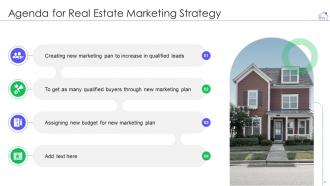
Diapositiva 2 : Esta diapositiva muestra la agenda para la estrategia de marketing inmobiliario.
Diapositiva 3 : Esta diapositiva presenta el índice de la estrategia de marketing inmobiliario.
Diapositiva 4 : esta diapositiva muestra el título de los temas que se cubrirán a continuación en la plantilla.
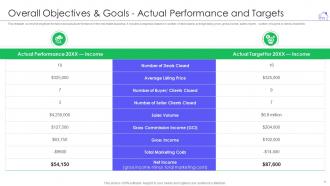
Diapositiva 5 : Esta plantilla cubre el rendimiento objetivo y el rendimiento real del negocio inmobiliario.
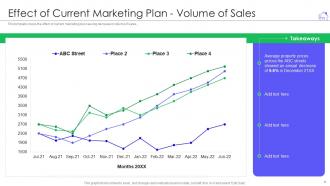
Diapositiva 6 : esta diapositiva muestra el efecto del plan de marketing actual que provoca una disminución en el volumen de ventas.
Diapositiva 7 : esta diapositiva muestra el título de los temas que se cubrirán a continuación en la plantilla.
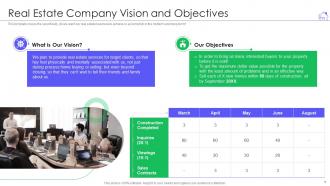
Diapositiva 8 : Esta diapositiva presenta la visión y los objetivos de la empresa de bienes raíces.
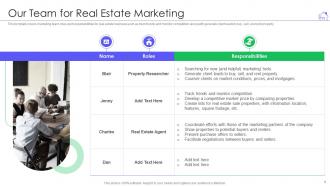
Diapositiva 9 : Esta plantilla cubre las funciones y responsabilidades del equipo de marketing para el negocio de bienes raíces.
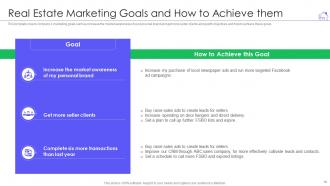
Diapositiva 10 : esta diapositiva representa los objetivos de marketing inmobiliario y cómo alcanzarlos.
Diapositiva 11 : esta diapositiva muestra el título de los temas que se cubrirán a continuación en la plantilla.
Diapositiva 12 : Esta diapositiva presenta el resultado de la investigación de la empresa realizada para conocer las preferencias de los clientes.
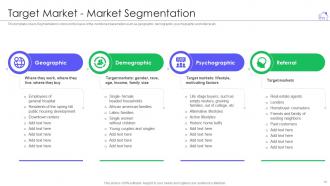
Diapositiva 13 : Esta diapositiva representa la segmentación realizada sobre la base de los parámetros mencionados.
Diapositiva 14 : esta diapositiva muestra el título de los temas que se cubrirán a continuación en la plantilla.
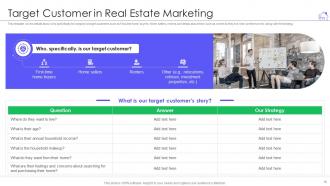
Diapositiva 15 : esta diapositiva presenta al cliente objetivo en el marketing inmobiliario.
Diapositiva 16 : esta diapositiva muestra la personalidad de los clientes compradores, incluida la edad de la ubicación, los ingresos, la experiencia de compra de viviendas, etc.
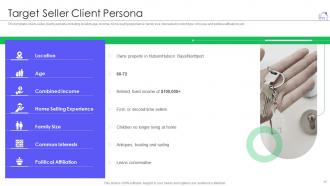
Diapositiva 17 : esta diapositiva representa la personalidad del cliente vendedor, incluida la ubicación, la edad, los ingresos, la experiencia de compra de vivienda, etc.
Diapositiva 18 : esta diapositiva muestra el título de los temas que se cubrirán a continuación en la plantilla.
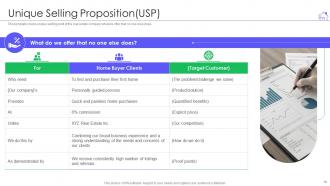
Diapositiva 19 : Esta diapositiva presenta el punto de venta único de la empresa de bienes raíces.
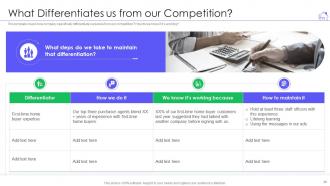
Diapositiva 20 : esta diapositiva muestra cómo la empresa se diferencia específicamente de la competencia.
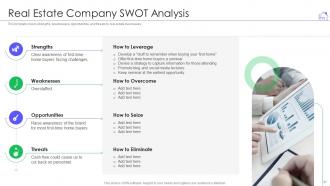
Diapositiva 21 : Esta plantilla cubre las fortalezas, debilidades, oportunidades y amenazas para los negocios de bienes raíces.
Diapositiva 22 : esta diapositiva muestra el título de los temas que se cubrirán a continuación en la plantilla.
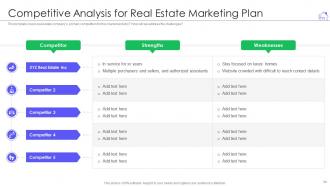
Diapositiva 23 : esta diapositiva representa el análisis competitivo para el plan de marketing inmobiliario.
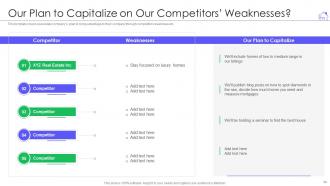
Diapositiva 24 : Esta diapositiva muestra nuestro plan para capitalizar las debilidades de nuestros competidores.
Diapositiva 25 : esta diapositiva muestra el título de los temas que se cubrirán a continuación en la plantilla.
Diapositiva 26 : Esta diapositiva presenta los materiales y métodos de marketing de la empresa de bienes raíces.
Diapositiva 27 : esta diapositiva cubre las estrategias de marketing de bienes raíces, como publicidad paga, publicidad gratuita, eventos, etc.
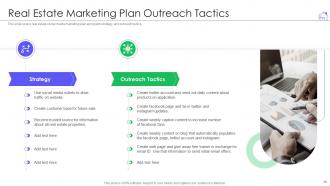
Diapositiva 28 : Esta diapositiva representa las tácticas de divulgación del plan de marketing inmobiliario.
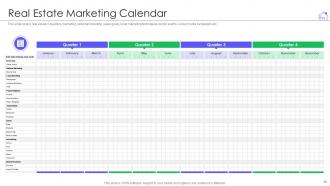
Diapositiva 29 : Esta diapositiva muestra el calendario de marketing inmobiliario de 4 trimestres, incluidos los objetivos de ventas, las técnicas de marketing local, los eventos públicos, las campañas en las redes sociales, etc.
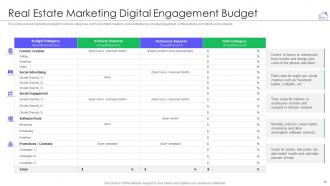
Diapositiva 30 : Esta diapositiva presenta el presupuesto de compromiso digital de marketing inmobiliario.
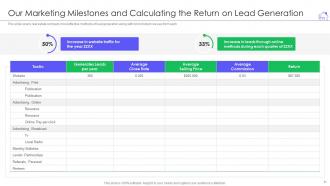
Diapositiva 31 : esta diapositiva muestra los métodos más efectivos de generación de oportunidades de venta de una empresa inmobiliaria junto con el tipo de retorno.
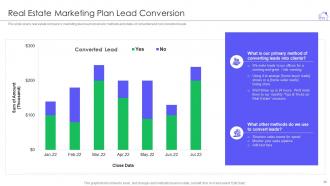
Diapositiva 32 : Esta diapositiva representa la conversión de clientes potenciales del plan de marketing inmobiliario.
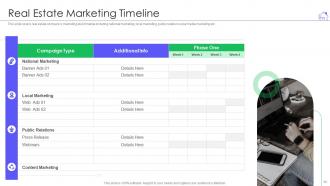
Diapositiva 33 : esta diapositiva muestra el cronograma del plan de marketing de la empresa de bienes raíces, incluido el marketing nacional, el marketing local, las redes sociales de relaciones públicas, etc.
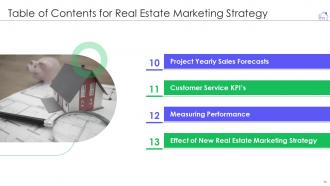
Diapositiva 34 : esta diapositiva muestra el título de los temas que se cubrirán a continuación en la plantilla.
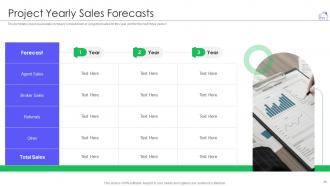
Diapositiva 35 : Esta diapositiva presenta el desglose de las ventas proyectadas de la compañía de bienes raíces para este año.
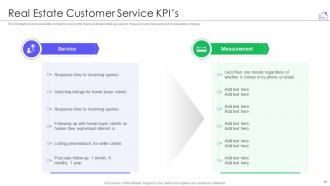
Diapositiva 36 : esta diapositiva muestra los indicadores clave de rendimiento de la empresa inmobiliaria que se utilizan para medir los servicios al cliente.
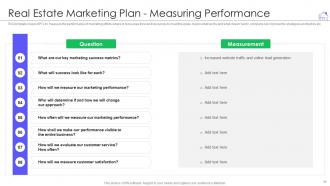
Diapositiva 37 : Esta diapositiva representa los KPI para medir el desempeño de los esfuerzos de marketing.
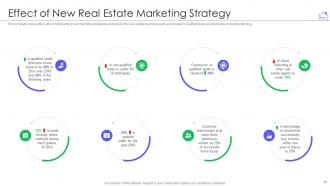
Diapositiva 38 : Esta diapositiva muestra el efecto de la nueva estrategia de marketing inmobiliario.
Diapositiva 39 : esta diapositiva muestra el título de los temas que se cubrirán a continuación en la plantilla.
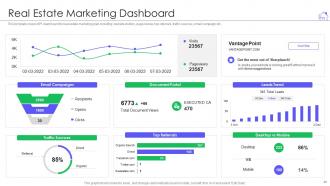
Diapositiva 40 : esta diapositiva presenta el tablero de KPI para el plan de marketing de bienes raíces, incluidos los visitantes del sitio web, la revisión de la página, etc.
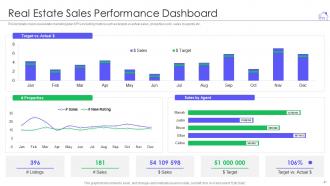
Diapositiva 41 : esta diapositiva muestra los KPI del plan de marketing inmobiliario, incluidas métricas como objetivos frente a ventas reales, propiedades vendidas, ventas por agentes, etc.
Diapositiva 42 : Esta diapositiva muestra iconos para la estrategia de marketing inmobiliario.
Diapositiva 43 : Esta diapositiva se titula Diapositivas adicionales para avanzar.
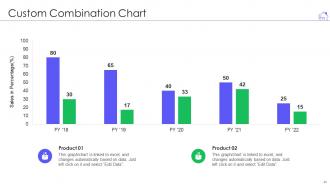
Diapositiva 44 : Esta diapositiva muestra el gráfico Combinación personalizada con una comparación de dos productos.
Diapositiva 45 : Esta diapositiva muestra un gráfico de áreas con una comparación de dos productos.
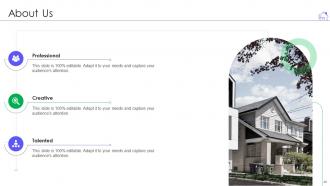
Diapositiva 46 : Esta es la diapositiva Acerca de nosotros para mostrar las especificaciones de la empresa, etc.
Diapositiva 47 : esta diapositiva proporciona un plan de 30 60 90 días con cuadros de texto.
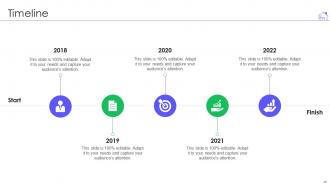
Diapositiva 48 : Esta es una diapositiva de la línea de tiempo. Mostrar datos relacionados con los intervalos de tiempo aquí.
Diapositiva 49 : Esta diapositiva presenta la hoja de ruta con cuadros de texto adicionales.
Diapositiva 50 : esta diapositiva muestra una lupa para resaltar información, especificaciones, etc.
Diapositiva 51 : Esta diapositiva muestra Post-It Notes. Publique sus notas importantes aquí.
Diapositiva 52 : Esta es una diapositiva de agradecimiento con dirección, números de contacto y dirección de correo electrónico.
Estrategia de marketing inmobiliario Diapositivas de presentación de Powerpoint con las 57 diapositivas:
Utilice nuestras diapositivas de presentación de Powerpoint de estrategia de marketing inmobiliario para ayudarlo de manera efectiva a ahorrar su valioso tiempo. Están listos para encajar en cualquier estructura de presentación.


















 Click here to view PDF
FAQs for Real estate marketing strategy
Honestly, you need to nail three things. First, get your online stuff looking sharp - website, social media, quality photos, virtual tours. People browse online before they'll even call you. Second thing is lead generation. Landing pages, email campaigns, local SEO so you actually show up when people search. The follow-up game is where most agents totally blow it though. Automated sequences for nurtures, staying in touch with past clients - referrals are literally everything in real estate. I'd say pick one weak spot and just focus on fixing that this month instead of trying to do everything at once.
Honestly, good photos are everything - people scroll so fast that blurry pics just get ignored. I'd stick to one platform at first, maybe Instagram or Facebook, and post like 3-4 times a week with local hashtags. LinkedIn's actually pretty solid too for getting referrals from other agents or mortgage people. Behind-the-scenes stuff works great - even just filming yourself walking through a property makes you seem more real, you know? Quick responses to comments really help with the algorithm thing. Oh, and don't spread yourself too thin trying to be everywhere at once. Pick one and nail it first.
Dude, content marketing is seriously a game changer for real estate. People need to trust you before they'll work with you - and buying a house is terrifying, honestly. When you're constantly posting neighborhood guides, market stuff, staging tips, whatever... you become the person they think of. They start seeing your name everywhere. I'd focus on your target neighborhoods first - maybe one post a week to start? The whole point is building that relationship way before they're ready to buy. It's like being their go-to person without being pushy about it.
Good lighting is everything - seriously, that plus steady shots will make or break your video. Grab a wide-angle lens or 360 camera to get full rooms. Always film during the day when natural light hits best. Trust me, I bombed some evening shots once and they looked awful! Move smoothly between spaces and definitely highlight cool stuff like renovated kitchens or weird architectural quirks. Keep it short though - 2-3 minutes tops because people's attention spans are basically nonexistent now. Oh, and test it on your phone first since that's how everyone watches these things anyway.
Yeah, you definitely need SEO if you want people to find your site. Most buyers are googling stuff like "homes for sale near me" constantly. Start with claiming your Google Business Profile - that's honestly the easiest win. Get your business listed consistently across directories too. Your website should target local keywords and maybe write some neighborhood guides or market updates. Oh, and make sure it works well on phones since everyone searches mobile now. I'd focus on the local stuff first because you'll probably see results faster there. The neighborhood content actually helps build trust with potential clients too.
Hey! Start with the basics - website traffic, form fills, and calls coming in. Then track your conversion rates (lead to appointment, appointment to deal). Cost-per-lead and ROI on ad spend are clutch because otherwise you're just hemorrhaging money. Social engagement and email opens show how your brand's doing. Oh, and definitely monitor listing views plus how long properties sit on the market. I set up a weekly dashboard to check everything - honestly saves me from realizing too late that something's tanking. Way easier to course-correct when you catch it early.
Honestly, knowing your local market is everything. You'll figure out what buyers actually want instead of just throwing random features at them. Suburban folks don't care about walkability scores like city people do, you know? Study recent sales first - see what's moving and what price points get attention. Then actually drive around those neighborhoods. Schools, commute times, that cute coffee shop everyone loves - this stuff sells houses. I mean, you could mention granite countertops all day, but if buyers want good schools, you're missing the point. Timing matters too. Some areas have sweet spots for listing.
Dude, email marketing is seriously worth it for real estate. Most people take forever to actually buy something, so you've gotta stay on their radar. I'd segment your lists - like buyers vs sellers, different areas, whatever makes sense. Send them market updates, new listings, cool neighborhood stuff. Way cheaper than running ads everywhere and honestly? The ROI is nuts. My buddy Sarah closed a $400k deal last month from an email she sent back in March. Wild, right? Just start simple - maybe a monthly newsletter. Don't overthink it.
Honestly, consistency is everything - your vibe needs to be the same whether someone sees your Instagram or drives past your yard sign. Post client wins and neighborhood stuff regularly. Behind-the-scenes content works great too. Get decent headshots done (worth the investment, trust me). Instead of trying to help everyone, pick your niche - maybe you're the downtown condo person or the suburban family expert. People want to work with someone they feel like they know, so let your personality show through. Your messaging should feel like *you* across every platform.
Honestly, virtual tours are where it's at right now - people can check out properties without leaving home. Drones get you those crazy good overhead shots that really make listings stand out. AI chatbots handle all the basic questions so you're not glued to your phone 24/7, which is a lifesaver. AR stuff lets buyers see how their furniture would look, though I feel like that's still pretty niche. Prices have dropped a ton lately too. If you can only do one thing, I'd go with VR tours first - everyone I know using them is seeing actual results.
So basically, luxury homes are all about that exclusive lifestyle vibe - you're selling the dream with fancy photos and targeting people through high-end magazines or private events. Affordable housing? Totally different game. You focus on practical stuff like good schools, easy commutes, and payment programs. Social media and community partnerships work way better here. Honestly, the biggest mistake I see is people trying to use the same approach for both. Match your message to what actually matters to each buyer type, and definitely advertise where they're actually looking.
Honestly, the hardest part is how fast you have to switch up your whole approach. Hot markets? You can push urgency and FOMO. But when things slow down, buyers want way more hand-holding and proof of value. Sellers are the worst though - they swing between thinking their house is worth a million more than it is, then freaking out when it doesn't sell in a week. Your ad spend has to be flexible too since different platforms work better depending on what's happening. I learned to build campaigns I can completely flip instead of committing to stuff long-term.
Dude, skip the boring "3 bed 2 bath" stuff and paint the actual lifestyle instead. Like, describe Sunday coffee in that gorgeous kitchen or family movie nights in the cozy living room. Buyers fall for the emotion first, then they'll justify it with facts later - which honestly still blows my mind how well this works. You want them picturing their own life there, you know? Write it like you're telling me about your friend's incredible house after dinner there, then just sprinkle in the specs naturally. Way more effective than listing features.
Just be straight up about everything - don't hide foundation cracks or sketchy neighborhood stuff. I've watched agents get completely screwed over trying to cover up problems. Your photos shouldn't mislead people either, like weird angles that make tiny rooms look huge. Oh and obviously follow fair housing rules, can't discriminate against anyone. Honestly? Building trust beats trying to trick buyers every single time. Sure, being transparent might cost you a sale here and there, but it's way better than dealing with lawsuits later. Buyers appreciate honesty more than you'd think.
Working with other local businesses is honestly a game-changer for getting referrals. I'd start with the obvious ones - mortgage brokers, home inspectors, contractors. But don't sleep on random spots like coffee shops or gyms either. Some of my best leads came from just chatting at the hardware store (weird, I know). The trick isn't being transactional about it. Build actual relationships first. Maybe create a little network where you all refer clients back and forth? I'd hit up 3-5 businesses this week and pitch a simple referral swap. Trust me, it works way better than cold calling strangers.
-
Excellent design and quick turnaround.
-
Visually stunning presentation, love the content.