

Real Estate Investment Business Plan Powerpoint Presentation Slides





Try Before you Buy Download Free Sample Product
 Impress Your
 Audience
 100%
100% Editable
 Save Hours
 of Time


If you are into the real estate business, then it is very likely you will need to present investment plan to target buyers. That is why our team of expert designs and researchers have come up with 61 slides Real Estate Investment Business Plan Powerpoint Presentation Slides. This PowerPoint presentation on real estate business will surely save you a lot of time and resources. As compared to making a PPT presentation from scratch. The real estate business plan PowerPoint presentation example has various slides like real estate snapshot, executive summary, market activity, real estate trends and demand, real estate opportunities, market analysis, market outlook, real estate sales growth, real estate home sales, real estate price index, real estate mortgage rates, real estate REO, and many more. This PPT on real estate business plan will provide necessary information to land developers and people working in the real estate business. This predesigned property investment PowerPoint presentation is fully editable and can be customized according to your needs. You can use this PowerPoint presentation on real estate business for topics like real property, residential premises, residential trends, land development, premises investing, real estate economics, land appraisal, estate industry overview etc. Close your business deal with our Real Estate Investment Business Plan Powerpoint Presentation Slides. Hurry up! Download this real estate PowerPoint presentation and get those potential buyers. Bring the core concept into clear focus with our Real Estate Investment Business Plan Powerpoint Presentation Slides. Identify important elements of the doctrine.
People who downloaded this PowerPoint presentation also viewed the following :
Content of this Powerpoint Presentation
Slide 1: This slide introduces Real Estate Investment Business Plan. State your company name and begin.
Slide 2: This slide presents Table Of Contents with Title and text boxes to state.
Slide 3: This slide is an agenda slide. You can use as per your business need.
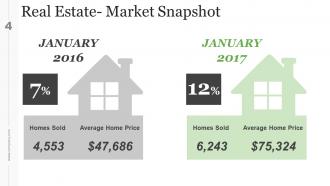
Slide 4: This slide presents Real Estate- Market Snapshot which includes Average Home Price and Homes Sold.
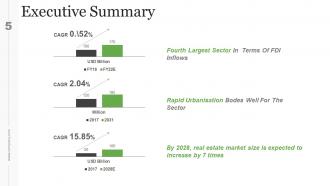
Slide 5: This slide presents Executive Summary in a graphical form.
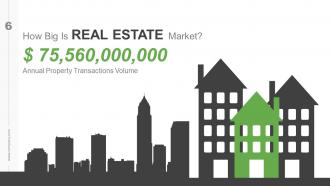
Slide 6: This slide shows How Big Is REAL ESTATE Market. Showcase your Annual Property Transactions Volume here.
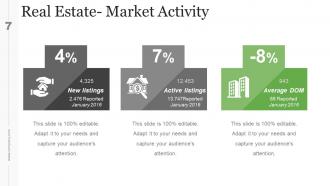
Slide 7: This is Real Estate- Market Activity slide. With this you can showcase your- Active listings, New listings, Average DOM.
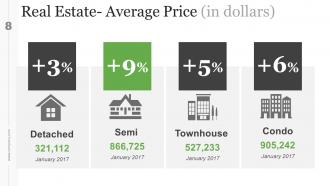
Slide 8: This slide shows Real Estate- Average Price (in dollars) with respect to- Detached, Semi, Townhouse, Condo.
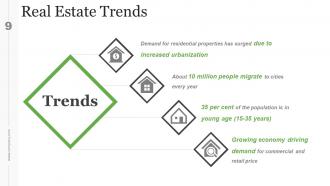
Slide 9: This slide showcases Real Estate Trends. You can add your own trends as per your business need.
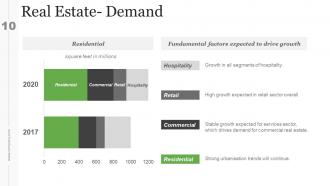
Slide 10: This slide showcases Real Estate- Demand. You can compare in this two years data and can use it for hospitality, retail, commercial, residential purposes.
Slide 11: This slide presents Real Estate Opportunities. You can add your opportunities as per your requirement.
Slide 12: This slide shows Real Estate Major Investments. State your major investments here.
Slide 13: This slide showcases Real Estate Policy Support. You can add them here.
Slide 14: This is a Coffee Break slide for a halt. You can add/ edit content as per need.
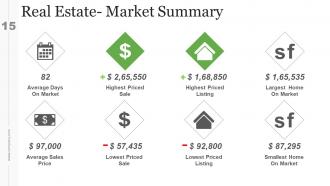
Slide 15: This slide presents Real Estate- Market Summary showing- Average Days On Market, Highest Priced Sale, Largest Home On Market, Highest Priced Listing, Smallest Home On Market, Lowest Priced Sale, Average Sales Price, Lowest Priced Listing.
Slide 16: This slide presents Real Estate- Market Analysis Infographic. Use the same or change as per need.
Slide 17: This slide presents Real Estate Market Outlook with imagery and text boxes.
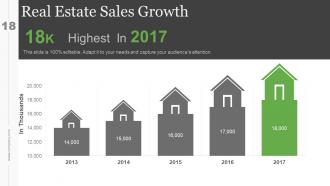
Slide 18: This slide displays Real Estate Sales Growth in a creative graphical form. Present the data for five consecutive years here.
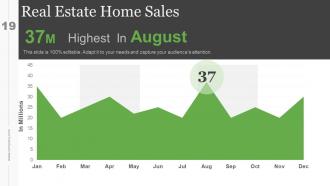
Slide 19: This slide shows a graphical representation of Real Estate Home Sales. Showcase your Home Sales here.
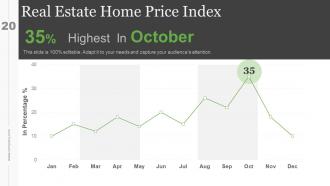
Slide 20: This slide displays Real Estate Home Price Index line chart. You can showcase your Home Price Index here.
Slide 21: This slide showcases Real Estate Prices (Projected Appreciation). State them in a graphical form here.
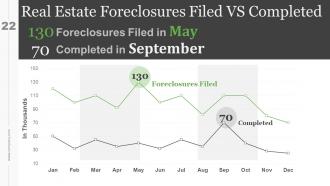
Slide 22: This slide presents Real Estate Foreclosures Filed VS Completed line chart. You can use it for analysis, comparison etc.
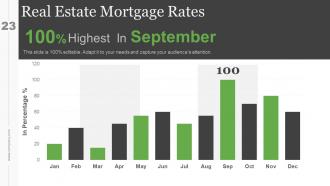
Slide 23: This slide shows Real Estate Mortgage Rates. You can create your own rate chart by using our editable slide.
Slide 24: This slide showcases Real Estate REO & Short Sales graph. You can add your sales data and use it accordingly.
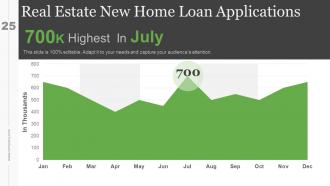
Slide 25: This slide showcases Real Estate New Home Loan Applications. You can modify/ change as per need.
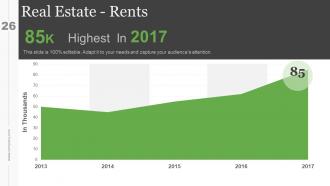
Slide 26: This slide another slide showcasing Real Estate New Home Loan Applications. You can modify/ change as per need.
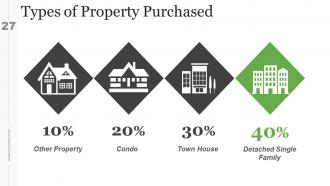
Slide 27: This slide states various Types of Property Purchased such as- Town House, Detached Single Family, Other Property, Condo.
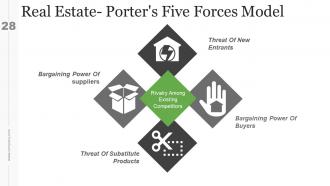
Slide 28: This slide showcases Real Estate- Porter's Five Forces Model involving- Threat Of New Entrants, Bargaining Power Of Buyers, Bargaining Power Of Suppliers, Threat Of Substitute Products, Rivalry Among Existing Competitors.
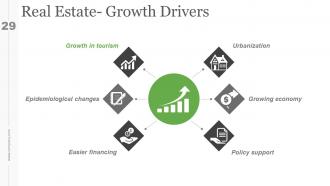
Slide 29: This slide shows Real Estate- Growth Drivers consisting of the following six drivers - Growth in tourism, Epidemiological changes, Easier financing, Policy support, Growing economy, Urbanization.
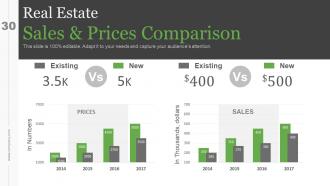
Slide 30: This slide showcase Real Estate- Sales & Prices Comparison. Use it for comparing Sales and Prices.
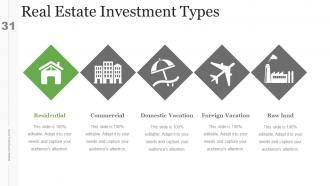
Slide 31: This slide shows Real Estate Investment Types which include- Residential, Commercial, Domestic Vacation, Foreign Vacation, Raw land. You can add your own or make use of these listed here.
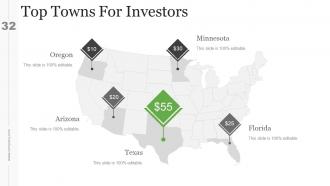
Slide 32: This slide displays a global presentation of Top Towns For Investors. You can use it as per your business need.
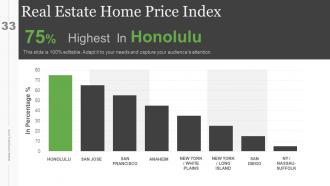
Slide 33: This slide showcases Real Estate Home Price Index graphically. You can modify it as per need.
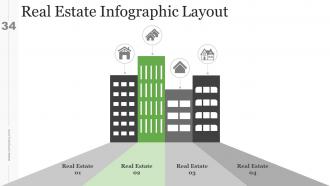
Slide 34: This slide presents Real Estate Infographic Layout. You can modify/ alter it as per need.
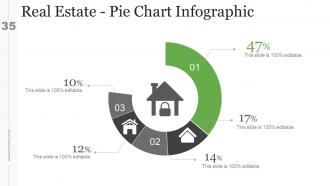
Slide 35: This slide displays Real Estate - Pie Chart Infographic with text boxes to state.
Slide 36: This slide presents Real Estate Icon Set. Add/ remove icons as per your need.
Slide 37: This slide is titled ADDITIONAL SLIDES to move forward. You can modify/ alter content as per need.
Slide 38: This slide represents Our Mission. State your mission, goals etc.
Slide 39: This is Meet Our Team slide with name, designation etc. to state.
Slide 40: This is an About Us slide. State company/ team specifications here.
Slide 41: This is Real Estate Main Goal slide with target imagery. State your main goals here.
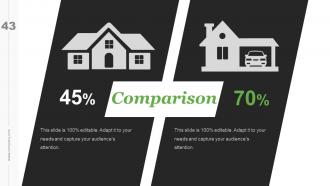
Slide 42: This is a Comparison slide to show comparison of two entities.
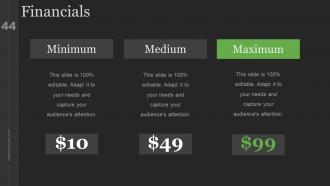
Slide 43: This is a Financial Score slide to show financial aspects here.
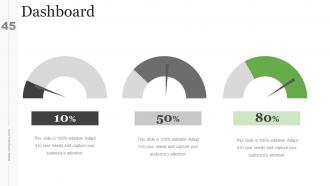
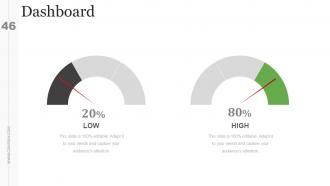
Slide 44: This is a Dashboard slide to state Low and High aspects, kpis, metrics etc.
Slide 45: This is a Timeline slide to present important dates, journey, evolution, milestones etc.
Slide 46: This is also a Timeline slide to present important dates, journey, evolution, milestones etc.
Slide 47: This is a Post It slide to mark events, important information etc.
Slide 48: This is a News Paper slide to flash company event, news or anything to highlight.
Slide 49: This is a Puzzle image slide to show information, specification etc.
Slide 50: This slide shows Target image with text boxes to state.
Slide 51: This is a Circular image slide to show information etc.
Slide 52: This is a Venn slide to show information, specifications etc.
Slide 53: This is a Mind Map image slide with text boxes to fill information.
Slide 54: This is a Matrix slide to show information, comparison, specifications etc.
Slide 55: This is a Lego image slide. State information, specifications etc. here.
Slide 56: This is a Hierarchy Chart slide to show team information, organizational specifications etc.
Slide 57: This is an Idea slide to state a new idea or highlight specifications/ information etc.
Slide 58: This slide shows a Magnifying glass with text boxes.
Slide 59: This is a Bar Graph slide. State specifications, comparison of products/ entities here.
Slide 60: This is a Funnel slide. Showcase the funnel aspect of your team, company, product etc.
Slide 61: This is a Thank You slide with Email, Address# street number, city, state, Contact Numbers.
Real Estate Investment Business Plan Powerpoint Presentation Slides with all 63 slides:
Create a jolly epidemic with our Real Estate Investment Business Plan Powerpoint Presentation Slides. It ensures good humor is infectious.
-
Real Estate Investment Business Plan
-

Table Of Contents
-
Agenda Slide
-
Real Estate Market Snapshot
-
Executive Summary
-
How Big Is REAL ESTATE Market
-
Real Estate Market Activity
-
Real Estate Average Price in dollars
-
Real Estate Trends
-
Real Estate Demand
-
Real Estate Opportunities
-

Real Estate Major Investment
-
Real Estate Policy Support
-

Coffee Break
-
Real Estate Market Summary
-
Real Estate Market Analysis Infographic
-
Real Estate Market Outlook
-
Real Estate Sales Growth
-
Real Estate Home Sales
-
Real Estate Home Price Index
-

Real Estate Prices Projected Appreciation
-
Real Estate Foreclosures Filed VS Completed
-
Real Estate Mortgage Rates
-

Real Estate REO Short Sales
-
Real Estate New Home Loan Applications
-
Real Estate Rents
-
Types of Property Purchased
-
Real Estate Porter s Five Forces Model
-
Real Estate Growth Drivers
-
Real Estate Sales Prices Comparison
-
Real Estate Investment Types
-
Top Towns For Investors
-
Real Estate Home Price Index
-
Real Estate Infographic Layout
-
Real Estate Pie Chart Infographic
-
Real Estate Icon Set
-

Additional Slides
-

Additional Slides
-

Our Mission
-

Meet Our Team
-

About Us
-

Real Estate Main Goal
-
Comparison Slide
-
Financials
-
Dashboard
-
Dashboard
-
Timeline
-
Real Estate Investment Business Plan Sli
-
POST IT
-

Newspaper
-

Puzzle
-
Target
-
Circular
-
Venn
-

Mind Map
-

Matrix
-
Lego
-

Hierarchy
-
Idea
-
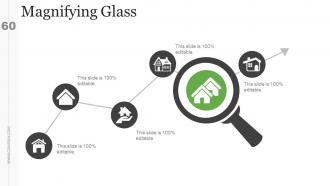
Magnifying Glass
-
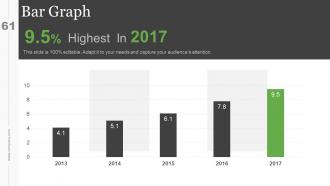
Bar Graph
-

Funnel
-

Thank You
FAQs for Real Estate Investment Business Plan
So you'll need an executive summary, market analysis, and your investment strategy - like are you flipping or going the rental route? Financial projections are huge too, especially cash flow models. Honestly, most people totally phone in the market analysis part, but that's where you prove you actually get the local scene and property values. Also throw in your funding sources and exit strategies because investors want to see you've mapped out how to make money AND bail if things go sideways. Oh, and don't overcomplicate it at first - grab a basic template and build from there.
Start with the numbers first - cash flow, cap rates, neighborhood comps. Trust me, emotions will screw you over if you lead with those (been there). Calculate everything: repairs, vacancy allowance, property taxes, insurance. Those last two especially can torpedo a deal that looked good on paper. Research rental demand in the area too. Honestly, I'd set up a basic spreadsheet with your must-haves vs nice-to-haves so you're not flip-flopping on criteria for each property. Makes it way easier to stay consistent when you're looking at multiple places.
Look, you need five main numbers before jumping into any deal. Cash flow is huge - just rental income minus expenses, shows what you're actually pocketing monthly. Cap rate and cash-on-cash return help you compare it to other investments. Appreciation projections matter too, though honestly predicting those right now is kinda anyone's guess. Also run the exit numbers - what you'd walk away with selling in 5-10 years. Oh and definitely stress test everything with conservative estimates because properties love to hit you with random expenses you never saw coming.
Honestly, you gotta dig into your local market data first. Pull census info, income levels, age ranges - all that boring stuff that actually matters. Check recent sales and rental rates too (MLS has most of this free). I spend way too much time on Zillow doing this, but whatever works. Figure out who's actually buying - first-time buyers, investors, people downsizing. Then just match what you're doing to what they can afford. Demographics don't lie, even if they're not exciting to research.
Don't dump everything into one area or property type - spread it around. Cash reserves are huge because repairs and vacancies pop up way more than you'd expect (learned that the hard way). Get professional inspections on every deal and actually research the local market. Insurance is obvious but partnering with someone experienced on your first couple properties? Game changer. Screen tenants like your life depends on it if you're renting. Oh, and start small - figure out your systems first, then you can think bigger once you're not scrambling constantly.
First thing - figure out who you're actually trying to reach. Young professionals? Families? Investors? Each group hangs out in totally different places. Social media's obvious, but local networking events work great too, plus partnering with real estate agents. I'd focus on digital ads, optimizing your listings, and definitely do referral bonuses for current tenants (that's honestly underrated). Content marketing's cool if you have time but not essential. Track everything though - you want actual qualified leads, not just random people wasting your time. Start with like 2-3 channels max and see what sticks before going crazy.
Location's literally everything - I can't stress this enough. Before you throw money at any property, dig deep into neighborhood trends, job growth, school ratings, crime stats. Also check what development's coming down the pipeline. I bought this "amazing deal" once in an area that just kept declining... never again lol. What's your plan though - flipping, renting, or holding long-term? Each one needs different location criteria. Pick 2-3 neighborhoods and really get to know their market inside out first.
Hey! So I'd set targets first - maybe 8-12% rental income, 15-20% total ROI with appreciation. Track cash flow every month, occupancy quarterly, property values once a year. Honestly, the maintenance costs under 10% rule saved my ass more than once. Diversification matters too - I never put more than 30% in one market or property type. Oh, and actually review these numbers monthly! I used to set goals then completely forget about them for months. Short sentences work. Longer ones with natural flow keep things interesting.
So basically you want to have a few backup plans ready. Banks are cheapest but slow as hell and super picky about everything. Private lenders? Way faster but you'll pay through the nose. Hard money's another option, plus partnerships if you know anyone with cash. Oh, and don't sleep on seller financing - seriously, some of the best deals I've seen used that. Lease-to-own too. Map out maybe 2-3 realistic options with real numbers so you're not panicking when you actually find something good. Each one affects your cash flow differently, so run those projections now.
Dude, tech makes deal hunting so much easier. I'd start with BiggerPockets or RealData for crunching numbers - way faster than doing it by hand. Zillow and Redfin are solid for tracking what's happening in different neighborhoods. Oh, and get some kind of CRM system going. I learned this the hard way when I had like 15 deals scattered across random notes and emails. Total nightmare. Social media's also clutch for finding motivated sellers, though that takes more time to figure out. Honestly don't try to use everything at once. Pick maybe two tools that'll solve your biggest headaches first, then add more later.
Honestly, cash-on-cash return is what I'd watch first - just your annual cash flow divided by what you put in upfront. Cap rates matter too (NOI divided by property value), plus your total ROI with appreciation factored in. Empty units will absolutely wreck you, so track occupancy rates religiously and monitor rent growth year over year. I also keep tabs on acquisition costs and how long it takes to get new tenants in after someone moves out - tells you if you're actually running things smoothly. Throw it all in a basic spreadsheet and check monthly so you catch problems before they get ugly.
Honestly, market trends are like your GPS for real estate decisions - they tell you when to buy, hold, or bail. Rising interest rates? Your financing gets pricier, so maybe focus on cash deals or stuff that pays immediately. I always check population growth because that shows where demand's headed long-term. Employment data matters too since unemployed people can't pay rent (obviously). Here's the thing though - if there's tons of construction happening, you might want to look elsewhere before oversupply kills your profits. Check local market reports every few months and tweak your strategy accordingly.
Look, from day one you gotta have backup plans ready. Buy-and-hold gives you steady cash flow, flipping gets you quick money, and timing sales right during hot markets is gold. BRRRR strategy is insanely popular right now - buy, fix up, rent out, refinance, then do it all over again. Don't sleep on 1031 exchanges either for dodging taxes when you upgrade. Market timing? Honestly overrated, but flexibility saves your butt when unexpected stuff happens. Write this all down in your business plan with clear triggers - like when to sell based on ROI goals. Way better than making emotional decisions later.
Dude, property management will literally make or break you. I've seen people lose their shirts because they half-assed this part. Good managers keep tenants happy, handle repairs fast, and your cash flow stays solid. Bad ones? Money just disappears. You can do it yourself or hire someone, but either way you need real systems - tenant screening, collecting rent, maintenance stuff, inspections. Oh and build those management costs into your numbers upfront. I learned that one the hard way. Don't wing it if you want this to actually work long-term.
First thing - pick your business structure. LLC or corporation, whatever works for your situation. Licensing is honestly such a headache because every state does it differently. If you're getting investors involved, securities laws become a thing too. Fair housing rules and zoning stuff in your area matter as well. Oh, and insurance - you definitely want liability, property, and errors & omissions coverage. I'd probably talk to a real estate attorney pretty early on since fixing mistakes later gets expensive fast.
-
Excellent template with unique design.
-
Excellent design and quick turnaround.
-
Excellent template with unique design.