


Reward Management Powerpoint Presentation Slides





Try Before you Buy Download Free Sample Product
 Impress Your
 Audience
 100%
100% Editable
 Save Hours
 of Time


To appreciate your employees and to motivate them, rewards and appreciation play a very crucial role. Present and manage your company’s rewards and benefits using our reward management PowerPoint template. This reward structure PowerPoint consists of a total of 32 content ready complete slides. This human resource management PPT deck comprise of templates like basic employee compensation layout, employee compensation components, employee compensation break up, employee compensation system, employee compensation plan types, employee compensation package, compensation plan framework, employee compensation structure, employee compensation sheet, employee compensation report sample, etc. The Compensation & Benefits PPT deck also includes additional templates our target, financial, our mission, about us, our team, etc. All the PPT slides are completely editable and you can make changes as per your needs. Quickly grab and download this reward structure PPT deck to let your employees know the perks of working in your organization. Get a chance to express visually. Generate action to establish equality with our Reward Management Powerpoint Presentation Slides. It helps identify discriminatory aspects.
People who downloaded this PowerPoint presentation also viewed the following :
Content of this Powerpoint Presentation
Slide 1: This slide introduces Reward Management. State Your Company Name and begin.
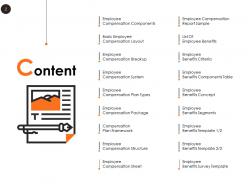
Slide 2: This slide shows Content of the presentation.
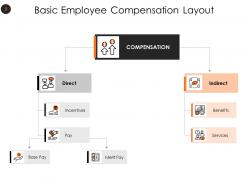
Slide 3: This slide shows Basic Employee Compensation Layout.
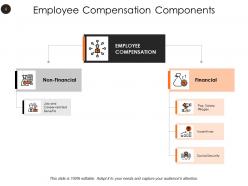
Slide 4: This slide presents Employee Compensation Components describing- Pay, Salary, Wages, Incentives, Social Security, Job and Career-related Benefits.
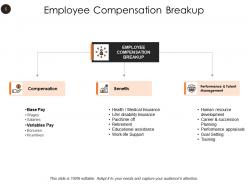
Slide 5: This slide displays Employee Compensation Breakup describing- Benefits, Compensation, Performance & Talent Management.
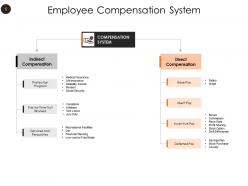
Slide 6: This slide represents Employee Compensation System describing- Protection Program, Pay for Time Not Worked, Services and Perquisites, Base Pay, Merit Pay, Incentive Pay, Deferred Pay.
Slide 7: This slide showcases Employee Compensation Plan Types as Territory Volume, Straight Salary, Salary Plus Commission, Commission Only.
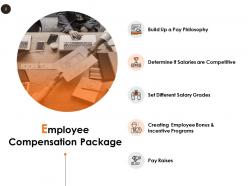
Slide 8: This slide shows Employee Compensation Package describing- Build up a Pay Philosophy, Set Different Salary Grades, Determine if Salaries are Competitive, Pay Raises, Creating Employee Bonus & Incentive Programs.
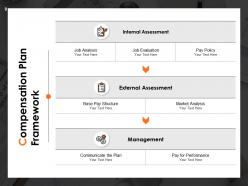
Slide 9: This slide presents Compensation Plan Framework with Internal Assessment, External Assessment, Management.
Slide 10: This slide displays Employee Compensation Structure describing salary break-up.
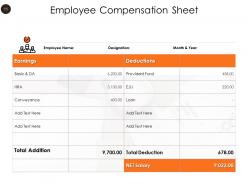
Slide 11: This slide represents Employee Compensation Sheet showing earnings, deductions and net salary.
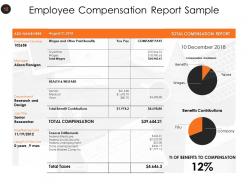
Slide 12: This slide showcases Employee Compensation Report Sample.
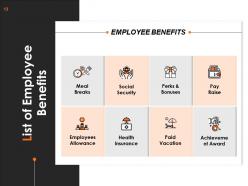
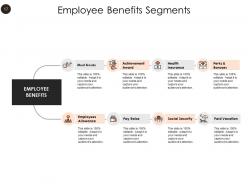
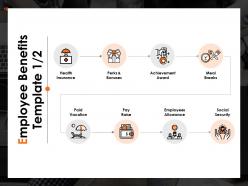
Slide 13: This slide shows List of Employee Benefits describing- Meal Breaks, Social Security, Perks & Bonuses, Pay Raise, Employees Allowance, Health Insurance, Paid Vacation, Achievement Award.
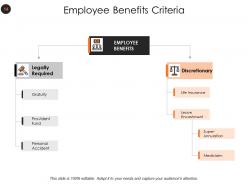
Slide 14: This slide presents Employee Benefits Criteria in hierarchy form.
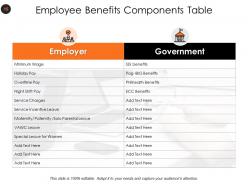
Slide 15: This slide displays Employee Benefits Component Table describing benefits provided by employer and government.
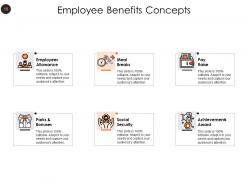
Slide 16: This slide represents Employee Benefits Concept with- Meal Breaks, Social Security, Perks & Bonuses, Pay Raise, Employees Allowance, Achievement Award.
Slide 17: This slide shows Employee Benefits Segments.
Slide 18: This slide shows Employee Benefits Template. You can add or edit data as per requirements.
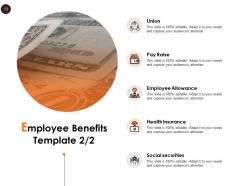
Slide 19: This is another slide presenting Employee Benefits Template.
Slide 20: This slide represents Employee Benefits Survey Template with scale range from strongly agree to strongly disagree.
Slide 21: This is Our Target slide. State your targets here.
Slide 22: This is a Financial slide. Show your finance related stuff here.
Slide 23: This is Our Mission slide with related imagery and text.
Slide 24: This is About Us slide to show company specifications etc.
Slide 25: This is a Venn slide with text boxes.
Slide 26: This is Our Team slide with names and designation.
Slide 27: This is another template slide for Our team.
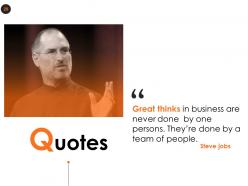
Slide 28: This is a Quotes slide to convey message, beliefs etc.
Slide 29: This is another Quotes slide.
Slide 30: This slide is titled as Post It. Post your important notes here.
Slide 31: This is a Bulb or Idea slide to state a new idea or highlight information, specifications etc.
Slide 32: This is a Thank You slide with address, contact numbers and email address.
Reward Management Powerpoint Presentation Slides with all 32 slides:
Use our Reward Management Powerpoint Presentation Slides to effectively help you save your valuable time. They are readymade to fit into any presentation structure.




FAQs for Reward Management
You'll want four key pieces for a solid reward system. Start with competitive base pay for your area. Add performance bonuses tied to specific, clear goals. Benefits matter too, but go beyond the basic stuff - figure out what your people actually want. Here's what most companies miss though: recognition without money attached. Seriously, just acknowledging good work goes way further than you'd think. Be transparent about how you decide rewards, and review everything regularly so it stays fair. Don't just copy what everyone else does - match your rewards to what motivates YOUR team and hits your business targets.
Honestly, most companies mess this up big time. First thing - figure out what behaviors actually move the needle for your goals. Want innovation? Then reward people for taking smart risks, not just playing it safe. Check if your bonuses, promotions, and recognition are all pointing in the same direction. I've seen so many places talk about teamwork while only rewarding individual wins - makes no sense! Your business changes, so don't set it and forget it. Do a quick audit every few months of what you're currently rewarding vs what you actually need. Sometimes the gap is pretty shocking.
Honestly, if your team isn't engaged, your reward programs are basically throwing money at a wall. Engaged people actually give a damn about recognition - they'll work harder for both cash bonuses and those cheesy "employee of the month" things. But disengaged employees? They'll take the rewards and shrug. What you want is rewards that make people more engaged, which then improves everything else - performance, retention, the whole deal. I learned this the hard way at my last job. Best thing you can do is just ask your team what actually gets them excited.
So basically, intrinsic stuff like feeling autonomous and having purpose keeps people motivated way longer than just throwing money at them. Cash and bonuses give you that quick hit, but honestly they can backfire if you overdo it - especially with creative work where people start chasing the reward instead of actually caring about what they're doing. Pretty weird how that works. For boring, routine tasks though? Extrinsic rewards are perfect since you need clear targets anyway. Best approach is making sure people aren't stressed about money first, then focus on giving them work that actually means something and room to grow.
Oh man, there's so many ways these things can backfire. Most companies reward the wrong stuff - like pushing individual performance when they actually need people collaborating. Then they make everything super complicated so nobody understands what they're supposed to do. Bad communication screws things up too. Unrealistic targets are probably the worst though - nothing kills motivation like impossible goals. I've seen this happen at my old job actually. Start simple, get people's input from the beginning, and make sure you're rewarding what you actually want to see happen.
So here's the thing - data shows you what actually motivates people instead of just guessing. Track which rewards boost performance and keep people around longer. I've noticed remote workers usually want flexibility while office people love public recognition (weird but true). You can also figure out better timing instead of random bonuses that don't hit right. Start small though - just monitor how performance changes after rewards and check satisfaction scores. That'll tell you what's worth your budget and what isn't. Pretty straightforward once you see the patterns.
Look, feedback is everything when it comes to rewards at work. You can't just set up a system and hope it works - people change, priorities shift, and what motivated someone last year might be totally irrelevant now. Regular check-ins tell you if your rewards actually matter to employees or if they're just going through the motions. Honestly, most companies get this wrong because they assume they know what people want. Surveys help, but so do casual conversations with managers and those "why are you staying" interviews. The whole point is catching problems early so you can adjust before people start looking elsewhere.
Oh man, you've hit on something huge here. Different cultures want completely different things from rewards. Like, Americans might love individual bonuses and public shoutouts, but in Japan that could actually backfire and embarrass people. Scandinavians are obsessed with work-life balance perks, while other places couldn't care less about flexible hours. I learned this the hard way at my last job actually. Your best move? Survey your teams directly and build programs that can flex based on location. Don't try to force the same cookie-cutter approach everywhere - it'll bomb.
Track turnover rates and engagement scores first - those tell you the most. Performance metrics matter too, but honestly, pulse surveys are where you'll get the real tea about what people actually want. Leadership usually gets this completely wrong. Monitor internal promotions and check if your pay's competitive. Everyone's motivated differently though, so don't put all your eggs in one basket. I'd pick maybe 3-4 things you can actually track every quarter without going crazy. Oh, and compare before/after numbers when you make changes - otherwise you're just guessing.
Honestly, transparency is huge here. Make your salary bands and promotion requirements super clear - don't hide this stuff like it's classified info. Document everything so people can actually see what they need to hit for raises or promotions. Also, audit your pay regularly for gender/demographic gaps because that's where things get messy fast. Your managers need training too since they're usually the ones screwing up evaluations (no offense to managers, but it's true). Oh, and regular check-ins help. If you can't explain why someone got a reward, that's your red flag right there.
Honestly, everyone's obsessing over personalized rewards now. Some people want career development stuff, others just want extra PTO or help with student loans. It's wild how different preferences can be. Real-time recognition is replacing those awkward annual reviews (thank god), and pay transparency laws are forcing companies to actually show their cards. The generic benefits package thing? Totally dead. Oh, and you should definitely survey your team first - I was shocked when I found out half my people cared more about flexible schedules than raises. Creative total rewards packages are where it's at now.
Honestly, just tie manager bonuses to diversity metrics - like hiring numbers or retention rates across different groups. Works way better than those feel-good diversity trainings that nobody remembers. Also check if your current rewards are accidentally biased against certain achievements or roles. Maybe women crush it at collaboration but you only reward individual sales numbers, you know? Pick 2-3 diversity goals that actually matter to your company and bake them right into performance reviews. It's pretty straightforward once you stop overthinking it.
Honestly, non-monetary stuff works way better than you'd think for keeping people around. Recognition hits different than cash - bonuses just vanish into rent payments, but flexible schedules or cool projects stick with people. Professional development opportunities are huge too. Everyone wants to feel like they're growing, not just collecting paychecks. The trick is actually paying attention to what each person cares about. Some want work-life balance, others crave challenging assignments. It's cheaper than raises and taps into that deeper motivation stuff. Your team will be way more engaged when they feel valued as humans, not just productivity machines.
Honestly, start by just asking people what they actually want - surveys, quick one-on-ones, whatever works. Leadership usually gets this stuff completely wrong lol. Once you've got the data, look for patterns. Maybe younger folks want flexibility while others prefer traditional benefits. The biggest mistake? Not following up on what you hear. If someone suggests something and you implement it, tell them! Even small pilot programs work better than guessing. Oh, and don't assume everyone wants the same thing - that's where most companies mess up.
Yeah so remote work totally changed the rewards game. You can't just walk over and high-five someone anymore, which honestly was half the fun of managing people. Now it's all about home office stipends, flexible PTO, and wellness perks - stuff that actually matters when you're stuck at home. Virtual celebration events work better than you'd think, but forget the old pizza party thing because Zoom pizza hits different (and not in a good way). The key is getting personal with recognition and finding ways to make people feel connected to the company culture from their couch.
-
Excellent template with unique design.