

Gestão de Recompensas Slides de Apresentação em PowerPoint





Try Before you Buy Download Free Sample Product
 Impress Your
Audience
 100%
Editable
 Save Hours
of Time


Para apreciar seus funcionários e motivá-los, recompensas e reconhecimento desempenham um papel muito crucial. Apresente e gerencie as recompensas e benefícios da sua empresa usando nosso modelo de apresentação de gerenciamento de recompensas. Esta estrutura de recompensas em PowerPoint consiste em um total de 32 slides completos prontos para conteúdo. Este deck de apresentação de gestão de recursos humanos inclui modelos como layout básico de compensação de funcionários, componentes de compensação de funcionários, divisão de compensação de funcionários, sistema de compensação de funcionários, tipos de plano de compensação de funcionários, pacote de compensação de funcionários, estrutura do plano de compensação, estrutura de compensação de funcionários, planilha de compensação de funcionários, amostra de relatório de compensação de funcionários, etc. O deck de apresentação de Compensação e Benefícios também inclui modelos adicionais como nosso alvo, financeiro, nossa missão, sobre nós, nossa equipe, etc. Todos os slides do PowerPoint são completamente editáveis e você pode fazer alterações de acordo com suas necessidades. Pegue e baixe rapidamente este deck de apresentação de estrutura de recompensas para que seus funcionários saibam os benefícios de trabalhar em sua organização. Tenha a chance de se expressar visualmente. Gere ação para estabelecer igualdade com nossos Slides de Apresentação de Gerenciamento de Recompensas. Ele ajuda a identificar aspectos discriminatórios.
People who downloaded this PowerPoint presentation also viewed the following :
Conteúdo desta apresentação em PowerPoint
Slide 1: Este slide apresenta a Gestão de Recompensas. Declare o nome da sua empresa e comece.
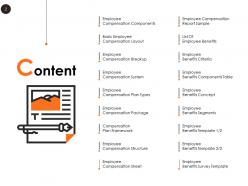
Slide 2: Este slide mostra o conteúdo da apresentação.
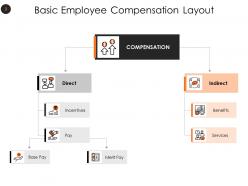
Slide 3: Este slide mostra o layout básico da compensação dos funcionários.
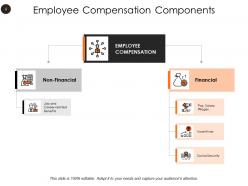
Slide 4: Este slide apresenta os componentes da compensação dos funcionários, descrevendo - pagamento, salário, salários, incentivos, segurança social, benefícios relacionados ao trabalho e carreira.
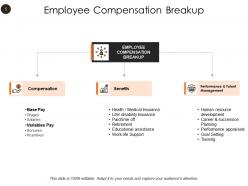
Slide 5: Este slide exibe a divisão da compensação dos funcionários, descrevendo - benefícios, compensação, gestão de desempenho e talentos.
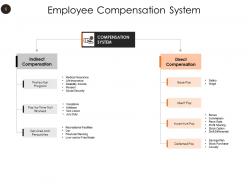
Slide 6: Este slide representa o sistema de compensação dos funcionários, descrevendo - programa de proteção, pagamento por tempo não trabalhado, serviços e benefícios, pagamento base, pagamento por mérito, pagamento de incentivo, pagamento diferido.
Slide 7: Este slide mostra os tipos de planos de compensação dos funcionários como volume territorial, salário direto, salário mais comissão, apenas comissão.
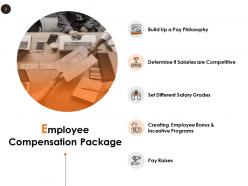
Slide 8: Este slide mostra o pacote de compensação dos funcionários, descrevendo - construir uma filosofia de pagamento, definir diferentes níveis salariais, determinar se os salários são competitivos, aumentos salariais, criação de programas de bônus e incentivos para funcionários.
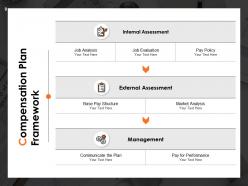
Slide 9: Este slide apresenta a estrutura do plano de compensação com avaliação interna, avaliação externa, gestão.
Slide 10: Este slide exibe a estrutura de compensação dos funcionários, descrevendo a divisão salarial.
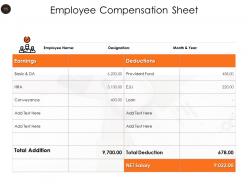
Slide 11: Este slide representa a folha de compensação dos funcionários, mostrando ganhos, deduções e salário líquido.
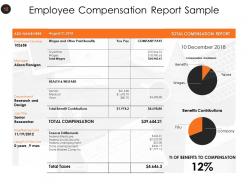
Slide 12: Este slide mostra um exemplo de relatório de compensação dos funcionários.
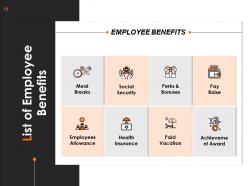
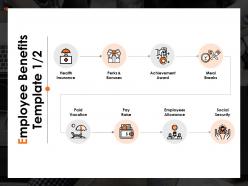
Slide 13: Este slide mostra uma lista de benefícios dos funcionários, descrevendo - pausas para refeições, segurança social, prêmios e bônus, aumento salarial, subsídios para funcionários, seguro saúde, férias remuneradas, prêmio de realização.
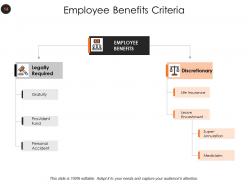
Slide 14: Este slide apresenta os critérios de benefícios dos funcionários em forma hierárquica.
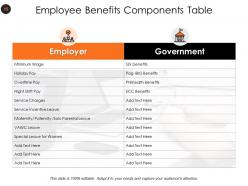
Slide 15: Este slide exibe uma tabela de componentes de benefícios dos funcionários, descrevendo os benefícios fornecidos pelo empregador e pelo governo.
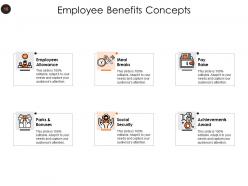
Slide 16: Este slide representa o conceito de benefícios dos funcionários com - pausas para refeições, segurança social, prêmios e bônus, aumento salarial, subsídios para funcionários, prêmio de realização.
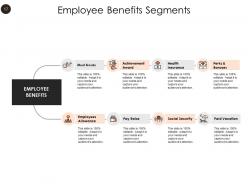
Slide 17: Este slide mostra os segmentos de benefícios dos funcionários.
Slide 18: Este slide mostra um modelo de benefícios dos funcionários. Você pode adicionar ou editar dados conforme necessário.
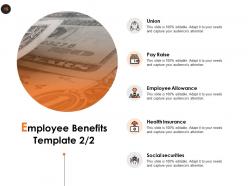
Slide 19: Este é outro slide apresentando um modelo de benefícios dos funcionários.
Slide 20: Este slide representa um modelo de pesquisa de benefícios dos funcionários com uma escala que varia de concordo totalmente a discordo totalmente.
Slide 21: Este é o slide Nossos Objetivos. Declare seus objetivos aqui.
Slide 22: Este é um slide financeiro. Mostre suas informações financeiras aqui.
Slide 23: Este é o slide Nossa Missão com imagens e texto relacionados.
Slide 24: Este é o slide Sobre Nós para mostrar as especificações da empresa, etc.
Slide 25: Este é um slide de Venn com caixas de texto.
Slide 26: Este é o slide Nossa Equipe com nomes e cargos.
Slide 27: Este é outro slide modelo para Nossa Equipe.
Slide 28: Este é um slide de Citações para transmitir mensagens, crenças, etc.
Slide 29: Este é outro slide de Citações.
Slide 30: Este slide é intitulado Post It. Poste suas notas importantes aqui.
Slide 31: Este é um slide de Lâmpada ou Ideia para declarar uma nova ideia ou destacar informações, especificações, etc.
Slide 32: Este é um slide de Obrigado com endereço, números de contato e endereço de e-mail.
Gerenciamento de Recompensas Apresentação de slides em PowerPoint com todas as 32 slides:
Utilize nossos slides de apresentação em PowerPoint de Gerenciamento de Recompensas para economizar seu tempo valioso de maneira eficaz. Eles estão prontos para se encaixar em qualquer estrutura de apresentação.




FAQs for Reward Management
You'll want four key pieces for a solid reward system. Start with competitive base pay for your area. Add performance bonuses tied to specific, clear goals. Benefits matter too, but go beyond the basic stuff - figure out what your people actually want. Here's what most companies miss though: recognition without money attached. Seriously, just acknowledging good work goes way further than you'd think. Be transparent about how you decide rewards, and review everything regularly so it stays fair. Don't just copy what everyone else does - match your rewards to what motivates YOUR team and hits your business targets.
Honestly, most companies mess this up big time. First thing - figure out what behaviors actually move the needle for your goals. Want innovation? Then reward people for taking smart risks, not just playing it safe. Check if your bonuses, promotions, and recognition are all pointing in the same direction. I've seen so many places talk about teamwork while only rewarding individual wins - makes no sense! Your business changes, so don't set it and forget it. Do a quick audit every few months of what you're currently rewarding vs what you actually need. Sometimes the gap is pretty shocking.
Honestly, if your team isn't engaged, your reward programs are basically throwing money at a wall. Engaged people actually give a damn about recognition - they'll work harder for both cash bonuses and those cheesy "employee of the month" things. But disengaged employees? They'll take the rewards and shrug. What you want is rewards that make people more engaged, which then improves everything else - performance, retention, the whole deal. I learned this the hard way at my last job. Best thing you can do is just ask your team what actually gets them excited.
So basically, intrinsic stuff like feeling autonomous and having purpose keeps people motivated way longer than just throwing money at them. Cash and bonuses give you that quick hit, but honestly they can backfire if you overdo it - especially with creative work where people start chasing the reward instead of actually caring about what they're doing. Pretty weird how that works. For boring, routine tasks though? Extrinsic rewards are perfect since you need clear targets anyway. Best approach is making sure people aren't stressed about money first, then focus on giving them work that actually means something and room to grow.
Oh man, there's so many ways these things can backfire. Most companies reward the wrong stuff - like pushing individual performance when they actually need people collaborating. Then they make everything super complicated so nobody understands what they're supposed to do. Bad communication screws things up too. Unrealistic targets are probably the worst though - nothing kills motivation like impossible goals. I've seen this happen at my old job actually. Start simple, get people's input from the beginning, and make sure you're rewarding what you actually want to see happen.
So here's the thing - data shows you what actually motivates people instead of just guessing. Track which rewards boost performance and keep people around longer. I've noticed remote workers usually want flexibility while office people love public recognition (weird but true). You can also figure out better timing instead of random bonuses that don't hit right. Start small though - just monitor how performance changes after rewards and check satisfaction scores. That'll tell you what's worth your budget and what isn't. Pretty straightforward once you see the patterns.
Look, feedback is everything when it comes to rewards at work. You can't just set up a system and hope it works - people change, priorities shift, and what motivated someone last year might be totally irrelevant now. Regular check-ins tell you if your rewards actually matter to employees or if they're just going through the motions. Honestly, most companies get this wrong because they assume they know what people want. Surveys help, but so do casual conversations with managers and those "why are you staying" interviews. The whole point is catching problems early so you can adjust before people start looking elsewhere.
Oh man, you've hit on something huge here. Different cultures want completely different things from rewards. Like, Americans might love individual bonuses and public shoutouts, but in Japan that could actually backfire and embarrass people. Scandinavians are obsessed with work-life balance perks, while other places couldn't care less about flexible hours. I learned this the hard way at my last job actually. Your best move? Survey your teams directly and build programs that can flex based on location. Don't try to force the same cookie-cutter approach everywhere - it'll bomb.
Track turnover rates and engagement scores first - those tell you the most. Performance metrics matter too, but honestly, pulse surveys are where you'll get the real tea about what people actually want. Leadership usually gets this completely wrong. Monitor internal promotions and check if your pay's competitive. Everyone's motivated differently though, so don't put all your eggs in one basket. I'd pick maybe 3-4 things you can actually track every quarter without going crazy. Oh, and compare before/after numbers when you make changes - otherwise you're just guessing.
Honestly, transparency is huge here. Make your salary bands and promotion requirements super clear - don't hide this stuff like it's classified info. Document everything so people can actually see what they need to hit for raises or promotions. Also, audit your pay regularly for gender/demographic gaps because that's where things get messy fast. Your managers need training too since they're usually the ones screwing up evaluations (no offense to managers, but it's true). Oh, and regular check-ins help. If you can't explain why someone got a reward, that's your red flag right there.
Honestly, everyone's obsessing over personalized rewards now. Some people want career development stuff, others just want extra PTO or help with student loans. It's wild how different preferences can be. Real-time recognition is replacing those awkward annual reviews (thank god), and pay transparency laws are forcing companies to actually show their cards. The generic benefits package thing? Totally dead. Oh, and you should definitely survey your team first - I was shocked when I found out half my people cared more about flexible schedules than raises. Creative total rewards packages are where it's at now.
Honestly, just tie manager bonuses to diversity metrics - like hiring numbers or retention rates across different groups. Works way better than those feel-good diversity trainings that nobody remembers. Also check if your current rewards are accidentally biased against certain achievements or roles. Maybe women crush it at collaboration but you only reward individual sales numbers, you know? Pick 2-3 diversity goals that actually matter to your company and bake them right into performance reviews. It's pretty straightforward once you stop overthinking it.
Honestly, non-monetary stuff works way better than you'd think for keeping people around. Recognition hits different than cash - bonuses just vanish into rent payments, but flexible schedules or cool projects stick with people. Professional development opportunities are huge too. Everyone wants to feel like they're growing, not just collecting paychecks. The trick is actually paying attention to what each person cares about. Some want work-life balance, others crave challenging assignments. It's cheaper than raises and taps into that deeper motivation stuff. Your team will be way more engaged when they feel valued as humans, not just productivity machines.
Honestly, start by just asking people what they actually want - surveys, quick one-on-ones, whatever works. Leadership usually gets this stuff completely wrong lol. Once you've got the data, look for patterns. Maybe younger folks want flexibility while others prefer traditional benefits. The biggest mistake? Not following up on what you hear. If someone suggests something and you implement it, tell them! Even small pilot programs work better than guessing. Oh, and don't assume everyone wants the same thing - that's where most companies mess up.
Yeah so remote work totally changed the rewards game. You can't just walk over and high-five someone anymore, which honestly was half the fun of managing people. Now it's all about home office stipends, flexible PTO, and wellness perks - stuff that actually matters when you're stuck at home. Virtual celebration events work better than you'd think, but forget the old pizza party thing because Zoom pizza hits different (and not in a good way). The key is getting personal with recognition and finding ways to make people feel connected to the company culture from their couch.
-
Excellent template with unique design.