


Gestión de riesgos en el proyecto de desarrollo de edificios comerciales Diapositivas de presentación de Powerpoint




Try Before you Buy Download Free Sample Product
 Impress Your
Audience
 100%
Editable
 Save Hours
of Time


La evaluación de riesgos crea la conciencia de accidentes o riesgos y forma parte integral del plan de gestión de seguridad y salud ocupacional. Tome nuestra plantilla de gestión de riesgos en el proyecto de desarrollo de edificios comerciales diseñada de manera eficiente para determinar su estrategia de respuesta al riesgo. Las empresas pueden controlar el trabajo y su eficiencia a través de diagramas de Gantt y cronogramas para cada tarea. Su objetivo es evitar el aumento inesperado en el costo del material, garantizar una interrupción mínima y mantener los estándares de calidad en el trabajo. La plantilla muestra detalles sobre la proyección de riesgos, entregables, presupuesto e hitos. Se pueden reconocer hechos relacionados con personas clave que trabajan en el proyecto. La propuesta presenta información para la evaluación del impacto del riesgo y la probabilidad de los proyectos de construcción. Las organizaciones pueden mostrar el impacto de los riesgos críticos identificados mediante cuadros y gráficos en el rendimiento general del proyecto. La plantilla destaca las especificaciones de construcción, el diseño del trabajo y las pautas de garantía de calidad del material de construcción. Las empresas pueden establecer responsabilidades y definir el trabajo de cada trabajador o miembro del equipo en función del plan de pruebas. Descárgalo ahora.
People who downloaded this PowerPoint presentation also viewed the following :
Contenido de esta presentación de Powerpoint
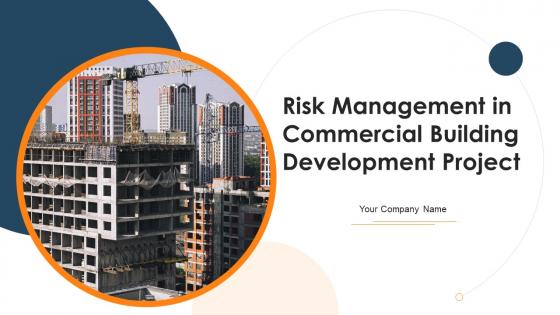
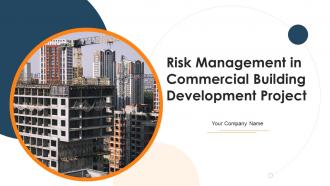
Diapositiva 1 : Esta diapositiva presenta la gestión de riesgos en el proyecto de desarrollo de edificios comerciales. Indique el nombre de su empresa y comience.
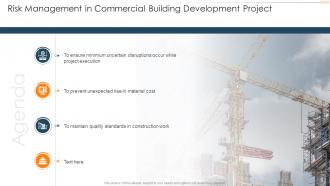
Diapositiva 2 : Esta diapositiva indica la Agenda de la presentación.
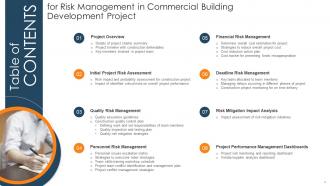
Diapositiva 3 : Esta diapositiva presenta la tabla de contenido de la presentación.
Diapositiva 4 : esta diapositiva resalta el título de los temas que se cubrirán a continuación en la plantilla.
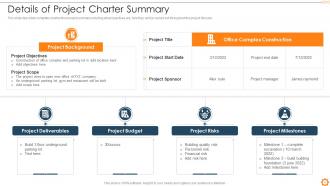
Diapositiva 5 : Esta diapositiva muestra el resumen completo del proyecto de construcción, incluidos los objetivos, cómo se llevarán a cabo, etc.
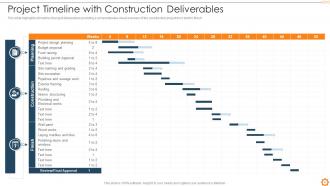
Diapositiva 6 : Esta diapositiva destaca una línea de tiempo de los entregables del proyecto que proporciona una descripción visual completa del proyecto de construcción.
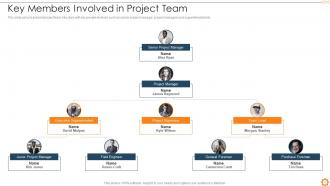
Diapositiva 7 : esta diapositiva tiene como objetivo presentar la estructura del equipo del proyecto con personas clave involucradas, como el gerente principal del proyecto, los gerentes del proyecto y el superintendente, etc.
Diapositiva 8 : esta diapositiva resalta el título de los temas que se cubrirán a continuación en la plantilla.
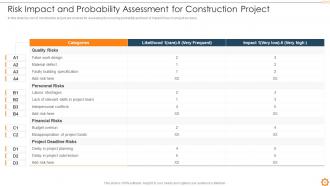
Diapositiva 9 : esta diapositiva muestra la evaluación del impacto del riesgo y la probabilidad del proyecto de construcción.
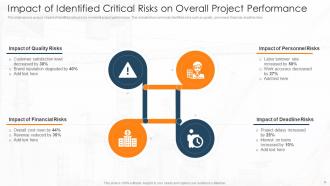
Diapositiva 10 : Esta diapositiva muestra el impacto de los riesgos críticos identificados en el desempeño general del proyecto.
Diapositiva 11 : esta diapositiva resalta el título de los temas que se cubrirán a continuación en la plantilla.
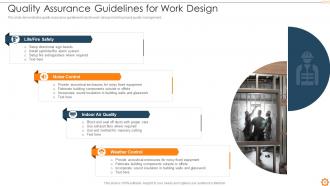
Diapositiva 12 : Esta diapositiva muestra las pautas de control de calidad para abordar los riesgos del diseño de trabajo para la gestión de calidad del proyecto.
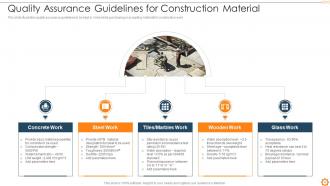
Diapositiva 13 : Esta diapositiva presenta pautas de control de calidad que se deben tener en cuenta al comprar o aceptar material para trabajos de construcción.
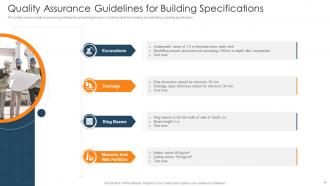
Diapositiva 14 : esta diapositiva muestra las pautas de garantía de calidad para las especificaciones de construcción.
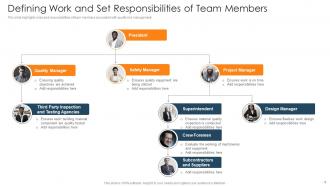
Diapositiva 15 : Esta diapositiva destaca los roles y responsabilidades de los miembros del equipo asociados con la gestión de riesgos de calidad.
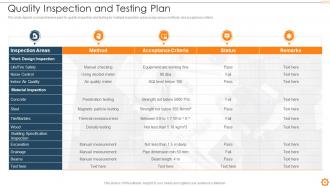
Diapositiva 16 : Esta diapositiva muestra un plan integral para la inspección y prueba de calidad para múltiples áreas de inspección.
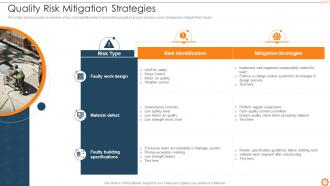
Diapositiva 17 : Esta diapositiva tiene como objetivo proporcionar una descripción general de los riesgos clave identificados que están obstaculizando la calidad del proyecto.
Diapositiva 18 : esta diapositiva destaca el título de los temas que se cubrirán a continuación en la plantilla.
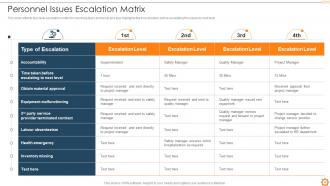
Diapositiva 19 : Esta diapositiva refleja una matriz de escalada de cuatro niveles para resolver problemas de equipo y también destaca la duración del tiempo.
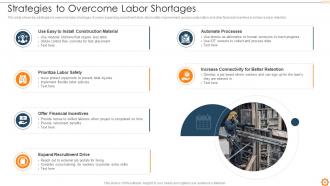
Diapositiva 20 : Esta diapositiva muestra estrategias clave para superar la escasez de mano de obra.
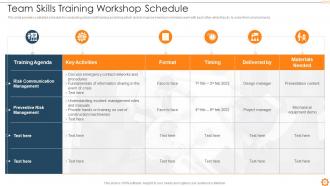
Diapositiva 21 : Esta diapositiva proporciona un cronograma detallado para llevar a cabo un taller de capacitación en habilidades de equipo cuyo objetivo es mejorar el funcionamiento de los miembros del equipo.
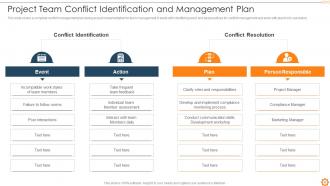
Diapositiva 22 : Esta diapositiva cubre un plan completo de gestión de conflictos durante la implementación del proyecto para la gestión del equipo.
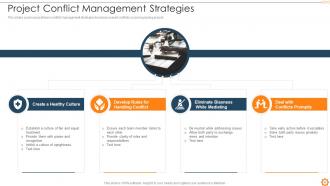
Diapositiva 23 : Esta diapositiva presenta las estrategias de gestión de conflictos del equipo del proyecto para reducir los conflictos generales que ocurren durante el proyecto.
Diapositiva 24 : esta diapositiva destaca el título de los temas que se cubrirán a continuación en la plantilla.
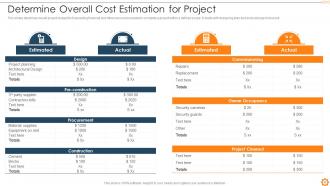
Diapositiva 25 : esta diapositiva muestra el presupuesto general del proyecto para pronosticar los recursos financieros y de otro tipo necesarios para completar un proyecto.
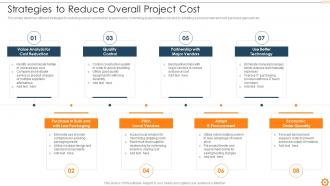
Diapositiva 26 : Esta diapositiva describe diferentes estrategias para reducir el costo general del proyecto de construcción al minimizar el costo oculto del proyecto.
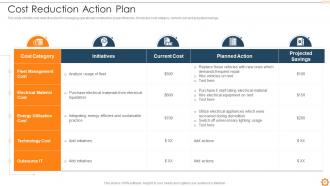
Diapositiva 27 : Esta diapositiva muestra un plan de reducción de costos para administrar las finanzas del proyecto de construcción operativa.
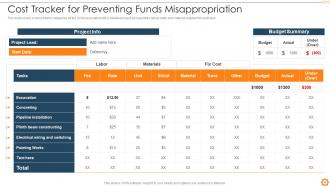
Diapositiva 28 : Esta diapositiva presenta Cost Tracker para prevenir la apropiación indebida de fondos.
Diapositiva 29 : esta diapositiva destaca el título de los temas que se cubrirán a continuación en la plantilla.
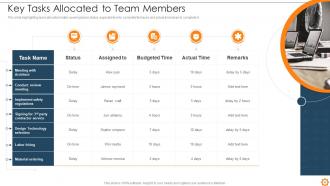
Diapositiva 30 : Esta diapositiva destaca la matriz de tareas asignadas que cubre el estado de las tareas, el tiempo esperado para completar las tareas y el tiempo real empleado.
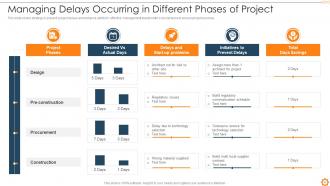
Diapositiva 31 : Esta diapositiva muestra la gestión de los retrasos que ocurren en las diferentes fases del proyecto.
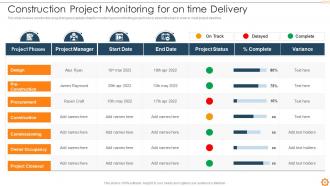
Diapositiva 32 : Esta diapositiva involucra la hoja de actualización del progreso del proyecto de construcción para monitorear y controlar los riesgos del proyecto.
Diapositiva 33 : esta diapositiva destaca el título de los temas que se cubrirán a continuación en la plantilla.
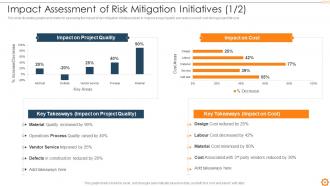
Diapositiva 34 : Esta diapositiva ilustra gráficos y tablas para evaluar el impacto de las iniciativas de mitigación de riesgos tomadas para mejorar la calidad del proyecto.
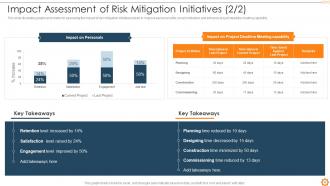
Diapositiva 35 : Esta diapositiva muestra la Evaluación de impacto de las iniciativas de mitigación de riesgos.
Diapositiva 36 : esta diapositiva resalta el título de los temas que se cubrirán a continuación en la plantilla.
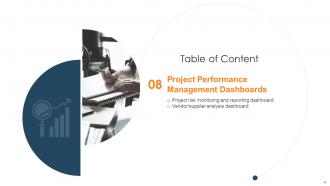
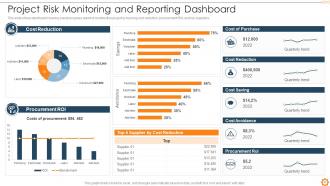
Diapositiva 37 : Esta diapositiva muestra un tablero que cubre el informe de progreso general del proyecto de construcción mediante el seguimiento de la reducción de costos, el ROI de adquisiciones, etc.
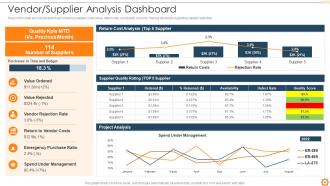
Diapositiva 38 : Esta diapositiva presenta el Tablero de análisis de proveedores/proveedores.
Diapositiva 39 : esta diapositiva muestra iconos para la gestión de riesgos en el proyecto de desarrollo de edificios comerciales.
Diapositiva 40 : esta diapositiva se titula Diapositivas adicionales para avanzar.
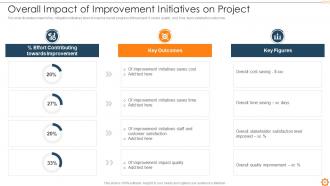
Diapositiva 41 : Esta diapositiva muestra el impacto general de las iniciativas de mejora en el proyecto.
Diapositiva 42 : Esta es la diapositiva Acerca de nosotros para mostrar las especificaciones de la empresa, etc.
Diapositiva 43 : Esta es la diapositiva Nuestra misión con imágenes y texto relacionados.
Diapositiva 44 : Esta es la diapositiva Nuestro equipo con nombres y designación.
Diapositiva 45 : Esta es una diapositiva de la línea de tiempo. Mostrar datos relacionados con intervalos de tiempo aquí.
Diapositiva 46 : Esta diapositiva muestra el diagrama de Venn con cuadros de texto.
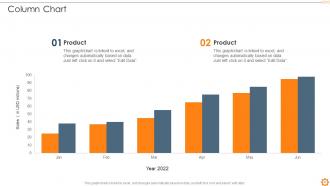
Diapositiva 47 : Esta diapositiva muestra un gráfico de columnas con una comparación de dos productos.
Diapositiva 48 : Esta es una diapositiva de generación de ideas para exponer una nueva idea o resaltar información, especificaciones, etc.
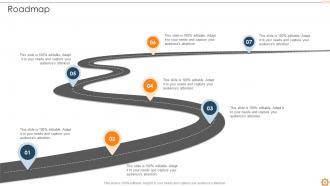
Diapositiva 49 : Esta diapositiva presenta la hoja de ruta con cuadros de texto adicionales.
Diapositiva 50 : Esta diapositiva muestra Post-It Notes. Publique sus notas importantes aquí.
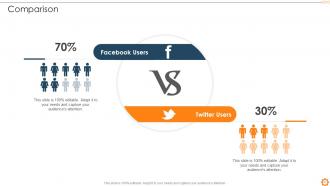
Diapositiva 51 : Esta es una diapositiva de comparación para establecer la comparación entre productos básicos, entidades, etc.
Diapositiva 52 : Esta es una diapositiva de agradecimiento con dirección, números de contacto y dirección de correo electrónico.
Gestión de riesgos en el proyecto de desarrollo de edificios comerciales Diapositivas de presentación de Powerpoint con las 57 diapositivas:
Utilice nuestras diapositivas de presentación de Powerpoint del proyecto de desarrollo de edificios comerciales de gestión de riesgos para ayudarlo de manera efectiva a ahorrar su valioso tiempo. Están listos para encajar en cualquier estructura de presentación.










FAQs for Risk Management In Commercial Building Development Project
You'll want to start by figuring out what could actually blow up in your face - both the obvious stuff and those weird edge cases that nobody thinks about until it's too late. Then figure out how likely each thing is and how badly it'd mess you up. That helps you know where to spend your time first. Create actual plans for the big risks and put someone in charge of each one. Oh, and set up some way to spot problems early before they get out of hand. Honestly, the biggest mistake is treating this like homework - you gotta keep updating it or it's useless.
So basically you want to do regular risk assessments - like every quarter, not yearly because things move too fast now. Get your teams together for brainstorming since they actually know their day-to-day stuff. Look at what went wrong before, those close calls, and what's happening in your industry. Supply chains are huge right now, don't skip those. Also check your tech systems and any new regulations coming down the pipe. Document everything you find and rank it by how likely it is versus how bad it'd be. That way you're not wasting time on tiny stuff when there's bigger fires to put out first.
Look, risk assessment is where you map out everything that could screw you over before it actually happens. Start by listing all the ways things might go sideways - don't just think about the obvious stuff either. Then rank each risk by how likely it is and how much damage it'd cause. That gives you a clear picture of where to focus your energy and money. Without doing this upfront, you're basically flying blind and hoping for the best. I learned this the hard way on a project last year - wish I'd been more thorough with my initial assessment.
Yeah, tech totally changes the game here. AI can catch patterns and predict problems before you'd ever notice them manually. Those real-time dashboards? Complete game changer - like having x-ray vision into your whole operation instead of squinting at spreadsheets all day. Automated alerts ping you the second something's off, plus predictive stuff helps you prep for scenarios you wouldn't think of. Honestly though, don't go crazy at first. Just pick one blind spot you have and throw some basic monitoring at it. Way easier to build from there.
Culture totally changes how teams think about risk. Some groups are cool with uncertainty and taking chances, while others want every step mapped out beforehand. Communication styles vary too - certain cultures will flag problems immediately, but others try to fix things quietly first to avoid looking bad. Power dynamics matter as well since junior people might not feel comfortable speaking up in hierarchical environments. Honestly, the biggest mistake is assuming everyone approaches risk like you do. You've got to figure out your team's cultural mix first, then adjust your processes to match how different people actually operate.
Track both early warning signs and actual outcomes. Near-miss reports and training completion rates help catch issues early - honestly this stuff saves your butt way more than people think. Then measure the real damage: incident rates, financial losses, how long recovery takes. I'd also compare what you spend on prevention versus what you actually save. Don't go overboard though. Pick maybe 3-4 metrics that actually matter to your specific situation rather than tracking everything under the sun. You'll just end up ignoring half the data anyway.
Honestly, just throw together a risk matrix - plot probability vs impact and you'll see what's actually urgent. High-probability, high-impact stuff first obviously, since that's what'll wreck you. The tricky part is those medium risks though. You gotta weigh mitigation costs against potential damage, which is kind of a pain. Get your department heads involved when you're scoring everything - they know their stuff way better than you do. Oh and don't try tackling every single risk at once. Pick your top 3-5 and actually finish those instead of spreading yourself too thin.
Honestly, the worst thing companies do is turn risk management into some bureaucratic nightmare that sits on a shelf collecting dust. Don't overthink it from the start - I've seen way too many organizations build these elaborate systems that are impossible to actually use. Getting different departments to talk to each other is huge too, instead of everyone doing their own thing in silos. Oh, and people get tunnel vision with just financial stuff while completely missing cyber threats or reputation issues. My advice? Keep it dead simple at first, make sure the important people are actually on board, then add layers once it's working.
Get your stakeholders involved from day one - seriously, this makes or breaks everything. Figure out who actually cares: internal teams, customers, suppliers, maybe regulators. Run workshops where they can tell you what scares them about their part of the business. I've found finance people want hard numbers while ops teams just want to know real impacts. Keep everyone in the loop with regular updates because surprises suck. Oh, and treat them like actual partners in solving problems, not just people you dump reports on. Makes a huge difference in buy-in.
Dude, you really don't want to mess around with regulatory stuff. The fines alone can be brutal - like, business-ending brutal. But honestly? The reputation damage might hurt even more long-term. Once regulators have you on their radar, they'll be watching everything you do with a microscope. Fixing things after you're already in trouble costs way more than just getting it right upfront. I learned that the hard way at my last job - what a nightmare that was. Just build those compliance checks into whatever risk stuff you're already doing. Makes life so much easier.
Look, building risk management right into your planning is like having backup plans that actually work. You won't be scrambling when stuff goes sideways - and trust me, it always does. Think of it as your business having multiple escape routes mapped out beforehand. Decision-making gets way faster because you've already thought through the "what if" scenarios. Honestly, it's kind of like playing chess but actually knowing your next three moves. Operations can shift gears smoothly instead of grinding to a halt. Start simple though - just pick your biggest 3-5 risks and sketch out response plans for each one.
Honestly, the worst part is watching your risk models completely fall apart when everything hits the fan. Markets start moving in ways that make zero sense - volatility goes nuts, assets that never moved together suddenly do, and good luck finding buyers when you need them. It's wild how fast things can change. The pressure to act quickly while everyone's freaking out? That's where people mess up big time. I've learned you gotta have your game plan ready way before the chaos starts. Set your stop-losses ahead of time and actually stick to them instead of trying to be a hero.
So scenario analysis is basically running "what if" experiments on your decisions. You pick 3-5 realistic worst-case situations - market crashes, operational mess-ups, new regulations, whatever keeps you up at night. Then you model how your portfolio or business would actually handle each one. Honestly, most people just wing it and react after problems hit, but this way you're spotting weak spots early. You can build backup plans before you need them. It's way better than crossing your fingers and hoping everything works out fine.
Start by figuring out what could actually mess up your business - cyber attacks, natural disasters, losing key people, whatever. Map out who does what when things go sideways and how everyone stays in touch. Here's the thing most places get wrong: they write this stuff down and then never practice it. Run some fake scenarios with your team so people don't panic when it's real. Oh, and have backup ways to communicate since phones/email might be down. Keep your plan simple enough that stressed-out people can actually follow it. Update it whenever you spot holes or your business shifts around.
Honestly, risk management can actually boost innovation if you do it right. Instead of just preventing problems, use it to get creative about solutions. When you spot risks early, your team has to brainstorm new ways around them - that's where the good ideas come from. It's kinda like how design constraints force you to think outside the box. Having a solid framework also gives people confidence to try bolder stuff they'd normally shy away from. I always tell teams to flip the question: "how can we innovate our way out of this mess?" Works way better than traditional risk assessments, trust me.
-
SlideTeam, Please don’t stop sharing discount coupons! I love your occasional discounts and tend to buy your products around that corner.
-
I am not the best at presentations but using SlideTeam’s PPT template made it easier for me. Thank you SlideTeam!