


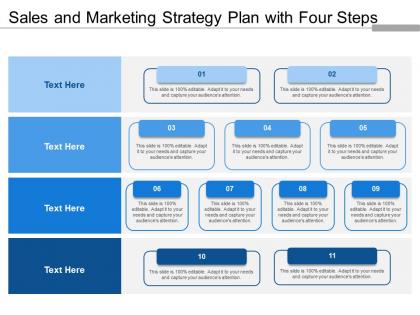
Sales and marketing strategy plan with four steps




Try Before you Buy Download Free Sample Product
 Impress Your
 Audience
 100%
100% Editable
 Save Hours
 of Time


Elaborate on all the fascinating features with our Sales And Marketing Strategy Plan With Four Steps. They assist in brand definition.
People who downloaded this PowerPoint presentation also viewed the following :
Sales and marketing strategy plan with four steps with all 5 slides:
Generate a huge amount of energy with our Sales And Marketing Strategy Plan With Four Steps. Bring about fusion of ideas.
FAQs for Sales and marketing strategy plan
Dude, start with actually knowing who you're selling to - like really knowing them. Map out how they buy stuff first. Most teams just skip the research and wonder why nothing works (drives me crazy). Your messaging has to hit their actual problems, not what you think matters. Sales and marketing need to agree on what counts as a good lead and when to pass things over. Otherwise it's just chaos. Find them where they already spend time instead of blasting everywhere. The customer journey thing sounds boring but it's honestly where everything else makes sense once you nail it down.
Honestly, the biggest thing is getting both teams to actually agree on what counts as a qualified lead upfront - saves you from so many headaches down the road. Weekly check-ins help too, plus some kind of shared dashboard where everyone can see what's happening in the pipeline. I'd also tie their goals together somehow instead of letting them compete against each other (which happens more than you'd think). Get a decent CRM going so marketing can see which leads actually close and sales can give feedback on quality. Oh, and quarterly planning sessions keep everyone on the same page about priorities.
Honestly, customer segmentation is like the backbone of everything you do marketing-wise. Your messaging, budget allocation, all of it flows from there. Instead of blasting generic content everywhere, you can actually create campaigns that speak to people. A 25-year-old startup founder has totally different problems than some 50-year-old enterprise exec, you know? When you hit the right pain points for each group, your conversion rates will thank you. I'd start with maybe 3-4 main customer types and build out separate campaigns. Way more work upfront but so worth it.
Honestly, digital marketing just makes your sales team look like rockstars. Your reps can hit up prospects who've already seen your case studies and testimonials online – way easier than starting from zero. LinkedIn campaigns and email sequences do the heavy lifting before they even pick up the phone. I love how marketing automation keeps nurturing leads in the background while salespeople focus on actually closing deals. It's basically like having extra teammates working around the clock. The trick is making sure your marketing stuff actually helps those sales conversations instead of just existing in its own little bubble.
Honestly, you need both the immediate stuff and the predictive metrics. Revenue and conversion rates are obvious winners - they tell you what's working right now. Customer acquisition cost too. But pipeline velocity and lead quality scores? Those actually predict what's coming next, which is super valuable. Customer lifetime value is massive if you're thinking long-term. Here's the thing though - don't track like 20 different things. Pick maybe 5-6 that matter most and actually check them weekly. Oh, and make sure sales and marketing are looking at the same numbers, otherwise you'll have weird disconnects in meetings.
Honestly, stories work way better than just rattling off features. Start with a customer who had the same problem your prospect is dealing with. Walk them through the whole journey - what sucked before, how your product helped, and where they ended up. That before/during/after thing is gold, trust me. Make it specific though - real details, actual emotions. People need to picture themselves in that story. Oh, and here's what I'd do: pick one boring bullet-point section in your next deck and swap it for a quick 2-minute customer story instead. You'll see the difference immediately.
Look, market research is basically your roadmap for everything - who to target, what they actually care about, where they spend time online. You'll figure out pricing that doesn't scare people off and messaging that clicks. Honestly, most businesses just guess at this stuff and wonder why nothing works. Survey your current customers first (ask why they picked you), then use those answers to hunt down similar people. Oh, and you might stumble onto competitor blind spots too. It's not glamorous work but it beats throwing money at random marketing tactics.
Dude, omnichannel is a game changer - customers can literally start shopping on Instagram, check stuff out in your store, then buy online later. No weird disconnects. Your retention rates will go up because people aren't getting frustrated switching between channels. The data side is huge too since you're finally seeing the full customer picture instead of random pieces. I started mapping all our touchpoints first - honestly took longer than I thought, but you'll spot the worst gaps pretty quickly. That's where you want to focus your energy. Sales teams eat this stuff up once they see complete customer histories.
Honestly, just pick one platform where your people actually are and get good at that first. Share stuff that actually helps them instead of constantly pitching your products - nobody wants to follow a walking advertisement. Reply to comments like a real person would. LinkedIn's solid for business stuff, but Instagram and TikTok absolutely demolish it for regular consumer brands (seriously, TikTok's algorithm is weirdly smart). Build trust first, sales come after. Customer reviews and user posts work way better than you talking about yourself all the time. It's basically about being helpful and not annoying.
Content marketing is like having a 24/7 salesperson that actually doesn't annoy people. You create helpful stuff - blogs, videos, whatever - and prospects start seeing you as the go-to expert. Way better than cold calling random people who hate you immediately. The cool thing is your content does all the relationship-building work upfront. By the time someone talks to your sales team, they already trust you and understand what you do. Just think about what questions people ask at each step of buying, then create content that answers those. Your future self will thank you when leads start coming to you instead of the other way around.
Honestly, CRM tools are game-changers because all your customer stuff lives in one spot instead of scattered across random spreadsheets. You'll actually know where each lead stands in your pipeline. The automation is clutch too - no more forgetting to follow up with people. I love how you can segment customers for targeted campaigns rather than just blasting everyone with the same message (which never works anyway). Your whole team stays on the same page since everyone sees the same updated info. Pro tip though - don't try to automate everything at once. Pick one thing first, like email sequences.
So I'd start by creating content for each stage - awareness, consideration, decision. Blog posts and social work great for getting attention early on. Then hit people with case studies and demos once they're actually interested. Email sequences are honestly where the magic happens though - best way to stay in touch without being annoying. Oh, and definitely set up lead scoring so you know when someone's getting serious. Retargeting ads help too, especially for people who checked out your pricing but bounced. Just don't be pushy about it. Automate everything in your CRM so you don't accidentally ghost good leads.
Honestly, good branding is like having a silent salesperson that never clocks out. It gets customers to pick you instead of the competition because they actually trust what you're about. People will pay more when your brand feels solid and communicates real value - I've seen this work so many times. Your sales team gets better talking points too since they know exactly what makes you different. Oh, and here's something cool - strong branding actually speeds up buying decisions because customers aren't sitting there confused about what you do. Start by nailing down what's truly unique about you, then make sure that message shows up everywhere customers see you.
Dude, it's such a mess when you have literally no data to work with. Like, where do you even start? You're just guessing at everything - who your customers are, what messaging hits, all of it. And of course you're trying to juggle sales AND marketing because money's tight. Honestly, the worst part is spreading yourself too thin across like five different channels. Here's what I'd do though - just pick ONE thing and stick with it for at least 3 months. I know it feels slow, but you need real data before you can figure out what's actually working. Then go all-in on whatever's giving you results.
Honestly, automation is a total lifesaver for all that boring repetitive work. You can set up email sequences to nurture leads while you sleep, plus it'll score prospects based on what they're actually doing on your site. CRM integration updates everything automatically – no more manual data entry nightmare. It triggers follow-ups when people hit your pricing page or download stuff. I even automate most of my social posts (though don't go completely robotic with it, people notice). Just start with one thing like lead nurturing, nail that down, then add more workflows. Trust me, you'll wonder how you survived without it.
-
Commendable slides with attractive designs. Extremely pleased with the fact that they are easy to modify. Great work!
-
Great designs, really helpful.