


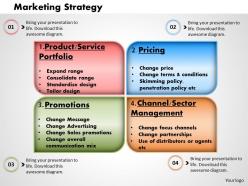
Marketing strategy powerpoint presentation slide template





Try Before you Buy Download Free Sample Product
 Impress Your
 Audience
 100%
100% Editable
 Save Hours
 of Time


Have it all. Our Marketing Strategy Powerpoint Presentation Slide Template are high quality affordable and ready at a moment's notice.
People who downloaded this PowerPoint presentation also viewed the following :
Marketing strategy powerpoint presentation slide template with all 5 slides:
Our Marketing Strategy Powerpoint Presentation Slide Template are a confluence of creativity and comfort. They are eminently employable.
FAQs for Marketing strategy powerpoint
Alright so you need a few key things - first, figure out who you're actually selling to. I can't stress this enough because most people just guess and wonder why nothing works. Then nail down your positioning and the basics like product, price, where you'll sell, and how you'll promote it. Oh and set actual measurable goals, not just "increase sales" or whatever. Look at what your competitors are doing too. Budget matters - decide how much goes where and when. Everything should tie back to your real business goals though, not just random marketing stuff because you think you should. Start with the audience thing first, seriously.
Here's what I'd do - connect every campaign directly to what you actually want to achieve business-wise. Revenue growth? Then focus on leads and conversions. Brand awareness? Go for reach and engagement stuff. I totally wasted like 3 months creating gorgeous content that looked amazing but didn't actually drive any real results. Such a rookie mistake! Track KPIs that matter, not just the pretty numbers that make you feel good. Check in every quarter and pivot if something's not working. Honestly, if you can't draw a line from your marketing spend to actual business impact, you're probably doing it wrong.
Track both leading and lagging stuff - conversion rates, customer acquisition cost, ROI are non-negotiable. Engagement metrics matter too: click-through rates, time on site, social shares. I wasted months obsessing over vanity metrics that looked pretty but didn't mean anything. Connect everything to actual revenue - that's what matters. Attribution tracking is huge so you know which channels drive real sales vs just eyeballs. Oh and pick maybe 5-7 metrics tops, otherwise you'll go crazy. Weekly reviews keep you sane.
So basically, dig into your customer data first to see what's actually working vs what's just burning cash. Track stuff like how much it costs to get new customers, their lifetime value, and which channels convert best. Honestly, most people overthink this part. Run quick A/B tests on your messaging or targeting, then let the numbers do the talking. I'd pick maybe 3-4 metrics that actually connect to revenue and check them weekly. That way you can pivot fast when something's not hitting. The whole point is spotting those behavior patterns so you know where to double down.
So you know how you text your mom different than your boss? That's basically customer segmentation. Break your audience into groups - demographics, what they buy, how they act. Then talk to each group differently. I learned this the hard way when I was throwing money at ads that totally missed the mark. Without it, you're literally shouting at people who don't care about your stuff. Pick your top 2-3 customer types first. Build campaigns just for them. Way better than trying to appeal to everyone at once.
Honestly, think of social media as just one part of your whole marketing thing - not the entire strategy. Pick 2-3 platforms where your people actually are instead of being everywhere at once (learned this the hard way). Use it to boost what you're already doing with email and other stuff. Keep your brand voice the same but switch up how you format posts for each platform. Here's the thing though - focus on what actually brings in business, not just getting a bunch of likes. Once you've got those first platforms down, then you can think about expanding.
Honestly, most companies just throw features at people instead of actually solving their problems. Figure out what's really bugging your customers first - like, what keeps them up at night? Then show how you fix that specific thing better than everyone else. Skip the corporate BS language too. Use words they'd actually say when complaining to their friends about this problem. The real test? Tell a few customers your pitch and see if they get it right away. If they're confused or can't explain it back to you... yeah, time to try again. It's gotta click immediately or it won't work.
Honestly, you gotta watch trends like a hawk and be ready to pivot fast. Set up social listening tools, track competitors, get customer feedback - the whole shebang. We totally whiffed on the TikTok thing and I'm still kicking myself over it lol. Test small first before dumping money into new stuff. Keep doing what works but maybe throw 20-30% at experimental campaigns when you see trends emerging. Monthly reviews are clutch so you can bail if something's not working. Don't go crazy changing everything at once though - that's how you lose your shirt.
So content marketing is pretty much what makes your whole marketing thing actually work. You're creating stuff that helps people instead of just screaming "buy my product!" at them all the time. Way better than those annoying ads nobody wants to see anyway. The trick is matching your content to where people are in their buying process - like, someone just discovering your brand needs different info than someone ready to purchase. Each piece should have a clear job to do. Build trust first, sales come later. It sounds obvious but most brands still mess this up somehow.
Honestly, the biggest mistake I see people make is creating these super rigid plans that fall apart the second something changes. Markets are weird like that - what's hot today is dead tomorrow. I found this out when our "amazing" social media push basically became irrelevant overnight lol. My advice? Nail down your core stuff (brand values, main goals) but keep everything else flexible. Do quarterly check-ins to see what's actually working. Ditch the stuff that isn't. Oh, and always save some budget for random experiments - you never know what'll stick.
Dude, customer feedback is like your marketing GPS - shows you if you're going the right way or totally lost. I'd set up surveys, social listening, maybe some customer interviews. Use what you learn to fix your messaging and figure out which channels actually work. So many teams I've seen just assume they know their audience and then... crash and burn. It's wild how wrong we can be about what people want. The key is building in time to actually review the feedback and pivot before you blow your whole budget on something that doesn't land.
Dude, visuals are a game-changer for marketing. Your brain processes images 60,000 times faster than text - which is honestly wild when you think about it. Complex stuff becomes way easier to understand, plus people actually remember it later. There's something about seeing behind-the-scenes content that just makes you feel more connected to a brand, you know? And here's the bonus: visual posts get shared way more on social media. Start small though. Turn your next blog into an infographic or make a quick video showing your product's benefits instead of just writing them out.
Oh man, where do I start? Don't try targeting everyone - you'll just end up reaching nobody. Research who actually buys your stuff instead of guessing. Copying competitors is tempting but kinda pointless if you don't get why their strategy works. Honestly, the timeline thing gets people every time. Marketing is soooo slow to show results. Also avoid super vague messaging and definitely track metrics that matter to your revenue, not just Instagram likes or whatever. My advice? Figure out your ideal customer first, then build everything else around that.
Cross-channel marketing is honestly a game changer because people need to see your message multiple times before they act. Think about it - someone might discover you on Instagram, then check out your website later, and finally buy after getting an email. Each platform should feel connected but not identical (nobody wants the exact same post everywhere, that's just lazy). The result? Way better brand recognition and conversions compared to just focusing on one channel. I'd start by looking at how your current channels connect - or don't connect - and figure out where people are falling through the cracks between them.
Dude, marketing without tech now would be like trying to drive blindfolded. Social media lets you target people crazy specifically, plus you can see what's working in real-time instead of guessing. AI predicts what customers will do next, automation handles the boring stuff, and analytics actually tell you if you're wasting money or not. Everything moves so fast though - you gotta be ready to pivot constantly. I'd say look at what tools you're using now and pick one area that's clearly broken. Fix that first, then worry about the fancy stuff later.
-
Presentation Design is very nice, good work with the content as well.
-
Good research work and creative work done on every template.