


Sales Department Organizational Hierarchy Sales And Marketing Alignment For Business Strategy SS V




Try Before you Buy Download Free Sample Product
 Impress Your
 Audience
 100%
100% Editable
 Save Hours
 of Time


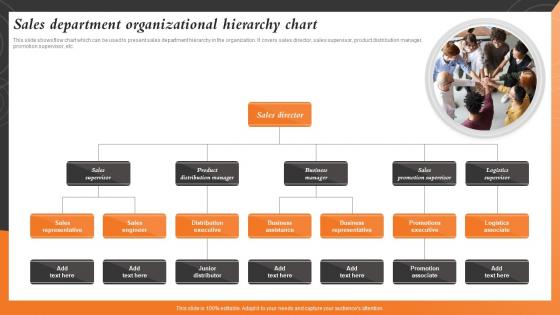
This slide shows flow chart which can be used to present sales department hierarchy in the organization. It covers sales director, sales supervisor, product distribution manager, promotion supervisor, etc.
People who downloaded this PowerPoint presentation also viewed the following :
Sales Department Organizational Hierarchy Sales And Marketing Alignment For Business Strategy SS V with all 9 slides:
Use our Sales Department Organizational Hierarchy Sales And Marketing Alignment For Business Strategy SS V to effectively help you save your valuable time. They are readymade to fit into any presentation structure.








FAQs for Sales Department Organizational Hierarchy Sales And Marketing Alignment For Business
Honestly, start with lead conversion rates - that's your easiest win. Track how many marketing leads actually turn into sales opportunities and how fast deals are closing. Better alignment usually means shorter sales cycles since marketing's bringing in people who actually fit. Revenue goals should obviously be shared between both teams. But here's the thing - the real test is whether your sales and marketing people can stand being in the same room together lol. Are they doing regular check-ins? Sharing feedback without throwing each other under the bus? When sales stops whining about lead quality and marketing stops blaming follow-up issues, you've cracked it.
Pick metrics both teams actually give a damn about - MQL to SQL conversion rates, deal velocity, revenue attribution. Email opens are basically worthless for this. Pipeline health matters way more. Also track customer acquisition cost and how fast deals close when sales and marketing work together vs. when they're doing their own thing. Oh, and don't forget the soft stuff - survey them about communication and processes. Honestly, I'd start with just 2-3 metrics everyone agrees on first. You can always add more later once you've got the basics down.
Okay so basically you need tech that gets both teams looking at the same stuff. Get a CRM that marketing actually uses too (not just sales hoarding it), plus some marketing automation to track leads all the way through. The real win is when marketing sees which leads actually convert and sales knows what content people looked at first. Honestly the "qualified lead" definition thing is huge - do that together or you'll keep fighting about garbage leads. Once everyone's on the same dashboard it's pretty solid. Way less finger-pointing.
Dude, sharing data between sales and marketing stops all that pointless guessing that tanks campaigns. Marketing finally sees what actually converts and which messages work. Sales gets decent leads instead of just cold calling random people all day. Once teams quit being weird about their spreadsheets, things click. Marketing can fix campaigns based on real results, not hunches. Sales knows which leads are worth calling first. Honestly? Just start with one dashboard tracking lead quality and conversion rates. You'll see results fast - like, probably within a few weeks.
Honestly, it's mostly lead quality fights and mixed-up priorities. Marketing sends over leads that sales thinks are trash. Sales drags their feet on follow-ups and marketing gets pissed. Each team has totally different goals too - like marketing cares about lead volume while sales only wants closeable deals. The handoff process? Usually a disaster. Messaging gets inconsistent, nobody knows what's happening in the pipeline. I've seen this play out so many times. Best fix is making both teams agree on what actually counts as a "qualified lead" first, then tie everyone's bonuses to the same revenue number.
Content marketing is basically like giving your sales team superpowers. Start by asking them what questions prospects ask all the time - then create blog posts, case studies, whatever answers those exact pain points. Your reps can share ROI calculators during calls to handle objections, or send whitepapers to educate people before they even hop on a demo. Honestly, I've seen it work magic when sales and marketing actually talk to each other (shocking, I know). Plus all that content keeps you in people's heads between meetings, which is huge for building trust.
Dude, you really need to get sales and marketing talking more. Sales can tell marketing which leads are garbage vs which ones actually buy stuff. Weekly meetings work great - have sales call out the duds and highlight the winners. Marketing then tweaks their targeting based on what's actually working. It's honestly pretty cool when you see it click. Your marketing team figures out what good prospects look like, and sales stops wasting time on people who'll never buy. The whole thing just gets better over time, like some kind of feedback loop that actually makes sense.
Okay so first thing - get both teams to actually agree on what words mean. Like what's a "qualified lead" vs an "opportunity"? I swear half the drama comes from people arguing about different definitions. Have them sit down together (not over email) and create a shared glossary. Make sure your CRM uses the same fields and scoring too. Oh and build those buyer personas together - sounds cheesy but it works. Regular workshops help way more than you'd think. The whole point is getting everyone on the same page so they're not constantly talking past each other about the same damn prospects.
Think of customer personas as your team's cheat sheet - both sales and marketing need to be talking to the same people the same way. Otherwise you get this mess where marketing brings in leads that sales has no clue how to handle. It's way better when everyone's on the same page about who you're actually trying to reach. Having both teams build these profiles together makes a huge difference. You'll stop wasting time on leads that go nowhere. Honestly, I've seen companies where the disconnect was so bad it was almost funny. Get your personas right and everything else gets easier.
Honestly, the best thing I've seen is getting both teams to work on actual deals together - like proper joint workshops. Way more effective than doing separate training. Role reversals are surprisingly good too (get sales people sitting in on marketing calls, have marketing shadow some sales meetings). Focus on building shared goals and making sure everyone's speaking the same language. The biggest mistake? Treating it like a one-time event instead of ongoing work. I'd probably start with quarterly sessions where both teams map out your customer journey together from first contact all the way to closing. Makes a huge difference when everyone actually understands what the other team deals with daily.
Honestly, you've gotta get sales and marketing actually talking to each other regularly. Weekly meetings work best - I know, I know, another damn meeting. But have them share what's working and what's bombing. Set up dashboards so everyone sees the same numbers instead of playing telephone. Sales needs to tell marketing when leads suck or messaging is off, and marketing should loop back on campaign results. Oh, and make sure feedback goes both directions all the time, not just when everything's on fire. It's one of those things that seems obvious but most companies totally mess up.
Get both teams in a room with a real agenda - focus on shared goals, not who's winning what. Bring actual numbers: pipeline data, lead quality, conversion rates. Trust me, arguing over "feelings" gets you nowhere fast. Don't let it turn into a blame fest though - keep the conversation forward-looking. Both teams need to own the same revenue target, not competing metrics that sabotage each other. Set concrete action items with deadlines and owners. Then do bi-weekly check-ins to see if anything's actually changing. Honestly, this stuff only works if everyone's measuring success the same way.
Honestly? Culture is everything here. When leadership pits sales and marketing against each other, you get this toxic finger-pointing mess where nobody shares leads. But flip that script - reward collaboration instead of competition - and suddenly both teams are chasing the same revenue goals. I've watched companies completely transform just by putting everyone in regular strategy meetings together. Shared metrics help too, obviously. The trick is making sure both sides actually care about the same numbers. Start small with monthly check-ins and see what happens.
Honestly, customer feedback is like your secret weapon for getting sales and marketing on the same page. When marketing hears the actual objections sales is dealing with, and sales sees what customers really think about the messaging - that's when things click. Both teams suddenly have real data instead of just guessing what works. The complaints and compliments become this shared reference point that keeps everyone grounded in reality (instead of whatever assumptions they had before). Set up a system to collect it regularly and do monthly reviews together. Trust me, it's way more effective than those awkward alignment meetings where nobody has concrete examples to work with.
So get your CRM set up as the main hub where both teams can actually see what's happening. No more of those awkward "wait, what happened to that lead from last week?" moments. You'll want shared dashboards so marketing can finally see which campaigns actually work and sales gets the full story before hopping on calls. Lead scoring is huge too - helps sales focus on the people who are genuinely interested instead of chasing dead ends. Honestly, the hardest part is just getting everyone to agree on what counts as a "qualified lead" upfront.
-
My presentations were a bit amateur before I found SlideTeam’s designs. I’ve been able to find slides for nearly every topic I’ve had to present. Thanks, Slideteam!
-
Kudos to SlideTeam for achieving the high success rate in delivering the top-notch slides.