


Sales and marketing alignment powerpoint presentation slides





Try Before you Buy Download Free Sample Product
 Impress Your
 Audience
 100%
100% Editable
 Save Hours
 of Time


Make an effective sales plan with our content ready Sales and Marketing Alignment PowerPoint Presentation Slides. Utilize sales alignment PowerPoint templates to create aligned terminology & processes. The ready to use Marketing PowerPoint complete deck contains twenty-two self-explanatory slides such as current scenario, industry best practices for alignment, sales & marketing alignment tactics, tips, challenges, solutions to overcome challenges, performance dashboard, etc. Sales & marketing alignment can improve your business performance. Showcase how marketing & sales teams can work together to improve ROI and sales productivity using this marketing alignment presentation deck. Incorporate the professional-looking sales alignment strategy PowerPoint templates to exhibit ways to increase revenue, shorten lifecycle, improve conversion rate and forecast accuracy. Our team of designers has created this PPT graphics after in-depth research, make your presentation more engaging with relevant content and suitable graphics given in this professionally designed sales & operational planning PowerPoint presentation deck. Extend your existence to folks around. Establish a good connection with our Sales And Marketing Alignment Powerpoint Presentation Slides.
People who downloaded this PowerPoint presentation also viewed the following :
Content of this Powerpoint Presentation
Slide 1: This slide introduces Sales & Marketing Alignment. State Your Company Name and begin.
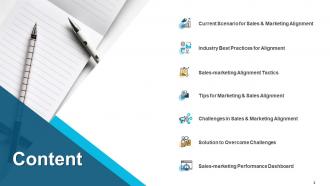
Slide 2: This slide shows Content of the presentation.
Slide 3: This slide presents Current Scenario for Sales & Marketing Alignment.
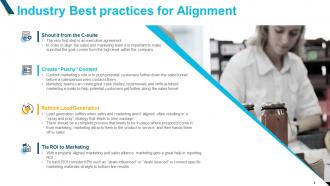
Slide 4: This slide displays Industry Best practices for Alignment with categories as- Shout it from the C-suite, Create “Pushy” Content, Rethink Lead Generation, Tie ROI to Marketing.
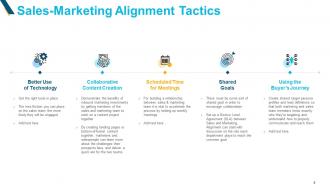
Slide 5: This slide represents Sales-Marketing Alignment Tactics describing- Better Use of Technology, Collaborative Content Creation, Scheduled Time for Meetings, Shared Goals, Using the Buyer’s Journey.
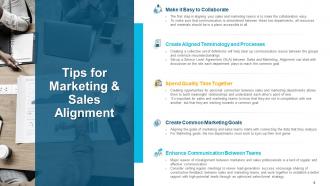
Slide 6: This slide gives Tips for Marketing & Sales Alignment as- Spend Quality Time Together, Create Common Marketing Goals, Enhance Communication Between Teams, Make it Easy to Collaborate, Create Aligned Terminology and Processes.
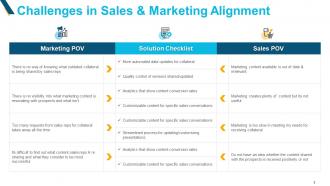
Slide 7: This slide showcases Challenges in Sales & Marketing Alignment.
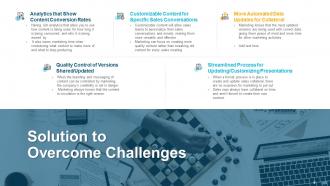
Slide 8: This slide shows Solution to Overcome Challenges with related imagery.
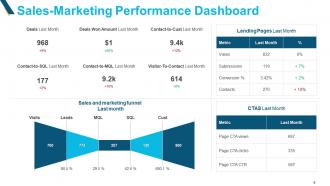
Slide 9: This slide presents Sales-Marketing Performance Dashboard.
Slide 10: This slide displays Sales & Marketing Alignment Icons.
Slide 11: This is About Us slide to show company specifications etc.
Slide 12: This is Our Mission slide with related imagery and text.
Slide 13: This is Our Team slide with names and designation.
Slide 14: This is a Lego slide with additional text boxes.
Slide 15: This is an Idea Generation slide to state a new idea or highlight information, specifications etc.
Slide 16: This is Our Goal slide. Show your firm's goals here.
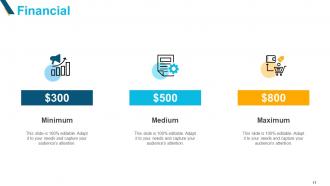
Slide 17: This is a Financial slide. Show your finance related stuff here.
Slide 18: This is a Puzzle slide with text boxes.
Slide 19: This is a Quotes slide to convey message, beliefs etc.
Slide 20: This is a Timeline slide to show information related with time period.
Slide 21: This slide is titled as Post It. Post your important notes here.
Slide 22: This is a Thank You slide with address, contact numbers and email address.
Sales and marketing alignment powerpoint presentation slides with all 22 slides:
Use our Sales And Marketing Alignment Powerpoint Presentation Slides to effectively help you save your valuable time. They are readymade to fit into any presentation structure.












FAQs for Sales and marketing alignment
Dude, when sales and marketing actually work together, everything clicks. Your leads get way better because marketing finally gets what salespeople need. The whole sales process speeds up too - prospects hear the same story from everyone instead of getting confused messages. Short cycles = more closed deals, obviously. Plus your CFO won't be constantly asking where the revenue's coming from since it becomes way more predictable. Teams start sharing their data instead of hoarding it like dragons. Marketing creates stuff that actually helps close deals rather than just... existing. Get them in regular meetings and tie their bonuses to the same goals. Game changer.
Look, when sales and marketing actually work together, your customers stop getting weird mixed messages. Marketing passes better leads with actual context instead of just random names. Sales gives feedback on what prospects really care about - not just marketing's best guess. The whole thing feels way less disjointed. Honestly, I've seen too many companies where it's like the left hand doesn't know what the right is doing. Start simple though - just get both teams in each other's monthly meetings. You'll be surprised how much that helps everything click into place.
Start with revenue attribution - you gotta see which marketing leads actually turn into sales. Lead velocity matters too (how quickly they move through your pipeline). Customer acquisition cost should drop when your teams work well together. Honestly? Most people get distracted by meaningless vanity metrics. Pipeline contribution percentage is way more valuable. Same with lead-to-customer conversion rates and sales cycle length. Don't forget the softer stuff either - get your sales team to score lead quality. Oh, and that sales-marketing handoff rate is huge. Master these basics before adding fancy metrics you probably don't need yet.
Honestly, start with getting both teams on the same CRM - that way everyone's looking at the same lead data instead of playing telephone. Slack or Teams works great for quick check-ins too, like "this prospect is ready to buy" instead of waiting for meetings. I'd also set up one dashboard showing leads from first contact through closed deals. Marketing automation is clutch here - you can actually see which campaigns turn into real sales. My friend's company does this and it cut their lead response time in half. Don't try to implement everything at once though, pick one tool first.
Think of content as the bridge between sales and marketing - when it actually works, both teams are speaking the same language. Marketing needs to create stuff sales will genuinely use: case studies, battle cards, objection guides. Otherwise you get that awkward situation where marketing makes beautiful content that just... sits there while sales does their own thing. What really matters is addressing the pain points your sales team hears every day. Honestly, the best move is having marketing sit in on some sales calls. They'll hear what prospects actually care about instead of guessing.
Honestly, most companies mess this up because they never agree on basic definitions first. Get your sales and marketing leaders in a room this week to hash out what a "qualified lead" actually means - I've watched too many teams argue over garbage leads that were never gonna convert anyway. Set shared revenue targets, not separate ones. Your CRM should track everything so both sides can see the whole picture. Also, those regular check-in meetings? Don't skip them even when things seem fine. But here's the real thing - compensation has to reward teamwork, not just individual wins. Otherwise you're just asking people to fight over credit.
Okay so the usual culprits are mismatched goals and crappy communication. Marketing's chasing lead volume while sales wants quality - tale as old as time. Then you get these weird turf wars about who owns which part of the funnel. Here's what actually works: ditch separate metrics and focus on revenue stuff both teams give a damn about. Yeah, regular meetings help I guess, but honestly? Real change happens when leadership stops letting them point fingers at each other. Get everyone together first and hash out what a "qualified lead" means. Sounds boring but trust me, half the drama disappears once you're all speaking the same language.
Honestly, it's all about getting your teams talking to each other regularly. Marketing hears what's actually going down on sales calls, then they can fix their messaging and lead quality. Meanwhile, sales gets better at explaining why leads aren't converting - instead of just whining about "bad leads" (which, let's be real, we've all done). The whole back-and-forth thing works. Your content gets better, targeting improves, and sales stops thinking marketing lives in some weird fantasy bubble. Start with weekly 15-minute check-ins. Nothing crazy - just consistent communication that actually matters.
Honestly, just get them in the same room for planning sessions first. Both teams need to agree on revenue targets together, not separately. Set up shared metrics they're both judged on - like leads that actually close, not just volume. Regular check-ins help, though yeah, more meetings suck. Marketing needs to hear what sales actually wants (hint: it's quality over quantity), and sales should give real feedback on lead performance. Throw them in shared Slack channels too. Here's the thing though - if you really want this to work, tie their bonuses to the same outcomes. Money talks.
So buyer personas are basically like having a roadmap both your sales and marketing teams can actually follow. You know how marketing usually generates leads that sales just rolls their eyes at? This fixes that whole mess. Both teams work from the same customer profiles, so marketing creates content that actually makes sense for each stage of the buyer's journey. Sales knows exactly what problems to dig into during calls. Honestly, it's kinda like having insider info on your best customers. My advice? Get both teams together from day one to build these things - way better than doing it separately and hoping it works out.
Honestly, start with shared terminology training - sounds boring but it's crucial. Get everyone on the same page with joint goal-setting workshops too. The shadowing program is where you'll see real results though. Having sales sit in on marketing strategy meetings (and flip it around) changes everything. Don't forget tools training for your CRM and lead scoring - both teams need to actually know how to use this stuff. Regular alignment meetings help, but here's what most people mess up: they do it once and call it done. You need that ongoing reinforcement. Maybe start quarterly and see how it goes?
Honestly, these tools are perfect for getting sales and marketing to stop fighting like siblings. They create this shared space where everyone can see lead scores, campaign data, and who's actually using what content. Marketing finally discovers nobody wants their glossy brochures (shocking, I know), while sales gets the real story on how hot these leads actually are. The "your leads suck" versus "you never call anyone" drama basically disappears overnight. I'd grab something simple that tracks content usage and lead handoffs first. You'll spot the weird gaps right away, and both teams can't argue with the data staring them in the face.
Get everyone in a room (virtual works too) and actually talk through your shared goals first. Review what's been working and what's been a disaster - then align on who you're targeting, your messaging, and how you're qualifying leads. Oh, and bring snacks if it's in person. Those always make strategy sessions way less painful. Document everything though, or you'll forget half the decisions by next week. Assign owners to each action item. Monthly check-ins work well - you want this to become routine, not some one-off thing that dies by Q3.
Honestly, it's a game changer when your sales and marketing teams actually talk. Marketing finally gets why certain leads suck, so they stop throwing money at channels that don't work. Your conversion rates will shoot up too - no more prospects getting confused by mixed messages or falling through cracks. Sales can tell marketing which objections keep coming up, then marketing creates content that actually helps close deals. The handoff becomes smooth instead of chaotic. Oh, and definitely make both teams sit down together to figure out what "qualified" even means to you guys first.
Honestly, you've gotta make this a daily thing, not some quarterly check-in. Get both teams obsessing over the same metrics - like qualified leads that actually turn into deals. Weekly sessions work great where marketing shows what's driving interest and sales shares which messaging actually closes people. I swear the best companies treat it like relationship therapy lol - just constant communication! Cross-functional projects help too. Maybe collaborate on specific campaigns together? Oh and definitely set up shared Slack channels. Short wins feel way better when everyone celebrates together. The whole point is making it feel natural instead of this forced corporate thing.
-
Out of the box and creative design.
-
Awesome presentation, really professional and easy to edit.