

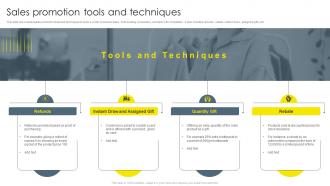
Sales Promotion Tools And Techniques





Try Before you Buy Download Free Sample Product
 Impress Your
 Audience
 100%
100% Editable
 Save Hours
 of Time


This slide showcases sales promotion tools and techniques to build a wider consumer base, hold existing consumers, and deal with competition. It also includes refunds, rebate, instant draw, assigned gifts, etc.
People who downloaded this PowerPoint presentation also viewed the following :
Sales Promotion Tools And Techniques with all 6 slides:
Use our Sales Promotion Tools And Techniques to effectively help you save your valuable time. They are readymade to fit into any presentation structure.





FAQs for Sales Promotion
So B2B customers want relationship stuff - volume discounts, better payment terms, exclusive deals. They're thinking long-term ROI and have to justify everything to their boss, which honestly makes sense. B2C is totally different though. Flash sales, BOGO offers, anything that screams "buy now or miss out!" works because people make quicker, more emotional decisions. Way shorter sales cycle too. Here's what I'd do: if you're targeting businesses, focus on building that partnership angle. For consumers? Create urgency and make it feel like they're getting a steal. Match your promo to how they actually think when they're buying.
Track your obvious stuff first - sales bump, coupon redemptions, website traffic. But the good data comes after: are people actually buying again once your promo ends? I'd watch repeat purchases and average order values super closely. Customer acquisition costs matter too. Compare everything to last year's numbers for the same timeframe or you'll have no idea what's normal. Oh, and set up some kind of dashboard before you launch - trust me, you don't want to be frantically pulling reports afterward when your boss is asking how it went.
Dude, social media is where it's at for promotions now. You can hit your audience instantly and actually get them excited about your deals. Flash sales create major FOMO, targeted ads let you zero in on exactly who you want, and influencers can blow up your reach. The analytics are amazing too - way better than old school advertising tbh. What I love most is people literally share your stuff with their friends for free. Just make sure you're on the platforms your customers actually use and don't make your content sound like a boring ad.
Templates are honestly a game changer for sales promos. Charts and visuals beat boring text dumps every single time - nobody wants to stare at walls of words. You'll be able to keep your branding consistent and show those compelling before/after scenarios that actually make people pay attention. The organization is key too. Target audience, timing, ROI projections - stakeholders can grasp everything fast when it's laid out properly. I always forget how much time they save until I'm customizing one for different teams instead of rebuilding from zero. Start simple: objectives, tactics, success metrics. That's really all you need at first.
Honestly, timing is everything with promos. Look at your analytics first - when do people actually buy from you? Black Friday's oversaturated anyway, so I'd hit those quieter months like January or March when you're not fighting everyone else for attention. Holidays are great but shoulder seasons can be goldmines. Your audience has patterns too - check email open rates and purchase history. Oh, and don't overthink the rollout timing. Two weeks of teasing is plenty; any longer and people forget you exist. Sometimes the "off" seasons work better than you'd expect.
Honestly, targeted promotions are where it's at. Check your customer data - purchase history, what they browse, demographics. You'll spot patterns like who buys seasonal stuff or sticks to certain price ranges. Timing is everything though, I've seen companies kill it just by getting that right. Hit people with discount codes for items they looked at but didn't buy. Create loyalty tiers based on spending habits. Don't blast everyone with the same boring offer - segment your audience first. Start with A/B testing on similar groups to see what actually works.
Honestly, just don't be shady about it. No fake countdown timers or made-up "original prices" - people see right through that stuff anyway. Put your terms and conditions where customers can actually find them, not buried in microscopic text at the bottom. Targeting kids or elderly people feels gross, so maybe avoid that whole thing. The promotion should actually give people the value you're advertising. Creating fake urgency is manipulative and backfires eventually. Here's my test: would you feel weird explaining your strategy to customers in person? If yes, probably rethink it.
Honestly, seasonal stuff is your best friend for promotions because people are already ready to spend. Black Friday's the big one obviously, but there's also back-to-school, spring cleaning, even tax refund season if you think about it. Map out which seasonal moments actually make sense for what you're selling - like don't force Valentine's Day if you sell lawn mowers, you know? The trick is planning way ahead, like 2-3 months out, so you're not scrambling for inventory later. Just ride those natural shopping waves when people's wallets are already open.
Dude, stick with clean charts that actually show ROI - before/after stuff hits hard. Customer testimonials with real faces work too. Revenue graphs and cost breakdowns are gold if they connect to what matters to them. I swear, messy slides are deal killers. Keep it simple. Product screenshots showing their competitor's numbers? Chef's kiss. Quick test - look at each visual and ask "so what?" If you can't answer that in like 2 seconds, trash it. Oh and usage stats work great too, just don't overcomplicate things.
Honestly, people remember stories way more than just "hey 20% off." Instead of leading with discounts, try building a little narrative first - like helping parents survive back-to-school madness rather than just pushing cheap supplies. It connects on an emotional level, you know? Stories also make your limited-time offers feel less pushy and more genuine. Think about it - when you frame promotions around actual customer problems or seasonal moments, suddenly the urgency makes sense. Your brand feels human instead of just another company trying to grab cash. Next time, maybe start with the story and let the discount be the cherry on top.
Honestly, constant discounting is such a trap! You're basically training customers to wait for sales instead of buying at full price. Your profit margins take a hit, and good luck ever getting people to pay regular prices again. Competitors might jump in with their own discounts too - then everyone's just racing to the bottom. Try stuff like free shipping or product bundles instead. Maybe exclusive early access for loyal customers? Those approaches boost sales without making your brand look cheap. Trust me, protecting your brand value is way more important long-term than quick discount wins.
So basically loyalty programs and sales promos are like peanut butter and jelly - they just work. Give your members early access to sales or bonus points during promotions. Higher tiers get better deals, obviously. The whole point is making loyal customers feel special compared to random shoppers. I mean, who doesn't want VIP treatment? Member-only discounts work really well too. You're basically rewarding people who already spend money with you, which keeps them coming back. Oh, and definitely do tiered stuff where your best customers unlock the coolest perks.
Honestly, AI personalization is where it's at right now - people want deals based on what they actually buy, not random 20% off stuff. Gamification's everywhere too. You know those spin wheels and point challenges? They work because shopping feels like playing games on your phone. Social commerce is blowing up on Instagram and TikTok feeds. Oh, and everyone's doing subscription promos plus buy-now-pay-later deals now. I'd start with personalized emails and social contests since they're pretty easy to test out. The generic discount era is basically dead at this point.
So cross-promotion is basically when you team up with another business to share customers - like a coffee shop partnering with a bookstore nearby. You're not competing, just helping each other out. The cool thing is you split the marketing costs but both get access to way more people. Think of it like when your friend introduces you to their other friends, except for businesses lol. Find companies whose customers would probably dig your stuff too. Your credibility goes up because you're associated with brands people already trust. Honestly, it's one of the smartest moves you can make. Just write down 5 local businesses that complement yours and pitch them something simple to start.
FOMO is your best friend here. Flash sales work amazing - "24 hours only" or "ends this Sunday." Throw in some quantity limits too like "only 50 left" because that scarcity thing really gets people panicked into buying. Countdown timers are kinda tacky honestly, but they convert like crazy on landing pages. Pair it with a solid discount - I usually do 20-30% off. Push it everywhere: email, social, your site. Oh and be specific about deadlines and actually stick to them. People catch on fast if you're lying about urgency.
-
My presentations were a bit amateur before I found SlideTeam’s designs. I’ve been able to find slides for nearly every topic I’ve had to present. Thanks, Slideteam!
-
I have just started downloading templates for my presentations and I must say this is a great design. It helped accelerate my presentation design process and made it more visually appealing.