


Self development plan powerpoint presentation slides





Try Before you Buy Download Free Sample Product
 Impress Your
 Audience
 100%
100% Editable
 Save Hours
 of Time


Become a better you with professionally designed content-ready Self Development Plan PowerPoint Presentation Slides. Incorporate self development plan PPT presentation slides and aim to learn new skills and interesting things. Add self development plan PPT templates, set goals, maximise your complete potential and intensify your employability prospects. This deck comprises of various templates for you to make positive choices in life. Such templates are establish your direction, identity development needs, identify learning opportunities, evaluate and review, formulate an action plan, undertake the development, record the outcomes, etc. These templates are completely editable. You can use these self development plan PPT slides as per your requirement. Develop a personal vision, manage personal development, initiate the improvement process, record personal development and more using personal development plan PPT presentation slides. Achieve career goals, enhance performance objectives, develop a specific skill or behaviour with self-development plan PowerPoint presentation templates. Our Self Development Plan Powerpoint Presentation Slides are ideal for any debut. It eases the apprehensions of a first attempt.
People who downloaded this PowerPoint presentation also viewed the following :
Content of this Powerpoint Presentation
Have you ever wondered why everyone nowadays focuses on self-development? How can self-development make you a better individual? Is self-development just about achieving success, or is there something more beyond that? Did all these questions ever come to your mind? Yes, self-development plays a crucial role in everyone's life. Be it the start of a career journey, a relationship matter, or anything else, self-development is an essential part of everyone's life.
You know this, but your gut feelings say you lack somewhere, and you need to improve yourself both professionally and personally. Well, if you are facing this, then you are not alone. Every individual has struggled with this phase and has overcome it with time.
Yes, there are seminars and sessions to gain a clearer sense of direction, but the most crucial step is establishing and following a robust strategy to succeed. There should be a quick approach to self-development strategies and goals to boost yourself. Need help on this? Then, check out our self-development templates, which cover various topics while highlighting the critical concepts of self-development. Did we mention that our templates can be tailored according to needs?
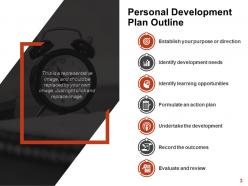
Template 1: Personal Development Plan Outline
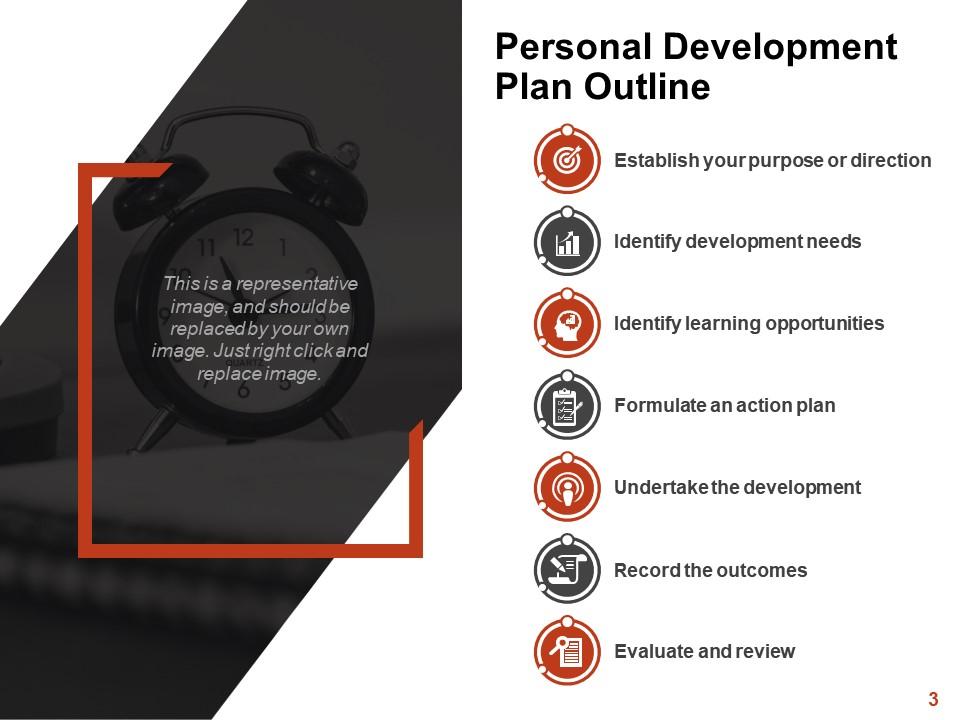
This PPT Template depicts your personal development plan outline and delineates the steps to a successful self-improvement journey. The first step is the definition of goals, and then comes a scan of the landscape to see if you have the resources and the vision. An action plan follows. As you walk on these steps, record the outcomes and evaluate your performance for better results.
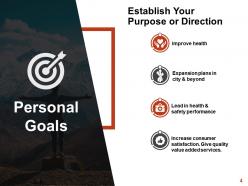
Template 2: Establish your Purpose or Direction
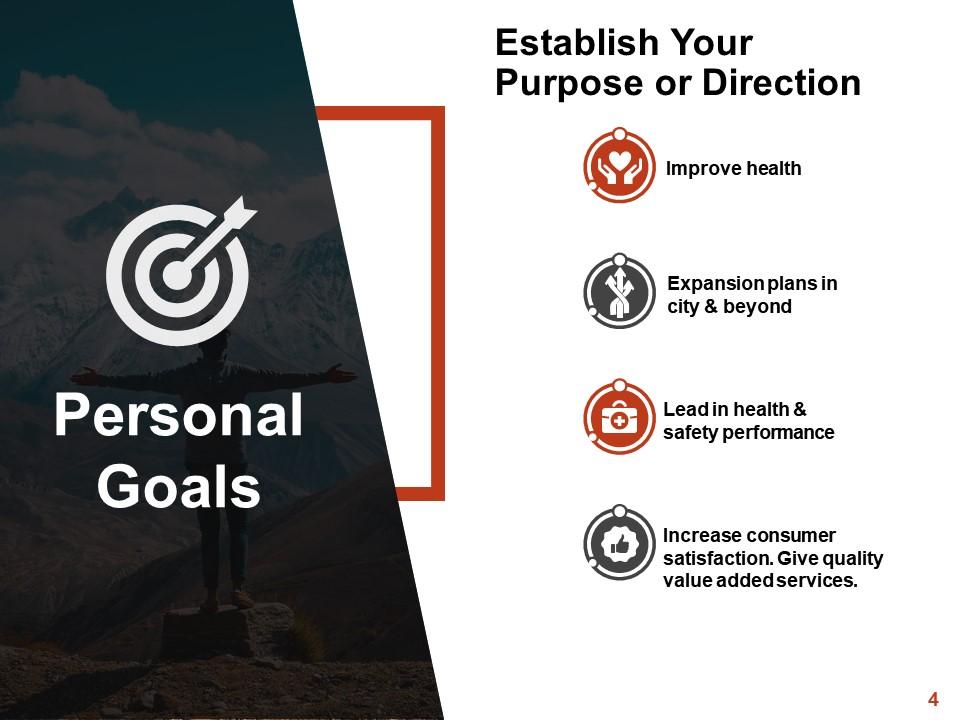
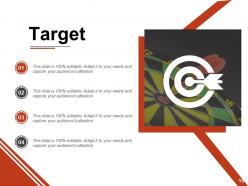
The bullseye symbol on the left always reminds you to maintain your focus. This template lets you establish your purpose, and where you want to see yourself in the coming years. Health can be one major goal that you wish to achieve, so ensure you follow a long-term diet and exercise plan.
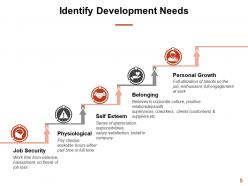
Template 3: Identify Development Needs
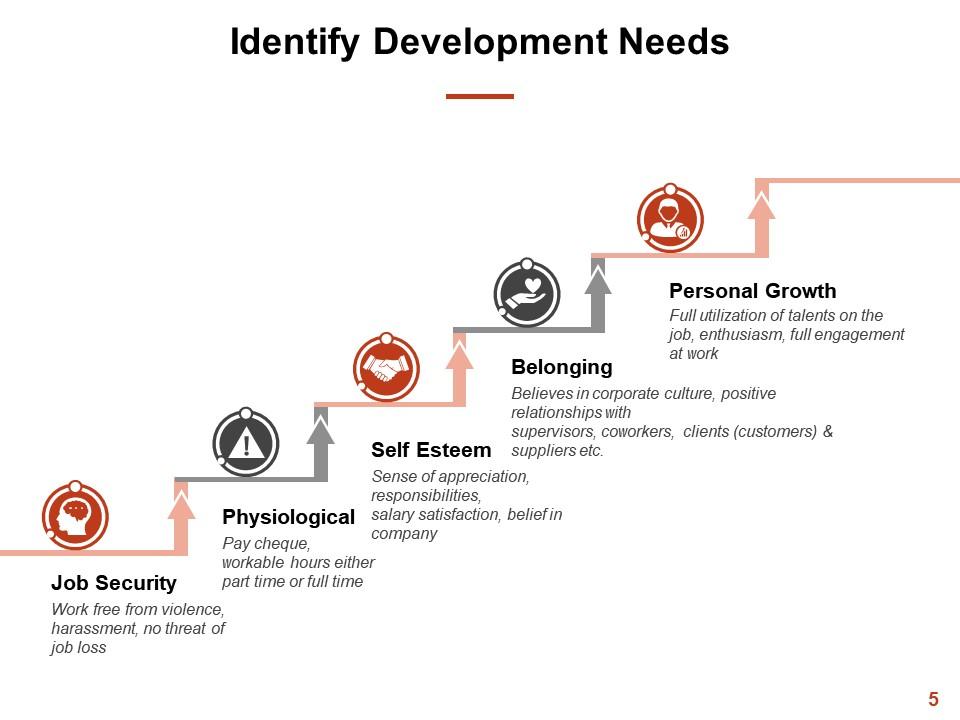
This template lets you identify the areas of improvement and allows you to develop robust strategies for improvement. It connects with the principle of Maslow's hierarchy of needs, according to which human needs are of five types and can be arranged in a pyramid. The basic need, better known as physiological need, includes a place to live, food, and water to drink. The safety need, like having a job. Following this, love and belonging needs, where one feels connected and accepted by others. Then comes the self-esteemed needs that make you feel good about yourself.
Template 4: Identifying Learning Opportunities Template
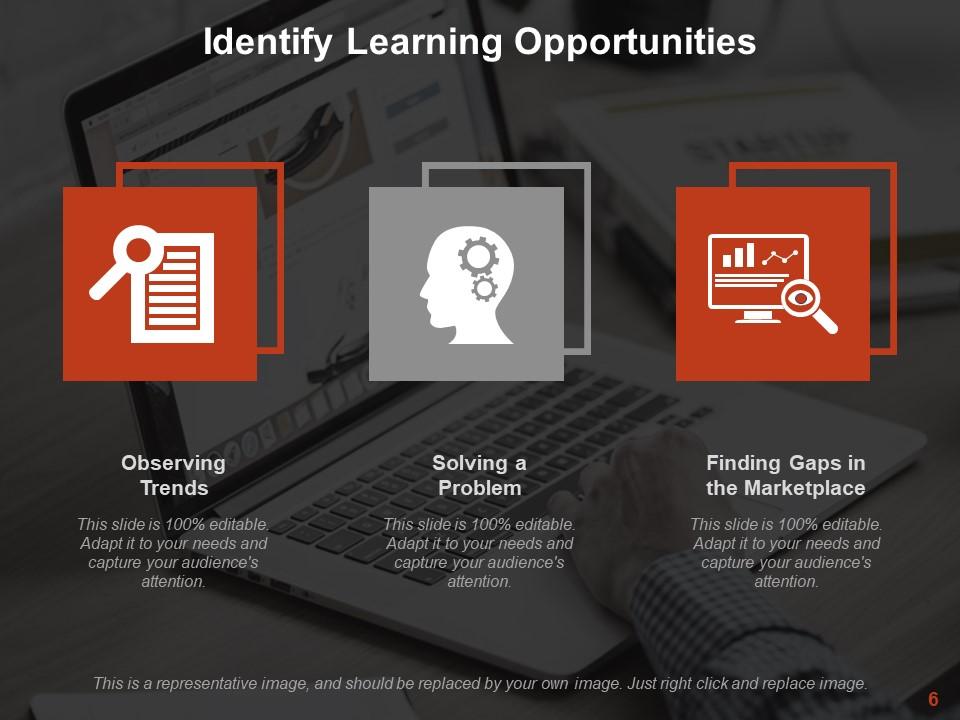
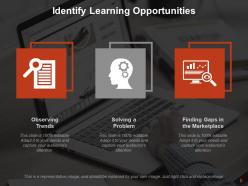
This template unlocks the learning potential of any industry, and helps you leverage the latest technologies to make informed decisions. The next stage comes is the problem-solving stage, where this template lets you unleash your creativity to brainstorm the problem. The last step in the process is to identify the gaps in the marketplace.
Template 5: Evaluate and Review
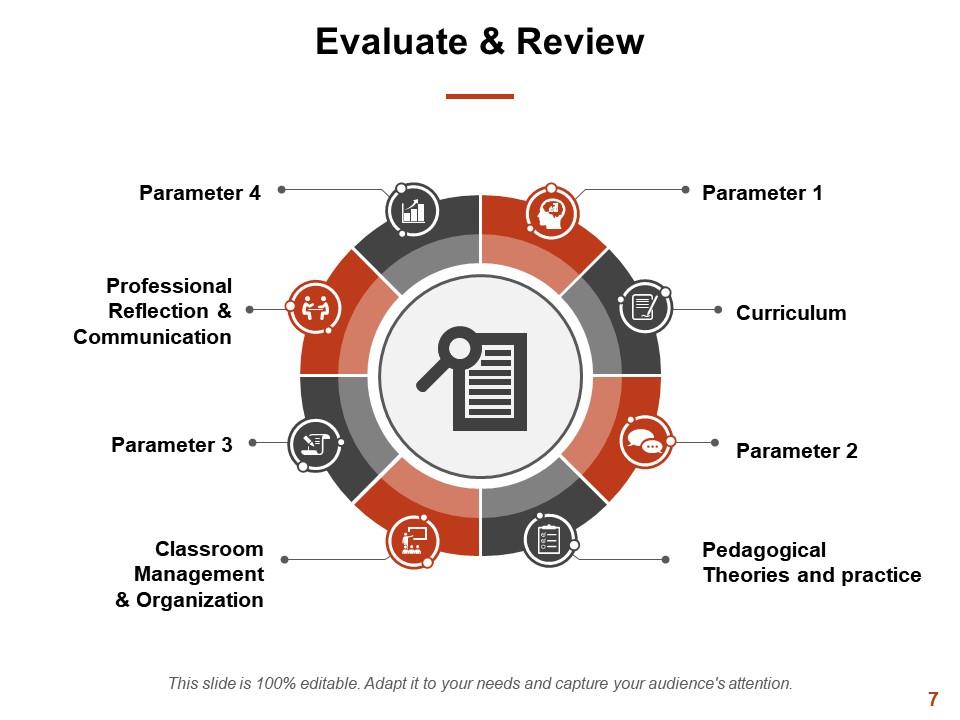
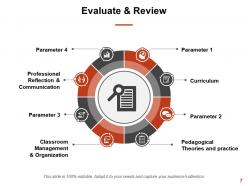
Tracking progress is one of the most difficult tasks of the self-development process. Do you know why? Self-development is subjective and needs clear metrics. It often involves confronting personal weaknesses and uncomfortable truths about oneself. This evaluation template breaks down your evaluation in a clear and easy-to-understand manner. Using this metric, you can easily visualize your strengths and areas of improvement.
Template 6: Formulate an Action Plan
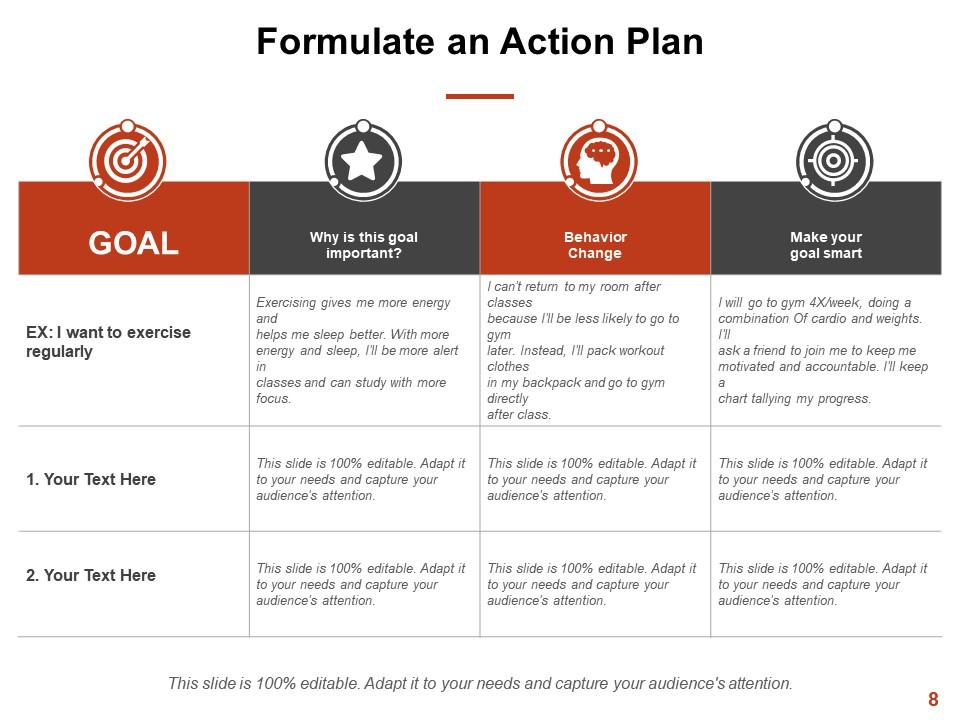
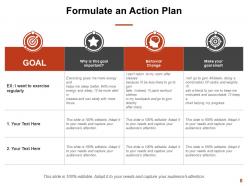
Breaking down your objective into actionable steps works best for individuals and professionals who seek growth. The template divides the entire action plan formulation process into four steps. Starting with the first step, define the objective you want to achieve. Next, step shows the significance of this goal. The following step talks about the necessary changes in behaviour to reach your goal. Finally, the last step helps you transform your aspirations into SMART goals.
Template 7: Undertake the Development
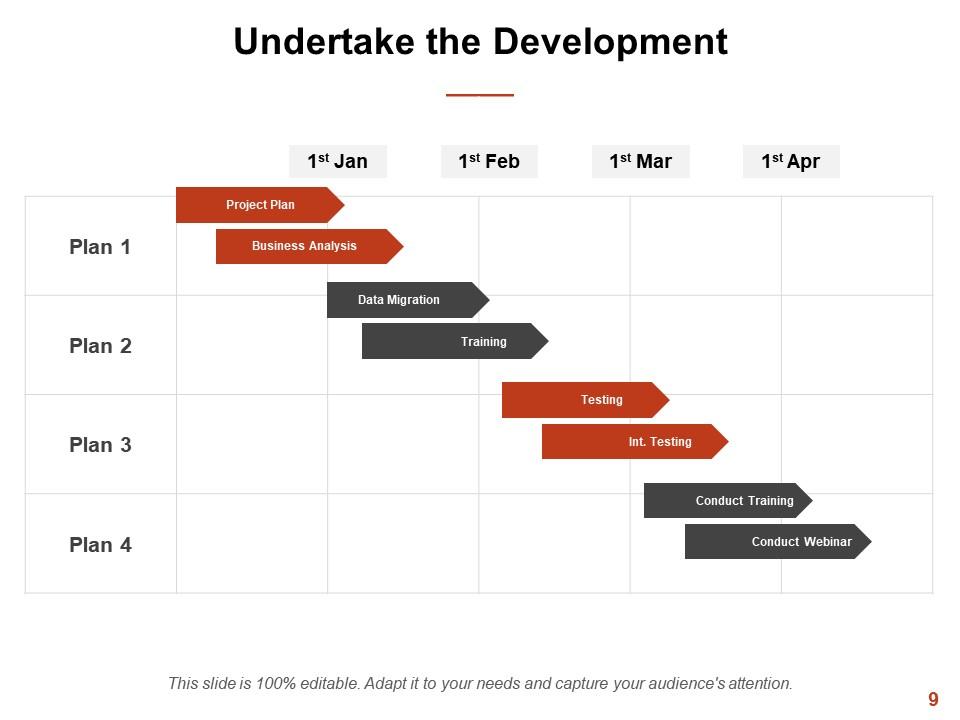
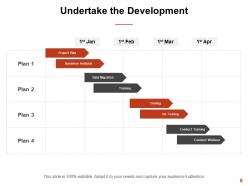
This template helps you map your growth journey to avoid any confusion. It pictorially represents the necessary data to guide you through each step of the development journey. From project plans to conducting webinars, this template has your back. Thus, it ensures that you don't overlook any deadline.
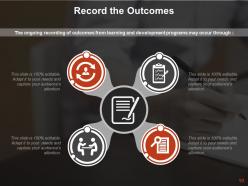
Template 8: Record the Outcomes
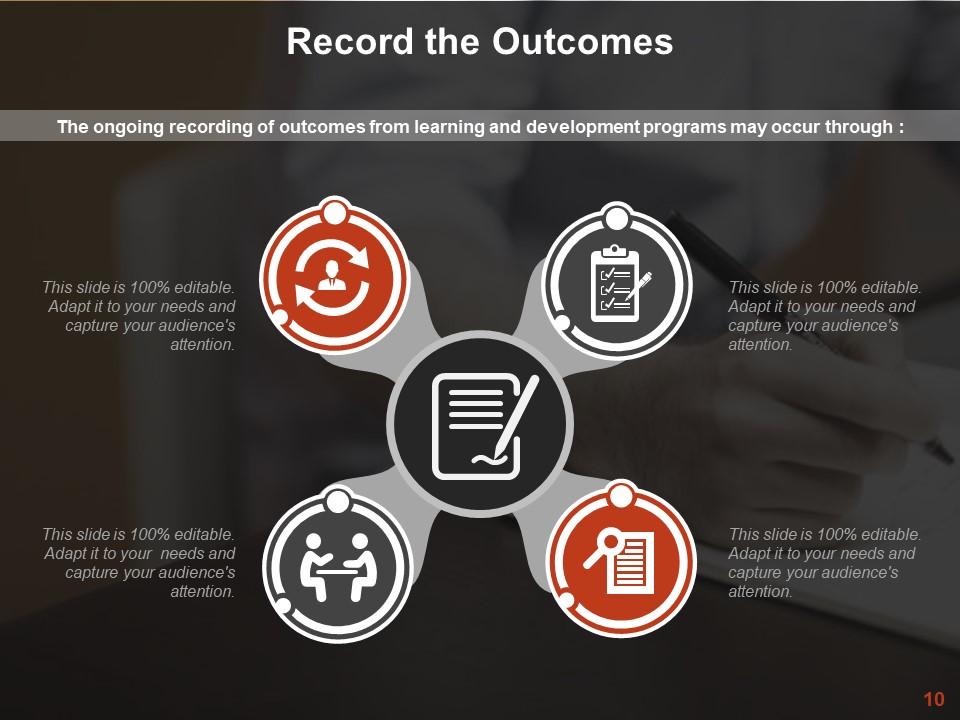
It is an easy-to-use template to record the outcomes of your self-development plan. It visually represents your progress over time and lets you understand what's working for you and what needs to be changed.
Conclusion
Walking on the road of self-development can be daunting, even for experienced professionals. Therefore, download our readymade templates, bring more clarity to the process and make your task easier. Our templates can help you stay motivated and focused throughout the development journey.
PS How about exploring our self-development orientation strategy and a checklist? We are sure our templates will help you unlock the doors to a brighter future.
Self development plan powerpoint presentation slides with all 25 slides:
Our Self Development Plan Powerpoint Presentation Slides are an irresistible draw. Compel folks to give you a hearing.





FAQs for Self development plan
Okay so first thing - pick 2-3 specific things to work on, not like 10. I learned this the hard way lol. Instead of "get better at leadership," go with something like "finish that conflict resolution course by March." Way more concrete. Figure out what skills you actually have vs what you need - be brutally honest here. Then map out a realistic timeline and what resources you'll need (courses, books, maybe finding a mentor). Set up monthly check-ins with yourself to see how you're doing. Even just writing down your thoughts works. The people who succeed at this stuff don't try to fix everything at once - they focus on a few key areas and actually follow through.
Honestly, SMART goals are game-changers because they turn vague ideas into actual plans. You know how people say "I wanna get better at public speaking"? That's basically useless. Instead, try "I'll do one 5-minute presentation at work monthly for three months." Way more concrete. The tracking part keeps you sane when progress feels slow - you can literally see you're moving forward. I'm terrible at sticking to goals without clear deadlines, so the time-bound thing really works. Write down maybe 2-3 SMART goals for whatever you're working on and check them weekly.
Look, you can't fix what you don't know is broken, right? Self-assessment shows you exactly where you're at before you start trying to get somewhere else. I've watched so many people jump straight into goals without understanding their actual strengths and weaknesses first - then they wonder why nothing changes. Get honest feedback from others, really look at your performance, figure out what you're good at and what needs work. It's like using GPS but actually knowing your starting point. Once you have that clarity, you can set goals that'll actually make a difference instead of just spinning your wheels.
Track the obvious stuff first - set real numbers like "read 2 books monthly" or "meet 5 new people this quarter." But honestly? The subtle changes matter way more. Notice when you handle drama differently or speak up in meetings. I keep a messy journal where I just dump thoughts monthly - sounds cheesy but it works. You'll miss your own progress otherwise since this stuff happens so gradually. Short bursts work better than long reflections too. The key is picking whatever method you'll actually stick with consistently.
Honestly, break that big goal into tiny chunks first. I'm weirdly addicted to crossing stuff off lists - so satisfying! Get yourself an accountability buddy too, makes such a difference. When motivation tanks (which happens to everyone), don't rely on willpower alone. Build actual systems instead. Like, make your dev work as routine as morning coffee. Oh and write down WHY you started this whole thing somewhere you'll actually see it daily. That's saved me more times than I can count. Small wins matter way more than people think.
Honestly, they're like having someone call you out when you're being lazy. You know how you'll skip your daily reading or whatever when nobody's watching? Well, now someone IS watching lol. Mentors are clutch because they've been there - they'll catch stuff you miss and suggest things you never would've thought of. I swear just knowing my mentor will ask "so how's that networking going?" makes me actually do it instead of procrastinating. Find someone who's got your back but won't buy your excuses when you slack off.
Honestly, just start with something dead simple like a spreadsheet or Notion - you'll actually stick with it that way. Habitica's pretty cool if you like the whole gaming aspect. I used to overthink this stuff way too much lol. For something more hands-on, try the Full Focus Planner or apps like Way of Life for quick daily stuff. Strides is solid too. Don't get fancy right away though. Pick whatever fits how you already work and commit to using it for 30 days before you even think about switching. Otherwise you'll just keep jumping between tools and never actually track anything.
Honestly, emotional intelligence is way more practical than people make it sound. Set phone reminders to check in with your feelings during the day - sounds silly but it works. The four big areas are self-awareness, managing your reactions, empathy, and social skills. I've gotten better at pausing before I react when I'm stressed, plus reading people's emotions more accurately. Track specific stuff like "I'll actively listen in three conversations this week" instead of some vague goal. It's made a real difference in my relationships and work life, though I still mess up sometimes.
Dude, you can't hit your self-development goals without decent time management. Period. I've watched so many friends set these awesome plans then never follow through because life just steamrolls over everything. The trick is blocking out even 30 minutes daily - treat it like you would any meeting you can't skip. Otherwise your growth plans become this fantasy list that gets buried under work emails and random errands. Honestly, consistency beats intensity every time. You'll be shocked how much progress you make just showing up regularly for that half hour.
Think of your self-development plan like a GPS that recalculates when you take a wrong turn. Life throws curveballs—new job, career switch, whatever—so your goals need to roll with it. I used to stubbornly stick to plans that made zero sense anymore (rookie mistake). Set up quarterly check-ins to see what's still working. Maybe you'll ditch those coding courses for management training, or push back deadlines because you're swamped. Industry shifts happen fast these days. Don't scrap the whole thing when life changes—just tweak it and keep moving forward.
Okay so mindfulness is basically like having a mirror for your brain - you start noticing all the dumb stuff you do automatically. Self-reflection takes it further and helps you figure out WHY you keep doing those things. I totally wrote this off as hippie nonsense for years, but it actually works. Like, you can't fix problems you don't even realize you have, right? Most people just try random self-help tactics without understanding their own patterns first. That's backwards. Start small - maybe spend 10 minutes each week writing down what went well and what sucked. You'll be surprised what patterns show up.
Don't try tackling like 10 goals at once - you'll just crash and burn. Been there, done that lol. Pick maybe 2-3 max and make them super specific, not some vague "get healthier" nonsense. The perfectionist thing will kill you too. Miss one day? So what, just keep going. Oh and actually put "review my goals" in your calendar or they'll just sit there forever. I swear people spend hours making these elaborate plans then never look at them again. Start small, see what sticks, then build from there.
Honestly, treat it like learning guitar or whatever - pick specific things to work on and actually practice them. Maybe you suck at small talk (join the club), or you're terrible at remembering names. Join some professional groups, go to industry meetups, or just try having real conversations with coworkers instead of the usual "how's your day" nonsense. Don't just wing it and hope you'll magically get better. I started tracking how awkward I felt at events, and it actually helped me see progress. The whole point is being deliberate about it rather than crossing your fingers.
You'll get stuck fast if you stop learning new stuff. The world changes so quickly now - I swear my job looks nothing like it did two years ago. Your skills need constant updates or you become irrelevant pretty quick. Learning keeps you flexible and honestly opens opportunities you never saw coming. Even something small like reading for 15 minutes or doing a short online course each week makes a real difference. Oh, and make it routine instead of just cramming when you feel behind. That's when it actually sticks and helps long-term.
Honestly, I used to burn myself out trying to keep work and personal stuff totally separate. Now I focus on skills that help both - like communication or time management. Reading about emotional intelligence? That's gold for your job AND relationships. Pick 2-3 things that would actually make a difference in both areas. Block out time for each, but don't stress when they overlap. Sometimes the best growth happens when you stop trying to compartmentalize everything. Start with what genuinely matters to you first - that's where you'll see real progress anyway.
-
Wonderful templates design to use in business meetings.
-
Informative presentations that are easily editable.