


Individual Development Plan Powerpoint Presentation Slides





Try Before you Buy Download Free Sample Product
 Impress Your
 Audience
 100%
100% Editable
 Save Hours
 of Time


Hone your skills and qualities with ready-made Individual Development Plan PowerPoint Presentation Slides. Work on your aim, set goals, increase self-esteem to new levels, enhance employability prospects, and become a better version of yourself using individual development plan PPT presentation templates. We have curated this PowerPoint presentation with professional templates for self development. Some of the individual development plan PowerPoint presentation templates are establish your purpose, identify development needs, identify learning opportunities, formulate an action plan, undertake the development, evaluate and review, record the outcomes, etc. These templates are editable. You can use them to create your own self development plan. This individual development plan PPT templates will help you choose effective choices and right decisions for personal and professional growth. Determine what you want to achieve, where you want to go, short and long-term goals, work on the development activities to meet those needs. Incorporate individual development plan PowerPoint presentation templates, raise your confidence and lead to a more fulfilling improved life. The basic concept of our Individual Development Plan Powerpoint Presentation Slides is essentially good.It has an intrinsic advantage.
People who downloaded this PowerPoint presentation also viewed the following :
Content of this Powerpoint Presentation
Slide 1: This is an introductory slide for Individual Development Plan. State Your Company Name and get started.
Slide 2: This is an Agenda slide. Present your agendas here.
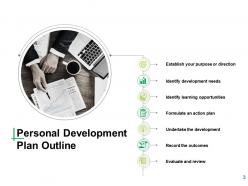
Slide 3: This slide presents Personal Development Plan Outline showcasing- Establish your purpose or direction, Evaluate and review, Identify development needs, Identify learning opportunities, Formulate an action plan, Undertake the development, Record the outcomes.
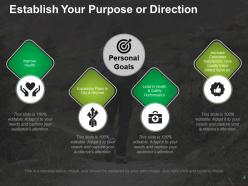
Slide 4: This slide showacases Establish Your Purpose or Direction with the following points- Personal Goals, Improve Health, Expansion Plans In City & Beyond, Lead In Health & Safety Performance, Increase Consumer Satisfaction. Give Quality Value Added Services.
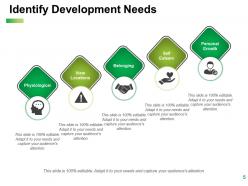
Slide 5: This slide showcases Identify Development Needs such as- Physiological, View Locations, Belonging, Self Esteem, Personal Growth.
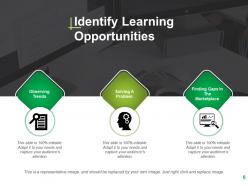
Slide 6: This slide showcases Identify Learning Opportunities in terms of- Observing Trends, Solving A Problem, Finding Gaps In The Marketplace.
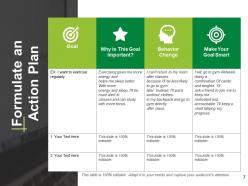
Slide 7: This slide presents Formulate an Action Plan in tabular form.
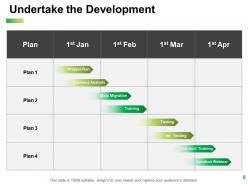
Slide 8: This slide showcases Undertake the Development in gantt chart form with the following points- Project Plan, Business Analysis, Data Migration, Training, Testing, Int. Testing, Conduct Training, Conduct Webinar.
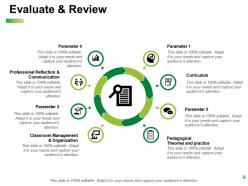
Slide 9: This slide shows Evaluate & Review with the following points- Parameters, Pedagogical Theories and practice, Curriculum, Professional Reflection & Communication, Classroom Management & Organization.
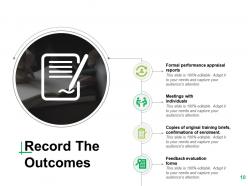
Slide 10: This slide presents Record The Outcomes in terms of- Meetings with individuals, Formal performance appraisal reports, Copies of original training briefs, confirmations of enrolment, Feedback evaluation forms.
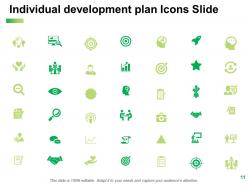
Slide 11: This slide presents Individual development plan Icons Slide. Use them as per need.
Slide 12: This slide shows a Coffee break image. You can change the slide content as per need.
Slide 13: This slide is titled Additional Slides to move forward. You can alter the slide content as per need.
Slide 14: This is Our Mission slide with Vision, Mission and Goal. State them here.
Slide 15: This is Our Team slide with names, designation and text boxes to state information.
Slide 16: This slides displays a Target image with text boxes to show information, specifications etc.
Slide 17: This slides displays a Puzzle image with text boxes to show information, specifications etc.
Slide 18: This is a Bulb or Idea image slide to show innovative information, specifications etc.
Slide 19: This slide displays magnifying glasses image with text boxes to show information, specifications etc.
Slide 20: This slide is titled Charts and Graphs. You can change the slide content as per need.
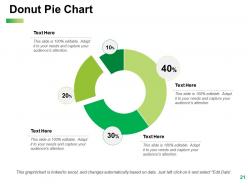
Slide 21: This is a Donut Pie chart slide. State specifications, comparison of products/entities here.
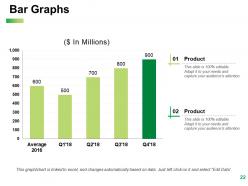
Slide 22: This is a Bar Graph slide. State specifications, comparison of products/entities here.
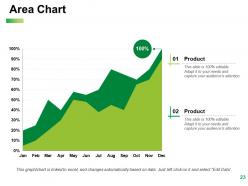
Slide 23: This is an Area chart slide. State specifications, comparison of products/entities here.
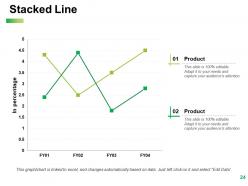
Slide 24: This is a Stacked Line graph slide to show product comparison, specifications etc.
Slide 25: This is a Thank You slide with Address# street number, city, state, Contact Number, Email Address.
Individual Development Plan Powerpoint Presentation Slides with all 25 slides:
Get folks involved in achieving common goals with our Individual Development Plan Powerpoint Presentation Slides. Give the cause to join forces.






FAQs for Individual Development Plan
So you need really specific goals that actually connect to where you want your career to go. Do an honest look at what skills you're missing right now. Then make concrete steps with actual deadlines - none of that vague "I want to get better at leadership" nonsense. Set up regular check-ins with your boss too. Find real resources like training programs or mentors who can help. Oh, and track everything! Seriously, most people write these things and never look at them again. Make your goals measurable so you'll know when you're winning.
Honestly, most people totally mess this up by treating their IDP like some fantasy career wishlist. You gotta connect what you want with what your company actually needs. Say you're eyeing a leadership role - perfect, because they probably need better project management anyway. Focus your development there. Have real talks with your manager about what opportunities are coming up. I mean, they'll know way before you do about openings or new projects. The magic happens when your growth helps the team hit their goals AND gets you closer to that next role. It's like killing two birds with one stone, but in a good way.
Check your company's HR portal first - they usually have templates sitting there. LinkedIn Learning's pretty decent for figuring out what skills you need to work on. Honestly though? A simple Google Doc works just fine if you want flexibility. Your manager probably knows about fancier platforms like Cornerstone, but those are honestly way more complicated than they need to be. I'd skip the bells and whistles for now. Pick something you'll actually stick with - that's what matters most. Start basic, set maybe 2-3 goals you can check on every few months. Keep it simple.
Check it every quarter to see how you're doing on your goals. Honestly, priorities shift constantly so you'll probably need to adjust things anyway. Once a year, do a bigger review where you look at your whole career direction and figure out new areas to work on. I learned this the hard way - don't just write it once and ignore it for months. Major stuff happens fast. New role, tough feedback, company restructuring? Update that thing immediately or it becomes useless. The quarterly thing keeps you honest, but the annual review is where you actually think big picture.
Your manager and mentor are like your IDP wingmen, honestly. Managers help you set goals that actually make sense for your career path and the business - plus they control the budget for training and can create those stretch assignments. Mentors? They've been there before and can warn you about the landmines you haven't stepped on yet. Without both of them, your IDP is basically just a nice document collecting digital dust. Regular check-ins are crucial though. Don't wait around for them to reach out - you need to drive those conversations yourself.
Honestly, most places treat development planning like some annoying HR task they have to check off. Your managers need to actually care about it - like really asking about growth goals in one-on-ones and then following up with real resources. People should feel safe admitting they suck at something without worrying it'll hurt them later. I've worked places where saying "I need help with X" felt dangerous, which is nuts! Train your managers to have decent conversations about this stuff. Budget for it properly. When someone levels up, celebrate that win. Oh, and connect development to actual career moves - otherwise people see right through the BS and know it doesn't matter.
Honestly, the trick is just not letting your IDP become this massive thing you avoid. I break mine into monthly chunks - way less scary that way. Schedule those check-ins with your manager too, because otherwise they never happen (learned that the hard way). Oh, and here's what actually works - connect your goals to stuff you're already working on. You're not adding more to your plate, just being smarter about the growth ops that are right there. Build in some wiggle room because priorities always shift. That's just life. Most people write these things once and forget about them, but if you make it manageable from the start, you'll actually stick with it.
Figure out how your brain actually works first - visual learner? Hands-on? Love reading everything? Match your development activities to that. Like if you're visual, skip the boring articles and go for workshops or infographics instead. Honestly, the biggest thing is being real about what you actually want career-wise. Leadership track needs totally different skills than staying technical. Don't just follow what sounds impressive, you know? Pick 2-3 concrete goals, then find learning methods that won't make you want to quit after a week. Trust me on this one.
Honestly, you'll want to track both the obvious stuff and the more subtle signs. Skill assessments and training completion rates are good starting points. Performance reviews before vs after tell a pretty solid story, though other things can mess with those numbers too. I'd pick 2-3 specific metrics when you first set up the IDP - don't go overboard. Manager feedback matters a lot here. Check in quarterly to see if you're actually making progress on what counts for their growth. The trick is measuring real development, not just ticking boxes because it feels productive.
Look, IDPs work because people actually feel valued when you invest in their growth instead of just squeezing productivity out of them. Your team will stick around way longer when they see a real path forward. Regular goal-setting keeps them focused on building their future at your company rather than job hunting. Honestly, most managers sleep on this - it's such an easy win. Just ask your people what skills they want to build. That one conversation alone makes a huge difference, trust me.
Don't let your IDP just sit there collecting dust! Bring it up during your regular one-on-ones with actual examples of what you're working on. I swear, people treat development planning like it's completely separate from their day-to-day performance - drives me crazy. Your manager should see how your development stuff is affecting your work and vice versa. Keep notes throughout the year on wins, roadblocks, whatever. That way your formal review won't be this awkward scramble to remember what happened six months ago. Basically, make development part of your ongoing conversations instead of saving it all for one big annual dump.
Honestly, tech makes IDPs so much easier to manage. Apps let you track progress in real-time and send you reminders so you don't forget about your goals. There's a ridiculous amount of online learning content now too - some platforms even create custom learning paths based on what you do and where you want to go. Way better than those old paper forms we used to fill out once a year. You can share everything with your manager instantly instead of those endless email threads. I'd start with whatever your company already has, then maybe look at LinkedIn Learning if they don't offer much.
Don't make your IDP super vague - like "get better at communication" means nothing without actual steps. Pick 2-3 solid goals max. I've seen people try to tackle like 10 different skills and they just burn out. Make sure whatever you choose actually matters for where you want to end up career-wise, not just stuff that sounds good. Set real deadlines and check-in dates. Oh and definitely loop in your manager regularly - they need to know you're serious about this thing.
Pick 2-3 areas outside your department that actually interest you or would help your role. Marketing person? Maybe data analysis or UX basics. Then get specific about it in your IDP - set up job shadowing, crash other teams' meetings, or grab small cross-department projects. Lunch and learns work great too, honestly less intimidating than formal stuff. I'd definitely work with your manager on this since they can open doors. Just don't make it vague like "learn finance sometime" - you need real timelines and ways to measure if it's working.
Dude, regular feedback on your IDP is seriously clutch. Monthly check-ins with your manager - even just 15 minutes - stop you from chasing the wrong stuff for months. Your goals stay current instead of becoming totally irrelevant. Annual reviews? Pretty much garbage for real development. But when you're getting consistent input, you can pivot quickly if something's not working. It keeps you motivated too since you actually see progress getting noticed. I know it sounds like extra work, but those brief touchpoints make a massive difference in staying on track.
-
Great thanks
-
Great product with effective design. Helped a lot in our corporate presentations. Easy to edit and stunning visuals.
-
Designs have enough space to add content.