


Self presentation infographic slide layout powerpoint guide





Try Before you Buy Download Free Sample Product
 Impress Your
 Audience
 100%
100% Editable
 Save Hours
 of Time


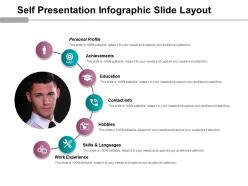
Establish a firm grip on your finances using our, self-presentation infographic slide layout PowerPoint guide. Include your employee image here in this PPT design and feature your characteristics, experience, personal information, and professional profile. seven distinct stages are shown here in this PPT which are, personal profile, achievements, education, contact information, hobbies, skills and language, and work experience. Use this PPT design to highlight your key points, portray your image to you seniors through this design in a confident manner. This PPT design has been thoroughly planned by our team to give your readers an insight into how to perform themselves well for a thriving interview. Use this deck to convey the job brief and basics at one click. Convey your message through this business profile PPT as it is designed to be a summary of your business and the business plan. Download our, self-presentation infographic slide layout PowerPoint guide and multiply your productivity, help the observer to understand the method. Proceed now at one click of a button. Make yourself comfortable with our Self Presentation Infographic Slide Layout Powerpoint Guide. Your thoughts will be in their elements.
People who downloaded this PowerPoint presentation also viewed the following :
Self presentation infographic slide layout powerpoint guide with all 5 slides:
All you have to do is dip into the basket of our Self Presentation Infographic Slide Layout Powerpoint Guide. You will discover an array of goodies.
FAQs for Self presentation infographic slide
Honestly, it's all about being consistent and authentic - but also knowing your audience. Your vibe needs to match the situation, whether that's a chill team check-in or some big client thing. Body language is huge too (like, way more than people realize). Good posture literally makes you look more confident. Listen well, be clear when you talk, and don't try to be someone you're not. Oh, and here's what really helped me - I picked like 2-3 qualities I wanted to be known for professionally and just stuck with those. Makes decisions way easier when you know what you're going for, you know?
Body language is huge - like way more than people realize. Stand tall, make eye contact, keep your arms uncrossed. Seriously, I've seen brilliant people get ignored just because they looked nervous while talking. People trust what they see over what you're actually saying, which is kinda weird but true. Fidgeting or looking at the floor kills your credibility instantly. Even if your idea's amazing, you'll look uncertain and people won't buy it. Practice confident gestures and steady posture - sounds cheesy but it actually works. Your body either backs up your words or totally undermines them.
Dude, stories are way better than just listing off your skills like a robot. Nobody remembers "I'm detail-oriented" but they'll totally remember when you tell them about that time you caught a massive error right before the client presentation. It makes you seem like an actual person instead of a walking resume. Plus people connect with stories emotionally - that's just how our brains work. So next time you're talking about your experience, throw in a specific example. Way more memorable than generic buzzwords, trust me.
Honestly, visual aids are a game changer for presentations. Your audience gets something to look at instead of just staring at you the whole time - which honestly feels awkward for everyone. Charts and slides help hammer home your main points too. Our brains are wired to remember stuff better when we both see and hear it. They're also great backup if you blank out mid-sentence (happens to the best of us). Just don't get crazy with animations and effects. Keep it simple and use them to showcase your big wins or goals. Clean slides beat flashy ones every time.
Okay so preparation is everything - know your stuff cold so you're not panicking about what comes next. Those power poses actually work btw, I was skeptical too but standing like Superman for 2 minutes genuinely helps lol. Practice your opening especially since that's when nerves hit hardest. Talk slower than feels right. Find the friendly faces and make eye contact with them instead of the grumpy ones. Oh and have a backup plan for when tech inevitably fails - just knowing you've got it covered keeps you way calmer. People are rooting for you anyway.
Oh man, this is so true - I've definitely messed this up before! Americans are taught to brag about themselves basically, while in places like Japan you're supposed to be super humble. It's wild how different it is. Some cultures want you to be direct and just say what you mean, others rely on reading between the lines and knowing people personally first. I swear, what feels totally normal to me can sound either arrogant or way too passive depending on who I'm talking to. You really have to watch how people communicate in their culture first, then try to match that energy somewhat.
Honestly, the worst thing you can do is try being someone you're not - it's so obvious and cringey. Don't just ramble about yourself either; actually connect with them. I see people bomb basic questions because they didn't prep at all, which is just... why? Overselling yourself makes you sound desperate. You want to practice enough so you're not stumbling around, but if you're too rehearsed you'll sound like a robot. Tell actual stories that show what you can do instead of listing off achievements. It's about finding that sweet spot between confident and conversational, you know?
Honestly, it's all about knowing who you're talking to. Executives want the bottom line and big picture stuff. Technical people? They actually want those nitty-gritty details. I made this mistake once where I got super technical in a sales pitch - crickets. Clients just care about what's in it for them, which makes sense. Watch what each group responds to. Some love data, others are all about relationships. Then match their vibe but don't be fake about it. Pick 2-3 groups you deal with most and practice switching gears between them. It gets easier once you nail down their "language."
Honestly, feedback is like having a mirror held up to how you actually come across. People will tell you stuff you'd never notice - maybe you interrupt too much or sound defensive when you're just trying to explain something. I still cringe remembering when someone told me I crossed my arms constantly (made me look super unapproachable apparently). Ask someone you trust what they'd tweak about how you present yourself. Then actually try their suggestions, even if it feels weird at first. You'll be surprised how differently people start responding to you once you make those small adjustments.
Ditch the boring "Hi, I'm Sarah from accounting" opener - literally everyone does that. Start with something that actually grabs attention instead. Maybe a weird fact about yourself or a quick story that connects to what you do. I've seen people open with questions too, which works if it's not cheesy. When you wrap up, try to tie back to however you started. Then give people something concrete - like "let's grab coffee" or whatever makes sense. Oh, and definitely practice saying both parts out loud beforehand. Trust me on this one, it'll feel way more natural when you're actually doing it.
Honestly, personal branding is just your professional reputation but way more intentional. When someone hears your name, what do they think? That's your brand right there. Sure, a good LinkedIn helps, but it's really about consistency - how you talk in meetings, which projects you go after, all that stuff. I'd start by picking 2-3 strengths you actually want to be known for (not just random skills). Then just... be that person every day? Like if you want to be the "creative problem-solver," actually solve problems creatively. It sounds obvious but most people skip this part and wonder why nobody notices them.
Canva and PowerPoint are solid for visual stuff, and LinkedIn has decent summary examples. But honestly? Just creeping on profiles in your field works way better than those generic templates. For writing, Grammarly helps with tone and Hemingway Editor keeps things punchy - though sometimes Hemingway makes everything sound a bit robotic. Try the STAR framework (Situation, Task, Action, Result) when you're talking about what you've accomplished. Pick one tool first, make a basic template, then tweak it for different situations. You'll need versions for networking, interviews, social media, whatever.
Okay so this might sound weird but record yourself on your phone first. Yeah, it's cringy to watch back but you'll catch all those "um"s you don't realize you're doing. I'd focus hard on nailing your opening and closing since that's when you're most nervous. Run through your main points out loud a bunch - just don't memorize it word for word or you'll sound like a robot. Oh, and definitely practice potential questions if you can. Nothing worse than getting blindsided. Try timing yourself too so you're not speeding through everything. Mirror practice works, or grab someone you trust for feedback.
Okay so basically your online stuff IS your first impression now - LinkedIn, GitHub, maybe even Twitter if you're not careful lol. Recruiters literally Google everyone, so you gotta clean up those weird old posts. I learned this the hard way! Make sure all your profiles match up and tell the same story about who you are work-wise. Personal websites are huge too if you have one. It's kinda annoying how much we have to think about this now, but honestly? Better to just accept it and get ahead of it than pretend it doesn't matter.
Honestly, just watch people's faces while you're talking - are they actually listening or checking their phones? Body language tells you everything. Ask a few people you trust for real feedback afterward (yeah it's awkward but whatever). Did you get what you wanted from the presentation? That's probably the biggest indicator right there. I always try to remember what got good reactions so I can do it again next time. Oh and if people are asking good questions during, that usually means you're connecting with them.
-
Top Quality presentations that are easily editable.
-
Professional and unique presentations.
-
cool