


Seo services proposal powerpoint presentation slides




Try Before you Buy Download Free Sample Product
 Impress Your
 Audience
 100%
100% Editable
 Save Hours
 of Time


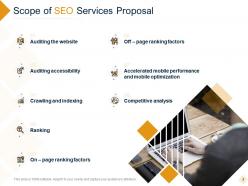
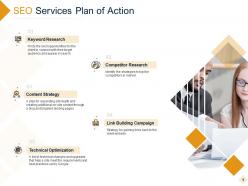
Search engine optimization helps to increase the existing traffic of a website. It also assists in maximizing the online presence of the business. The main purpose of SEO is to improve the web page’s organic visibility in the search engine result pages. Search engine optimization mainly focuses on enhancing the quantity and quality of the website’s traffic. Digital marketers use this tool to promote their brand on the website and reach out to more customers. Presenting our content ready SEO Services Proposal PowerPoint Presentation Slides that help you to turn your prospects into clients. Boost the online presence of your client’s website by using this visually-appealing SEO services proposal PPT layout. Pitch your services to the clients and move a step ahead of the competition with the aid of our search engine optimization proposal presentation template. Incorporate our eye-catching SEO proposal PowerPoint theme and tweak the information on your cover letter as per your requirements. Clearly explain the SEO plan of action in a presentable format using this topic-specific search engine optimization proposal PPT slide. In the scope of SEO, you can mention the services like auditing the website, auditing accessibility, crawling & indexing, ranking, on-page & off-page ranking factors, and mobile optimization. Take the assistance of this outwardly engaging and useful SEO services proposal PPT slide to determine your plan of action that involves the keyword research, content strategy, technical optimization, competitor research, and link building campaign. Provide a cost estimation of your services to the clients with the help of our search engine optimization proposal PPT theme. Employ this well-informed SEO services proposal PowerPoint layout to portray the search engine optimization tools & techniques your experts use to measure the website ranking. Promise to deliver the verifiable results to your clients by downloading our ready-to-use SEO services proposal PowerPoint presentation template.
People who downloaded this PowerPoint presentation also viewed the following :
Content of this Powerpoint Presentation
Slide 1: This slide displays SEO Services Proposal. State Company name and begin.
Slide 2: This slide displays Cover letter.
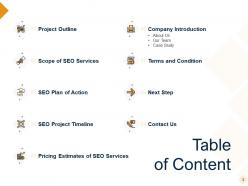
Slide 3: This slide showcases Table of Content of presentation.
Slide 4: This slide shows Table of Contents.
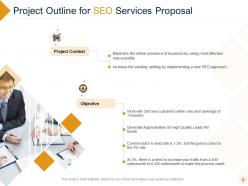
Slide 5: This slide shows Project Outline For SEO proposal
Slide 6: This slide depicts Table of contents
Slide 7: This slide depicts Scope of SEO Proposal Services.
Slide 8: This slide displays Table of Content.
Slide 9: This slide showcases SEO Proposal Plan of Action.
Slide 10: This slide depicts Table of Content.
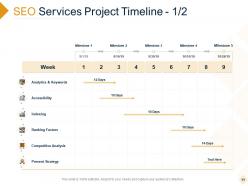
Slide 11: This slide represents SEO Proposal Project Timeline.
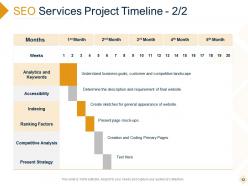
Slide 12: This slide showcases SEO Proposal Project Timeline.
Slide 13: This slide displays Table of Content.
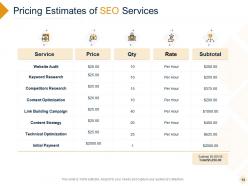
Slide 14: This slide represents Pricing Estimates of SEO Proposal Services.
Slide 15: This slide shows Table of Content.
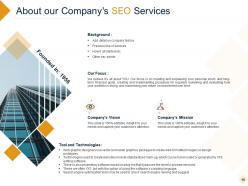
Slide 16: This is About Us slide for SEO Proposal. Showcase Company details, Vision, Mission, Goals etc.
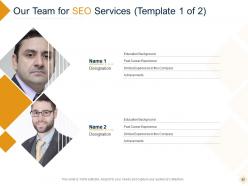
Slide 17: This is Our Team slide with Names and Designations.
Slide 18: This is Our Team slide with Names and Designations. Write in brief (4-5 lines) on team member’s education background, past career experience, similar experience in this company, achievements etc.
Slide 19: This slide displays Client Testimonials for SEO Proposal.
Slide 20: This slide shows Case Study for SEO Proposal. Project Goals, Our Solution, Results.
Slide 21: This slide shows Table of Contents.
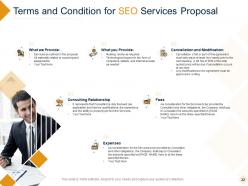
Slide 22: This slide describes Terms and Condition for SEO Proposal.
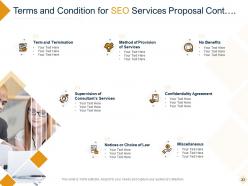
Slide 23: This slide is continued with Terms and Condition for SEO Proposal.
Slide 24: This slide displays Next Steps for SEO Services Proposal.
Slide 25: This is Contact Us slide with Address, Contact number and Email address.
Slide 26: This is Icons Slide for SEO Services Proposal.
Slide 27: This slide is titled as Additional Slides for moving forward.
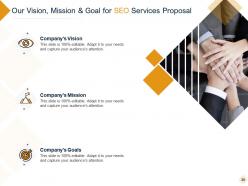
Slide 28: This slide displays Our Vision, Mission & Goal for SEO Services Proposal.
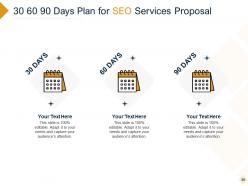
Slide 29: This is 30 60 90 Days Plan slide.
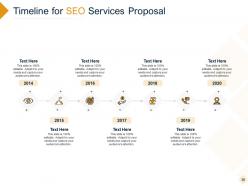
Slide 30: This slide displays Timeline for SEO Services Proposal.
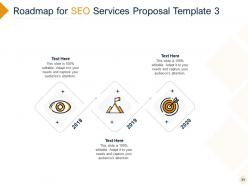
Slide 31: This slide displays Roadmap process.
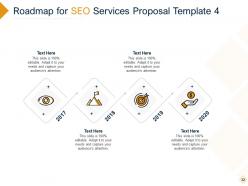
Slide 32: This slide depicts Roadmap for SEO Services Proposal.
Slide 33: This slide also displays Roadmap for SEO Services Proposal Template 5.
Slide 34: This slide shows Roadmap for SEO Services Proposal Template 6.
Slide 35: This slide showcases Roadmap for SEO Services Proposal Template 7.
Seo services proposal powerpoint presentation slides with all 35 slides:
Harness available forces with our SEO Services Proposal Powerpoint Presentation Slides. Get them all acting in your favor.













FAQs for Seo services proposal
Start with a solid website audit and keyword research - that's your foundation. Pricing needs to be upfront because hidden fees are the worst. Throw in competitor analysis and technical fixes you'll handle. Content strategy recommendations are huge too. Show them exactly what metrics you'll track, like traffic growth and conversions. Case studies work great if you've got them - people love seeing real results. Oh, and timelines matter more than you'd think. Give them a clear roadmap with deliverables and when they'll start seeing movement. Keeps everyone on the same page.
Start with a basic SEO audit - check your current rankings and organic traffic in Analytics. Search Console shows what keywords you're actually ranking for (honestly, it's always more random than you'd expect). Look at site speed and mobile stuff too. Don't go crazy with it though. Do some quick competitor research - the free version of SEMrush works fine, or just Google your main keywords and see who's dominating. Having this info makes you look prepared when talking to agencies. Plus you'll actually understand what they're proposing instead of just nodding along.
Focus on metrics that actually matter to their wallet - organic traffic growth, better keyword rankings, more conversions from search. Nobody cares about vanity numbers anymore, honestly. Connect everything back to revenue or leads they're getting from Google. Also throw in some technical stuff like site speed improvements since that's huge for rankings now. Oh and make sure you put actual numbers and deadlines on everything - like "increase organic traffic 40% in 6 months." That way you can't wiggle out of proving results later. Clients love seeing concrete goals they can track.
Yeah, keyword research is huge - honestly can't stress this enough. It shows clients exactly which search terms you're going after and helps estimate traffic potential. Without it, you're basically guessing what might work, which looks pretty amateur. The data also reveals content gaps and search intent, plus it sets realistic expectations for timelines. I usually go with 3-5 solid keywords that actually tie to their business goals. Oh, and it totally justifies your entire strategy too - clients love seeing the logic behind your approach.
Organic traffic and keyword rankings are your bread and butter - track those first. CTR from search results matters a ton too since it shows people actually want to click your stuff. Bounce rate and time on page? Yeah, Google's watching those signals now so don't ignore them. Conversion rates obviously (that's what pays the bills). If your client has a physical location, local metrics are clutch. Monthly reports work best, but honestly, focus on metrics that actually move revenue. Nobody cares if your impressions look pretty if they're not making money.
Honestly, you've gotta dig deep into each industry first. Restaurants care about "near me" searches and Google My Business stuff, but B2B software companies? They want long-tail keywords and thought leadership. I spend way too much time lurking in industry forums - feels like spying but it works! Don't just swap company names in some template. Actually learn what drives their traffic and conversions. Drop competitor names in your proposal, use their jargon naturally. Structure everything around what you discover about their space. It's the difference between looking like you get it vs. another generic pitch.
Honestly, you can't write a decent SEO proposal without doing competitor analysis first. It's like going into a fight blindfolded otherwise. Look at what keywords they're ranking for and where their content sucks - that's where you'll find your opportunities. Their backlink game tells you how hard this'll be too. I usually throw in 3-5 main competitors so clients can see the full picture. Plus it makes your timeline way more realistic when you can show them "hey, this competitor has been at it for 2 years, so here's what we're working with."
Definitely make the maintenance stuff its own section in your proposal. Break down monthly tasks - keyword tracking, content tweaks, technical checkups, reporting, the whole deal. Honestly, I've watched so many agencies mess this up by being vague about post-launch work. Clients get confused and cranky later. Show them exactly how much time each task takes and explain why SEO needs constant babysitting (it really does). Set clear response times for when stuff breaks. Give them realistic expectations about ongoing results too - nobody wants those awkward "where are my rankings?" conversations three weeks in.
Here's what I'd do - set up three packages (good/better/best) but pitch the middle one first. People almost always go with that anyway, it's so predictable. Make sure you're crystal clear about what's in each tier, none of that industry mumbo-jumbo that confuses everyone. Include timelines and what they can expect to see happen. The key thing? Don't just list features - actually explain how this stuff will help their business make more money. ROI is what they really care about, even if they don't say it upfront. Wrap it up with something like "which option sounds right for your goals?" Gets them talking instead of just sitting there.
Dude, forget just listing what you *can* do - show actual proof with real numbers. Like "boosted organic traffic 156% in 8 months for Client X" with screenshots and graphs. People eat that stuff up. Throw in 3-4 detailed case studies because honestly, I get so annoyed when agencies just list vague services without backing anything up. Client testimonials mentioning specific results help too. Don't forget your team's certifications and experience years. The whole thing comes down to being super specific - literally anyone can say they're SEO experts, but the data? That's what actually matters.
Okay so for local SEO you'll definitely want Google Business Profile optimization - that's like the foundation. Then hit local keywords and build citations on Yelp, Yellow Pages, all those directories. NAP consistency is critical though, seriously one wrong phone number screwed me over once. Reviews matter tons too, so include management for those. Create geo-targeted pages for different areas you serve. Oh and schema markup helps Google understand your business data better. Local link building from community groups works great. Honestly I'd start with auditing what they have now - shows them exactly what's broken.
Yeah, mobile-first indexing and Core Web Vitals are total musts for your proposal. Google's basically forcing everyone mobile-first now. Focus on page speed, responsive design, mobile usability testing - the whole shebang. I'd throw in UX metrics like bounce rate and time on page as KPIs since they actually affect rankings now. Oh, and definitely include mobile site audits and performance monitoring as deliverables. AMP might be worth mentioning if it fits their industry. Just explain how fixing mobile UX boosts both search rankings and conversions - clients love that direct connection.
Dude, be honest about timelines from the start - this stuff takes months, not weeks. Never promise specific rankings because Google's always changing things up. I learned this the hard way watching other agencies crash and burn by overpromising clients ridiculous results. Stick to white-hat methods only and explain what's actually in your control versus what isn't (like competitors or algorithm changes). Document everything too. Oh, and maybe mention upfront that SEO isn't some magic overnight fix - some clients still think it works that way somehow.
Just make a simple visual timeline or Gantt chart with realistic date ranges - not exact dates because that'll bite you later. Break it down: audit done by weeks 2-3, then initial fixes in month 2, ranking improvements around months 3-6. Clients eat this visual stuff up, honestly makes them feel way more confident. Always build in buffer time because SEO projects go sideways constantly. Their delays with content approvals will mess up your timeline guaranteed. Oh and list exactly what they get at each milestone - saves you from those "so what am I paying for?" conversations down the road.
Oh totally, list the specific tools! Google Analytics and Search Console are no-brainers - they're free and clients love that. For keyword stuff, maybe suggest SEMrush or Ahrefs, but heads up, they're kinda expensive for smaller budgets. Google PageSpeed Insights works great for the technical side. Screaming Frog's solid for site audits too, though the name sounds weird lol. Here's the thing though - don't just dump tool names on them. Actually explain what each one does for their business. Also be upfront about whether you'll teach them how to use everything or just send monthly reports.
No Reviews