


Service level management powerpoint presentation slides





Try Before you Buy Download Free Sample Product
 Impress Your
 Audience
 100%
100% Editable
 Save Hours
 of Time


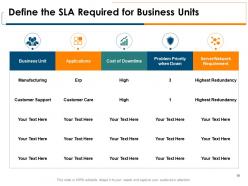
Elucidate the methods to enhance your offerings using this Service Level Management PowerPoint Presentation Slides. This product performance PPT slideshow depicts challenges of SLM, implementation of SLM, service elements, etc. Take advantage of this service rate PPT template to showcase the need for SLM processes such as improvement of service delivery, etc. Take the assistance of these service quality PPT slides to portray the challenges that thwart process implementation such as customer representative, etc. Utilize this service level agreement PPT visual to demonstrate the stages of the SLM process like updating service framework, identifying service requirements, activating service, etc. Moreover, you can unveil the performance indicators of SLM namely SLAs under review, the fulfillment of service levels, monitored SLAs, etc. Define the service level that is requisite for various business units like manufacturing and customer support using these service management visuals. Download this service quality PPT infographic and provide a seamless experience to your present as well as potential clients.
People who downloaded this PowerPoint presentation also viewed the following :
Content of this Powerpoint Presentation
Slide 1: This slide introduces Service Level Management. State Your Company Name and begin.
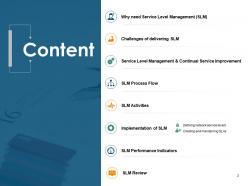
Slide 2: This slide shows Content of the presentation.
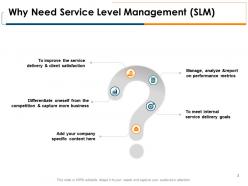
Slide 3: This slide explains Why Need Service Level Management (SLM).
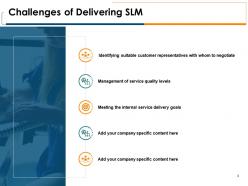
Slide 4: This slide presents Challenges of Delivering SLM as- Identifying suitable customer representatives with whom to negotiate, Management of service quality levels, Meeting the internal service delivery goals, etc.
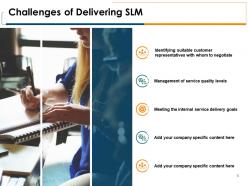
Slide 5: This is an optional slide showing Challenges of Delivering SLM.
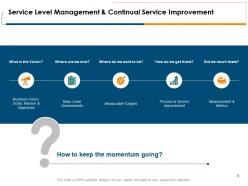
Slide 6: This slide displays Service Level Management & Continual Service Improvement.
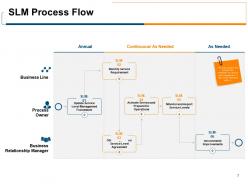
Slide 7: This slide represents SLM Process Flow undertaken for service level management.
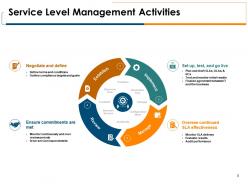
Slide 8: This slide showcases Service Level Management Activities as- Oversee continued SLA effectiveness, Ensure commitments are met, Set up, test, and go live, Negotiate and define.
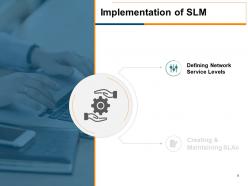
Slide 9: This slide shows Implementation of SLM with related imagery.
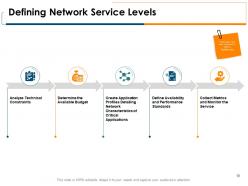
Slide 10: This slide presents Defining Network Service Levels with related icons and text.
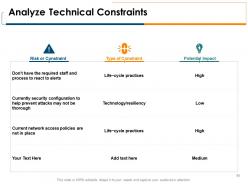
Slide 11: This slide displays Analyze Technical Constraints.
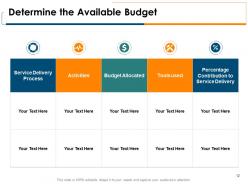
Slide 12: This slide represents Determine the Available Budget in tabular form.
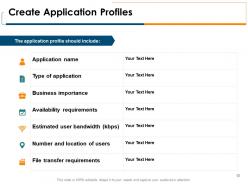
Slide 13: This slide showcases Create Application Profiles.
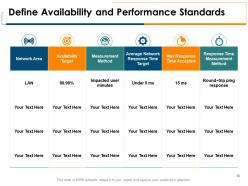
Slide 14: This slide shows Define Availability and Performance Standards.
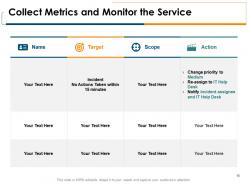
Slide 15: This slide presents Collect Metrics and Monitor the Service.
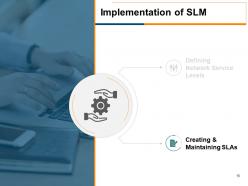
Slide 16: This slide displays Implementation of SLM highlighting Creating & Maintaining SLAs.
Slide 17: This slide represents Benefits of SLA’s with related imagery.
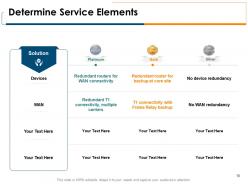
Slide 18: This slide showcases Determine Service Elements.
Slide 19: This slide shows Define the SLA Required for Business Units.
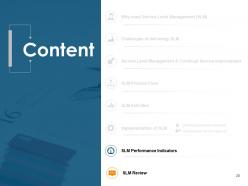
Slide 20: This slide highlights SLM Performance Indicators and SLM Review.
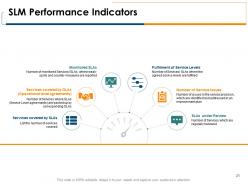
Slide 21: This slide presents SLM Performance Indicators describing- Fulfilment of Service Levels, Number of Service Issues, SLAs under Review, Services covered by SLAs, Monitored SLAs, Services covered by OLAs.
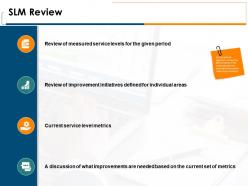
Slide 22: This slide represents SLM Review to measured service level definitions and to make improvements.
Slide 23: This slide displays Service Level Management Icons.
Slide 24: This slide is titled as Additional Slides for moving forward.
Slide 25: This slide shows Clustered Column chart with three products comparison.
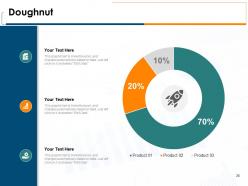
Slide 26: This slide displays Doughnut chart with data in percentage.
Slide 27: This is Our Mission slide with related imagery and text.
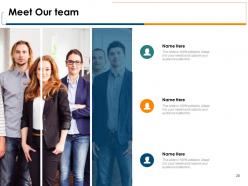
Slide 28: This is Meet Our team slide with names and designation.
Slide 29: This is About Us slide to show company specifications etc.
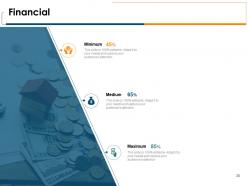
Slide 30: This is a Financial slide. Show your finance related stuff here.
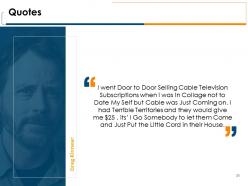
Slide 31: This is a Quotes slide to convey message, beliefs etc.
Slide 32: This slide is titled as Post it Notes. Post your important notes here.
Slide 33: This is a Thank you slide with address, contact numbers and email address.
Service level management powerpoint presentation slides with all 33 slides:
Use our Service Level Management Powerpoint Presentation Slides to effectively help you save your valuable time. They are readymade to fit into any presentation structure.




FAQs for Service level management
So you've got three main pieces: SLAs, SLOs, and SLIs - basically your agreements, targets, and how you measure stuff. Focus on metrics users actually care about, not just whatever's easiest to track. You'll need solid monitoring and a game plan for when things break (spoiler: they will). Regular check-ins with stakeholders help keep everyone aligned. Honestly, the biggest mistake is overcomplicating it. Keep things simple so everyone gets what you're measuring and why it matters. Oh, and start with your most critical services first - don't try to boil the ocean.
Honestly, you've gotta flip your whole approach here. Start with what actually makes your company money - sales, happy customers, whatever keeps the lights on. Then work backwards to set your SLAs. Like if your checkout page crashing costs $10K an hour, that number should totally drive your uptime goals. Don't just pick random percentages because they sound good. The trick is translating all that technical stuff into language your boss actually cares about. I learned this the hard way - nobody gives a damn about server metrics if you can't connect them to real business impact.
KPIs are your early warning system - they catch problems before they blow up. I'd start with 3-5 metrics that actually tie to your SLAs, not just whatever's easiest to track. Response times creeping up? You'll spot it week over week instead of getting blindsided. Plus they're perfect for those awkward stakeholder meetings where you need hard data to back up resource requests. The trick is focusing on stuff your users actually care about. Honestly, most teams track way too much noise. Review weekly and you'll catch issues while they're still fixable.
Honestly, automation is a game-changer for SLM stuff. Set up monitoring tools that track your metrics automatically and send alerts when things go sideways - saves you from constantly checking dashboards. Most platforms can handle the reporting too, which is nice since manual reports are such a pain. The escalation workflows are pretty sweet - incidents get routed to the right people without you playing phone tag. AI analytics can even predict problems before they hit, though I'm still figuring out how reliable that is. Start with whatever's eating up most of your time first.
Honestly, the hardest part is figuring out SLAs that actually make sense for your business - not just numbers that look impressive. Getting everyone on the same page is a nightmare because each team wants totally different metrics. Plus measuring stuff consistently? Way trickier than you'd think, especially when your systems barely talk to each other. And then there's the fun part of managing what customers expect vs what you can realistically pull off. My advice? Start with just a few critical services. Get those dialed in first, then slowly add more. Trust me on this one.
So basically, SLM works because you're telling customers exactly what to expect - like "we'll respond in 2 hours" or whatever. Then you actually do it. Sounds simple but most companies mess this up somehow. The cool part is tracking everything and showing off when you beat your own promises. Customers love seeing those reports where you hit 99% uptime when you only promised 95%. When stuff goes wrong (and it will), having those agreements already in place makes the conversation way less awkward. You can be like "hey, we're behind on our 24-hour target but here's our plan." Just pick your biggest customer complaints first and build metrics around those.
First thing - research what's standard in your industry so you're not going in blind. Don't take their initial offer, they totally expect pushback anyway. Know what you absolutely need vs what would just be nice. Here's the thing though - focus on metrics that actually matter to your business, not just impressive-sounding numbers. Set up both penalties for when they screw up AND bonuses when they nail it. Oh, and make sure you can actually track whatever you agree to measure. Otherwise you're just signing fancy paperwork that means nothing.
Track your SLA compliance first - that's the main thing. Customer satisfaction scores matter too, plus how fast you're resolving stuff vs your targets. Honestly, the dashboards can be addictive when they're all green! Business impact is huge though. Are people complaining less? Critical services staying up? I'd watch your resolution times and availability percentages each month. You know you've won when stakeholders aren't constantly asking "when's this getting fixed?" - they actually trust you'll deliver. Start with maybe 3-4 metrics your users actually care about.
Send those monthly dashboards before anyone asks - trust me on this one. Context matters way more than just throwing numbers at people, so explain what the metrics actually mean for their day-to-day stuff. Got an outage brewing? Jump on it immediately with updates and your fix plan. I learned this the hard way, but honestly it's better to over-communicate than leave people wondering what's happening. Oh, and set up quarterly check-ins to see if your SLAs still make sense or if they need tweaking. Start building these habits now before you're stuck putting out fires.
Honestly, you've gotta get your SLAs super specific first - like actual numbers each team can hit, not just vague goals. Marketing can't promise 24-hour fixes if support is already buried (learned this the hard way lol). Pick maybe 2-3 key metrics per department instead of tracking every little thing. Set up a shared dashboard so everyone sees their numbers in real time. Regular cross-team meetings help too, but actually review the data together instead of just emailing reports around. Most important thing? Make sure everyone agrees on what "good service" actually means before you start measuring anything.
So SLAs are what you promise your actual customers - like "we'll fix your issue in 4 hours." OLAs are totally different. They're internal deals between your own teams about how they'll support each other. Your support team might have an OLA with IT saying they'll respond to escalations in 30 minutes. Honestly, most people mix these up all the time. The key thing is making sure your internal OLA timelines actually work with what you're telling customers in the SLA. Otherwise you're just setting everyone up to fail, which sucks for morale.
Oh man, that sucks but happens to everyone eventually. First thing - call your customer ASAP and own it. Don't wait around hoping they won't notice. Start documenting everything now because you'll need it for the post-mortem (trust me on this one). Check your SLA for penalty clauses - yeah, those fun little things nobody likes talking about. Process any credits or compensation fast. Honestly? How you handle this matters way more than the actual breach. Be super transparent about what went wrong and your prevention plan. Keep them updated throughout - radio silence kills relationships faster than downtime does.
Honestly, continuous improvement is like giving your SLM superpowers. You're building this feedback loop that spots problems way before they blow up in your face. Every month, dig into your performance data and hunt for patterns - that's where you'll find the real insights. Instead of guessing what should work, you're making decisions based on actual results. Think of it as a 24/7 health check for your services (minus the annoying doctor visits). This lets you tweak targets proactively, crush those annoying recurring issues, and your customers will actually trust your commitments. Start with monthly SLA reviews - seriously game-changing stuff.
Oh man, SLAs get weird when you're dealing with different cultures. "Urgent" in NYC hits way different than in Tokyo - like, completely different timelines. Some teams are super blunt about outages while others dance around it politely. Time zones suck but honestly the communication styles will trip you up more. Different regions have totally different ideas about what's acceptable downtime too. My advice? Write your SLAs with cultural context baked in from day one. Don't just assume everyone's on the same page about response times and escalations.
AI monitoring tools are getting crazy good at predicting problems before they actually break anything. You'll want to start playing around with some now because everyone's moving toward automated SLA management - way less manual work. Edge computing's also shaking things up since services are spread everywhere now, which makes measuring performance way trickier. Cloud-native stuff and containers are making everything more scalable too (though honestly the learning curve can be steep). Point is, these changes are happening whether we're ready or not, so might as well get ahead of it.
-
Visually stunning presentation, love the content.
-
Great designs, Easily Editable.