

Servicelevelmanagement-Präsentationsfolien





Try Before you Buy Download Free Sample Product
 Impress Your
Audience
 100%
Editable
 Save Hours
of Time


Erläutern Sie die Methoden zur Verbesserung Ihrer Angebote mithilfe dieser Service-Level-Management-PowerPoint-Präsentationsfolien. Diese Produktleistungs-PPT-Präsentation zeigt die Herausforderungen von SLM, die Umsetzung von SLM, Servicelemente usw. Nutzen Sie diese Service-Rate-PPT-Vorlage, um den Bedarf an SLM-Prozessen wie die Verbesserung der Servicebereitstellung usw. aufzuzeigen. Nutzen Sie diese Service-Qualität-PPT-Folien, um die Herausforderungen darzustellen, die die Prozessimplementierung wie Kundenvertreter usw. behindern. Verwenden Sie diese Service-Level-Agreement-PPT-Visualisierung, um die Phasen des SLM-Prozesses wie die Aktualisierung des Servicerahmens, die Identifizierung von Serviceanforderungen, die Aktivierung des Service usw. zu demonstrieren. Darüber hinaus können Sie die Leistungsindikatoren von SLM wie SLAs unter Überprüfung, die Erfüllung von Servicelevel, überwachte SLAs usw. aufzeigen. Definieren Sie das für verschiedene Geschäftseinheiten wie Fertigung und Kundenservice erforderliche Servicelevel mithilfe dieser Service-Management-Visualisierungen. Laden Sie dieses Service-Qualität-PPT-Infografik herunter und bieten Sie Ihren derzeitigen sowie potenziellen Kunden ein nahtloses Erlebnis.
People who downloaded this PowerPoint presentation also viewed the following :
Inhalt dieser Powerpoint-Präsentation
Folie 1: Diese Folie führt in das Service-Level-Management ein. Nennen Sie Ihren Firmennamen und beginnen Sie.
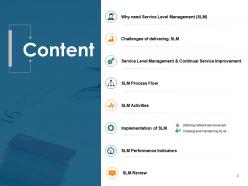
Folie 2: Auf dieser Folie wird der Inhalt der Präsentation gezeigt.
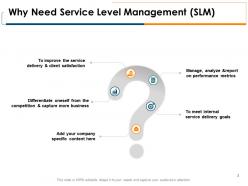
Folie 3: Auf dieser Folie wird erklärt, warum Service-Level-Management (SLM) benötigt wird.
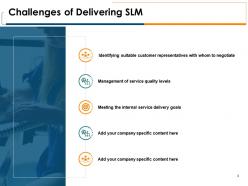
Folie 4: Auf dieser Folie werden die Herausforderungen bei der Erbringung von SLM vorgestellt, wie z.B. die Identifizierung geeigneter Kundenvertreter für Verhandlungen, das Management der Servicequalitätsniveaus, die Erfüllung der internen Servicebereitstellungsziele usw.
Folie 5: Dies ist eine optionale Folie, die die Herausforderungen bei der Erbringung von SLM zeigt.
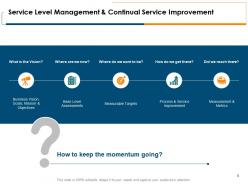
Folie 6: Auf dieser Folie werden Service-Level-Management und kontinuierliche Serviceverbesserung dargestellt.
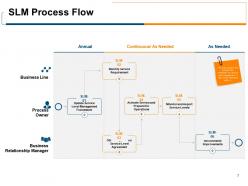
Folie 7: Diese Folie stellt den SLM-Prozessablauf für das Service-Level-Management dar.
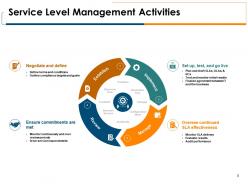
Folie 8: Auf dieser Folie werden die Service-Level-Management-Aktivitäten wie Überwachung der kontinuierlichen SLA-Wirksamkeit, Sicherstellung der Einhaltung der Verpflichtungen, Einrichtung, Testen und Live-Gehen sowie Verhandeln und Definieren vorgestellt.
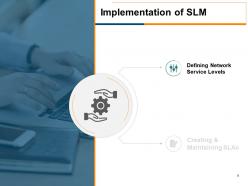
Folie 9: Diese Folie zeigt die Implementierung von SLM mit zugehörigen Bildern.
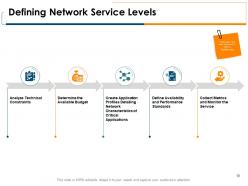
Folie 10: Auf dieser Folie wird die Definition von Netzwerk-Service-Levels mit zugehörigen Symbolen und Text präsentiert.
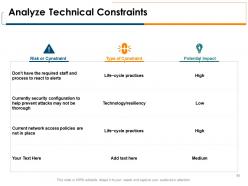
Folie 11: Auf dieser Folie werden technische Einschränkungen analysiert.
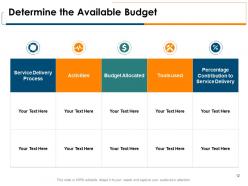
Folie 12: Diese Folie stellt das verfügbare Budget in Tabellenform dar.
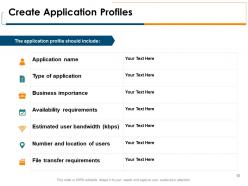
Folie 13: Auf dieser Folie werden Anwendungsprofile erstellt.
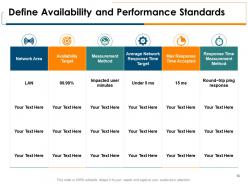
Folie 14: Diese Folie zeigt die Definition von Verfügbarkeits- und Leistungsstandards.
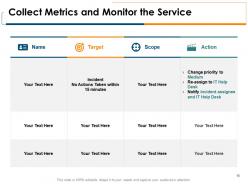
Folie 15: Auf dieser Folie wird die Sammlung von Metriken und die Überwachung des Service präsentiert.
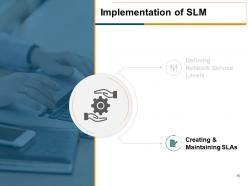
Folie 16: Auf dieser Folie wird die Implementierung von SLM mit Schwerpunkt auf der Erstellung und Pflege von SLAs dargestellt.
Folie 17: Diese Folie stellt die Vorteile von SLAs mit zugehörigen Bildern dar.
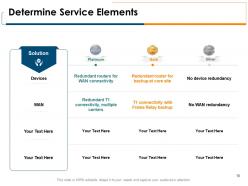
Folie 18: Auf dieser Folie werden Service-Elemente bestimmt.
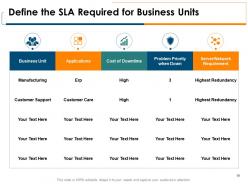
Folie 19: Diese Folie zeigt die Definition der für Geschäftsbereiche erforderlichen SLAs.
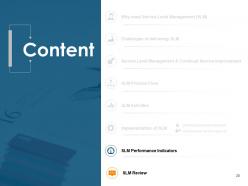
Folie 20: Auf dieser Folie werden SLM-Leistungsindikatoren und die SLM-Überprüfung hervorgehoben.
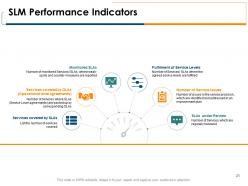
Folie 21: Diese Folie präsentiert SLM-Leistungsindikatoren, die die Erfüllung von Service-Levels, die Anzahl von Service-Problemen, die zu überprüfenden SLAs, die durch SLAs abgedeckten Services, die überwachten SLAs und die durch OLAs abgedeckten Services beschreiben.
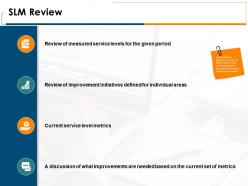
Folie 22: Diese Folie stellt die SLM-Überprüfung dar, um die Service-Level-Definitionen zu messen und Verbesserungen vorzunehmen.
Folie 23: Auf dieser Folie werden Service-Level-Management-Symbole angezeigt.
Folie 24: Diese Folie trägt den Titel "Zusätzliche Folien für den weiteren Fortschritt".
Folie 25: Auf dieser Folie wird ein Clustered Column-Diagramm mit einem Vergleich von drei Produkten gezeigt.
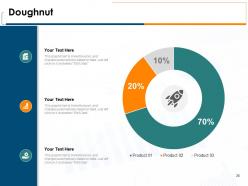
Folie 26: Auf dieser Folie wird ein Doughnut-Diagramm mit Daten in Prozent angezeigt.
Folie 27: Dies ist die Folie "Unsere Mission" mit zugehörigen Bildern und Text.
Folie 28: Dies ist die Folie "Unser Team" mit Namen und Bezeichnungen.
Folie 29: Dies ist die Folie "Über uns", um Firmenspezifikationen usw. zu zeigen.
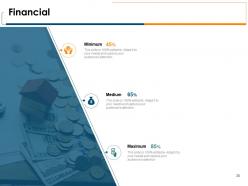
Folie 30: Dies ist eine Finanzfolie. Zeigen Sie hier Ihre finanzrelevanten Inhalte.
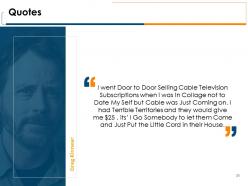
Folie 31: Dies ist eine Folie mit Zitaten, um Botschaften, Überzeugungen usw. zu vermitteln.
Folie 32: Diese Folie trägt den Titel "Post-it-Notizen". Posten Sie hier Ihre wichtigen Notizen.
Folie 33: Dies ist eine Dankesfolie mit Adresse, Telefonnummern und E-Mail-Adresse.
Servicelevelmanagement-Präsentationsfolien
Service Level Management Powerpoint Präsentationsfolien



FAQs for Service level management
So you've got three main pieces: SLAs, SLOs, and SLIs - basically your agreements, targets, and how you measure stuff. Focus on metrics users actually care about, not just whatever's easiest to track. You'll need solid monitoring and a game plan for when things break (spoiler: they will). Regular check-ins with stakeholders help keep everyone aligned. Honestly, the biggest mistake is overcomplicating it. Keep things simple so everyone gets what you're measuring and why it matters. Oh, and start with your most critical services first - don't try to boil the ocean.
Honestly, you've gotta flip your whole approach here. Start with what actually makes your company money - sales, happy customers, whatever keeps the lights on. Then work backwards to set your SLAs. Like if your checkout page crashing costs $10K an hour, that number should totally drive your uptime goals. Don't just pick random percentages because they sound good. The trick is translating all that technical stuff into language your boss actually cares about. I learned this the hard way - nobody gives a damn about server metrics if you can't connect them to real business impact.
KPIs are your early warning system - they catch problems before they blow up. I'd start with 3-5 metrics that actually tie to your SLAs, not just whatever's easiest to track. Response times creeping up? You'll spot it week over week instead of getting blindsided. Plus they're perfect for those awkward stakeholder meetings where you need hard data to back up resource requests. The trick is focusing on stuff your users actually care about. Honestly, most teams track way too much noise. Review weekly and you'll catch issues while they're still fixable.
Honestly, automation is a game-changer for SLM stuff. Set up monitoring tools that track your metrics automatically and send alerts when things go sideways - saves you from constantly checking dashboards. Most platforms can handle the reporting too, which is nice since manual reports are such a pain. The escalation workflows are pretty sweet - incidents get routed to the right people without you playing phone tag. AI analytics can even predict problems before they hit, though I'm still figuring out how reliable that is. Start with whatever's eating up most of your time first.
Honestly, the hardest part is figuring out SLAs that actually make sense for your business - not just numbers that look impressive. Getting everyone on the same page is a nightmare because each team wants totally different metrics. Plus measuring stuff consistently? Way trickier than you'd think, especially when your systems barely talk to each other. And then there's the fun part of managing what customers expect vs what you can realistically pull off. My advice? Start with just a few critical services. Get those dialed in first, then slowly add more. Trust me on this one.
So basically, SLM works because you're telling customers exactly what to expect - like "we'll respond in 2 hours" or whatever. Then you actually do it. Sounds simple but most companies mess this up somehow. The cool part is tracking everything and showing off when you beat your own promises. Customers love seeing those reports where you hit 99% uptime when you only promised 95%. When stuff goes wrong (and it will), having those agreements already in place makes the conversation way less awkward. You can be like "hey, we're behind on our 24-hour target but here's our plan." Just pick your biggest customer complaints first and build metrics around those.
First thing - research what's standard in your industry so you're not going in blind. Don't take their initial offer, they totally expect pushback anyway. Know what you absolutely need vs what would just be nice. Here's the thing though - focus on metrics that actually matter to your business, not just impressive-sounding numbers. Set up both penalties for when they screw up AND bonuses when they nail it. Oh, and make sure you can actually track whatever you agree to measure. Otherwise you're just signing fancy paperwork that means nothing.
Track your SLA compliance first - that's the main thing. Customer satisfaction scores matter too, plus how fast you're resolving stuff vs your targets. Honestly, the dashboards can be addictive when they're all green! Business impact is huge though. Are people complaining less? Critical services staying up? I'd watch your resolution times and availability percentages each month. You know you've won when stakeholders aren't constantly asking "when's this getting fixed?" - they actually trust you'll deliver. Start with maybe 3-4 metrics your users actually care about.
Send those monthly dashboards before anyone asks - trust me on this one. Context matters way more than just throwing numbers at people, so explain what the metrics actually mean for their day-to-day stuff. Got an outage brewing? Jump on it immediately with updates and your fix plan. I learned this the hard way, but honestly it's better to over-communicate than leave people wondering what's happening. Oh, and set up quarterly check-ins to see if your SLAs still make sense or if they need tweaking. Start building these habits now before you're stuck putting out fires.
Honestly, you've gotta get your SLAs super specific first - like actual numbers each team can hit, not just vague goals. Marketing can't promise 24-hour fixes if support is already buried (learned this the hard way lol). Pick maybe 2-3 key metrics per department instead of tracking every little thing. Set up a shared dashboard so everyone sees their numbers in real time. Regular cross-team meetings help too, but actually review the data together instead of just emailing reports around. Most important thing? Make sure everyone agrees on what "good service" actually means before you start measuring anything.
So SLAs are what you promise your actual customers - like "we'll fix your issue in 4 hours." OLAs are totally different. They're internal deals between your own teams about how they'll support each other. Your support team might have an OLA with IT saying they'll respond to escalations in 30 minutes. Honestly, most people mix these up all the time. The key thing is making sure your internal OLA timelines actually work with what you're telling customers in the SLA. Otherwise you're just setting everyone up to fail, which sucks for morale.
Oh man, that sucks but happens to everyone eventually. First thing - call your customer ASAP and own it. Don't wait around hoping they won't notice. Start documenting everything now because you'll need it for the post-mortem (trust me on this one). Check your SLA for penalty clauses - yeah, those fun little things nobody likes talking about. Process any credits or compensation fast. Honestly? How you handle this matters way more than the actual breach. Be super transparent about what went wrong and your prevention plan. Keep them updated throughout - radio silence kills relationships faster than downtime does.
Honestly, continuous improvement is like giving your SLM superpowers. You're building this feedback loop that spots problems way before they blow up in your face. Every month, dig into your performance data and hunt for patterns - that's where you'll find the real insights. Instead of guessing what should work, you're making decisions based on actual results. Think of it as a 24/7 health check for your services (minus the annoying doctor visits). This lets you tweak targets proactively, crush those annoying recurring issues, and your customers will actually trust your commitments. Start with monthly SLA reviews - seriously game-changing stuff.
Oh man, SLAs get weird when you're dealing with different cultures. "Urgent" in NYC hits way different than in Tokyo - like, completely different timelines. Some teams are super blunt about outages while others dance around it politely. Time zones suck but honestly the communication styles will trip you up more. Different regions have totally different ideas about what's acceptable downtime too. My advice? Write your SLAs with cultural context baked in from day one. Don't just assume everyone's on the same page about response times and escalations.
AI monitoring tools are getting crazy good at predicting problems before they actually break anything. You'll want to start playing around with some now because everyone's moving toward automated SLA management - way less manual work. Edge computing's also shaking things up since services are spread everywhere now, which makes measuring performance way trickier. Cloud-native stuff and containers are making everything more scalable too (though honestly the learning curve can be steep). Point is, these changes are happening whether we're ready or not, so might as well get ahead of it.
-
Visually stunning presentation, love the content.
-
Great designs, Easily Editable.