Small Business Company Profile Executive Summary
Try Before you Buy Download Free Sample Product
Audience
Editable
of Time
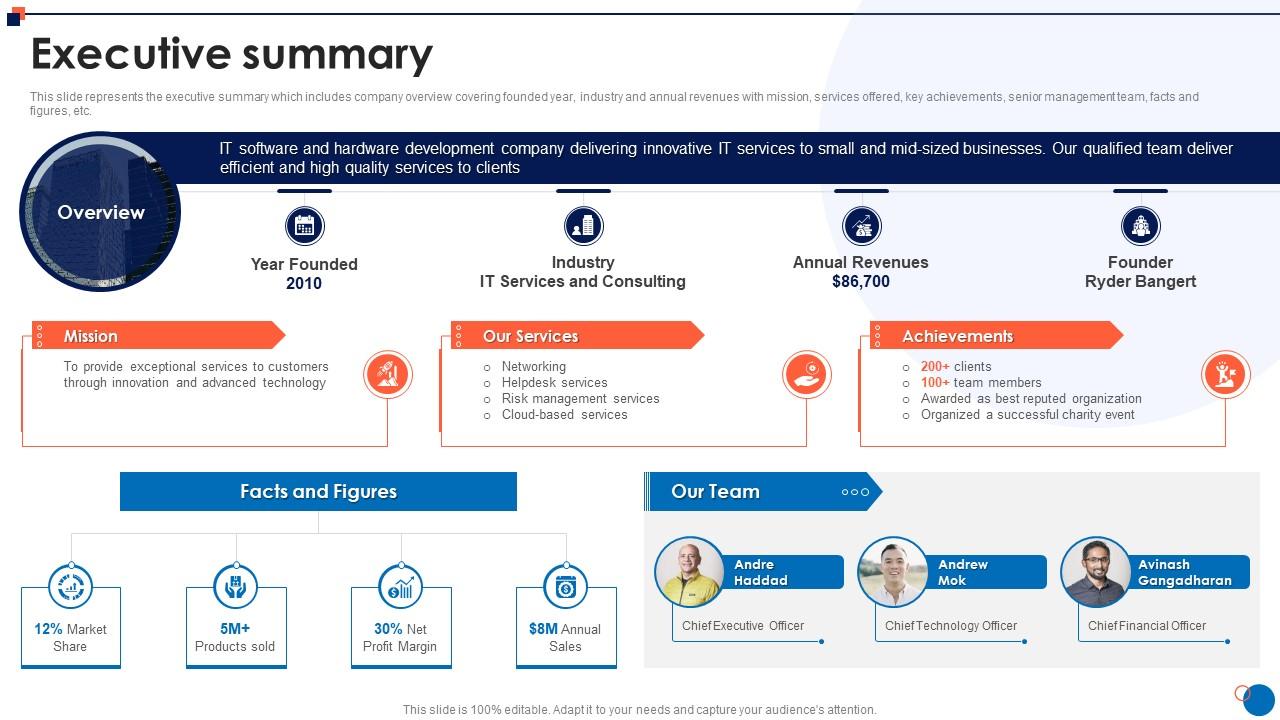
This slide represents the executive summary which includes company overview covering founded year, industry and annual revenues with mission, services offered, key achievements, senior management team, facts and figures, etc.
People who downloaded this PowerPoint presentation also viewed the following :
Small Business Company Profile Executive Summary with all 6 slides:
Use our Small Business Company Profile Executive Summary to effectively help you save your valuable time. They are readymade to fit into any presentation structure.
FAQs for Small Business Company
Honestly, I always save the executive summary for last even though it goes at the front - way easier that way. You need four key pieces: what problem you're solving, how you'll fix it, what good stuff will happen, and what you want from them (money, approval, whatever). One page max though, seriously. Someone should be able to read just that part and totally get why they should give a damn. It's basically your elevator pitch but on paper. Oh and don't overthink it - once you've written everything else, the summary pretty much writes itself.
Oh man, this is huge. You've gotta completely switch up how you write depending on who's reading it. Investors? Hit them with ROI numbers and financial stuff right away. Tech teams want the nitty-gritty - timelines, how you'll actually build it, all that implementation details. Executives though - they're probably just skimming between meetings, so keep it super high-level with strategic stuff. I always think about what decision they need to make after reading. That's your north star. Same info, but you're basically putting different parts in the spotlight and using words that click with each group. It's like speaking their language, you know?
Keep your exec summary to one page – I'm serious about this. People try to cram everything in and it becomes useless. Write it LAST, not first (learned this the hard way). You want to hit your main findings and recommendations without getting lost in technical weeds. Most folks mess up by treating it like an intro paragraph instead of a complete standalone thing. Skip the boring background stuff and jump straight to what matters. Oh, and use headings to break it up – nobody wants to stare at a wall of text. Your CEO probably won't read past page one anyway.
Look, one page is your goal, two pages absolute max. Executives are swamped - anything longer and they'll just skip it entirely. I learned this the hard way when my 4-page "summary" got completely ignored last year. Write everything you think matters first, then be brutal about cutting it down. What would you say if you had 30 seconds in an elevator? That's your exec summary right there. Internal stuff especially should stay tight. The whole point is making their decision easy, not giving them homework. Trust me, less is definitely more here.
Honestly, charts and graphs are a game-changer for executive summaries. Nobody wants to wade through paragraphs of data - execs are skimming anyway. A bar chart showing quarterly growth hits way harder than three sentences explaining the same thing. Same goes for pie charts breaking down revenue streams. Super quick to digest. Just don't go overboard with visuals everywhere (I've seen people do this and it's messy). Stick to 2-3 solid charts that actually back up your main points. The goal is making your key takeaways pop, not decorating your document.
Look, your exec summary is make-or-break time. VCs are drowning in pitches - like hundreds every week, it's insane. You've got maybe 2 minutes before they move on. Hit them with your value prop and market size right away. What's your competitive edge? Show some real traction if you have it. Financial projections need to be compelling but not totally unrealistic - nobody believes hockey stick growth anymore. Be super clear about how much money you want and what returns they can expect. Honestly, this section determines whether you get that follow-up call or just radio silence.
Start with something that'll make them sit up - a wild stat or bold claim works great. Stories beat bullet points every time, even in boring business stuff. Keep paragraphs short so people can actually scan through without their eyes glazing over. Bold the important numbers so they pop. Read it out loud before hitting send - if you're bored by your own writing, imagine how they'll feel. Oh, and throw in some subheadings to break things up. Active voice makes everything sound way more confident than that passive corporate dreck everyone's used to.
Honestly? Skip it when your audience already knows what's up. Internal team updates, technical deep-dives, stuff like that - they don't need the recap. Same goes for short presentations under 10 minutes where the whole thing is basically one big summary anyway. If you're presenting to the same people who've been grinding on the project with you, just jump into the meat of it. Nobody wants to sit through background they already know (trust me, I've been in those meetings). Quick test: would your audience mentally check out during a high-level overview? Then ditch it and get straight to the good stuff.
Think elevator pitch - what would they absolutely need to know if you had 30 seconds? Lead with your main conclusion first. Then hit 2-3 critical points that got you there. Skip all the methodology stuff (they can dig into the full report later if they want). Honestly, executives just want to know what decisions they need to make and what risks they're facing. Use real numbers instead of vague statements. I learned this the hard way - don't try to showcase all your analysis work. Short sentences work. Your goal is making their next move obvious, not impressing them with how thorough you were. They'll thank you for cutting straight to what actually matters.
Put your main recommendation right at the top - don't bury the lead. Then quickly outline what problem you're solving. I'd focus on just 2-3 killer points after that, like financial impact or strategic wins. Here's where I always mess up though - I want to include every detail I researched. Don't do that! Executives are scanning this in like 30 seconds max. Keep each section super tight. Wrap up with concrete next steps and when stuff needs to happen. The whole thing should flow like a story they can skim and still totally get your point.
Ditch the boring stats opening and hook them with a real problem instead. Like "Three months ago, our biggest client almost walked..." - way better than "This report analyzes quarterly metrics" or whatever. Tell it like a story: problem, what you did, results. Sounds cheesy but executives eat this stuff up. Make your examples super specific - actual customers, real scenarios they can picture. Oh and always end with stakes. What happens if they say yes vs. if they don't? People need that push. Short version: lead with drama, not data.
Honestly, just use Word or Google Docs for executive summaries. I've seen people waste hours on fancy formatting when it literally doesn't matter. PowerPoint works too if you're presenting it. One page max - seriously, nobody reads past that. Lead with your main point right away, then use bullet points for everything else. Harvard Business Review has solid free templates, or grab one from Canva Business if you want something prettier. But here's the thing - I'd rather read a basic Word doc with great insights than a beautifully designed summary that says nothing. Focus on the content first.
Honestly, update it whenever something big changes - scope, timeline, budget, major findings. Quarterly works for most projects, but fast-moving stuff needs more frequent updates. Annual is fine for completed studies unless someone specifically asks for changes. The worst thing? When your summary says one thing but the actual report is totally different. Super awkward in meetings. Just set a reminder to check it regularly instead of forgetting about it for months. Oh, and static reports are way easier to manage than ongoing projects - lucky you if that's what you're dealing with.
Honestly, your executive summary can make or break everything – stakeholders usually only read that part anyway. You've got like 2 minutes max to hook them. Problem, solution, what you need, boom. I've watched solid projects crash because someone buried the good stuff in corporate speak (ugh). Lead with your strongest hook first. What's the one thing that'll make them think "we need this"? Keep it short and benefits-heavy. Think elevator pitch but written down.
Always wrap up your executive summary by telling people exactly what you want them to do next. I can't tell you how many summaries I've read that just... stop. Like, what am I supposed to do with this info? Restate your main recommendation one more time and paint a picture of what success actually looks like. Throw in a timeline if you've got one - executives love knowing when things will happen. This is basically your last chance to sell them on the idea. The whole point is making it stupidly easy for them to say "yeah, let's do this thing."
-
Designs have enough space to add content.
-
Very unique and reliable designs.