

Small IT Business Company Profile Powerpoint Presentation Slides





Try Before you Buy Download Free Sample Product
 Impress Your
 Audience
 100%
100% Editable
 Save Hours
 of Time


A Company profile is a professional description that aims to inform clients about product and service offerings, their structure, resources, financial performance, etc. Check out our efficiently designed template on Small IT Business Company Profile. It showcases the executive summary and company introduction, including our mission, specialities, achievements, and core values. Also, it covers our global presence across different regions, key products and support services. Further, this PPT represents our management team, company history, strategic partnerships, business model, key clients, and their reviews. Moreover, it focuses on financial highlights such as revenues, net profit, ratio analysis, revenue split by geography, and R and D expenses. Also, it captures market share and comparison with competitors based on financials and services. It also focuses on a strategic approach to improving client base, marketing mix, SWOT analysis, CSR activities, and case study approach. Customize this 100 percent editable Company profile through assistance from our highly-skilled research or design team. Get access now.
People who downloaded this PowerPoint presentation also viewed the following :
Content of this Powerpoint Presentation
Slide 1: This slide introduces Small IT Business Company Profile. State Your Company Name and begin.
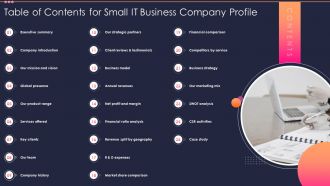
Slide 2: This slide presents Table of Content for the presentation.
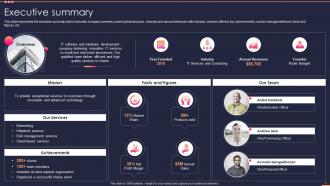
Slide 3: This slide represents the executive summary which includes company overview.
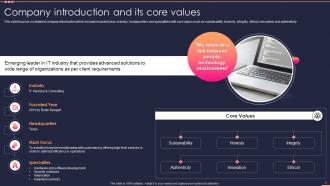
Slide 4: This slide focuses on detailed company introduction which includes founded year, industry, headquarters and specialities.
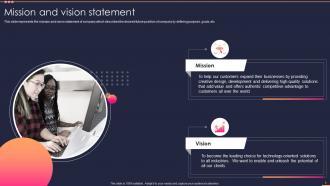
Slide 5: This slide represents the mission and vision statement of company.
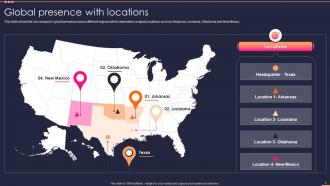
Slide 6: This slide shows the our company’s global presence across different regions.
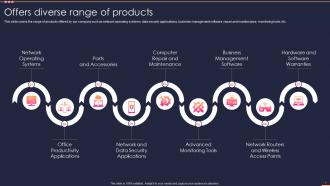
Slide 7: This slide covers the range of products offered by our company such as network operating systems, data security applications, etc.
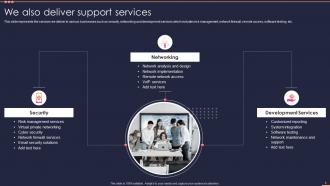
Slide 8: This slide represents the services we deliver to various businesses such as security, networking and development services.
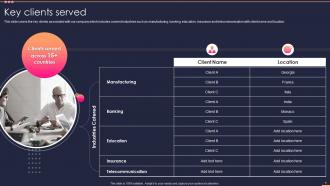
Slide 9: This slide covers the key clients associated with our company which includes covered industries.
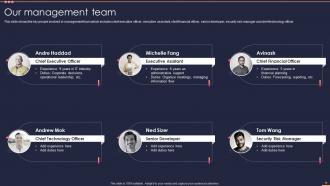
Slide 10: This slide shows the key people involved in management team.
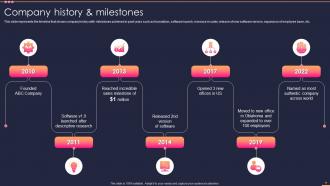
Slide 11: This slide represents the timeline that shows company history with milestones achieved.
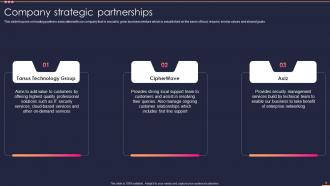
Slide 12: This slide focuses on leading partners associated with our company.
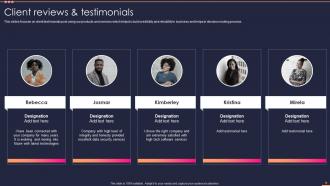
Slide 13: This slides focuses on client testimonials post using our products and services.
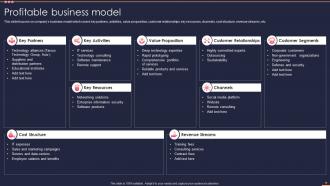
Slide 14: This slide focuses on company’s business model which covers key partners, activities, value proposition, etc.
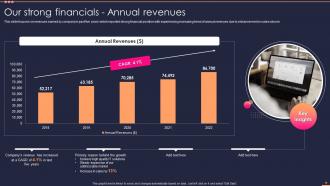
Slide 15: This slide focuses on revenues earned by company in past five years which reported strong financial position.
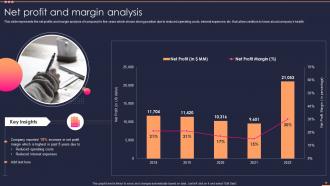
Slide 16: This slide represents the net profits and margin analysis of company for five years.
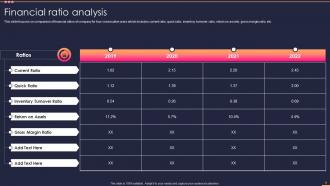
Slide 17: This slide focuses on comparison of financial ratios of company for four consecutive years.
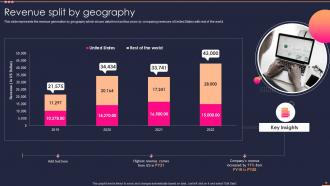
Slide 18: This slide represents the revenue generation by geography which shows data from last four years.
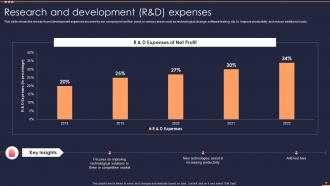
Slide 19: This slide shows the research and development expenses incurred by our company.
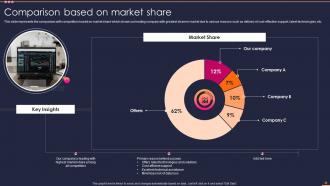
Slide 20: This slide represents the comparison with competitors based on market share.
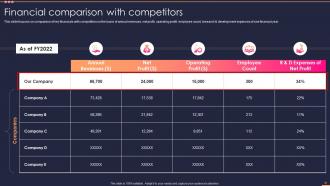
Slide 21: This slide showcases Financial comparison with competitors.
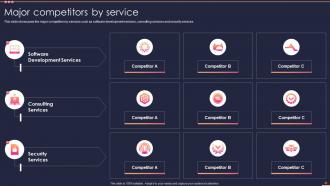
Slide 22: This slide presents the major competitors by services such as software development services, consulting services and security services.
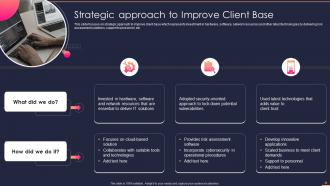
Slide 23: This slide displays Strategic approach to improve client base.
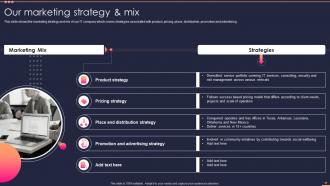
Slide 24: This slide shows the marketing strategy and mix of our IT company.
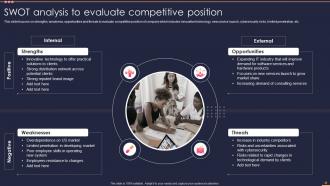
Slide 25: This slide presents SWOT analysis to evaluate competitive position.
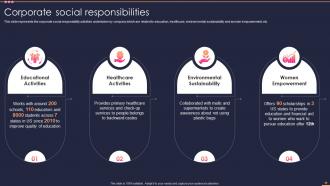
Slide 26: This slide represents the corporate social responsibility activities undertaken by company.
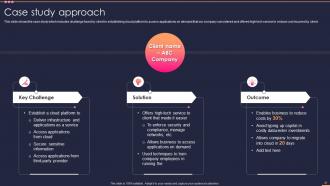
Slide 27: This slide shows the case study which includes challenge faced by client in establishing cloud platform.
Slide 28: This slide displays Icons for small IT business company profile.
Slide 29: This slide is titled as Additional Slides for moving forward.
Slide 30: This is Our Mission slide with related imagery and text.
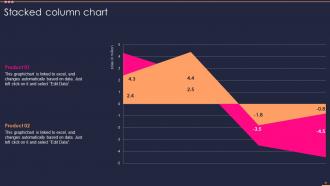
Slide 31: This slide represents Stacked column chart with two products comparison.
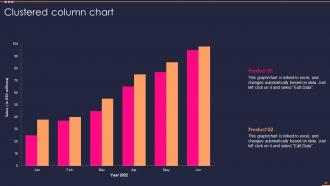
Slide 32: This slide provides Clustered Column chart with two products comparison.
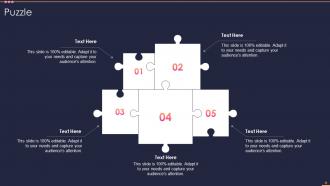
Slide 33: This slide contains Puzzle with related icons and text.
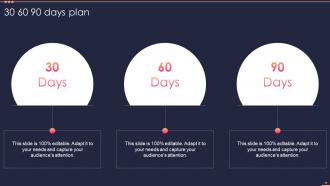
Slide 34: This slide provides 30 60 90 Days Plan with text boxes.
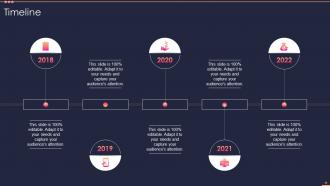
Slide 35: This is a Timeline slide. Show data related to time intervals here.
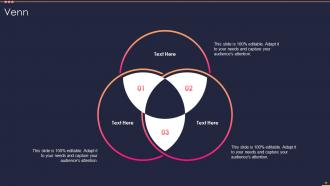
Slide 36: This slide depicts Venn diagram with text boxes.
Slide 37: This is a Thank You slide with address, contact numbers and email address.
Small IT Business Company Profile Powerpoint Presentation Slides with all 42 slides:
Use our Small IT Business Company Profile Powerpoint Presentation Slides to effectively help you save your valuable time. They are readymade to fit into any presentation structure.








FAQs for Small IT Business Company Profile
Man, it's rough out there for small IT shops. You're going up against giants like Google and Microsoft for the same talent pool - good luck with that salary war, right? The tech changes so fast you're constantly learning new stuff just to stay relevant. Clients always wonder if you'll still be around next year, which makes landing those bigger contracts tricky. Most days you'll be wearing like five hats - CEO, developer, sales guy, probably janitor too. But here's the thing: find your specialty and own it completely. Skip trying to do everything. Beat the big guys with personal service and actually caring about each client.
Pick 1-2 emerging technologies that actually fix problems your clients have. AI chatbots for customer service work great. So do automation tools for boring repetitive stuff. But honestly? Don't chase every new trend - that'll burn you out fast. Cloud migration and cybersecurity automation are pretty solid right now. Low-code platforms too. The whole point is becoming THE expert in whatever you choose. Clients need to think of you first when they have that specific problem. Start with one service, get really good at it, then add more. Way better than trying to do everything and sucking at most of it.
Pick a niche first - like being the IT guy for restaurants or whatever. Way easier than trying to help everyone. Just be reliable, honestly. Most IT people suck at communication, so if you actually explain tech stuff normally and respond fast, you're already ahead. Always do what you say you'll do. Send simple monthly reports showing what you fixed. My buddy does this and swears by asking happy clients for referrals - apparently word-of-mouth still crushes everything else. Oh, and suggest improvements before problems happen. Clients love that proactive stuff.
Dude, networking is everything for small IT shops. I know it sounds cheesy, but it's true. Your coding skills won't mean much if nobody knows you exist. Most of my best gigs came through people I met at random events, not cold emails or whatever. Join some local business groups or tech meetups - even the boring ones sometimes have solid connections. Grab coffee with other entrepreneurs too. Hell, I've gotten referrals from competitors who were swamped with work. Don't be that brilliant developer who stays locked in their cave all day. Get out there.
Dude, your online presence can make or break you in IT. Think about it - if potential clients google you and find nothing, or worse, find outdated junk, they're gonna question whether you know what you're doing. Get a decent website up first. LinkedIn's huge for networking too. GitHub repos are great if you code, but honestly don't stress if that's not your thing. The reviews and case studies you build up basically sell for you while you sleep, which is pretty sweet. SEO helps people find you organically. Start by googling yourself and see what comes up - might surprise you what's out there.
Okay so first thing - track literally everything. I use QuickBooks but honestly a good spreadsheet works too. Check your cash flow every week, not monthly, trust me on this. Focus on clients who'll give you repeat work instead of just one-time gigs. When I had three big projects wrap up at once... yeah, that sucked. Always put away like 20-30% for taxes and emergencies. Bill people right away or they'll "forget." Oh and review everything on Fridays - catch problems early before they totally screw you over.
Dude, start with content marketing and local networking - that's your bread and butter. Write blogs about fixing tech headaches your customers actually have. Chamber of commerce meetings sound boring but they're secretly goldmines for connections. LinkedIn's where it's at for B2B stuff, so post there regularly. Show up consistently wherever your potential clients are lurking. Case studies work crazy well too - people love seeing real before/after transformations. Oh, and don't try to do everything at once. Pick one thing, get good at it, then branch out. You'll burn out otherwise.
Honestly, lean into what those massive companies can't pull off - being fast and actually flexible. When a client needs something custom, you can pivot immediately while Big Corporate Inc. is still scheduling meetings about scheduling meetings (seriously, it's ridiculous). Be the place where clients know your name and talk to actual decision-makers instead of some call center robot. Don't try being everything to everyone - pick a niche and own it. Here's the thing though: price isn't the magic bullet everyone thinks it is. Highlight how quickly you respond and that you genuinely care about their success, not just cashing checks.
Dude, first things first - get that business structure locked down. LLC's the way to go, trust me on this one. Then hit up your local licensing stuff and grab liability insurance ASAP. Clients will 100% throw you under the bus when their systems crash, even if it's totally unrelated to your work. Don't forget contracts either - I know it seems overkill for small jobs, but you'll thank yourself later. Copyright and data privacy laws matter big time if you're touching their files or software. Honestly? Just bite the bullet and talk to a business lawyer upfront.
Dude, partnerships are seriously a game-changer. You can tackle way bigger projects by pooling resources and splitting costs - stuff you'd never handle alone. Find someone who complements what you do, like if you're in web dev, maybe team up with a cybersecurity or marketing person. The referral network alone is worth it. My best work honestly came from collabs where we each had different strengths. Oh, and your client base basically doubles since partners send business your way. Just start small with someone you trust - maybe bid on one project together first and see how it goes.
Honestly, just track three main things: monthly recurring revenue (MRR), how many clients stick around, and profit margins by project type. MRR shows your predictable income. Client retention tells you if people actually like working with you - which matters more than you'd think. Then look at which projects make you decent money vs. the ones that barely pay for coffee. Oh, and throw in support ticket resolution times too. Clients get cranky when stuff takes forever to fix. I'd check these monthly so you catch any weird trends early.
Answer calls fast and actually listen to what's going wrong. Nobody wants to explain their problem to five different people - honestly, that's the fastest way to lose clients. Follow up without them having to chase you down. When you're working on something, give them updates even if it's just "still on it, should know more by Friday." Your team needs to talk like normal humans, not robots spouting technical garbage. Oh, and write everything down so you remember their setup next time they call. Clients notice when you actually know their history.
Honestly, just keep it simple - Trello or Asana work great for small teams. Don't overthink it with fancy enterprise stuff that'll bog you down. Daily standups help, but make them quick. The real trick? Actually getting people to update their tasks (good luck with that lol). Ship small pieces often instead of waiting forever for perfection. Oh, and definitely have one person handle all client communication - trust me, multiple voices just leads to chaos and scope creep. Track your burn rate too, but don't stress if you're not perfect at first.
Honestly, just let them mess up without freaking out about it. Give everyone a few hours weekly for random side projects - you'll be shocked how much this changes everything. The best stuff I've seen comes from people tinkering with whatever tech they want or solving problems their weird way. Sure, celebrate the polished work, but get excited about the messy prototypes too. Mix up who works on what so nobody gets bored doing the same thing forever. Oh, and pick your next project as a test run - let them choose their tools and see what happens.
Start with cloud hosting - AWS or Azure work great. Then grab a decent CRM because honestly, that's where most agencies screw up their client relationships. Project management is huge too - Asana or Monday.com are solid picks. For daily stuff, you'll need Slack and Zoom (obviously), plus QuickBooks for money stuff and some kind of ticketing system when clients inevitably break things. Oh, and make sure everything actually integrates together. I've seen too many teams drowning in disconnected tools. Build your foundation first, then add the fancy stuff later.
-
Content of slide is easy to understand and edit.
-
This PowerPoint layout is very helpful from a business point of view, and it's visually stunning too! I'm so happy with this product because it has helped me understand and deliver great presentations.