


Smart Energy Meter Working Architecture Comprehensive Guide On IoT Enabled IoT SS




Try Before you Buy Download Free Sample Product
 Impress Your
 Audience
 100%
100% Editable
 Save Hours
 of Time


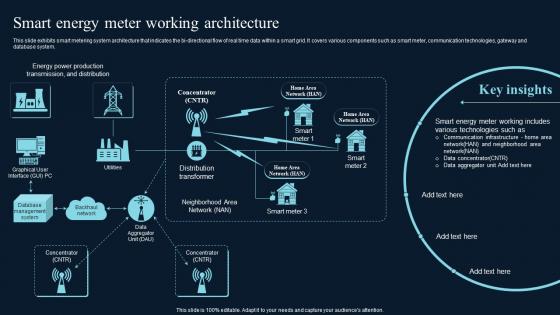
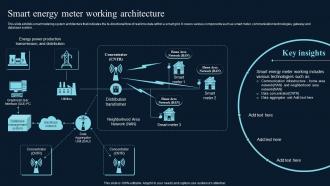
This slide exhibits smart metering system architecture that indicates the bi directional flow of real time data within a smart grid. It covers various components such as smart meter, communication technologies, gateway and database system.
People who downloaded this PowerPoint presentation also viewed the following :
Smart Energy Meter Working Architecture Comprehensive Guide On IoT Enabled IoT SS with all 9 slides:
Use our Smart Energy Meter Working Architecture Comprehensive Guide On IoT Enabled IoT SS to effectively help you save your valuable time. They are readymade to fit into any presentation structure.








FAQs for Smart Energy Meter Working Architecture Comprehensive Guide On IoT
Dude, you should totally get one if your utility company offers free installation. The real-time data is honestly kind of shocking at first - like finding out your old fridge is basically eating money. I love being able to check usage from my phone when I'm not home. No more estimated bills either, which used to drive me nuts. You'll start noticing patterns pretty quick, like which appliances are the real power hogs. Makes it way easier to cut back on stuff that's actually wasteful instead of just guessing.
Honestly, smart meters are pretty clutch for cutting your bill. You get real-time data so you can see exactly what's sucking up power - like that ancient fridge you refuse to replace. No more shock when your bill shows up. Time-of-use pricing is where it gets interesting though - run your dishwasher and do laundry during off-peak hours when electricity's cheaper. The trick is actually looking at the data regularly. I check mine every few days now. Set a reminder or you'll forget and waste the whole point of having one.
So basically these things have digital sensors tracking your electricity use constantly. They send that data to your utility company through cellular, Wi-Fi, or mesh networks - sometimes they're even smart enough to use your actual power lines as the communication channel, which is kinda wild if you think about it. There's a little computer inside processing everything and storing your usage patterns. The cool part is it's two-way communication, so the utility can send info back for stuff like adjusting your rates or yeah... cutting you off remotely if needed. Not gonna lie, that last part feels a bit Big Brother to me.
So basically smart meters let your utility see exactly when you're using power, which is how those demand response programs actually function. Your AC, water heater, EV charger - they can automatically dial back during peak hours when electricity costs more. You'll save money with time-of-use rates plus maybe get rebates. Just make sure your stuff works with whatever platform your utility uses. Honestly the tech is pretty neat once you get it set up. Oh and peak hours are usually like 4-9pm when everyone's home cranking the AC.
Yeah, so smart meters basically track your energy use in crazy detail - like when you're home, which appliances you're running, your whole daily routine. The big worry is that data getting sold to companies, hacked, or grabbed by cops without warrants. It's kinda like having a spy gadget on your house tbh. Plus the data isn't always encrypted when it gets sent around. I'd definitely check what your utility company's privacy policy says about sharing your info. Most let you opt out if you push back on it.
So basically, smart meters let power companies see what's happening on their grid in real-time instead of waiting for people to call and complain about outages. They can spot problems instantly and see exactly how much juice each neighborhood is using. The cool part is they can actually reroute power around busted lines and predict issues before your lights go out. My neighbor's an electrician and he says it's made a huge difference - way fewer blackouts these days. You'll get more reliable power at your house since they can balance everything so much better now.
Dude, you definitely want a smart meter if you're doing solar. These things track when your panels are cranking out extra power vs. when you're actually using grid electricity. Real-time data is key here. Grid companies use this info to deal with how unpredictable wind and solar can be - honestly pretty smart on their part. You can even get time-of-use rates where they pay you more for sending power back during peak hours. My neighbor's been loving his setup. It'll help optimize everything and probably cut your bills too.
Honestly, don't get too caught up in the raw numbers at first - focus on your patterns instead. Check your meter daily to see when you're burning through the most power (mornings and evenings are the usual suspects). The data dump can feel crazy overwhelming, but it's worth pushing through. Try flipping appliances on and off while watching the real-time readings. You'll quickly spot which ones are energy vampires. Also look for weird spikes that might mean something's broken or you've got a bad habit going. I'd start with fixing your top 2-3 biggest drains first - that's where you'll see actual results.
Dude, data privacy is gonna be your biggest headache - people freak out about their usage data being tracked. Upfront costs are brutal too. Then you've got the nightmare of making everything talk to each other when utility companies all use different systems. Cybersecurity keeps everyone paranoid (rightfully so tbh). Network reliability can be spotty depending where you're rolling out. Oh, and customers will definitely give you grief about the privacy stuff. Start small with pilot programs in areas where people are more tech-friendly. Get your security locked down first before going big.
So basically smart meters talk to your utility company in real time, which lets them change prices throughout the day. Peak hours cost more, off-peak is cheaper - you know the drill. The meter tracks exactly when you're using power and bills you the right rate for that time. Pretty cool system actually. You could literally save money by doing laundry at like 2 AM instead of during dinner time when everyone's cranking up their AC. Two-way communication means they can adjust rates based on actual demand patterns.
So smart meters are like the brain for your whole energy setup. Your thermostat can actually see what electricity costs right now and adjust accordingly. Same with EV chargers - they'll wait for cheaper rates automatically. Without the meter, you just have random smart gadgets doing whatever. But with it? Everything talks to each other through your home system. Way more savings that way. Honestly, I'd get the smart meter sorted first before buying other stuff - it makes everything else work better. My neighbor did it backwards and regrets it.
Oh man, smart meter regs are such a mess right now. Europe's pushing hard with their EU directive, but over here each state does whatever they want. China's going crazy with rollouts too, though their tech specs are totally different from ours. Privacy stuff is where it gets really wild - GDPR makes European companies jump through like a million hoops while other places are way more chill about it. Honestly feels like nobody can agree on anything. Just double-check your local utility rules and national regs before you dive in, because what works in one market definitely won't fly in another.
Yeah, so the upfront hit is pretty brutal - we're talking $200-500 per meter plus install costs. That can mean millions for a full rollout, which honestly makes my head spin. But here's the thing - most utilities see payback in 3-5 years through way fewer truck rolls, automated readings, and way better outage response. You'll cut down on estimated billing headaches too, plus catch theft easier. The operational stuff is where you really win though. Time-of-use pricing opens up new revenue streams you can't touch otherwise. I'd definitely pilot it in your worst theft areas first to prove the numbers work.
Smart meters are seriously useful for demand forecasting because they give you detailed consumption data broken down by hour, day, whatever. You can dig into usage patterns - like when people crank their AC or how seasons affect demand. Way better than those old monthly meter reads, honestly. The real-time aspect lets you spot trends and correlate usage with stuff like weather or economic changes. Feed all this historical data into forecasting models and boom - you can predict both short-term spikes and long-term growth. Oh, and collect at least a year's worth first to catch seasonal patterns.
Honestly, some pretty cool stuff is coming. AI will automatically tweak your energy usage without you doing anything. Real-time data updates are getting way faster - we're talking seconds now. The mesh networking thing is actually neat - meters talk to each other for better grid reliability. They're beefing up cybersecurity too since everyone freaks out about hacking. Solar panels and home batteries will integrate better. If you're thinking about energy upgrades, maybe hold off like 18 months? The newer models should be worth waiting for.
-
Nice and innovative design.
-
I am not the best at presentations but using SlideTeam’s PPT template made it easier for me. Thank you SlideTeam!