


Smart City Digital Twin Architecture IoT Digital Twin Technology IOT SS





Try Before you Buy Download Free Sample Product
 Impress Your
 Audience
 100%
100% Editable
 Save Hours
 of Time


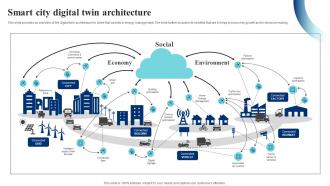
This slide provides an overview of the digital twin architecture for cities that assists in energy management. The slide further includes its benefits that are it helps in economic growth and in decision making.
People who downloaded this PowerPoint presentation also viewed the following :
Smart City Digital Twin Architecture IoT Digital Twin Technology IOT SS with all 9 slides:
Use our Smart City Digital Twin Architecture IoT Digital Twin Technology IOT SS to effectively help you save your valuable time. They are readymade to fit into any presentation structure.








FAQs for Smart City Digital Twin Architecture IoT Digital Twin
You'll need real-time data feeds first - think sensors, IoT stuff, traffic cameras. Then grab a 3D visualization platform and some analytics engines to crunch all that info. Integration APIs are crucial for connecting your existing city systems (which is probably a nightmare tbh). Simulation models are where it gets fun though - you can test crazy scenarios without actually messing up traffic or whatever. Cloud infrastructure handles the data dumps. User interfaces let people actually use the thing. Honestly, just start by figuring out what data sources you already have. That'll show you the gaps pretty quick.
So basically digital twins are like having a sandbox version of your city - you can test stuff like traffic changes or new buildings without actually breaking anything. It's SimCity but way cooler because it pulls real data from sensors and city systems. Way better than the old "cross your fingers and build it" method cities used to do. Emergency routes, power grid tweaks, whatever - you can run scenarios for pretty much anything. Only catch is your data has to be decent quality, otherwise you're just playing an expensive video game that doesn't help anyone.
So basically, real-time data is what makes your digital twin actually useful instead of just a pretty 3D model collecting dust. You need constant feeds from IoT sensors, traffic cams, weather stations - all that stuff flowing in live. Otherwise it's like using yesterday's GPS data, which obviously sucks. The cool part is you can run scenarios and catch problems before they blow up. Traffic optimization, energy management, whatever. Honestly though, don't try to connect everything at once. Figure out your most critical data sources first and build from there.
So Digital Twins let you basically test out sustainability stuff virtually before you actually do it in real life. Saves a ridiculous amount of money and resources. You can mess around with energy patterns, figure out better waste routes, see how green buildings would actually perform - honestly, the city planning applications are pretty cool. Instead of just hoping your carbon reduction policies work, you get actual data to back up decisions. My friend's company saved like 30% on their energy pilot just by modeling it first. Start with whatever your biggest sustainability headache is and run different scenarios through your Twin before committing to anything expensive.
Dude, the data integration stuff is absolutely brutal - cities have info spread across like 50 different ancient systems that hate each other. Budget's another killer since you're looking at millions just for sensors and decent people who know what they're doing. Finding that talent is honestly harder than the tech itself sometimes. Privacy gets messy too because you're basically watching everyone's daily life, which freaks people out. My advice? Don't go crazy right away. Pick one neighborhood or maybe just traffic management to show it actually works. That's your ticket to more funding later.
Start with IoT sensors everywhere for real-time data, then cloud platforms to crunch all those numbers. You'll want AI/ML algorithms analyzing everything - honestly, the amount of data cities generate is insane. GIS handles your spatial mapping needs. 5G keeps transmission speeds decent, and edge computing cuts down lag (because nobody's making urban planning decisions on slow tech). Integration platforms are key so your systems actually communicate instead of working in silos. Pick one area of the city to model first rather than trying to do everything at once.
So basically you want interactive portals where people can report stuff - potholes, broken streetlights, whatever. Real-time apps work great for this. Citizens become your data collectors, which is honestly pretty smart since they're the ones actually using the streets daily. Virtual town halls using your digital twin's visuals are a game-changer too. Pick one focus area first though - maybe transportation since everyone has opinions about traffic. The trick is making sure people's input actually changes things, not just disappears into some database. Otherwise you'll lose them fast. User-friendly design is huge here - if it's clunky, nobody's using it.
Track the obvious stuff first - data accuracy, system uptime, how fast your models sync with real changes. But honestly? The "wow factor" matters more than people admit because that's what gets you funding. Decision speed and cost savings are solid metrics, plus citizen satisfaction if you can get reliable data. The real win though is seeing if departments actually start collaborating differently - sharing insights they never could before. I'd probably start with like 3 metrics tied to your city's biggest headaches, then add more once you're not drowning in dashboards.
So basically these digital twins let cities test out disaster scenarios ahead of time - floods, earthquakes, cyber stuff, whatever. Pretty smart actually. When real emergencies hit, responders get this live dashboard showing traffic, how many people are in buildings, where resources are. No more flying blind. Cities can spot weak points in their infrastructure before disaster strikes instead of scrambling after. I mean, beats the old "cross your fingers and hope" approach we used to have. The whole system just makes cities way tougher when bad things happen.
Honestly, it's a mess right now. Cities are hoovering up tons of personal data - cameras, sensors, your phone, all that IoT stuff everywhere. People can't exactly opt out of living in a city, you know? Location tracking, behavior patterns, the whole nine yards gets stored somewhere. Data breaches happen. Sometimes departments share info or sell it to random companies without telling anyone. I'd push hard for anonymization and clear consent rules before they launch anything. Oh, and transparency about what they're actually doing with the data - that's huge too.
So basically digital twins are like a video game version of your city's transportation system. You can test out autonomous cars with traffic lights, mess around with new bus routes, see if those bike stations would actually get used. Pretty neat stuff! Before cities blow their budget on infrastructure that might suck, they can run these "what if" scenarios first. Rush hour with dynamic tolls? Bridge closure during construction? Test it all virtually. Honestly beats the hell out of implementing some fancy smart solution only to find out nothing talks to each other properly.
Singapore's honestly killing it with their digital twin - they track everything from traffic to energy use for city planning. Amsterdam does theirs for sustainability stuff, Boston focuses more on transport and emergency planning. Helsinki's pretty cool too with all their IoT sensors everywhere. Most cities seem to start small though, like just doing traffic management or flood prediction first, then build from there. Oh and Boston's emergency response modeling is actually really smart. Definitely check out Singapore's Virtual Singapore project if you want to see what's actually possible with this tech.
Oh that's actually pretty cool - digital twins can predict when city stuff will break before it happens. Sensors on bridges and water pipes send data constantly, then AI spots patterns showing wear or failures coming up. Honestly beats waiting for some pipe to explode at 2am, you know? You'll see warning signs weeks ahead instead. Then maintenance crews can fix things during normal hours rather than emergency calls. The trick is getting those alerts set up early so teams can actually plan around them. Way smarter than just waiting for disasters.
So basically, AI's getting crazy good at predicting stuff - like actual traffic jams and when bridges might fail before it happens. Real-time updates are becoming standard too, so the digital city changes as the real one does. The coolest part? Regular people can actually mess around with their city's digital twin through apps and VR now. Different city systems are finally starting to talk to each other properly (thank god, right?). Honestly, Singapore and Barcelona are crushing it with pilot programs if you want to see where this is all headed. Pretty wild stuff.
Look, getting everyone involved is what makes digital twins actually work. Urban planners have zoning data, utilities know infrastructure inside and out, citizens see street-level problems daily. Without all those perspectives, you're basically flying blind. People won't adopt systems they didn't help create - I've seen too many tech projects fail because of this. Set up data-sharing deals and run workshops where stakeholders can watch their input improve the model in real time. That's honestly the fun part. Start by figuring out who controls what data, then get them talking to each other.
-
Great experience, I would definitely use your services further.
-
“You have the structure in place that are easy to explore new opportunities.I will be recommending your services to other people.”