


Smart Greenhouse Remote Monitoring System Iot Implementation For Smart Agriculture And Farming




Try Before you Buy Download Free Sample Product
 Impress Your
 Audience
 100%
100% Editable
 Save Hours
 of Time


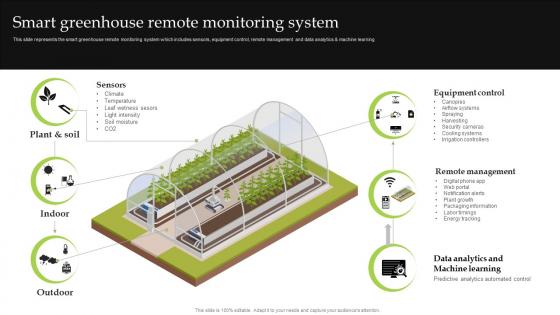
This slide represents the smart greenhouse remote monitoring system which includes sensors, equipment control, remote management and data analytics and machine learning
People who downloaded this PowerPoint presentation also viewed the following :
Smart Greenhouse Remote Monitoring System Iot Implementation For Smart Agriculture And Farming with all 6 slides:
Use our Smart Greenhouse Remote Monitoring System Iot Implementation For Smart Agriculture And Farming to effectively help you save your valuable time. They are readymade to fit into any presentation structure.





FAQs for Smart Greenhouse Remote Monitoring System Iot Implementation For Smart
You'll need sensors for the basics - temp, humidity, soil moisture, light. Then grab some actuators like fans and irrigation pumps. A central controller ties everything together with WiFi or LoRaWAN. Honestly, the mobile app is clutch because who wants to walk out there constantly? Set up automated triggers so your system responds to sensor data without you babysitting it. Just make sure everything talks to each other properly - that's where people usually mess up. Oh, and figure out which environmental factors actually matter for your plants first. Don't go overboard with sensors you won't use.
So basically, you get sensors that watch everything - soil moisture, temp, humidity, all that stuff. Then your watering and heating systems respond to actual data instead of just running on timers (which is honestly such a waste). Your plants only get water when they're actually thirsty. Same with heating - it kicks in when temps actually drop below what your plants need. I'd start with soil moisture sensors first though, they'll save you the most water right away. Plus over time you'll start seeing patterns in the data that help you plan better. Way smarter than guessing, you know?
Most people start with temp/humidity sensors - those are pretty much essential for any setup. Soil moisture ones too, obviously, since you don't want to kill your plants by overwatering. Light sensors help track if they're getting enough for photosynthesis. pH sensors are clutch for nutrient levels, and CO2 monitoring makes sense since plants literally live off that stuff. Some folks add cameras for visual checks and airflow sensors, but honestly that's getting fancy. Start basic with temp/humidity and soil moisture, then add more as you figure out what you actually need. No point blowing your budget right away.
So basically, your greenhouse sensors become this amazing predictor for how your plants will do. Track temperature, humidity, soil moisture, and light - the machine learning picks up on which combos give you the best harvests. Honestly, it's pretty wild how it starts alerting you to problems before they even happen. Water and nutrient usage gets way more efficient too since you're feeding plants what they actually need instead of just winging it. I'd start simple though - maybe pick 3 key things to monitor first. Once you see those patterns clicking, then you can get fancy with more data points.
So AI basically acts like the brain for all your sensors - it takes data from temperature, humidity, soil moisture, light levels and figures out what your plants actually need. The cool part is it spots problems before they happen, like catching diseases early or knowing exactly when to water. Honestly, the automation side is probably the biggest game changer - it'll adjust your climate controls and irrigation without you having to check every sensor constantly. Plus it can predict harvest times and crop yields based on what's happening right now. Way more efficient than doing everything manually, and your plants get consistent conditions 24/7.
So temp and humidity are like the brain of your whole setup - they control everything else automatically. When humidity gets crazy high, your exhaust fans kick in or watering cuts back. Temperature spikes? Shade screens deploy, misting turns on, all that good stuff. Honestly the coolest part is how it predicts when your plants might get stressed or diseased. You'll want sensors scattered around though because - and this surprised me at first - even tiny greenhouses have weird hot/cold spots everywhere. The data helps you nail harvest timing too.
So the upfront hardware costs are gonna hit you for $2-10K - sensors, controllers, all that connectivity stuff. Size and complexity obviously drive the price up. Monthly you're looking at cloud storage, data plans, software subscriptions piling on. Installation always takes forever, I swear it's like a universal law or something. Plus you'll have ongoing maintenance and replacing sensors that inevitably break. Honestly? Start small with just temp and humidity monitoring. See what kind of energy savings and better yields you actually get before going crazy with fancy features. Calculate your payback first - don't just buy everything at once.
Dude, remote monitoring is a game changer for catching plant problems early. These sensors track everything - temperature, humidity, soil moisture, light levels - and honestly the amount of data is kind of nuts. Your phone buzzes when something's off, like humidity going crazy or nutrients tanking. Instead of finding dead plants later, you can fix things right away. The cool thing is you'll start seeing patterns after a while. Makes it way easier to prevent issues instead of scrambling to save dying plants.
Start with climate and watering - that's your foundation. Temperature and humidity adjust automatically based on sensor readings, plus irrigation kicks in when soil gets too dry. Lighting adapts to weather and growth phases, which is pretty slick. The fertilizer injection stuff honestly blows my mind - total game changer. After that, you can add ventilation, pest monitoring cameras, even robotic transplanting if you're feeling fancy. Don't go crazy at first though. Build it up gradually and see what actually saves you the most hassle day-to-day.
So these smart greenhouses are pretty cool - they use IoT sensors to track soil moisture, temperature, humidity, all that stuff. Your water usage drops big time because it only waters when needed instead of guessing. Same with energy since the climate control runs automatically. Oh, and you'll catch pest problems early so no more spraying everything just to be safe. The precision is honestly wild once you see it in action. Year-round growing means way better yields too. I'd start by writing down what you're spending on water and electricity now - that way you can actually see the difference later.
Honestly, the money hit is brutal upfront - sensors, software, all that connectivity stuff adds up fast. Rural internet is garbage half the time, which doesn't help. Plus nobody wants to turn into a spreadsheet wizard just to grow tomatoes, you know? Data security freaks me out too - who knows where all that info ends up. The payoff isn't obvious right away either, so convincing yourself it's worth it gets tough. My advice? Try it on just one section first. Way less painful if things go sideways, and you'll actually learn what works.
Strong passwords on all your IoT stuff first - change those defaults ASAP since most attacks are just bots trying "admin/admin." Set up a separate WiFi network for the greenhouse devices so they can't access your main business systems if something goes wrong. Data encryption should happen automatically with decent platforms, but worth checking. Two-factor auth wherever you can get it. I know protecting tomato data sounds ridiculous, but getting hacked still costs real money and downtime. The network isolation thing is probably your biggest win honestly.
Dude, renewable energy is a game-changer for smart greenhouses. Solar panels are honestly a no-brainer since you're already getting maximum sun exposure. Calculate your current energy usage first, then size everything from there. Wind turbines work too if you've got decent wind patterns (though I've seen mixed results with those). Battery storage keeps your sensors and pumps running at night. Your electricity bills will drop like crazy. Most people break even in 3-5 years, which isn't bad considering how much energy those climate controls suck up. You'll basically be running on free power while going sustainable.
So basically these smart greenhouses have IoT sensors everywhere tracking temp, humidity, light - you know, all that stuff. Heat wave hits? Boom, shade cloths deploy and cooling cranks up automatically. Cold snap does the opposite. What's really neat is they're getting predictive now, reading weather forecasts to prep ahead of time. You can customize settings for different crop areas too. Oh, and here's the thing - you definitely want backup systems because if your main one craps out during a storm, you're screwed. The redundancy saves your ass when it really counts.
Dude, some crazy stuff is coming down the pipeline! Edge computing is blowing up right now - your sensors will crunch data right there in the greenhouse instead of bouncing everything to the cloud. Way faster responses. AI predictive analytics are getting scary good too. Like, you'll spot diseases before they even show up. Digital twins let you basically clone your whole setup virtually and test stuff without killing real plants. Honestly feels like we're living in the future sometimes. I'd start looking into edge computing solutions first - that's gonna change everything for you pretty quick.
-
Every time I ask for something out-of-the-box from them and they never fail in delivering that. No words for their excellence!
-
The quality of the templates is as fine as it could get. It was a purchase well made!