

Smart Dashboard For Agriculture And Livestock Management




Try Before you Buy Download Free Sample Product
 Impress Your
 Audience
 100%
100% Editable
 Save Hours
 of Time


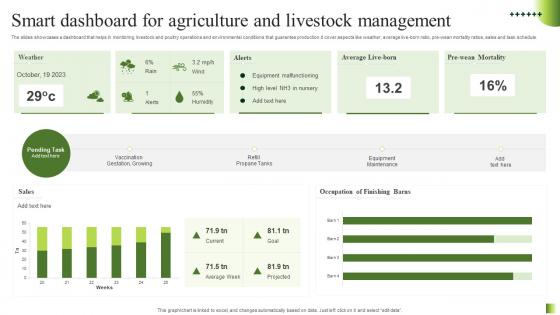
The slides showcases a dashboard that helps in monitoring livestock and poultry operations and environmental conditions that guarantee production.it cover aspects like weather, average live born ratio, pre wean mortality ratios, sales and task schedule.
People who downloaded this PowerPoint presentation also viewed the following :
Smart Dashboard For Agriculture And Livestock Management with all 7 slides:
Use our Smart Dashboard For Agriculture And Livestock Management to effectively help you save your valuable time. They are readymade to fit into any presentation structure.





FAQs for Smart Dashboard For Agriculture
IoT sensors are probably the biggest game-changer - soil moisture, weather stations, all that stuff feeding data straight to farmers. Drones do crop monitoring and spraying now too. GPS tractors are wild, honestly way smarter than most cars on the road. Machine learning helps predict when to water and spots diseases before they spread. My cousin's got some of this tech and says it's crazy how everything connects together. The farm basically monitors itself once you get it set up right. I'd start with basic soil sensors if you're thinking about diving into this world.
Dude, precision farming is actually pretty sick - you can bump yields 10-15% while spending less on inputs. GPS and sensors let you drop fertilizer and water exactly where plants need it instead of just blasting everything. Way less waste that way. The environmental stuff is honestly the best part though - no more chemical runoff killing waterways, better soil health, way less water usage. My cousin started with just soil testing and variable-rate fertilizer on like 20 acres. Saw results immediately. If you're thinking about it, that's probably the smartest way to dip your toes in without going crazy on equipment costs.
Dude, these IoT soil sensors are actually pretty sweet. You just jam them in the ground and they'll text your phone with moisture, pH, temp - all that good stuff. No more trudging around checking everything manually, which honestly saves my back. The coolest part? Hook them up to your irrigation and it'll only water when needed. I started with like 3-4 sensors spread across different spots and was shocked how much my soil varies. Some areas stay wet forever while others dry out fast. Definitely worth trying a few first before going crazy with them.
Honestly, drones are pretty amazing for checking crops - you'll cover your whole field in like 20 minutes instead of walking around for hours. The multispectral cameras can actually spot plant stress and diseases before you'd even notice them. Kinda feels like cheating in a good way! Plus they map out where you need more irrigation and track how everything's growing. Way better than just eyeballing it and hoping for the best. I'd start simple though - just do a basic flyover to see what problem spots pop up, then get fancier from there.
Honestly, AI pest management is pretty game-changing. Computer vision can catch pest damage or eggs way before you'd spot them - drones and field cameras do the heavy lifting. The software picks up on patterns we'd totally miss. Best part? It cuts pesticide use by like 30% because it knows exactly when and where to treat. Weather and crop data help predict outbreaks too, which is clutch. I'd start with just an AI scouting app to test the waters - see how it changes your monitoring game before going all-in.
So these smart irrigation systems are actually pretty neat - they've got sensors that check soil moisture and weather stuff in real time. Basically tells you exactly when to water and how much each area needs. It's like having your own little weather station out there, which sounds kind of excessive but honestly works really well. Instead of just guessing, the system adjusts everything automatically based on what's actually happening. You can cut water waste by like 20-50%, which isn't bad at all. I'd probably start with whatever areas use the most water and test it there first.
Money's the biggest thing - this stuff isn't cheap and most farmers are already stretched thin. Rural internet still sucks which makes all those fancy sensors pretty useless. Plus suddenly you're expected to be a tech expert AND a data scientist? No thanks. The learning curve is brutal honestly. My advice would be pick one thing that'll actually solve your worst problem first. Don't try to go full sci-fi farm mode right away or you'll just end up frustrated and broke.
Smart ag is honestly a game-changer for cutting emissions. GPS tractors burn way less fuel, and precision fertilizer application stops all that nitrous oxide from leaking out. The sensor tech is pretty sweet - monitors soil health and optimizes irrigation so you're not wasting water or energy. Oh, and the data stuff helps predict harvest timing perfectly, which cuts down on food waste big time. Variable rate technology is where I'd start if you're serious about this - biggest bang for your buck on carbon reduction. My cousin uses it on his farm and swears by it.
So basically all those farm sensors and weather data you're collecting can actually tell you useful stuff instead of just sitting there. Like when to plant or water based on actual patterns, not just guessing. Modern farms create insane amounts of data - way more than you'd think! The cool part is spotting trends, like why certain field spots always suck or predicting pest problems before they hit. Plus you won't waste fertilizer dumping it everywhere when only some areas need it. Honestly I'd just pick one data source first and see how it goes.
So blockchain creates this unbreakable digital record of your food's entire journey. From the farm to your grocery store - everything gets tracked. What pesticides were used, harvest dates, transportation routes, all of it. Think of it like a receipt book that can't be faked and everyone has to sign off on. Honestly, the transparency angle is huge right now. Consumers want to know where their stuff comes from (no more sketchy meat origins), and you can actually prove your sustainable practices aren't just marketing fluff. IBM Food Trust and VeChain are good starting points if you're curious about diving in.
Honestly, farming apps are game-changers now. You can check soil moisture, get weather alerts, and even turn on sprinklers remotely - all from your phone. The satellite crop monitoring stuff still blows my mind sometimes. Look for apps that combine multiple features so you're not constantly switching between different platforms (that gets old fast). I'd start with whatever's bugging you most - water management, pest issues, yield tracking, whatever. Some connect to physical sensors too, which is pretty sweet if you want real-time data. Way easier than driving out to check everything manually.
Look, the money side is pretty solid - most farmers see 15-30% better yields while using 20-40% less water and fertilizer. Smart sensors let you hit crops with exactly what they need instead of just dumping stuff everywhere (we've all been guilty of that). Early pest detection saves you from losing whole sections too. Weather forecasting actually helps more than I expected. Investment pays back in 2-3 seasons usually. Just grab some soil sensors first - don't blow your budget on the crazy expensive stuff right away. You can always add more tech later once you see what works.
So smart agriculture basically helps with food security by using all this tech to get better harvests from the same amount of land. Sensors and AI optimize irrigation, fertilizer - the whole deal. Honestly, the amount of tech involved now is kinda wild. Predictive analytics tells you when to harvest for best results, IoT monitors storage so food doesn't spoil, plus it speeds up getting crops to market. Way less waste overall. If you're thinking about trying it, I'd start small with soil sensors and weather monitoring stuff first. Much easier entry point than diving into the deep end.
Honestly, sensors are like having someone watching your crops 24/7. They track soil moisture, temperature, pH, all that stuff - way better than guessing when to water. You'll get alerts when things go wrong before your plants actually suffer. I started with just basic soil moisture ones since they're cheap, and wow, I had no idea how badly I was timing my irrigation. They measure everything from nutrients to pest activity too. The whole point is catching problems early so you can fix watering or fertilizer issues right away. Plus you can adjust everything remotely, which is pretty sweet when you're lazy like me.
Dude, ML is seriously changing farming right now. Farmers are ditching the old "look at the sky and guess" approach for algorithms that crunch satellite data, soil sensors, weather forecasts - all that stuff. The results? Crazy accurate predictions about pest outbreaks, disease, harvest timing, you name it. These models catch things way before humans would - like tiny leaf color changes that mean disease is coming. My cousin's been using Climate Corp's platform and swears by it. Companies like Farmers Edge are killing it too with their predictive analytics. ROI is legit.
-
Fantastic collection. Loved how we can personalize these templates as per the requirements.
-
Their professional templates are very impressive, even my manager was curious about the source. I am very grateful.