


Social Media In Customer Service Powerpoint Presentation Slides




Try Before you Buy Download Free Sample Product
 Impress Your
 Audience
 100%
100% Editable
 Save Hours
 of Time


Communication in business is vital to convey clear, strong messages about strategy, customer service, and branding. Grab our Social Media in Customer Service template. It briefly explains the business communication types and problems companies face in their communication strategies, training programs, and budget. Our Social Media in Customer Service deck covers the overview of two types of business communication such as external and internal. It also includes the problems businesses face with their communication strategy and its impact on business. In addition, our internal Business Communication PPT contains the external communication implementation plan for customer service and social media technologies. It also caters to the different implementation challenges and their impact. Also, our Video Conferencing in the Internal Communication presentation exhibits the internal communication implementation plan and its effects. Furthermore, it caters to an employee training program for communication technologies and a budget plan to implement new communication channels into business. Moreover, our Instant Messenger in Internal Communication module comprises a timeline and a roadmap to implement IT communication technologies in business. Lastly, it contains a dashboard for tracking progress. Get instant access.
People who downloaded this PowerPoint presentation also viewed the following :
Content of this Powerpoint Presentation
Slide 1: This slide introduces Social Media in Customer Service. Commence by stating Your Company Name.
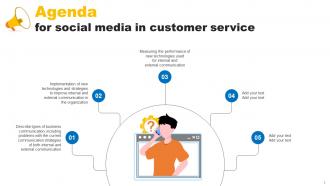
Slide 2: This slide depicts the Agenda of the presentation.
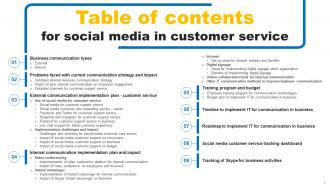
Slide 3: This slide incorporates the Table of Contents.
Slide 4: This slide highlights the Title for the Topics to be discussed further.
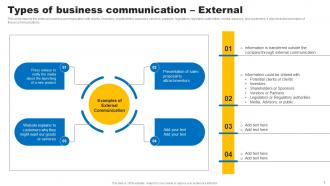
Slide 5: This slide states the external business communication with clients, investors, shareholders, sponsors, etc.
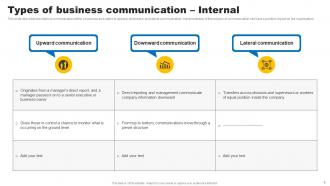
Slide 6: This slide describes the internal communication within a business and caters to upward, downward, and lateral communication.
Slide 7: This slide elucidates the Heading for the Components to be further discussed.
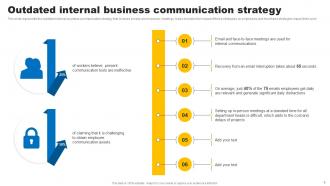
Slide 8: This slide talks about the Outdated internal business communication strategy.
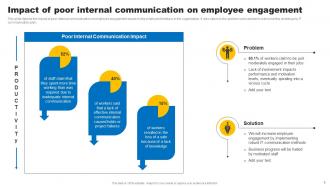
Slide 9: This slide depicts the impact of poor internal communication on employee engagement.
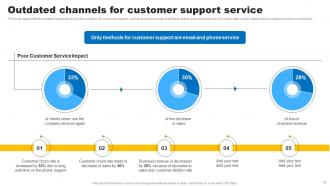
Slide 10: This slide represents the outdated channels used by the company for customer support.
Slide 11: This slide displays the Title for the Ideas to be covered in the following template.
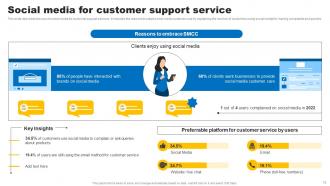
Slide 12: This slide describes the use of social media for customer support services.
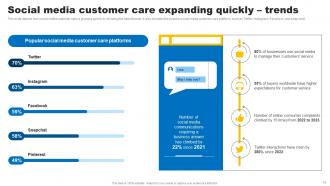
Slide 13: This slide presents how social media customer care is growing quickly by showing the latest trends.
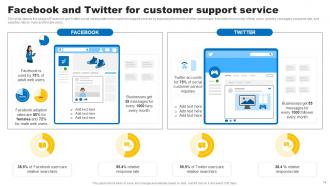
Slide 14: This slide elucidates Facebook and Twitter for customer support service.
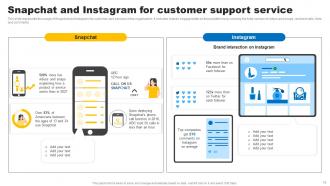
Slide 15: This slide represents the usage of Snapchat and Instagram for customer care services in the organization.
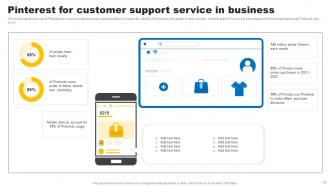
Slide 16: This slide outlines the use of Pinterest as a social media customer support platform.
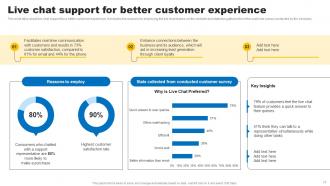
Slide 17: This slide talks about live chat support for a better customer experience.
Slide 18: This slide showcases the Heading for the Ideas to be discussed in the upcoming template.
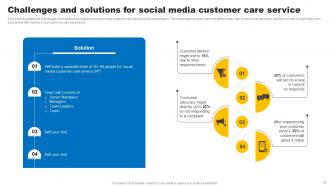
Slide 19: This slide illustrates the challenges and solutions for deploying social media customer care service in the organization.
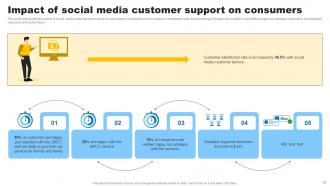
Slide 20: This slide exhibits the Impact of social media customer support on consumers.
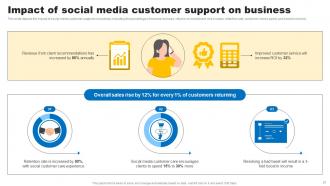
Slide 21: This slide depicts the impact of social media customer support on business.
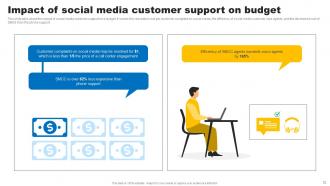
Slide 22: This slide talks about the impact of social media customer support on a budget.
Slide 23: This slide mentions the Title for the Contents to be covered in the following template.
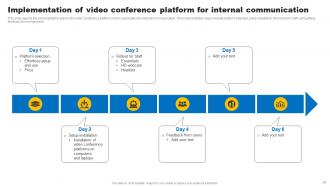
Slide 24: This slide displays the implementation plan for the video conference platform in the organization for internal communication.
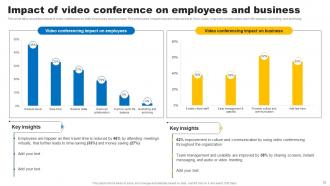
Slide 25: This slide elucidates the Impact of video conference on employees and business.
Slide 26: This slide highlights the Heading for the Topics to be discussed next.
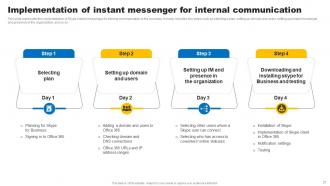
Slide 27: This slide represents the implementation of Skype instant messenger for internal communication in the business.
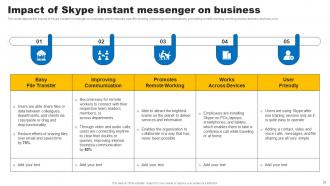
Slide 28: This slide depicts the impact of Skype instant messenger on business.
Slide 29: This slide portrays the Title for the Topics to be covered in the following template.
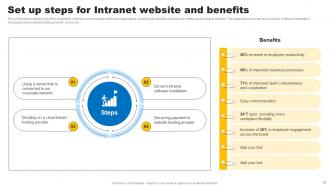
Slide 30: This slide presents the use of the intranet for internal communication within the organization.
Slide 31: This slide elucidates the Heading for the Components to be further discussed.
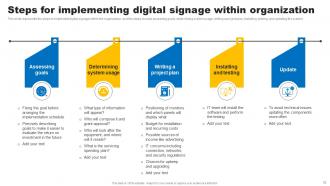
Slide 32: This slide states the steps to implement digital signage within the organization.
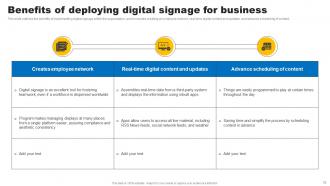
Slide 33: This slide exhibits the Benefits of deploying digital signage for business.
Slide 34: This slide outlines the Heading for the Components to be covered in the following template.
Slide 35: This slide displays the Online collaboration tools for internal communication.
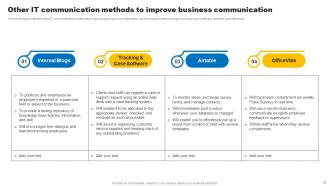
Slide 36: This slide represents the other IT communication methods to improve business communication.
Slide 37: This slide indicates the Title for the Ideas to be discussed next.
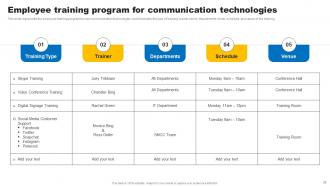
Slide 38: This slide showcases the Employee training program for communication technologies.
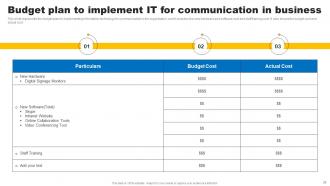
Slide 39: This slide highlights the Budget plan to implement IT for communication in business.
Slide 40: This slide incorporates the Heading for the Ideas to be covered further.
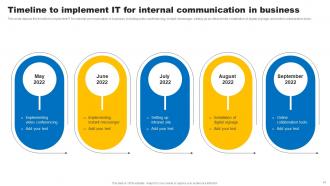
Slide 41: This slide depicts the timeline to implement IT for internal communication in business.
Slide 42: This slide portrays the Title for the Components to be discussed in the following template.
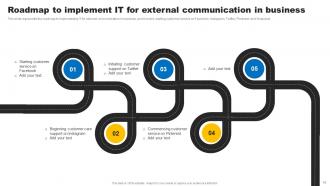
Slide 43: This slide represents the roadmap to implementing IT for external communication in business.
Slide 44: This slide shows the Heading for the Topics to be covered in the forth-coming template.
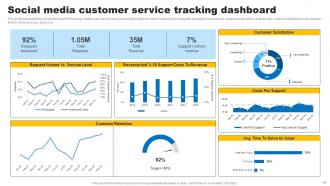
Slide 45: This slide represents the social dashboard for tracking media customer service.
Slide 46: This slide includes the Title for the Components to be discussed next.
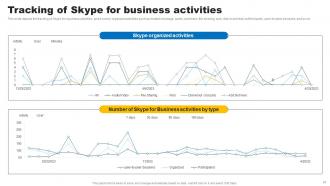
Slide 47: This slide depicts the tracking of Skype for business activities, and it covers organized activities.
Slide 48: This is the Icons slide containing all the Icons used in the plan.
Slide 49: This slide is used for showcasing Additional information.
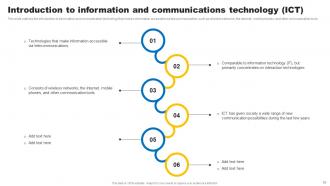
Slide 50: This slide outlines the introduction to information and communication technology.
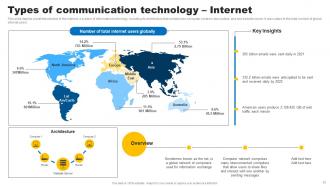
Slide 51: This slide displays a brief introduction to the internet, a system of information technology.
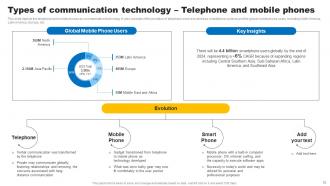
Slide 52: This slide states the telephone and mobile phones as communication technology.
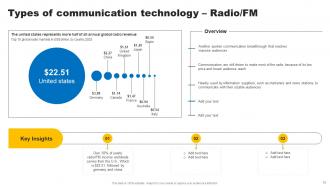
Slide 53: This slide mentions the Types of communication technology for Radio/FM.
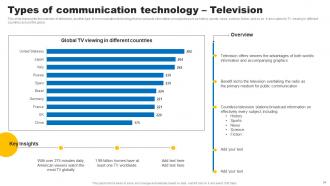
Slide 54: This slide represents the overview of television.
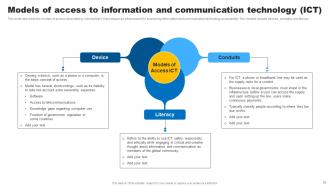
Slide 55: This slide describes the models of access described by scholar Mark Warschauer as a framework for examining information and communication technology accessibility.
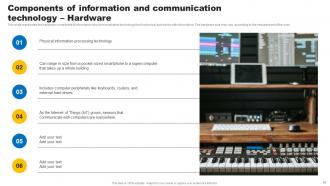
Slide 56: This slide showcases the hardware component of information and communication technology.
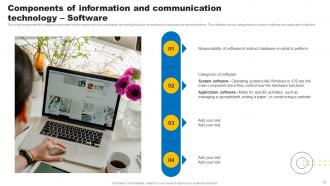
Slide 57: This slide represents the software component of information and communication technology.
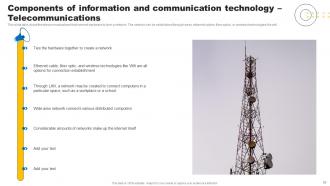
Slide 58: This slide talks about the telecommunications that connect hardware to form a network.
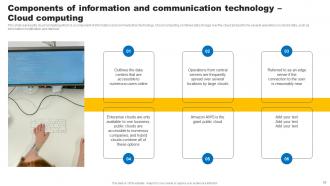
Slide 59: This slide reveals the cloud computing which is a component of information and communication technology.
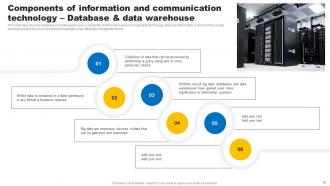
Slide 60: This slide describes the database and data warehouse components of information and communication technology.
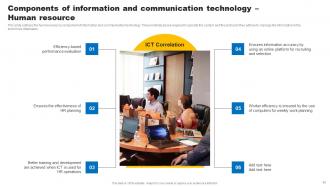
Slide 61: This slide outlines the human resource component of information and communication technology.
Slide 62: This is the Venn diagram slide.
Slide 63: This slide presents the Company Timeline.
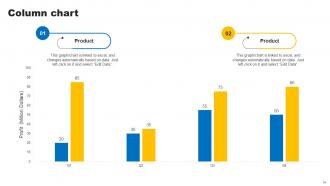
Slide 64: This slide illustrates the Column chart.
Slide 65: This is the Puzzle slide with related imagery.
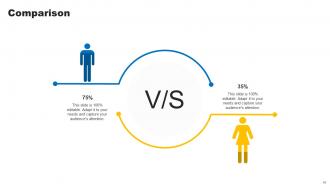
Slide 66: This slide is used for the purpose of Comparison.
Slide 67: This slide contains the Post it notes for reminders and deadlines.
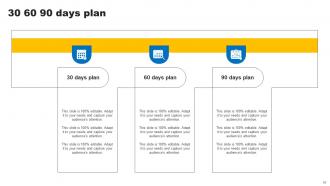
Slide 68: This is the 30 60 90 days plan slide for effective planning.
Slide 69: This is Our goal slide. Mention your organizational goals here.
Slide 70: This is the Thank You slide for acknowledgement.
Social Media In Customer Service Powerpoint Presentation Slides with all 75 slides:
Use our Social Media In Customer Service Powerpoint Presentation Slides to effectively help you save your valuable time. They are readymade to fit into any presentation structure.







FAQs for Social Media In Customer Service
Dude, social media customer service is actually clutch for three main reasons. First, you can fix problems instantly instead of those endless email back-and-forths that take forever. When you solve issues publicly, other customers see you're not just ignoring complaints - it's basically free PR. Your replies reach way more people than just that one angry customer. Plus you'll catch problems early since people love to complain on Twitter first before anywhere else (honestly, can't blame them). Just monitor your brand mentions daily and set up alerts. Trust me, you don't want stuff slipping through.
Get Hootsuite or something similar so you can watch all your platforms from one place - saves so much time. Set up alerts for keywords since people love to complain without tagging you. Response times matter though - like an hour for Twitter, maybe 4 for Facebook. Each platform needs its own vibe too. LinkedIn can't sound like TikTok, you know? Oh and definitely move messy complaints to DMs or calls fast. Nobody wants a public meltdown on their page! Start by figuring out where your customers actually spend time first.
Dude, people are *so* impatient on social media - like way more than email or phone. They expect you to respond in hours, not days. Four hours max during business hours, but honestly faster is always better. The thing is, social media feels instant to them, so when you don't reply quickly they get pissed and start complaining publicly. Which sucks because then everyone sees it. Even just dropping a quick "we see this, looking into it" helps while you figure out the real answer. I learned this the hard way at my last job.
Start with platform differences - Twitter's totally different from Facebook posts, obviously. Your team needs role-playing practice, especially for angry customers going viral (that's when things get messy fast). Mock accounts sound dumb but they actually help a ton. Speed and empathy are key since everyone's watching public replies. Make sure they know your brand voice cold, plus when to move conversations to DMs. Oh, and don't leave them hanging during PR nightmares - clear escalation paths are crucial. Practice fake social crises during training too.
Response time is huge - people get pissy when you leave them hanging on social. Track how many problems you're actually fixing too, not just responding to. Customer satisfaction surveys help, though honestly half the people won't fill them out. Sentiment analysis is solid for seeing if people are trash-talking your brand. Don't forget volume stuff like total messages and how often things get bumped to phone support. Your team's workload matters too - nobody wants to be the person drowning in DMs all day. Start simple with these basics, then add fancier tracking later.
So basically, don't abandon your brand's personality when people complain - that's super jarring. Stay true to your core voice but crank up the empathy. Like if you're usually playful, keep being warm but maybe skip the jokes when someone's pissed off? Always acknowledge their frustration first, then fix the problem using your normal language and phrases. I've noticed some brands do this weird 180 and suddenly sound like corporate robots when handling complaints. It feels so fake. Just let genuine concern come through while staying authentically you.
Oh man, biggest mistakes? Don't get defensive - I've seen brands absolutely melt down doing that. Copy-paste responses are the worst too, people spot them instantly. Never ignore bad comments thinking they'll just go away (they won't). Also don't take forever to respond, and definitely don't get into public fights with customers - move that drama to DMs fast. Oh, and make sure whoever's running your accounts actually knows how you normally sound. I learned that one the hard way when our intern started responding like a corporate robot. Set up notifications so you're not missing stuff!
Oh totally, age makes a huge difference! Gen Z and millennials love sliding into DMs or dropping comments - they want instant replies and literally use memes to explain problems sometimes. It's actually pretty funny. Boomers though? They'll write entire essays on Facebook posts instead of messaging privately. Way more formal too. Gen X does whatever feels right for the situation - public or private. You'll want to watch different platforms based on where your people actually hang out. Makes sense to match their energy when you respond.
Know when to take things private - payments, personal details, anything complicated that needs back-and-forth. I always DM first with "let's hop on email so I can actually help you properly" plus a case number. Phone calls are honestly your best bet for messy issues. Set up some templates your team can tweak quickly, but acknowledge their public post before going private. The worst thing? Making someone repeat their entire problem again. So brief whoever's handling the next step, or people get annoyed fast. Make it feel smooth.
Honestly, social media analytics are perfect for this - you can track when complaints spike and see what's actually pissing people off. Set up alerts for brand mentions and negative keywords so you're not constantly behind the curve. Sentiment trends will show you patterns, plus you'll figure out which platforms customers prefer for support (spoiler: probably not the one you think). I'd also watch for recurring issues and hashtags tied to your brand. Oh, and response time data is huge - track that stuff because it shows when your team's dropping the ball. Most companies just ignore this goldmine of feedback, but it's literally customers telling you what's broken.
Ugh, negative feedback on social media hits different because everyone can see it. Your potential customers are literally watching how you handle complaints, and honestly? The algorithms seem to push drama more than the good stuff sometimes. But here's what I've learned - your response matters way more than whatever they originally said. Jump in fast with something that actually sounds human and empathetic. It shows you give a damn about fixing things. Start with a public reply so everyone sees you care, then slide into DMs to sort out the details. Done right, you can actually come out looking better than before.
Make it stupid easy for happy customers to spread the word about you. Quick, helpful responses work wonders - I've actually seen companies flip angry customers into raving fans just by being real and fixing stuff. Feature customer stories, run contests, ask questions that get people talking. Oh, and set up brand mention alerts so you don't miss anything. The biggest mistake? Posting then disappearing. Stay engaged with people who take time to interact with you. It's honestly not that complicated, but most businesses mess up the follow-through part.
So automation is pretty clutch for handling all the boring repetitive questions that come in constantly. I'd start with your top 10 FAQs and just automate those responses first. You can set up chatbots, auto-route stuff to the right teams, trigger follow-ups based on keywords - the usual. Game changer during crazy busy times or when nobody's around at 3am to answer "what are your hours?" for the millionth time. Just don't make it sound too robotic, ya know? People can smell fake automation from a mile away. Your team will actually get to work on interesting problems instead.
Hit them up in a day or two with a quick check-in. Something like "Hey, everything still running smooth?" Don't make it fancy or whatever. Honestly, most people don't expect follow-ups so you'll stand out just by doing it. Plus if something's still broken, you'll catch it before they get pissed again. When they say everything's good, that's gold for testimonials later. Set a phone reminder though - I always forget this stuff otherwise. It's such a small thing but builds real loyalty.
Oh man, privacy laws are no joke on social media - GDPR and CCPA still count even if the customer posted publicly first. Move anything sensitive to DMs or email immediately. Also, stick to facts only because defamation lawsuits are real. I've watched companies get absolutely wrecked by reps who got too chatty online. Document everything you do for compliance. Your team needs clear rules about when to loop in legal, especially for those late-night angry customer situations. Trust me, you don't want to figure this out on the fly.
-
One-stop solution for all presentation needs. Great products with easy customization.
-
Informative presentations that are easily editable.