Social Media Communication Channel Marketing Strategy

Rating:
90%
Social Media Communication Channel Marketing Strategy
Slide 1 of 6
Favourites Favourites

Try Before you Buy Download Free Sample Product

Audience Impress Your
Audience
Editable 100%
Editable
Time Save Hours
of Time
The Biggest Sale is ending soon in
0
0
:
0
0
:
0
0
Rating:
90%
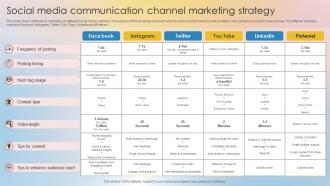
This slide covers methods for marketing on different social media channels. The purpose of this template is to teach when to post on social media in order to attract more audience and gain more revenue. The different channels used are Facebook, Instagram, Twitter, You Tube, LinkedIn and Pinterest. Introducing our Social Media Communication Channel Marketing Strategy set of slides. The topics discussed in these slides are Posting Timing, Hash Tag Usage, Tips For Content. This is an immediately available PowerPoint presentation that can be conveniently customized. Download it and convince your audience.

FAQs for Social Media Communication

LinkedIn's your best bet for B2B stuff - that's where all the decision-makers are scrolling anyway. Twitter's solid too if you want to build thought leadership. B2C is totally different though. Instagram and TikTok kill it with younger crowds, while Facebook still owns the older demographic (plus their ad targeting is insane). YouTube works for both but honestly performs way better on the consumer side. Here's the thing - none of this matters if you don't know where YOUR people actually spend time. I'd just ask your current customers what they use. Sounds boring but it works better than guessing.

Track the stuff that actually makes you money. Cost per acquisition, customer lifetime value, and real revenue from each platform - not just follower counts because those are basically meaningless. Set up conversion tracking so you can see which posts drive actual sales or signups. Google Analytics helps but tbh the cross-platform tracking gets weird sometimes. I'd start by figuring out what success looks like dollar-wise first. Then work backwards from there to build out how you'll measure everything.

Dude, user-generated content is gold. People trust what other customers say way more than your polished marketing stuff - it just hits different, you know? When someone posts about your brand or leaves a review, that's authentic social proof doing the work for you. Create a hashtag for your brand and actually engage with people who mention you. You can repost their content or feature customer stories. Honestly, it's like having free marketing that doesn't feel like marketing. Oh, and run campaigns asking people to share their experiences - works better than you'd think.

Facebook and Instagram want posts that get people talking - comments and shares are gold. LinkedIn's different though, it loves professional stuff and industry hot takes. TikTok? Totally obsessed with watch time and whether people share your videos. If viewers bounce after 3 seconds, you're screwed. Twitter (ugh, X now) still cares most about being fresh and getting engagement fast. Honestly, the biggest mistake is posting identical content everywhere. Won't work. Each platform has its own vibe, so you gotta adjust your content accordingly. Match what each algorithm actually wants and you'll see way better results.

Honestly, just ask people stuff directly instead of posting into the void. Behind-the-scenes content works great too - people eat that up. Reply to comments fast, it makes such a difference. Check your analytics to see when people are actually online (I always forget to do this). The messy, imperfect posts usually get way more engagement than the super polished ones anyway. Polls and stories are your friend. Oh, and definitely engage back when someone takes time to comment. Track what gets people talking and do more of that. User-generated content is gold if you can get it.

Dude, influencer marketing is seriously everywhere right now. People trust creators way more than regular ads - it's wild but makes sense when you think about it. The ROI can be insane if you pick the right people. Micro-influencers are actually better than celebrities half the time, which sounds backwards but their followers are super engaged. Perfect for Gen Z and millennials especially. I'd start small though - maybe test a few micro-influencers in your space first? See what works before you blow your whole budget on some mega influencer who might not even move the needle.

Your visuals have to grab people right away - that's what stops the endless scrolling. Headlines should promise something specific, like solving an actual problem they're dealing with. Talk like you're chatting with one person, not giving a presentation to a boardroom (that corporate stuff is so boring anyway). CTAs need action words that feel urgent but not desperate. Honestly, test everything - different headlines, images, even those tiny button colors make a difference. Pick one platform first and get really good at it. Once you've figured out what works there, you can tweak it for the others.

Honestly, people connect way more with stories than boring product features - our brains are just wired that way. Share real customer stories, behind-the-scenes stuff, maybe how your company started. Structure posts with beginning/middle/end and throw in some emotional hook or problem that gets solved. Oh and think about what challenges your customers actually deal with, then show how you fit into their bigger picture. Try posting one customer success story this week (I'd be curious to see how it performs compared to your usual stuff). Start there and see what happens.

Honestly, just be real with people - they can spot fake responses from a mile away. I always tell people to start with one platform and actually engage there instead of spreading yourself thin everywhere. Behind-the-scenes stuff works great, plus sharing what your followers post makes them feel special. Quality beats posting constantly, trust me on that one. Polls and questions get people talking way more than just pushing products at them. Oh, and celebrate when your community hits milestones - people love feeling part of something bigger. The brands that crush it usually have hashtag campaigns that people actually want to join, not just ignore.

Dude, get yourself a scheduling tool like Hootsuite or Buffer - game changer. Pick 2-3 platforms where your people actually are instead of spreading yourself thin everywhere. I learned this the hard way lol. Batch your content creation into themes, then tweak the same message for each platform. Twitter's gotta be short and punchy, Instagram needs those hashtags, LinkedIn wants you to sound all professional. Block out a couple hours weekly to schedule everything and reply to comments. Way better than scrambling to post something every single day.

Honestly, just be real with people and don't try to trick them. The FTC will come for you if you don't clearly mark sponsored stuff - learned that the hard way from other marketers getting burned. Don't oversell what your product actually does, and skip those annoying fake countdown timers that reset every day (we all see through that). Respect people's data too. Oh, and maybe don't jump on every trending topic, especially if it's sketchy. I'd say audit what you're doing now and set some basic rules for your team. Trust beats quick cash every time.

So audience segmentation is basically the difference between talking to everyone and talking to *someone*, you know? Break your followers into groups - age, interests, where they are in buying something. Your Gen Z people want those quick TikTok videos, but your business crowd? They're reading LinkedIn case studies like it's homework. Honestly changed everything for me once I figured it out. No more posting random stuff hoping it sticks. Pick your top 3 audience types and make content just for them. Way better than trying to please everyone and ending up boring instead.

Honestly, you've gotta pay attention to AI personalization - these platforms are getting creepy good at knowing what people want. Short-form video is still dominating everything, not just TikTok anymore. Social commerce is where it's at though - people can buy stuff without even leaving the app now. The influencer game is changing too. Everyone's moving toward micro and nano-influencers because they feel more real. Oh, and definitely start playing around with AI tools for content creation if you haven't already. Focus on building actual communities instead of just selling stuff constantly - that's what really works now.

Okay so first thing - respond fast but don't just panic-post something stupid. Own up to whatever went wrong if it's actually your fault. Move the heavy conversations to DMs though, nobody wants to watch that play out publicly. Don't delete comments unless they're genuinely nasty - that almost always makes things worse anyway. Be honest about what happened and how you're fixing it. People can usually tell when you're just trying to cover your ass versus actually caring. Oh and definitely have some kind of plan ready beforehand so you're not totally scrambling. Most folks will cut you slack if you handle it well.

Okay so social listening is basically having ears everywhere online - you can see what people actually say about your brand, competitors, the whole industry. I'd start with alerts for your brand name and key terms first. You'll catch complaints before they explode, jump on trends early, and figure out what content actually works vs. what bombs. Honestly, the data you get should change everything - your content calendar, how you talk to people, maybe even what products you build. It's kind of like having a crystal ball but for social media drama and opportunities.

Ratings and Reviews

90% of 100
Review Form
Write a review
Most Relevant Reviews
  1. 80%

    by Deangelo Hunt

    Been using SlideTeam for some time now…can’t imagine why I wasted all that time in front of the screen trying to make the perfect presentation.
  2. 100%

    by Daren Henry

    SlideTeam makes creating presentations easy. Unlimited products, premium quality designs and affordable.

2 Item(s)

per page: