

Sponsorship opportunities ppt layouts portfolio




Try Before you Buy Download Free Sample Product
 Impress Your
 Audience
 100%
100% Editable
 Save Hours
 of Time


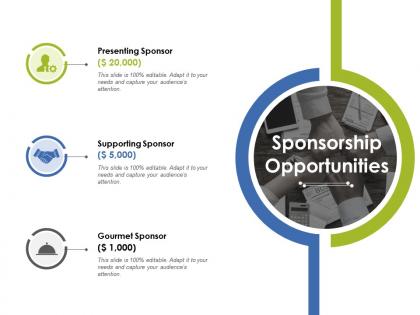
Do you need to design a professional presentation on sponsorship opportunities? Not able to find the unique and creative graphics and visuals relation to sponsorship and opportunities? Do not worry when we are here for you! Yes, SlideTeam has come with a predesigned sponsorship opportunities PPT layouts portfolio PowerPoint template slide researched by researchers. To make this sponsorship opportunities template design look professional and appealing, our designers have incorporated an expert hand joining image and symbols. A symbol of a person with gear, handshake, and government building has been used to prepare this commercial opportunity template slide design. Use this sponsorship opportunities PPT template slide to represent a different type of sponsors which are presenting sponsor, supporting sponsor, gourmet sponsor. This template slide design allows you to add your content by removing the already existing information. Impress your market by downloading this sponsorship opportunities ppt layouts portfolio PowerPoint template design. Our Sponsorship Opportunities Ppt Layouts Portfolio enable effective administration. Get all departments functioning efficiently.
People who downloaded this PowerPoint presentation also viewed the following :
Sponsorship opportunities ppt layouts portfolio with all 5 slides:
Give in to your desires with our Sponsorship Opportunities Ppt Layouts Portfolio. They have the attributes you always dreamt of.

FAQs for Sponsorship opportunities
Okay so sponsorship is pretty much a win-win situation. Brands get direct access to their target audience and build awareness through positive associations. The event gets funding, credibility, plus they can tap into the sponsor's marketing reach and know-how. Honestly, it's brilliant when executed well - way better than traditional ads sometimes. You just need genuine alignment between brand values and the event's crowd. Look for events where your ideal customers actually spend time, then propose partnerships that benefit everyone equally. Don't overthink it.
Look, audiences can spot a weird sponsorship match instantly - it's like they have radar for this stuff. You want your brand values and target audience to actually fit with whatever you're sponsoring. Red Bull + extreme sports? Perfect. Makes total sense. But if there's no connection, you're just burning money while confusing people. The best partnerships feel so obvious that nobody even questions them. I always tell people to think: would my customers naturally expect to see my brand here? If you have to explain why it works, it probably doesn't. Trust me on this one.
Honestly, you gotta track the obvious stuff first - website traffic spikes during events, social mentions, lead gen. But don't sleep on brand lift surveys either, they're actually pretty telling. Sales attribution is huge if you can nail down the tracking (which is always messier than it sounds). Also measure if people are associating your brand with whatever you're sponsoring - like their values rubbing off on you. That's harder to quantify but matters long-term. Oh, and set your benchmarks NOW before you start, not when your boss asks for ROI numbers later. Trust me on that one.
Honestly, skip the massive events and go smaller first. Target stuff that actually matches your brand - local sports teams, community festivals, industry meetups where you can talk to people face-to-face. Way better ROI than just throwing your logo on something random that nobody cares about. What I'd do is bring more than just money to the table. Offer your expertise or donate products. Makes you memorable. Oh, and definitely track your website hits and leads from each event - learned that the hard way when I couldn't figure out which sponsorships were duds. You'll thank yourself when planning next year's budget.
Honestly, engagement is everything when it comes to sponsorship money. Companies don't just want eyeballs - they want people who actually give a shit about what you're posting. Think about it from their perspective: would you rather pay someone with 10K followers who comment and share everything, or someone with 100K dead followers who never interact? Those likes, comments, and shares you get? That's literally what determines your rates. I'm obsessed with tracking mine now because high engagement basically means you can charge way more. Plus engaged audiences actually buy stuff, which makes sponsors happy and more likely to work with you again.
Honestly, most companies just wing sponsorships and wonder why they don't work. First thing - figure out what you actually want. More brand buzz? Leads? Sales? Whatever it is, write it down with real numbers. Before you spend a dime, get your baseline data. Then track everything: surveys, website traffic, those promo codes nobody thinks matter, social stuff. I learned this the hard way on a project last year. Short bursts work better than long campaigns sometimes. Check your numbers monthly, not after it's too late to fix anything.
First thing - dig deep into who you're pitching. What do they actually care about? Their brand, their customers, their goals. Most people mess this up by making it all about themselves instead of showing what's in it for the sponsor. Your proposal should scream "here's exactly what you'll get" - real numbers, audience details, specific deliverables. Be realistic about what you're asking for and when you need it. Oh, and don't be that person who sends one email then disappears. Follow up, but like, don't be annoying about it. Strong call-to-action at the end seals the deal.
Dude, social media is like putting your sponsorship on steroids. You get to squeeze so much more content out of it - posts, stories, behind-the-scenes stuff, live coverage. Way more reach than just the event itself. People actually interact with it too, which is huge. They're sharing and tagging friends, creating this whole ripple effect you can't get anywhere else. I love that you can see what's working in real-time. Just don't be that brand that posts once and calls it done. Map out content before, during, and after the event. That's where the real value comes from - milking every moment of that sponsorship investment.
Honestly, micro-influencers are where it's at right now. Brands are ditching celebrities for people with smaller but way more engaged followers - makes sense if you think about it. Real-time ROI tracking is non-negotiable too, they want proof of every dollar spent. Experiential stuff is blowing up. Instead of boring logo placements, you're seeing branded AR filters and interactive campaigns. Sustainability partnerships aren't optional anymore either, which is actually pretty cool. My take? Start connecting with nano-influencers in your niche ASAP. And seriously, learn attribution tools because brands will grill you on performance metrics. Trust me on that one.
Different events need totally different approaches, honestly. Sports sponsorships are great for visibility - think logo placement and fan experiences that get people hyped. Arts events? Way more niche but perfect if you want to position yourself as sophisticated or thoughtful. Conference sponsorships are where the real networking magic happens though. You can actually talk to prospects, do speaking gigs, maybe grab some decent leads. The worst thing you can do is treat them all the same - I've seen companies blow their budget doing that. Figure out where your ideal customers hang out first, then go there.
Ugh, the worst mistakes are being vague about deliverables and totally lowballing how long things take. Pin down exactly what you're making, deadlines, approval stuff - all of it. Those exclusivity clauses are sneaky too, they seem fine until you can't work with half your potential clients. Payment terms matter way more than you think - waiting 3 months for your money when you've already done the work? Brutal for cash flow. Oh and definitely pad your timeline for revisions because there's always revisions. Get literally everything written down, even the tiny details that seem obvious.
Here's the deal: sponsorship is just paying for your name to show up somewhere. You write a check, they slap your logo on stuff. Pretty straightforward. Partnerships? Totally different vibe. You're actually working together on something, sharing the workload and hopefully the wins too. Way more involved but honestly more rewarding. If you just need your brand in front of eyeballs fast, go sponsor something. But if you want to build something cool together or need their expertise - that's partnership territory. Really depends what you're trying to accomplish here.
Dude, definitely nail down payment terms and what exactly they're getting for their money - logo spots, social posts, event tickets, whatever you promised. Termination clauses will literally save your ass later, trust me on this one. Don't skip the IP stuff around content usage either. Liability protection is smart, plus exclusivity deals if that's part of it. Oh and throw in force majeure language because... well, you know how things can go sideways now. Just pay a lawyer to look it over first. I know it's annoying but way cheaper than fixing problems later.
Look, you don't want to be that brand that feels like it crashed the party uninvited. Instead of slapping your logo on everything, try sponsoring stuff people actually need - WiFi, phone charging stations, water refills. Make yourself useful, you know? I've seen brands do interactive setups that actually match the event's vibe instead of fighting against it. Honestly, the best event marketing happens when people are genuinely glad you're there because you made their day easier. Nobody remembers the company that screamed loudest, but they'll remember who helped them stay connected when their phone died.
Dude, cultural differences will absolutely tank your sponsorship if you're not careful. Colors, symbols, even celebrities mean totally different things across markets. That sports sponsorship killing it in the US? Could be worthless in countries where nobody cares about that sport - learned that one the hard way. Religious stuff, local holidays, humor styles... it's all over the map. Honestly, just translating your campaign is lazy and shows. You've gotta do real research upfront. Partner with local agencies who actually get the culture, not just someone who speaks the language.
-
Very unique and reliable designs.
-
Appreciate the research and its presentable format.