


Sprint complex process flow sample of ppt presentation




Try Before you Buy Download Free Sample Product
 Impress Your
 Audience
 100%
100% Editable
 Save Hours
 of Time


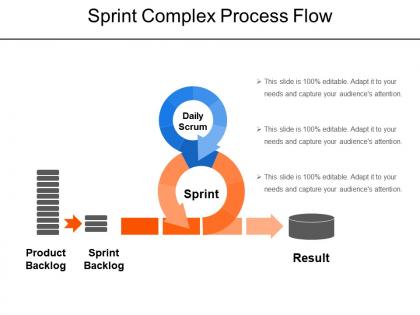
Put forth the purpose of a process or an event using our Sprint Complex Process Flow Sample of PPT Presentation. An easy to understand sprint process flow diagram can help your audience assess the amount of task completed and what needs to be completed. Describe the tasks under the product backlog and sprint backlog accordingly. Explain any complex scrum process flow effortlessly with a comprehensive presentation. Focus on the important areas of the project and develop a product roadmap. The sprint process flow will help your development team execute a well-defined sprint plan. Display the tasks to be implemented in the sprint execution overview. Present the prioritized list of items to be completed during the sprint. Devise strategic plans and goals for the product release. Download our professionally designed PPT slide to make scrum project management effective with an impressive PowerPoint presentation.
People who downloaded this PowerPoint presentation also viewed the following :
Sprint complex process flow sample of ppt presentation with all 5 slides:
Gains happen with our Sprint Complex Process Flow Sample Of Ppt Presentation. Assets will grow by the day.


FAQs for Sprint complex process flow sample
The key stages include sprint planning, daily standups, development work, sprint review, and sprint retrospective. These structured phases streamline project delivery by establishing clear objectives, maintaining team alignment, and incorporating continuous feedback, with many software development teams finding that this iterative approach accelerates product releases while enhancing quality and stakeholder satisfaction.
Sprint planning meetings establish clear objectives, define deliverable scope, and align team priorities through collaborative task breakdown and capacity assessment. This structured approach enables teams to commit to realistic goals, anticipate potential roadblocks, and maintain focused execution throughout the sprint, ultimately delivering higher quality outcomes and predictable project velocity.
The Scrum Master facilitates daily standups, removes impediments, and ensures adherence to Scrum principles, while the Product Owner clarifies requirements, prioritizes backlog items, and makes acceptance decisions. These complementary roles streamline development workflows by maintaining team focus, resolving blockers quickly, and ensuring clear communication, with many organizations finding that this collaboration significantly enhances delivery speed and product quality.
Teams effectively prioritize tasks during sprint planning by evaluating business value, technical complexity, dependencies, and user impact through collaborative discussion and stakeholder input. Using frameworks like MoSCoW or value-based prioritization, development teams can sequence work that delivers maximum customer value while maintaining technical feasibility, ultimately ensuring sprint goals align with broader product objectives.
**INPUT**: What metrics can be used to evaluate the effectiveness of a sprint? **OUTPUT**: Sprint effectiveness metrics include velocity, burndown rates, sprint goal completion, defect rates, and team satisfaction scores. These measurements enable organizations by tracking delivery consistency, identifying bottlenecks, and optimizing resource allocation, with many development teams finding that combining quantitative data with qualitative feedback ultimately delivers improved predictability and enhanced project outcomes. **Word count: 54 words**
Common retrospective challenges include low participation, focusing only on negatives, lack of actionable outcomes, time constraints, and fear of blame or conflict. Teams overcome these by rotating facilitation methods, balancing problem identification with solution brainstorming, setting specific improvement commitments, and creating psychologically safe environments where members feel comfortable sharing honest feedback, ultimately delivering continuous process improvements and stronger team collaboration.
The definition of "done" serves as a quality gate that determines when sprint tasks can be considered complete, ensuring consistent standards across development cycles, testing protocols, and delivery requirements. This clarity streamlines sprint reviews, reduces rework cycles, and accelerates deployment timelines, with many development teams finding that well-defined completion criteria ultimately delivers faster releases and improved product quality.
Best practices for managing user stories and tasks in a sprint backlog include prioritizing by business value, breaking stories into manageable tasks, maintaining clear acceptance criteria, conducting daily stand-ups, and tracking progress through burndown charts. These practices streamline workflow by enhancing transparency, enabling faster decision-making, and improving team collaboration, with many agile teams finding that structured backlog management ultimately delivers higher-quality deliverables and increased sprint success rates.
Agile teams can improve sprint reviews by inviting diverse stakeholders, preparing interactive demos with real scenarios, asking specific questions about user value, and creating structured feedback forms with priority ratings. Teams should focus discussions on business outcomes rather than technical features, schedule follow-up sessions for deeper insights, and maintain visual feedback boards, ultimately transforming reviews into strategic alignment sessions that drive meaningful product iterations.
**INPUT**: What tools are most effective for visualizing the sprint process flow and tracking progress? **OUTPUT**: Effective sprint visualization tools include Jira, Azure DevOps, Trello, Monday.com, and ClickUp, which streamline workflow management through customizable boards and real-time tracking. These platforms enhance team collaboration by providing burndown charts, velocity metrics, and automated progress updates, with many development teams finding that integrated dashboards ultimately deliver improved transparency and faster sprint completion rates. [Word count: 58 words]
Daily stand-ups enhance communication by creating structured touchpoints where team members share progress updates, identify blockers, and align on priorities. These brief meetings foster collaboration through transparent knowledge sharing, enabling teams to quickly resolve dependencies, redistribute workloads when needed, and maintain collective sprint momentum, ultimately delivering faster problem resolution and stronger team cohesion.
**INPUT**: What strategies can be implemented to ensure that the sprint goals align with the product roadmap? **OUTPUT**: Effective alignment strategies include regular roadmap reviews during sprint planning, establishing clear acceptance criteria tied to product objectives, maintaining transparent communication between product owners and development teams, and conducting quarterly alignment audits. These approaches streamline development by ensuring feature prioritization matches long-term vision, minimizing scope creep, and accelerating delivery timelines, with many organizations finding that structured alignment processes ultimately deliver greater product coherence and competitive advantage. [Word count: 60 words]
Continuous integration and deployment practices integrate into sprint workflows through automated testing pipelines, daily code commits, and deployment staging environments that align with sprint milestones. These practices enable development teams to detect issues earlier, streamline release cycles, and maintain consistent code quality throughout each sprint, ultimately delivering faster product iterations and reducing post-sprint debugging time.
Timeboxing ensures sprints maintain focus by establishing fixed durations that prevent scope creep, encourage prioritization of high-value tasks, and create urgency for decision-making and delivery. This structured approach enables teams to deliver consistent results, maintain predictable release cycles, and adapt quickly to changing requirements, with many organizations finding that timeboxed sprints significantly enhance productivity and stakeholder confidence.
Remote teams best adapt sprint processes by implementing structured daily stand-ups with video-on requirements, establishing clear sprint goals with individual accountability measures, and utilizing collaborative tools like shared digital boards and real-time documentation. Through consistent communication protocols and transparent progress tracking, distributed teams maintain engagement while delivering sprint objectives, with many organizations finding that remote sprints actually enhance focus and productivity when properly structured.
-
Easy to edit slides with easy to understand instructions.
-
Design layout is very impressive.