


Stakeholder In Construction Projects Powerpoint Ppt Template Bundles




Try Before you Buy Download Free Sample Product
 Impress Your
 Audience
 100%
100% Editable
 Save Hours
 of Time


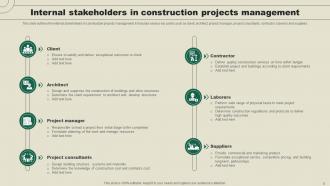
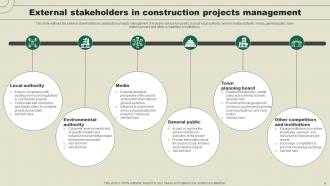
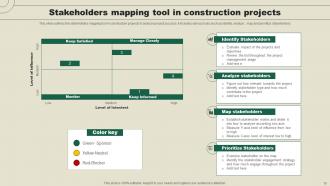
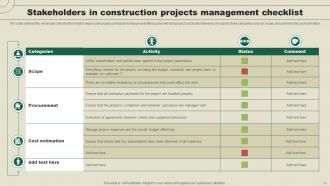
Introducing our comprehensive PowerPoint presentation on Stakeholders in Construction Projects. This informative deck delves into the vital realm of construction project management, spotlighting the significance of stakeholder engagement. With a strategic focus on utilizing stakeholder mapping tools, this presentation offers actionable insights to identify, analyze, and engage both internal and external stakeholders effectively. Explore the dynamic interplay between project goals and the expectations of internal stakeholders in project management. From contractors to regulatory bodies, this PPT equips you with the knowledge to navigate intricate stakeholder relationships, fostering project success. Enlighten your audience about stakeholder managements pivotal role in construction projects, ensuring seamless collaboration, timely delivery, and enhanced project outcomes.
People who downloaded this PowerPoint presentation also viewed the following :
Stakeholder In Construction Projects Powerpoint Ppt Template Bundles with all 22 slides:
Use our Stakeholder In Construction Projects Powerpoint Ppt Template Bundles to effectively help you save your valuable time. They are readymade to fit into any presentation structure.








FAQs for Stakeholder In Construction Projects Powerpoint
Honestly, stakeholder management boils down to knowing who matters and what they actually want. Map out the power players first - seriously, forgetting someone key will screw you over later. Don't treat everyone the same though, that's where most people mess up. Some want detailed emails, others prefer quick calls. Stay consistent with updates and be upfront when priorities clash. Listen to their concerns instead of just pushing your agenda. Oh, and whatever you promise, actually follow through. Nothing kills trust faster than saying you'll do something then... not doing it.
Honestly, stakeholder analysis is huge for projects. You gotta map out who actually has power and what they want from you upfront. I've watched projects crash and burn because someone overlooked a "minor" stakeholder who turned out to be crucial. Start by listing everyone who could affect your project or get affected by it. Then figure out who has real influence versus just interest. This helps you spot roadblocks early and build the right alliances. Plus you can tailor your communication instead of treating everyone the same - which never works anyway. Trust me, managing expectations before drama starts is way easier than damage control later.
Honestly, just start by listing anyone who could mess with or get affected by your project. A stakeholder matrix works well - map people by how much power they have versus how interested they are. RACI charts are solid for clarifying who does what (though they sound boring as hell). But here's the thing - skip the fancy tools if you want. A basic spreadsheet tracking contact info and communication preferences does the trick. What really matters? Actually talking to these people early on through interviews. You'll be surprised who ends up being important. Focus on the high-power, high-interest folks first.
Yeah, stakeholder needs totally change as you move through phases. Early on they want scope clarity and timelines figured out. During execution? All about progress updates and fixing problems when stuff breaks. Some stakeholders get super demanding in those messy middle phases - honestly drives me nuts sometimes! Quality becomes their obsession near the end, plus training and handoff stuff. Their communication style shifts too. Executives might love those high-level dashboards at first but then want detailed reports before launch. You'll save yourself headaches by mapping this out upfront in your stakeholder plan.
First thing - figure out what's actually bugging them. Are they worried about their job? Feel ignored? Some people are just natural pessimists, honestly. Once you know that, you can adapt how you talk to them. Skip the boardroom stuff and grab coffee instead. Be upfront about what you can actually change vs what's out of your hands. Here's what really works though: give them something important to do or ask for their advice. Suddenly they're invested instead of fighting you. And whatever you promise, even tiny stuff - do it. Being reliable beats being charming.
Honestly, start with whatever's causing you the biggest headache right now. Project management tools like Asana give stakeholders real-time updates without you constantly fielding "where are we on this?" emails. Automated reporting is clutch - saves hours every week. Video calls make everything easier, obviously. For bigger projects, stakeholder portals are worth their weight in gold since different people need different info access. Slack or Teams work great for quick back-and-forth stuff. I've found that once you get one system running smoothly, adding others feels way less overwhelming.
Honestly, cultural differences make stakeholder management way trickier than people think. What works perfectly for one group can completely bomb with another. Some cultures want to build relationships first - like, spend ages chatting before any real business talk (I used to find this super frustrating but now I get it). Others just want you to cut straight to the point. You've gotta adapt everything - how direct you are, when you schedule meetings, even how decisions get made. Hierarchy matters way more in some places. My advice? Do your homework on each group's background and just ask them how they prefer to communicate. Saves so much awkwardness later.
So I'd focus on survey scores and NPS ratings first - that's your bread and butter for direct feedback. Response rates to your emails show if people actually care what you're sending. Meeting attendance matters too, but honestly sometimes everyone's just swamped with calls. Track how often things get escalated and decision turnaround times. Also watch if stakeholders reach out to you proactively vs you having to hunt them down constantly. Email tone tells you way more than formal surveys sometimes - you can feel when someone's annoyed. Pick maybe 3-4 metrics that actually fit your stakeholder groups and check monthly.
Honestly, transparency is everything when you're managing projects. I've watched so many teams crash and burn because someone decided to hide the messy stuff. Bad idea. When you're upfront about challenges and realistic timelines, people actually respect that. Sure, you don't need to overshare every tiny detail, but stakeholders can smell BS from a mile away. They'd rather know what's actually happening than get blindsided later. Set expectations early about what you'll communicate and how often - then don't flake on it. Trust me, it's way better than dealing with angry surprises.
Start with one-on-ones to figure out what each person actually cares about - their real concerns are usually different from what they say upfront. Map out everyone's priorities, then hunt for those sweet win-win spots. When you can't avoid conflicts, just be straight up about the tradeoffs and get stakeholders involved in the prioritizing. People hate surprises but they're cool with tough decisions if you explain the logic. Oh, and write everything down because somehow everyone's memory gets weird when deadlines hit. You won't make everyone happy, but you can keep relationships intact.
Honestly, the worst thing you can do is miss key stakeholders at the start. I've watched projects completely blow up because someone forgot about that one exec who could kill everything with a single "no." Map everyone out early - like, really early. Don't treat your CEO the same as Bob from accounting, you know? Some people need way more hand-holding based on how much power they actually have. Set up regular check-ins before stuff hits the fan. Oh, and keep a simple tracker of who you've talked to and what they're worried about. Sounds boring but it'll save your butt later when someone claims they were never consulted.
Okay so here's what I've learned the hard way - don't wait until the end to ask for feedback. Map out maybe 3-4 key points in your timeline where you'll check in with stakeholders. Use the same survey format each time so you can actually track patterns. But honestly? You can't use every single suggestion or you'll be tweaking forever. I prioritize based on who's giving the feedback and how much it'll actually move the needle. Always circle back though - people get weird if you ask for input then go radio silent. Oh, and write everything down because you'll forget half of it otherwise.
Honestly, just send the agenda ahead of time - people get annoyed when they walk in clueless. Keep it small too, like only invite people who actually need to be there. Come with real questions that need decisions, not just updates they could've read in Slack. Oh and listen way more than you talk. Either take notes yourself or get someone else to do it (I always forget this part). Here's the thing though - follow up within two days with clear action items. Most people totally skip this step, but it's literally what makes you look competent. Trust me on that one.
Stop just posting at people and actually talk WITH them instead. Figure out where your stakeholders are already scrolling - LinkedIn for business folks, Facebook groups for community stuff, whatever. Create spaces where they can ask questions and give you real feedback. Here's the thing though: you've got to actually show up and respond quickly. None of this works if you're ghosting people's comments. I'd honestly rather see someone post less but engage more authentically than blast updates into the void. Meet them where they are, keep it consistent, and don't be weird about it.
Just be straight up with everyone - transparency is everything. Don't promise stuff you can't deliver because it'll bite you later (learned that one the hard way). Actually listen to what each group needs instead of just trying to manage them. If there's a conflict of interest, call it out upfront. Building real trust takes time but it's way better than trying to manipulate your way through situations. Oh, and write down what you've committed to - I swear people forget half the things they promise. Check in on those regularly so you're not that person who drops the ball.
-
I had them make a presentation for an office retirement party. They were very helpful in understanding what we wanted and delivered the perfect presentation. Highly recommended!
-
A fantastic collection of templates. I'll likely use this as my go-to resource for future templates and support.