


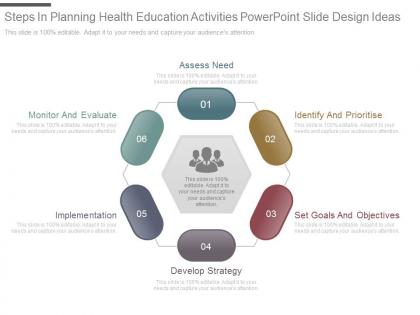
Steps in planning health education activities powerpoint slide design ideas




Try Before you Buy Download Free Sample Product
 Impress Your
 Audience
 100%
100% Editable
 Save Hours
 of Time


Build belief that you can do it with our Steps In Planning Health Education Activities Powerpoint Slide Design Ideas. They are equipped with all the facilities.
People who downloaded this PowerPoint presentation also viewed the following :
Steps in planning health education activities powerpoint slide design ideas with all 7 slides:
Formulate a comprehensive checklist with our Steps In Planning Health Education Activities Powerpoint Slide Design Ideas. Guard against any errors.
FAQs for Steps in planning health education activities powerpoint
So you'll want to start with a solid needs assessment - figure out what people actually need, not what you assume they need. Trust me on that one. Set clear, measurable objectives and really dig into your audience analysis first. Pick delivery methods that actually work for their literacy levels and preferences. Build evaluation right into your planning from day one so you can track if it's working. Oh, and definitely get community stakeholders involved early - they'll catch stuff you'd totally miss otherwise. Honestly, their input usually ends up being the most valuable part of the whole process.
So basically, you're doing detective work before jumping into any health program. Survey people in the community, look at their health data, see what's missing. It's like market research but for something that actually saves lives, you know? Figure out which health problems need attention first. Cultural stuff matters too - what works in one neighborhood might totally flop in another. The whole point is understanding your audience so you can pick the right message, find the best places to reach them, and not waste money on programs nobody will use. Pretty straightforward once you think about it.
Honestly, stakeholder engagement makes or breaks these programs. I've watched so many fail because people planned in isolation - big mistake. You gotta loop in community members, healthcare folks, and your actual target audience from day one. They'll tell you what barriers really exist and what cultural stuff you're missing. Without that input, you're basically guessing at what people need. Plus when stakeholders help create the program, they actually show up and participate. Start by figuring out who holds influence in health decisions locally - those are your key people.
Don't just slap cultural stuff on at the end - weave it throughout everything. Research their health beliefs and language preferences first. Get community members involved in actually designing your materials because honestly, they'll spot issues you'd never see. Use imagery and examples that actually connect with their lives. Focus groups are clutch for testing before you launch anything. I learned this the hard way on a project once - we thought we nailed it but completely missed the mark. Work WITH the community from the start instead of guessing what they want.
Honestly, mix your data collection methods - surveys and assessments for the hard numbers, but also do focus groups to understand the actual "why" behind changes. Participation rates matter too. The tricky part? Measuring if people actually stick with new behaviors long-term (most programs totally bomb this). I'd say collect feedback throughout the program, not just at the end. Oh, and set up your measurement plan before you launch - trust me, you don't want to be frantically trying to prove impact later when someone asks "did this actually work?"
Honestly, tech is making health education so much better these days. You can use data to figure out what your audience actually needs instead of guessing. VR simulations are pretty cool - way more engaging than boring pamphlets. Mobile apps and social media help you reach people where they already are. The feedback is instant too, which is huge compared to waiting forever for survey results. My advice? Don't get caught up in whatever's trendy right now. Pick tools that match your audience's comfort level and actually improve how they learn. Sometimes simple works better than fancy.
Honestly, you've gotta get the community involved from the very beginning - like, before you even think about making materials. Figure out their cultural stuff, what language they prefer, how they learn best. I've watched so many good programs completely bomb because they skipped this part. Partner with local leaders, use images that actually make sense to them, and test everything with real people first. Some groups love visual stories, others are all about group talks. Oh, and don't forget different literacy levels matter too. Always pilot test and be ready to change things based on what people tell you.
There are solid tests like REALM or TOFHLA you can use, but honestly? Just asking people how often they need help with health paperwork tells you a lot. Most people won't admit they're struggling anyway. Once you figure out where they're at, write everything at like a 6th grade level - I know that sounds basic but trust me on this. Throw in some pictures or videos too. Oh, and always have them repeat back what you just explained. That's where you'll catch if they actually get it or they're just nodding along. Test your stuff on a few people first before rolling it out to everyone.
Ugh, the usual suspects always kill these programs - no money, leadership doesn't care, and people just won't show up. Super predictable but still annoying. Try partnering with local groups for funding, or hunt down some grants. Getting the higher-ups on board early saves you so much headache later. For engagement, actually talk to your audience first instead of guessing what they want. Cultural stuff matters way more than people think, so bring in community leaders from day one. Oh, and start tiny with pilot programs - way better to expand something that's already working than trying to salvage a disaster.
Look at your last quarter's outcome reports first - that's where the gold is. Track stuff like behavior changes, knowledge retention, disease rates, not just how many people showed up (though attendance matters too, obviously). If your diabetes education isn't actually lowering HbA1c levels, something's off with your approach. The data helps you spot gaps and figure out which high-risk groups need different messaging. Don't get caught measuring the wrong things though - that's honestly where most programs mess up. Use patterns you find to tweak delivery methods or completely revamp what isn't working.
So policy is basically what controls everything you can or can't do in health ed. Federal stuff like the ACA requires certain preventive education. States mandate what health topics schools have to cover. It's a total maze honestly - I'm still figuring out half of it myself! But here's the thing: policies also open doors by setting priorities and funding things like diabetes programs or mental health campaigns. You'll want to keep tabs on policy changes since they directly affect how you design programs and whether they'll actually stick around long-term.
So basically when you pull in people from different backgrounds - doctors, teachers, community folks, even designers - your health programs just work better. Everyone sees things differently, which is actually super helpful. You'll spot problems you'd totally miss otherwise. Plus the content ends up way more relatable to whoever you're trying to reach. Honestly, I've seen programs fail because they only had one type of expert involved. Root causes get addressed instead of just surface stuff. My advice? Figure out what fields matter most for your topic, then get them involved early. Don't wait until you're halfway done to bring people in.
Honestly, start with figuring out what apps your audience actually uses daily - that's way more important than chasing shiny new tech. Digital health literacy is blowing up right now. AI-powered personalized messaging works, but community approaches where you involve real people from those communities? That's where the magic happens. Short videos on social platforms are crushing it for health education. VR training sounds goofy but it's legitimately effective for CPR and addiction stuff. Mobile apps are finally moving past basic step tracking into actual behavior change - which is about time. I'd just pick one new thing to test this quarter instead of trying everything at once.
Honestly, social media's perfect for this since everyone's already scrolling anyway. Instagram stories are great for quick health tips - people actually watch those. TikTok's where you want short educational videos, and Facebook groups? Total goldmine for building communities around specific health stuff. People eat up that peer support vibe. Oh, and infographics perform way better than walls of text - make them shareable and visually appealing. I'd say pick whatever platform your audience uses most and just focus there first. Don't try to be everywhere at once, you'll burn out.
Honestly, I'd focus on whether people actually learned anything first - do pre/post tests to see if the info stuck. Then check if they're using it months later with follow-up surveys. Participation rates tell you if people even showed up (though mandatory stuff makes this weird). Short sentences work. You can also track real outcomes like fewer people smoking or more getting screened, depending on your program. Don't go crazy trying to measure everything though - pick like 2-3 things that actually matter for what you're trying to accomplish.
-
Awesome use of colors and designs in product templates.
-
Thanks for all your great templates they have saved me lots of time and accelerate my presentations. Great product, keep them up!