


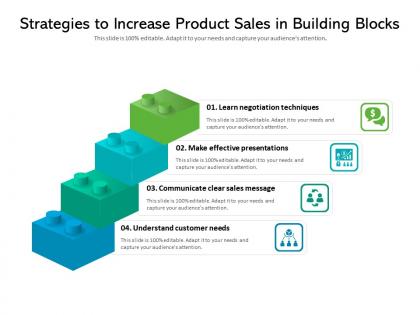
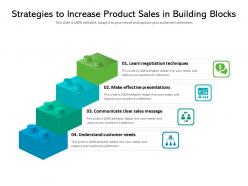
Strategies to increase product sales in building blocks




Try Before you Buy Download Free Sample Product
 Impress Your
 Audience
 100%
100% Editable
 Save Hours
 of Time


Our Strategies To Increase Product Sales In Building Blocks are topically designed to provide an attractive backdrop to any subject. Use them to look like a presentation pro.
People who downloaded this PowerPoint presentation also viewed the following :
Strategies to increase product sales in building blocks with all 2 slides:
Use our Strategies To Increase Product Sales In Building Blocks to effectively help you save your valuable time. They are readymade to fit into any presentation structure.
FAQs for Strategies to increase product sales
Honestly, the biggest difference is B2B takes forever - you're dealing with committees and long decision cycles, so you need patience and solid case studies. B2C is way more impulse-driven. People see something, want it, buy it. With B2B you're basically doing consultative sales. LinkedIn messages, demos, endless follow-ups. For B2C? Make everything look amazing, show reviews everywhere, and don't make checkout complicated - I've abandoned so many carts just because they wanted too much info. The psychology is totally different too. Business buyers care about ROI and covering their ass. Regular consumers just want stuff that makes them happy. Figure out who's actually writing the checks first, then match your vibe to theirs.
Dude, analytics is a game-changer for sales - it shows you what's *actually* working instead of just guessing. You can figure out which customers are worth chasing, predict who's gonna buy, and find patterns you'd totally miss otherwise. My favorite part? It helps with pricing and timing too. Honestly feels like cheating sometimes, but in a good way. Start simple though - pick one thing like conversion rates from different sources. I made the mistake of trying to track everything at once and it was a mess. Build up slowly and you'll be golden.
So you basically take your prospects and group them by what they have in common - industry, company size, their biggest headaches, whatever makes sense. Then instead of pitching everyone the same way (been there, it sucks), you customize your approach for each group. Different messaging, different timing, maybe even tweak your whole process. I swear it's like night and day when you actually speak to what matters to them. Oh, and don't overthink it at first - pick 3 or 4 obvious segments from your current pipeline and just test different angles with each one.
Stories stick because our brains are wired that way - way better than dumping features on someone. You're basically showing how another customer dealt with the same mess your prospect is facing. Here's what works: problem they had, how you fixed it, actual results. Don't drag it out past 2 minutes though. The trick is matching their situation closely so they can picture themselves in that story. And honestly? Skip the fairy tale endings - real examples with some rough edges feel way more legit than those "perfect" case studies that make everyone roll their eyes.
Don't be that person who just keeps saying "checking in!" Mix it up - emails, calls, LinkedIn. I usually do 5-7 touches over a couple weeks, spacing them 2-3 days apart at first. Always bring something new to the table each time. Reference whatever you talked about before so they know you were actually paying attention. Honestly, the "breakup email" works way better than it should - something like "seems like this isn't a priority right now" gets people responding when nothing else did. Track it all in your CRM or you'll forget who you contacted when.
Honestly, focus on relationships first - sales come later. Pick ONE platform and get good at it instead of being everywhere at once. Share stuff that actually helps people and shows you know your shit. LinkedIn's great for reaching out directly, while Instagram and TikTok work amazing for showing your products in action (if you're selling to regular people, not businesses). Here's the thing though - don't be that person constantly selling. People spot fake engagement instantly. Jump into conversations where people are complaining about problems you can solve. Be genuinely useful in comments. I'd start small and build from there rather than trying to dominate every platform right away.
Know your audience first - what actually bugs them day to day? Start there, not with your features. Tell a story instead of listing specs because honestly, nobody remembers bullet points. I always check if they're still with me instead of just talking at them for 10 minutes straight. Oh and don't end with "any questions?" - that's momentum killer. Give them something concrete to do next. The whole thing should feel like a conversation where you happened to solve their exact problem. Works way better than the formal presentation thing most people do.
Conversion rates are what you really need to watch - track how many leads become qualified prospects, then actual closed deals. Revenue per customer and deal size tell you if you're getting quality buyers. Time-to-close matters too because nobody wants deals that drag forever. Cost per acquisition is key, especially comparing different approaches. Honestly, most people don't give strategies enough time - you need at least a full quarter to see real patterns. Set up some basic dashboard so you can catch trends early and bail on stuff that's clearly not working. Short sentences mixed with longer ones help you spot what's actually moving the needle versus just looking busy.
Dude, the biggest mistake? Teams get obsessed with features instead of solving actual problems. Also nobody qualifies leads properly - like why are you even talking to someone who can't buy from you? Most reps try closing after 5 minutes. Build some rapport first! Generic messaging is another killer. Your team probably isn't listening either - they're just waiting for their turn to pitch. Honestly the whole "spray and pray" approach is so 2015. Map out how your buyers actually think and teach your people to ask smarter questions. Oh and have an actual process instead of letting everyone freestyle it.
Dude, CRM tools are game-changers. All your customer stuff lives in one spot instead of scattered across random spreadsheets and sticky notes. You can actually see your entire sales pipeline without losing your mind. The automated reminders are clutch - no more forgetting to follow up with that hot lead from last week. Analytics show you what's working and what isn't, plus which deals might actually close. Honestly, some of the predictive features still feel like magic to me. Oh, and definitely set up lead scoring first - that'll save you tons of time chasing dead ends.
Dude, emotional intelligence is a game-changer for sales. You can literally read the room - like when someone's actually interested vs just nodding to be nice. Body language tells you everything. If they seem pressured, back off. Genuinely engaged? Keep going. I swear it's almost like cheating once you get good at it. Your messaging hits different when you match their vibe. Try this: next couple calls, really watch their tone and how they're sitting. You'll start closing way more deals, trust me.
Honestly, your existing customers are gold mines you're probably not tapping enough. Most people will happily refer friends if you just ask - I know it feels awkward, but seriously, just do it. Look for ways to sell them more stuff they actually need since they already trust you. Their testimonials and success stories? Use those everywhere in your marketing. Oh, and don't sleep on renewals either. The trick is staying in touch regularly so when they need something new or meet someone who does, you're the first person they think of. Easy money right there.
Honestly, role-playing is where it's at - your team has to actually practice this stuff, not just sit through another boring presentation. I'd pair your newbies with the veterans so they can listen in on real calls and learn that way. Skip the PowerPoints entirely (seriously, who learns from those?). Run interactive workshops instead where people can ask questions and work through tough objections together. Oh, and don't dump everything on them at once - pick one strategy and nail it first. Follow up with them afterward too, otherwise they'll forget half of what you covered.
Honestly, timing is everything in sales. You've gotta watch when your customers actually spend money - retail goes crazy during holidays, but B2B? Dead zone in summer when all the executives are at their beach houses. I'd dig into your past sales data to catch these patterns early. Market trends matter just as much though. Everyone's losing their minds over AI right now, so if that fits your product, jump on it. Set up quarterly check-ins to review what worked seasonally and what people are buzzing about, then adjust your pitch accordingly.
Dude, everything's gone hybrid now - teams are mixing virtual demos with face-to-face stuff way more than before. The personalization game is crazy too, like people are actually digging into data to customize their pitches instead of using the same tired script. LinkedIn's still big but TikTok for B2B? Didn't see that coming lol. Most reps I know have basically ditched cold calling for video messages. Way better response rates. Oh and there's this whole shift toward actually building relationships first instead of just hammering features at people. Honestly, if your team isn't doing video outreach yet, you're missing out. The engagement is solid.
-
Graphics are very appealing to eyes.
-
Excellent Designs.