


Cross selling strategies powerpoint presentation slides




Try Before you Buy Download Free Sample Product
 Impress Your
 Audience
 100%
100% Editable
 Save Hours
 of Time


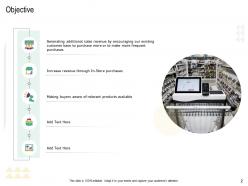
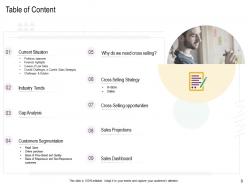
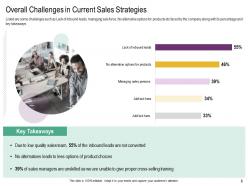
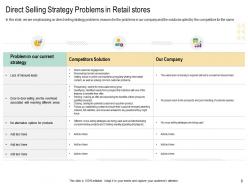
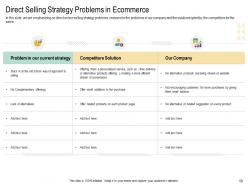
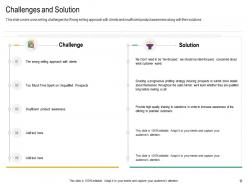
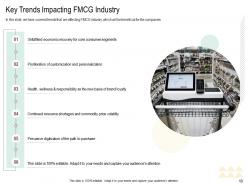
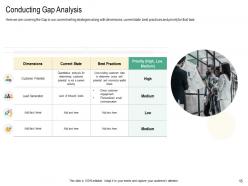
Discover new sales techniques with the help of our Cross-Selling Strategies PowerPoint Presentation Slides. Explain the cross-selling strategy to your employees by employing our business marketing tactics PPT slides. Mention the current problems faced by the companies by incorporating our professionally-designed cross-selling tips PPT themes. Provide the quarterly financial highlights and discuss the causes of low sales by adopting our selling techniques PPT slides. Showcase the overall challenges in current sales strategies and direct selling strategy problems by using our cross-selling Ideas PPT slides. Elucidate the key trends impacting the FMCG industry and depict the gap analysis by utilizing cross selling tips PPT layouts. Take the help of our business marketing tactics PPT theme to illustrate why every business needs a cross-selling strategy. Depict the increase in sales after implementing the strategy both offline and offline. Introduce this new revenue generation method to your company by downloading this cross-selling Ideas PPT slideshow.
People who downloaded this PowerPoint presentation also viewed the following :
Content of this Powerpoint Presentation
Description:
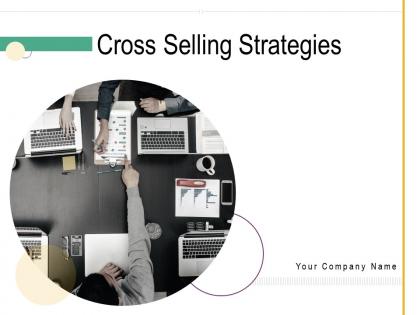
The image appears to be a PowerPoint slide with the title "Cross Selling Strategies." At the center, there is a photograph of a group of professionals sitting around a conference table with their laptops and documents, seemingly engaged in a discussion or a planning session. One person seems to be pointing at a mobile device, possibly presenting or referring to a cross-selling app or tool.
Below the photograph, there's a placeholder for "Your Company Name," allowing this slide to be customized for any specific business. The layout is clean and corporate, utilizing a minimal color scheme that emphasizes the content—in this case, strategies for cross-selling.
Use Cases:
This slide can be used in various industries to outline plans or strategies to increase sales through cross-selling.
1. Banking:
Use: Training on selling additional financial products to existing clients
Presenter: Sales Manager
Audience: Bank Tellers and Personal Bankers
2. Insurance:
Use: Describing methods to sell multiple insurance policies to one customer
Presenter: Marketing Director
Audience: Insurance Agents
3. SaaS (Software as a Service):
Use: Strategies for bundling different software solutions
Presenter: Product Manager
Audience: Sales Team
4. Retail:
Use: Techniques for product pairings and promotions
Presenter: Store Manager
Audience: Sales Associates
5. Telecommunications:
Use: Approaches for bundling phone, internet, and TV services
Presenter: Strategy Officer
Audience: Customer Service Representatives
6. Automotive:
Use: Tactics for selling ancillary services and products alongside main purchases
Presenter: Sales Trainer
Audience: Car Salespeople
7. Hospitality:
Use: Maximizing revenue by selling additional services to guests
Presenter: Guest Relations Manager
Audience: Front Desk Agents
Cross selling strategies powerpoint presentation slides with all 44 slides:
Use our Cross Selling Strategies Powerpoint Presentation Slides to effectively help you save your valuable time. They are readymade to fit into any presentation structure.
FAQs for Cross selling strategies
So cross-selling is when you add stuff that goes with what they're buying - like offering a phone case with that new iPhone. Upselling? That's getting them to spend more on the same thing, maybe the pro model instead of basic. Cross-selling adds more items to the cart. With upselling you're swapping their choice for something pricier. I've always found cross-selling works better honestly - feels way less sleazy than trying to talk someone out of what they picked. Oh and definitely track both in your system separately. You'll figure out which one actually moves the needle for your stuff.
Start with your customer data - dig into who's buying what and when. Purchase history will show you patterns like "people who buy A usually need B in 3 months." Your CRM probably has this info already, just need the right reports. Train your team to actually listen during calls though. Honestly, they catch stuff data misses - random complaints that hint at upsell opportunities. Set triggers around key moments like onboarding or renewals when people are most open to buying more. Pick your top 3 product combos and map those out this week.
Honestly, customer data is what makes cross-selling actually work instead of just annoying people. Look at your top customers' purchase histories first - you'll spot which products they buy together naturally. The timing matters too, like when someone's behavior shows they're ready for more stuff. I learned this the hard way when I used to just guess at what people wanted (spoiler: didn't go well). Your data reveals buying patterns and shows you different customer segments. Without it, you're basically shooting in the dark and hoping something sticks. Pull those purchase histories and see what combinations keep popping up.
Templates are honestly a game-changer for getting buy-in on cross-selling ideas. Visual stuff like customer journey maps and product relationship diagrams just click better with people than walls of text. Finance teams want clean revenue charts, but sales folks need to see actual touchpoints - so you'll probably need different versions of the same data. The key is those "if customer buys X, suggest Y" flowcharts with clear ROI numbers attached. Makes everything feel less theoretical, you know? I'd start with one solid template first, then tweak it for whoever you're presenting to. Way easier than reinventing the wheel each time.
Honestly, psychology is your best friend here. Show what other customers bought together - that social proof thing really works. Start with your most expensive option first, then everything else looks like a bargain (anchoring effect). Limited-time bundles create that "oh crap I need this now" feeling. Give value upfront and people naturally want to return the favor. Here's what's wild though - instead of saying "get this bonus," frame it like "don't miss out on this." People hate losing stuff more than they love gaining it. Just pick one or two of these and test them out first.
Look at what your best customers actually buy together - that's where the gold is. Your CRM probably has all this data already, so segment people by their spending habits and what stage they're at. Then make bundles that actually make sense, not just random stuff thrown together. Honestly, I hate when stores suggest things that have zero connection to what I'm buying! Predictive analytics tools can automate most of this once you set it up. Start small though - test personalized emails with different customer groups and see what clicks. On-site recommendations work great too if you're not doing that yet.
Oh totally! Amazon's the classic example - their "frequently bought together" thing boosted revenue by 35%. Pretty wild numbers. McDonald's does it too with the whole "want fries?" approach, which honestly feels so obvious but works every time. Netflix keeps you glued by suggesting shows based on what you're already binge-watching. Banks jump on this when you open accounts - suddenly they're pitching credit cards since you're already thinking about money stuff. The trick is catching people when they're already in buying mode and engaged.
So here's what I've noticed - different industries get pretty smart about when they pitch you extra stuff. Banks will hit you up during big life moments like buying a house. Retailers? They're all over that "people who bought this also bought..." thing at checkout. SaaS companies are honestly kind of sneaky about it - they watch how you use their product and then suggest upgrades based on your patterns. Healthcare does it during treatments, insurance around renewal time. The trick is figuring out when your customers are already in "buying mode" instead of just randomly throwing offers at them.
Your CRM is probably your best bet - HubSpot and Salesforce both suggest products based on what customers bought before. Pretty clever stuff. Marketing automation like Mailchimp can send targeted emails when someone hits certain triggers. Amazon's whole "people also bought" thing? That's AI recommendation engines, and they work crazy well. Chatbots can jump in with suggestions during conversations too. The data you'll get from all this is honestly the most valuable part - you start seeing patterns you never noticed. I'd mess around with your CRM's cross-sell features first since they're not as complicated to set up.
Check your surveys, support tickets, and reviews - customers are brutally honest about which offers actually help vs. which ones annoy them. Timing matters too. Maybe you're hitting them too early or they've already found a solution somewhere else (happens all the time). Test different approaches based on their feedback. I'd focus on satisfaction scores alongside conversion rates - if people are happier, you're probably doing it right. The patterns will jump out once you start digging into what they're actually telling you.
Definitely focus on average order value first - that's where you'll see the biggest impact. Track attachment rates too (basically how often people add extra stuff to their cart). Customer lifetime value is key since cross-selling usually keeps people coming back longer. Oh, and don't forget conversion rates for your cross-sell attempts. Here's the thing though - half these metrics are just fluff. Revenue per customer and which product combos actually work? That's what matters. I'd honestly start simple with AOV and attachment rates, then branch out once you figure out what's driving real results. Way too easy to get buried in data that doesn't help your bottom line.
Look, you gotta teach them how to listen for opportunities without being that annoying salesperson everyone avoids. Role-playing is awkward as hell but honestly works best for building confidence. Have them practice asking open questions - like what problems are you trying to solve? Then they can connect those answers to your other products naturally. Active listening is huge here. I'd start small though, maybe focus on your top 3 cross-sell items first. Short training sessions work better than marathon ones. Once they get comfortable having real conversations instead of pitching, the sales kinda happen on their own.
Honestly, the worst thing you can do is be pushy - customers smell that from a mile away. Bad timing kills deals too, like when someone's already pissed off about something else. Train your people to actually listen instead of just pitching random stuff. Data helps you figure out what products go together naturally. Map out your customer journey first though - find those moments where suggesting something feels genuinely helpful rather than annoying. I swear timing makes or breaks everything with cross-selling. Oh, and make sure your teams aren't all suggesting different things to the same customer.
So here's the thing - social media is actually perfect for cross-selling. You can show product combos super naturally through posts and stories. Like, post outfit flat lays or all your recipe ingredients together. The algorithm works in your favor since engaged customers see more of your stuff anyway. User-generated content is gold here - when customers post their own product combinations, it feels way more real than regular ads. Plus you can sell directly from posts now. I'd start by figuring out what products your audience already buys together, then just create content around those pairings. Way easier than you'd think!
Honestly, CRM is a game-changer for cross-selling. It keeps all your customer data in one spot - purchase history, preferences, the works. You'll start noticing patterns like customers who buy product A almost always grab product B a few months later. Set up automated alerts so you hit them at the perfect moment. The segmentation feature is clutch too - you can group customers by how they actually shop, not just demographics. I mean, who cares if they're 35 if they never buy anything? Track which cross-sells work and ditch what doesn't. Start with basic purchase tracking first though.
-
Very unique and reliable designs.
-
Best way of representation of the topic.
-
Editable templates with innovative design and color combination.
-
Very well designed and informative templates.
-
Graphics are very appealing to eyes.
-
Colors used are bright and distinctive.
-
Great product with effective design. Helped a lot in our corporate presentations. Easy to edit and stunning visuals.