


Stripe Investor Funding Elevator Pitch Deck Ppt Template





Try Before you Buy Download Free Sample Product
 Impress Your
 Audience
 100%
100% Editable
 Save Hours
 of Time


Check out our professionally designed Stripe investor funding elevator pitch deck PowerPoint presentation. It entails a pitch deck for an online payment processing enterprise, empowering users to engage in secure digital transactions. This company presents an array of APIs designed to streamline digital payments and offer e-commerce solutions tailored to businesses of all scales. Additionally, the Fundraising pitch presentation encompasses comprehensive insights, including an overview of the products and services provided, essential facts, distinctive selling propositions, significant milestones accomplished, and endorsements from satisfied clients. Furthermore, the Investor Deck includes the underlying business model, diverse revenue streams, a thorough competitive analysis, financial performance details, future projections, and an investment pitch deck to secure investor support. Lastly, the presentation outlines an exit strategy, introduces the core team entrusted with company management, sheds light on the organizational structure, and elucidates the envisioned shareholding distribution post potential investment from interested stakeholders. Download this 100 percent editable pitch deck and get access to our highly researched and skillfully designed product.
People who downloaded this PowerPoint presentation also viewed the following :
Content of this Powerpoint Presentation
Slide 1: This slide introduces Stripe Investor Funding Elevator Pitch Deck. State your company name and begin.
Slide 2: This slide shows Table of Content for the presentation.
Slide 3: This slide showcases major problems faced e-commerce traders to facilitate digital business.
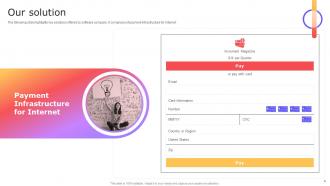
Slide 4: This slide presents key solutions offered by software company. It comprises of payment infrastructure for internet.
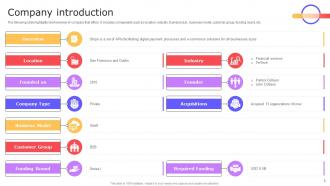
Slide 5: This slide displays a brief overview of company that offers.
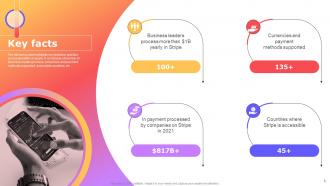
Slide 6: This slide presents key statistics and fact associated with company.
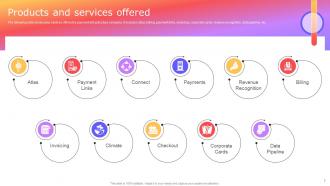
Slide 7: This slide showcases services offered by payment infrastructure company.
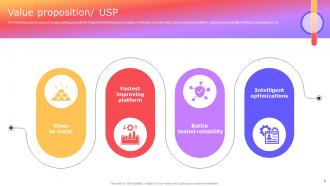
Slide 8: This slide focuses on unique selling propositions of payment infrastructure company.
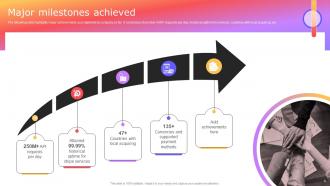
Slide 9: This slide presents major achievements accomplished by company so far.
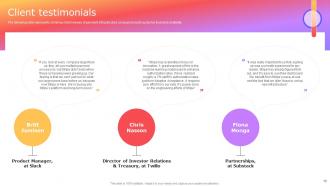
Slide 10: This slide represents some top client reviews of payment infrastructure company to build customer trust and credibility.
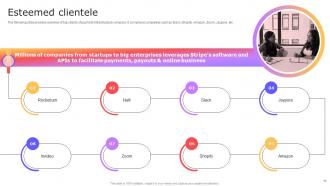
Slide 11: This slide provides overview of top clients of payment infrastructure company.
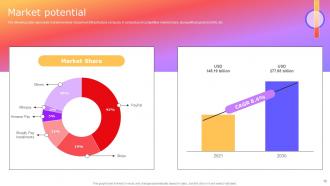
Slide 12: This slide represents market overview of payment infrastructure company.
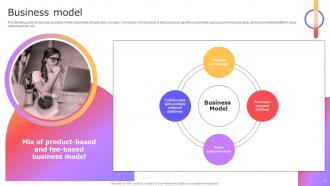
Slide 13: This slide showcases business model of payment infrastructure company.
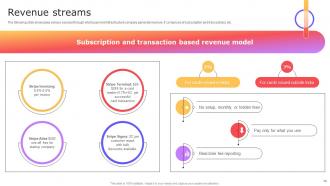
Slide 14: This slide presents various sources through which payment infrastructure company generate revenue.
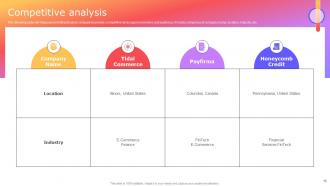
Slide 15: This slide describes how will help payment infrastructure company to provide competitive landscape to investors and audience.
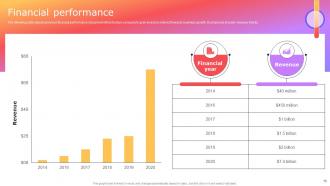
Slide 16: This slide depicts previous financial performance of payment infrastructure company to grab investors interest towards business growth.
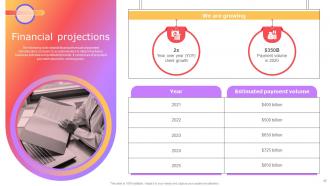
Slide 17: This slide presents financial forecast of payment infrastructure company to assist investors to determine future business potential and profitability trends.
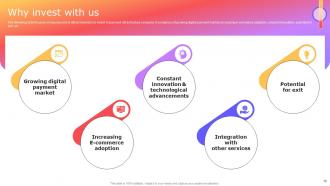
Slide 18: This slide focuses on key reasons to attract investors to invest in payment infrastructure company.
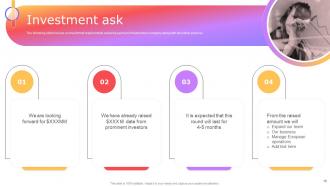
Slide 19: This slide displays on investment requirements asked by payment infrastructure company along with allocation purpose.
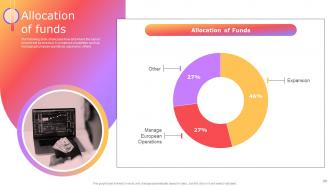
Slide 20: This slide showcases how and where the raised amount will be invested. It comprises of activities such as managing European operations, expansion, others.
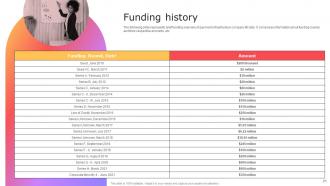
Slide 21: This slide represents brief funding overview of payment infrastructure company till date.
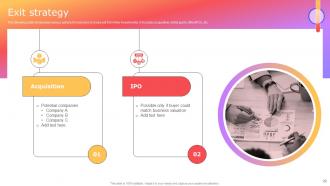
Slide 22: This slide showcases various options for investors to make exit from their investments.
Slide 23: This slide depicts key members of payment infrastructure company’s executive team.
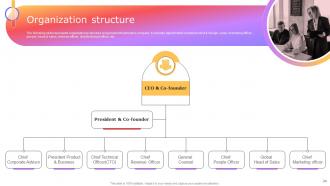
Slide 24: This slide represents organizational structure of payment infrastructure company.
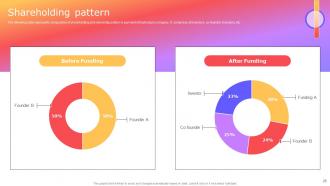
Slide 25: This slide describes composition of shareholding and ownership pattern in payment infrastructure company.
Slide 26: This is a contact us slide to show company's contact information.
Slide 27: This slide shows all the icons included in the presentation.
Slide 28: This slide is titled as Additional Slides for moving forward.
Slide 29: This is Our Vision, Mission & Goal slide.
Slide 30: This is About Us slide to show company specifications etc.
Slide 31: This slide presents Roadmap with additional textboxes.
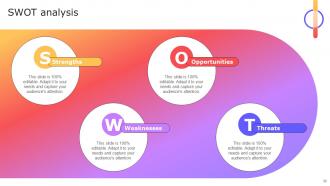
Slide 32: This slide shows SWOT analysis describing- Strength, Weakness, Opportunity, and Threat.
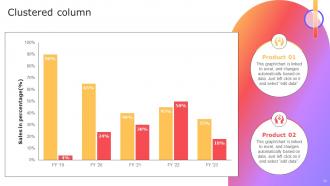
Slide 33: This slide provides Clustered Column chart with two products comparison.
Stripe Investor Funding Elevator Pitch Deck Ppt Template with all 38 slides:
Use our Stripe Investor Funding Elevator Pitch Deck Ppt Template to effectively help you save your valuable time. They are readymade to fit into any presentation structure.















FAQs for Stripe Investor Funding Elevator Pitch
Honestly, Stripe's just way better for developers. Their API docs are insanely good - like, actually enjoyable to read which is weird to say about documentation lol. You get total control over the checkout experience instead of sending people to some PayPal-branded page. Works in 40+ countries, no surprise fees, and their fraud protection is solid. The customization options are pretty much endless too. Square's fine for basic stuff, but if you're building something custom or care about how payments feel for your users, Stripe's the move. Way more flexible than the other options.
Stripe's pretty smart with their pricing - you pay per transaction whether you're doing $100 or $100M monthly. No setup fees or monthly minimums for startups. You can add stuff like subscriptions and fraud protection as you grow without switching platforms. That's why most companies just stay with them instead of dealing with those clunky "enterprise" payment systems later. Bigger companies get dedicated support and custom pricing. Oh, and their pricing page is actually readable unlike most SaaS sites. Worth checking what tier fits your volume.
Dude, Stripe's subscription stuff is a lifesaver. Auto-recurring payments, handles failed charges, prorates when people switch plans - all that annoying billing logic you don't want to code yourself. The analytics are actually useful too, shows you churn rates and revenue trends. You can do free trials, different billing cycles, even usage-based pricing. Oh and their webhooks keep everything synced automatically which is clutch. Honestly their docs are pretty solid, definitely worth reading through first. You'll save yourself weeks of headache compared to building it all from scratch.
So Stripe basically handles all the currency stuff for you - they support 135+ currencies and do the conversions automatically. Your customers can pay in whatever currency they want, then Stripe converts it to your preferred one using live exchange rates. Super smooth process. You can show prices in the customer's local currency (which honestly does help with sales) or just stick with one currency if you prefer keeping things simple. Their fees are pretty upfront about conversion costs too. Oh, and definitely check their currency support page first to see which countries you're actually targeting - saves you some headache later.
Yeah, Stripe's security is really solid. They're PCI DSS Level 1 compliant (the top tier) and use AES-256 encryption for everything. The smart part is they tokenize card data instead of storing actual numbers - so if someone hacks in, they just get useless tokens. They've got machine learning watching for sketchy transactions 24/7, plus two-factor auth for your dashboard. Oh, and most of this just runs automatically in the background, which is honestly a lifesaver since nobody wants to become a cybersecurity expert just to sell stuff online.
Stripe's API is super straightforward to work with - they've got SDKs for JavaScript, Python, PHP, Ruby, all the usual suspects. So you collect payment details on your frontend, shoot that over to Stripe's servers securely, then your backend handles whatever comes back. Their docs are actually good too (rare these days lol). Don't forget about webhooks - you'll need those for tracking successful payments and failed charges. Oh, and definitely start in their test mode first. Trust me, you don't want to accidentally charge real cards while you're figuring things out.
So Stripe charges 2.9% + 30¢ for most transactions, but international cards cost extra. You'll get hit with $15 for disputes too, plus currency conversion fees if you're doing global stuff. Their pricing is way clearer than most payment processors though - I actually like that about them. If you're moving serious volume, definitely try to negotiate better rates. Also worth setting up their subscription billing for recurring payments since those rates are usually better. Oh, and this might be obvious but keep your chargebacks low. That's honestly the biggest thing that'll mess up your rates long-term.
So Stripe handles most of the chargeback stuff automatically. You'll get an email when a dispute comes in, then you've got 7 days to fight it if you want. Their evidence portal is honestly way better than dealing with banks directly - much cleaner interface. Don't respond or lose? They'll pull the transaction amount plus a $15 fee from your account. There's also some Chargeback Protection thing for extra cost that covers certain disputes (haven't tried it personally). Oh, and definitely set up webhook notifications so you catch these things right away instead of randomly checking your email.
Honestly, Stripe's customizable checkout is way better than their basic version. You get full control over the design so it actually matches your brand instead of looking like every other site out there. Custom fields are clutch too - delivery instructions, promo codes, whatever you need. Multi-step flows if that's your thing. The best part? Everything stays on your site so customers aren't bouncing between pages like ping pong balls. I mean, their docs are pretty solid if you want to dig into specifics, but yeah - definitely worth exploring for your setup.
Stripe's API is perfect if you want total control over payments without building everything from scratch. Their RESTful endpoints handle payments, subscriptions, refunds - whatever you need. What's cool is it scales automatically, so 10 transactions or 10 million, doesn't matter. The webhook system keeps everything synced in real-time too. Honestly feels like cheating sometimes - you get this whole payments infrastructure without the headache of managing it yourself. Oh, and definitely use their sandbox first to test everything out. Way better than breaking stuff in production (learned that the hard way with other services).
Yeah, Stripe's dashboard analytics are actually pretty decent - you can see revenue, customer stuff, payment success rates, all that. The reporting's intuitive with date filters and whatever. If you want to get fancy, there's Sigma but it costs more and gives you SQL access (honestly might be overkill unless you're really into data). You can export everything or use their API to pull into your own tools. I'd just mess around with the standard dashboard first though - covers most daily needs and you'll get a feel for what else you might want.
Stripe's mobile SDKs for iOS/Android work really well, plus their payment forms look good on mobile browsers. Apple Pay and Google Pay integration is pretty straightforward too. Big thing is making your checkout mobile-friendly - those tiny form fields are the worst. Their pre-built components handle responsive design automatically which saves you time. Biometric auth is clutch when you can use it. Oh and definitely test on real devices, not just your desktop browser made smaller (learned that one the hard way). Start with their SDK in a test environment first so you don't break anything live.
Oh yeah, Stripe Atlas is super handy for this stuff. It'll incorporate you as a Delaware C-corp and handle the tax ID paperwork - basically all the boring legal setup that normally takes forever. You get bank account access plus their payment processing bundled together. Costs like $500 upfront, then there's some state fees you can't avoid. Honestly beats dealing with lawyers if you just want to get up and running fast. I know a few people who used it and didn't have any major complaints. Worth looking into if you're trying to launch something and don't want paperwork slowing you down.
Dude, go with Stripe. Their fees are pretty standard at 2.9% + 30¢, but the setup is so smooth it's worth it. Recurring donations work perfectly - honestly that's where most of your money will come from anyway. Donors don't need accounts which removes like 90% of the friction. The dashboard gives you solid reporting for tracking patterns, plus you can export stuff for your accountant. Oh and fraud protection is automatic, so sketchy transactions get filtered out before they become headaches. I'd start basic and build from there - you can always get fancier later.
Stripe's actually getting stronger with all these new regulations, not weaker. They've been staying ahead of stuff like EU's PSD2 and anti-money laundering rules. Your customers might see extra authentication steps now, but Stripe handles the messy compliance stuff automatically. I've been pretty impressed with how they roll out changes without breaking everything - though I did have one hiccup last year, nothing major. Just keep your integration updated and check their docs if you're expanding internationally. They're usually good about giving you heads up when things change.
-
I can say with full confidence that all your business, academic, or professional work requirements will be sufficed with SlideTeam. Their gallery is as rich as 2Million+!!
-
Extensive range of templates! Highly impressed with the quality of the designs.