

Structural engineering project proposal powerpoint presentation slides




Try Before you Buy Download Free Sample Product
 Impress Your
 Audience
 100%
100% Editable
 Save Hours
 of Time


A well-planned building design forms the basis of every good construction design. A good civil engineer knows how to creatively include all the required elements in the building plan, without compromising on the aesthetic value of the site-elevation. In Structural Engineering Project Proposal Powerpoint Presentation Slides, a well-balanced study of all the important aspects of the construction project is showcased professionally. With a specially chosen color scheme of olive-green and bright red, a striking combination hooks the audience’s attention to your design proposal. Introduce your construction consulting firm’s proposal to your clients in a well-composed cover letter. Provide a comprehensive layout of the building development pitch with an organized table of contents before proceeding into details. Exhibit the different sections of the scope of work involved with the building project using bullet points organized in the context PPT slide in this proposal deck. Present a complete list of all the different services your civil management company provides with distinctly marked headings. Schedule your design and construction stages with the start and end date of each level with a smartly crafted table in this construction proposal template. To ease the personalization by the user, an exemplary project of a high school building has been incorporated in this PPT template deck. List to your customers the deliverable documents that will be provided by your company with an aptly designed PowerPoint slide included with this construction pitch deck. Clear discussion about the financials is crucial for every successful partnership. Elucidate the pricing and investment for each stage of the building project with concise tabular forms of this architectural consultation PPT proposal deck. Additional slides with subject-specific icons and infographics have been added at the end of the presentation to make customization more simple for you. Educate your prospective customers about your company’s past projects and successes with the ‘about us’ PowerPoint template slide in this proposal deck. So, download our stunning project proposal complete deck show to galvanize your audience!. Grins begin to appear on faces with our Project Proposal Powerpoint Presentation Slides. They ensure frowns disappear.
People who downloaded this PowerPoint presentation also viewed the following :
Content of this Powerpoint Presentation
Slide 1: This slide introduces Structural Engineering Project Proposal. State User name, Company name, Client name and address.
Slide 2: This slide displays Cover Letter for Structural Engineering Project Proposal
Slide 3: This slide depicts Table of Content
Slide 4: This slide describes Project Context of Structural Engineering Project Proposal
Slide 5: This slide tells about Scope of Structural Engineering Project Proposal.
Slide 6: This slide explains Activity Schedule of Structural Engineering Project Proposal.
Slide 7: This slide presents Activity Schedule of Structural Engineering Project Proposal.
Slide 8: This slide showcases Deliverables of Structural Engineering Project Proposal.
Slide 9: This slide depicts Your Investment for Structural Engineering Project Proposal.
Slide 10: This is About us slide with with Company specifications.
Slide 11: This slide displays Certifications for Structural Engineering Project Proposal.
Slide 12: This slide depicts Our Key Structural Engineering Project Proposal.
Slide 13: This is Our Team slide with Names and Designations.
Slide 14: This is Our Team slide with Names and Designations.
Slide 15: This is Our Team slide.
Slide 16: This slide displays Our Major Structural Engineering Project Proposal.
Slide 17: This slide displays Client Testimonials for Structural Engineering Project Proposal
Slide 18: This slide showcases Terms & Conditions
Slide 19: This is Sign-Off slide.
Slide 20: This is Contact Us slide with Address, Contact number and Email address.
Slide 21: This is Structural Engineering Project Proposal Icons Slide.
Slide 22: This slide is titled as Additional Slides for moving forward.
Slide 23: This is Our Mission slide with Vision, Mission and Goal.
Slide 24: This slide displays Timeline process.
Slide 25: This slide displays Roadmap for Structural Engineering Project Proposal
Slide 26: This is 30 60 90 Days Plan slide.
Slide 27: This slide depicts Project Management Gantt Chart for Structural Engineering Project Proposal.
Structural engineering project proposal powerpoint presentation slides with all 27 slides:
Use our Structural Engineering Project Proposal Powerpoint Presentation Slides to effectively help you save your valuable time. They are readymade to fit into any presentation structure.
-
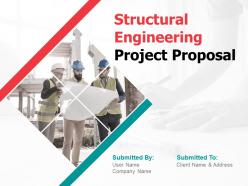
Structural Engineering Project Proposal
-

Cover Letter for Structural Engineering Project Proposal
-
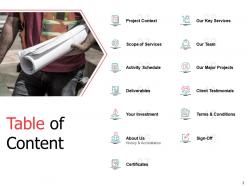
Table of Content
-

Project Context of Structural Engineering Project Proposal
-

Scope of Structural Engineering Project Proposal
-

Activity Schedule of Structural Engineering Project Proposal 1 2
-

Activity Schedule of Structural Engineering Project Proposal 2 2
-

Deliverables of Structural Engineering Project Proposal
-
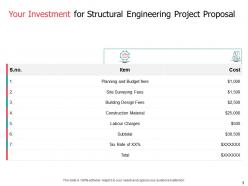
Your Investment for Structural Engineering Project Proposal
-
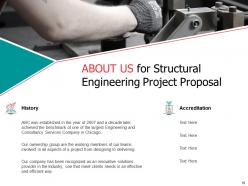
About Us for Structural Engineering Project Proposal
-
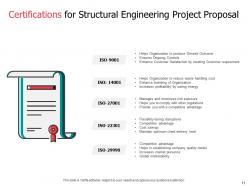
Certifications for Structural Engineering Project Proposal
-

Our Key Structural Engineering Project Proposal
-
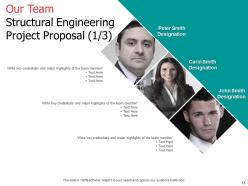
Our Team Structural Engineering Project Proposal 1 3
-

Our Team for Structural Engineering Project Proposal 2 3
-
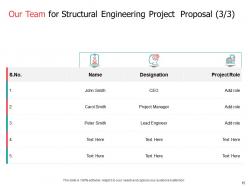
Our Team for Structural Engineering Project Proposal 3 3
-

Our Major Structural Engineering Project Proposal
-
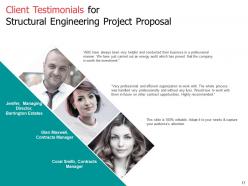
Client Testimonials for Structural Engineering Project Proposal
-
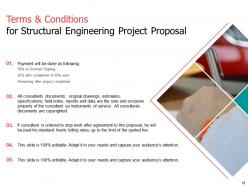
Terms Conditions for Structural Engineering Project Proposal
-

Sign Off for Structural Engineering Project Proposal
-

Contact Us for Structural Engineering Project Proposal
-
Structural Engineering Project Proposal Icons Slides
-

Additional Slides
-

Our Mission for Structural Engineering Project Proposal
-

Timeline for Structural Engineering Project Proposal
-

Roadmap for Structural Engineering Project Proposal
-
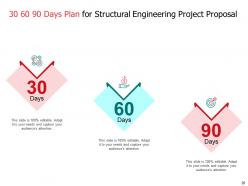
30 60 90 Days Plan for Structural Engineering Project Proposal
-

Project Management Gantt Chart for Structural Engineering Project Proposal
FAQs for Structural engineering project proposal
Alright, so you'll need the basics: scope, objectives, your technical approach, timeline with milestones, and cost breakdown. Case studies are gold - show them similar projects you've crushed. Don't skip the deliverables section because clients get nervous when they can't picture exactly what they're paying for. Risk assessment is huge, especially if it's a tricky structure. Oh, and actually address their specific requirements - sounds obvious but you'd be surprised how many people just copy-paste generic proposals. Start with an executive summary since busy people read that first, then bail if it doesn't grab them.
Start with your structural calcs and load analysis - that's what actually proves your design won't fall down. Material specs and building code compliance too, obviously. Clients get bored by the math but they need to see you did it right. Show them similar projects you've done before that worked out well. Visual stuff helps a lot - diagrams, maybe some 3D renders to make the technical bits less painful to look at. Oh and honestly? Real examples where this approach worked are gold. Just lay out your work clearly and they'll trust you know what you're doing.
Honestly, sustainability isn't optional anymore - it's what clients expect from day one. LEED certifications are everywhere now. You'll want to highlight stuff like mass timber or recycled steel right in your proposal, plus show energy modeling results. Carbon footprint calculations used to stress me out but the tools are way better now. The key is building this into your design process early instead of scrambling to add it later. Oh, and definitely emphasize the long-term cost savings - that's what really gets their attention.
So you'll want a whole risk assessment section that hits both technical stuff and project management risks. Think structural failures, weird soil conditions, weather screwing up your timeline, code changes mid-project - honestly, anything that could tank the whole thing or create safety issues. Clients eat up those visual risk matrix charts, so definitely include one of those. For every risk you identify, spell out how you'd handle it and who's watching for it. Insurance and liability coverage needs to be in there too. The goal is showing them you've already thought through Murphy's Law scenarios before they panic about them.
Dude, visuals totally change the game with structural proposals. Complex engineering stuff becomes way clearer when clients can actually see it. 3D models are huge - I'd honestly start there first since the ROI is solid. Rendered drawings work great too, plus AR walkthroughs if you're feeling fancy. Charts help explain load paths and material choices without boring everyone with dense paragraphs (trust me on this one). Your clients will get the scope faster and ask way better questions. They'll also feel more confident in what you're doing. Sometimes I throw in construction sequence diagrams too - clients love seeing the process.
So you'll need IBC and whatever local amendments your area has - that's the baseline. ASCE 7 covers your loads, then grab AISC 360 for steel or ACI 318 for concrete. Seismic stuff gets annoying fast, so check if you need ASCE 41 for retrofits. Bridges? That's AASHTO territory. Coastal projects usually have their own wind requirements too. Here's the thing though - be super specific about editions and years when you list them. Codes change constantly and plan reviewers will call you out if there's any confusion about which version you're referencing. Trust me on that one.
Okay so definitely do a Gantt chart or timeline table - break it into phases like preliminary design, detailed analysis, permitting, final deliverables with actual dates. Clients eat up those milestone checkboxes, trust me. Build in buffer time though because agencies always take forever and there's gonna be revisions. I learned that the hard way on my last project. Tie your payments to each milestone so you're not chasing money at the end. Keep it realistic but don't undersell how fast you can move. Short sentences work. Longer ones should flow naturally when you're explaining the more complex stuff.
Honestly, just break everything down into clear chunks - materials, labor, contingencies. Charts and tables are your friend here because nobody wants to stare at walls of numbers. Never give just one figure though, always do ranges and explain what might bump costs up or down. Oh and if you can swing it, throw in some industry benchmarks for comparison - makes you look like you actually know what you're talking about. The whole thing really comes down to being upfront about how you got your numbers. Clients aren't stupid, they just want to understand your process.
You need to map out exactly how you'll work with the MEP, geotech, and architecture teams from day one. Set up joint design reviews and shared BIM workflows - trust me, nobody wants to discover HVAC conflicts with their beam layout at 2am before a deadline. Weekly calls work great, or maybe a shared cloud setup depending on your team's vibe. Figure out when each discipline drops their deliverables so you can plan your structural milestones around them. The whole point is proving to clients that you're not some lone wolf engineer. Show them you've got a real coordination strategy that won't fall apart halfway through the project.
You'll want solid geotechnical data first - soil conditions, bearing capacity, groundwater levels. Load calculations are obviously crucial too. Environmental stuff matters: seismic zones, wind loads, local codes. If it's renovation work, grab existing structural assessments. Historic data from similar projects is gold for cost estimates and timelines - honestly saved my ass more than once. Material testing results and availability should be on your list. Don't overwhelm the client with every technical detail, but show enough depth so they know you get the complexities. Focus on data that actually impacts your design approach and their budget.
Be totally honest about potential problems - create a whole "Risk Assessment" section. Clients way prefer transparency over getting blindsided later. For each challenge, include your fix and backup plan. I've watched proposals crash because they glossed over the tough stuff. Get specific too, like "soil might need deeper foundations, so we'll do extra geotechnical testing upfront." Build in extra time and budget for the big risks. Honestly, this approach makes you look way more professional than pretending everything's perfect. Frame it as smart planning, not disaster prep.
Start with side-by-side visuals - traditional vs your new approach. Case studies are gold if you've got measurable wins like cost cuts or faster timelines. Skip the tech jargon though, seriously. Most clients tune out instantly. Tell them why it matters instead. Before/after scenarios work great, plus highlight any proprietary tools you're using. Sustainability angle too if it applies. The whole point? Make your innovation feel obvious, not just shiny for no reason. Oh and maybe throw in a quick ROI breakdown - numbers don't lie.
Dude, case studies are seriously your best friend in proposals. Pick 2-3 projects that actually match what they're dealing with - similar problems, scope, whatever. I always start with the mess we had to fix, then walk through what we did and throw in numbers if you've got them. Here's the thing though - you can't just dump project summaries and call it a day. Connect it to their situation! Like if you nailed a retrofit under crazy time pressure, spell out how that experience helps with their timeline crunch. Make it super obvious why your past wins matter for what they need now.
Executive summary goes first - clients always read that part. Break it down: problem, your solution, how you'll do it, timeline, and costs. Headings and bullet points are your friend because walls of text suck. Put your code references and design specs early so they know you get it. Sketches or diagrams work great for complicated stuff. Don't go overboard with technical language in the client sections though. Your qualifications section should highlight similar work you've done. Oh, and definitely include that detailed fee breakdown - being upfront about money saves everyone headaches later.
Build those feedback loops right into your timeline from day one. I do check-ins at three key points - initial concept, preliminary design, then right before final submission. Trust me, that last one saves your butt every time. Don't send them massive technical docs though, nobody reads those. Give them short summaries with specific questions instead of "what do you think?" Set hard deadlines for responses or you'll be scrambling at the end. Make it stupidly easy for stakeholders to actually help you out. Works way better than hoping they'll magically have time later.
-
Colors used are bright and distinctive.
-
Innovative and Colorful designs.
-
Very unique and reliable designs.
-
Thanks for all your great templates they have saved me lots of time and accelerate my presentations. Great product, keep them up!
-
Professional and unique presentations.