


Civil engineering project proposal powerpoint presentation slides




Try Before you Buy Download Free Sample Product
 Impress Your
 Audience
 100%
100% Editable
 Save Hours
 of Time


Our Civil Engineering Project Proposal Powerpoint Presentation Slides are topically designed to provide an attractive backdrop to any subject. Use them to look like a presentation pro.
People who downloaded this PowerPoint presentation also viewed the following :
Civil engineering project proposal powerpoint presentation slides with all 29 slides:
Use our Civil Engineering Project Proposal Powerpoint Presentation Slides to effectively help you save your valuable time. They are readymade to fit into any presentation structure.
-
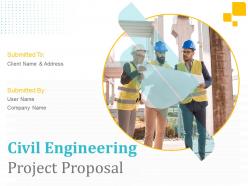
Civil Engineering Project Proposal
-
Cover Letter for Civil Engineering Project Proposal
-
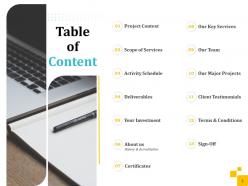
Table of Content
-
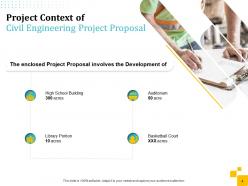
Project Context of Civil Engineering Project Proposal
-
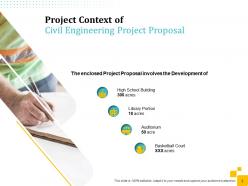
Project Context of Civil Engineering Project Proposal
-
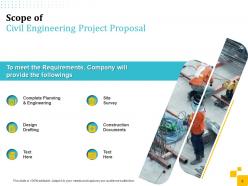
Scope of Civil Engineering Project Proposal
-
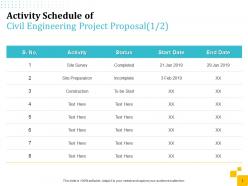
Activity Schedule of Civil Engineering Project Proposal 1 2
-
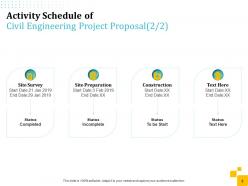
Activity Schedule of Civil Engineering Project Proposal 2 2
-
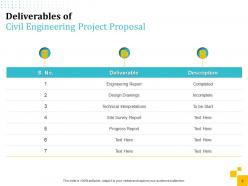
Deliverables of Civil Engineering Project Proposal
-
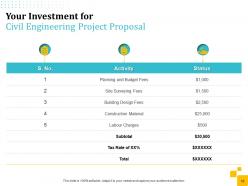
Your Investment for Civil Engineering Project Proposal
-
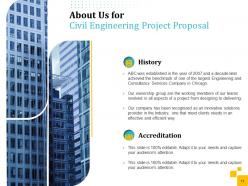
About Us for Civil Engineering Project Proposal
-
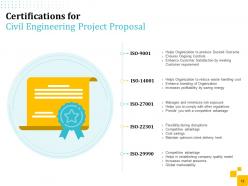
Certifications for Civil Engineering Project Proposal
-
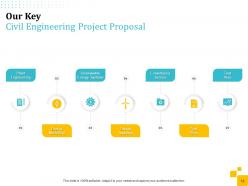
Civil Engineering Project Proposal
-
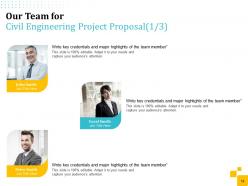
Our Team for Civil Engineering Project Proposal 1 3
-
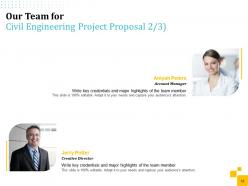
Our Team for Civil Engineering Project Proposal 2 3
-
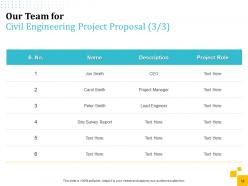
Our Team for Civil Engineering Project Proposal 3 3
-
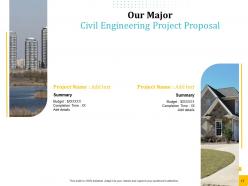
Civil Engineering Project Proposal
-
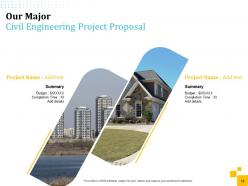
Our Major Civil Engineering Project Proposal
-
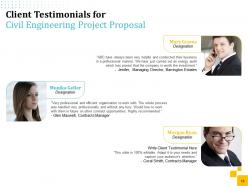
Client Testimonials for Civil Engineering Project Proposal
-
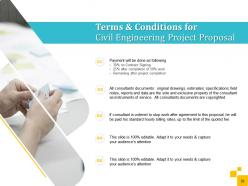
Terms Conditions for Civil Engineering Project Proposal
-
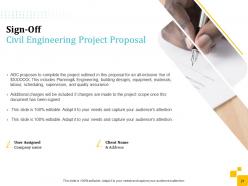
Sign Off Civil Engineering Project Proposal
-
Contact Us for Civil Engineering Project Proposal
-
Civil Engineering Project Proposal Icons Slide
-
Additional Slides
-
Our Mission for Civil Engineering Project Proposal
-
Project Timeline for Civil Engineering Project Proposal
-
Roadmap for Civil Engineering Project Proposal
-
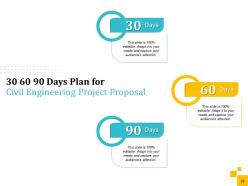
30 60 90 Days Plan for Civil Engineering Project Proposal
-
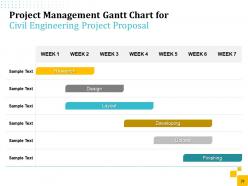
Project Management Gantt Chart for Civil Engineering Project Proposal
FAQs for Civil engineering project proposal
So you'll need the obvious stuff first - scope, objectives, your technical approach, timeline with milestones, and budget breakdown. Team qualifications are huge too. Site analysis and regulatory requirements? Don't skip those, they'll tank your proposal faster than anything else. Risk assessment and deliverables go in there as well, plus how you'll actually measure if this thing worked. Oh, and timeline - be realistic because once they approve it, you're stuck with those dates. Write your executive summary last even though it goes first. Trust me on that one.
Definitely go with a Gantt chart or timeline - clients eat that visual stuff up. Break it into the big chunks: design, permits, construction, testing. Show how tasks connect to each other too. I swear, most proposals are just walls of text that nobody wants to read. Add buffer time because weather or permit delays will happen - they always do. Highlight your critical path and key dates. Oh, and color-code different work areas so people can easily spot what matters to them. Makes the whole thing way more digestible.
Break everything down component by component - that's your bottom-up approach right there. You'll want a 10-20% buffer for contingencies, but don't just pull that number out of thin air. Tie it to actual risks you've identified. For longer projects, phase your budget around key milestones instead of dumping everything upfront. Cover your direct costs (materials, labor), indirect stuff like permits and insurance, plus that buffer. Clients eat up detailed risk planning - shows you actually know what you're doing. Oh, and timeline everything so budget phases match project milestones. Way cleaner that way.
Okay so first thing - get an Environmental Impact Assessment done covering air, water, soil, and wildlife. Document what everything looks like now, then model how construction's gonna mess with it. Noise pollution is huge too, trust me on this one. Neighbors will lose their minds over construction sounds. Map out how you'll fix each problem and prove you're following local regs. Oh, and don't skip the community meetings - people need to feel heard or they'll make your life hell later. Being super thorough now saves you from those awful mid-construction surprises that cost a fortune.
Look, you've gotta talk to stakeholders early or you're screwed. Map out everyone who cares about your project - residents, city folks, enviro groups, property owners, the whole deal. Get their thoughts while you're still planning, not after. I watched one project crash and burn because they ignored the local homeowners association (those people have serious power, btw). Their feedback shows you problems you didn't see coming and helps build support. Makes the approval process way smoother. Don't wait - start having those conversations now before you lock anything down.
So you'll want a solid risk assessment section covering the usual suspects - weather delays, sketchy soil conditions, regulatory curveballs, budget blowouts. List out likelihood and impact for each, plus your backup plan. Always pad the budget by 10-15% because trust me, something will go wrong. Oh and make sure someone's actually assigned to watch each risk as things progress. Clients love seeing you've already thought through the disasters instead of just crossing your fingers. A visual risk matrix helps too - tables are your friend here.
Ditch the jargon and use simple comparisons instead. Like, don't say "reinforced concrete with 4000 PSI compressive strength" - just call it "extra-strong concrete that handles heavy loads like building foundations." Visual stuff helps tons too. Simple diagrams, before/after pics, comparison charts. I've honestly watched proposals crash and burn because they drowned people in technical speak. Focus on what they actually care about - saving money, faster timelines, better safety. Oh, and always throw in a one-page summary that skips all the engineering mumbo-jumbo. They're buying solutions to problems, not trying to become engineers themselves.
Dude, zoning laws will make or break your project before you even get started. Check setbacks, height limits, and what's actually allowed on that land first thing. Environmental rules too - that stuff's non-negotiable. These regs control everything: what you can build, size limits, where it goes. Your permit timeline depends on it. Honestly? The approval process is brutal if you're not prepared. Get that zoning analysis done ASAP and make friends with the planning department people. Sounds cheesy but they'll literally save you months of back-and-forth later. Trust me on this one.
Definitely go with something like Proposify or PandaDoc for the main proposal stuff and client collaboration. AutoCAD and Civil 3D are no-brainers for your drawings and site plans. Microsoft Project's solid for scheduling too. Honestly, Bluebeam is amazing for markup and reviews - I can't work without it anymore. Oh, and don't sleep on reusing templates from your winning proposals. Saves tons of time. My advice? Pick one main platform first and build everything around that. I made the mistake of trying like 5 different tools at once and it was chaos.
Make sure you have a solid sustainability section covering environmental impact, resource efficiency, and long-term benefits. Clients hate vague proposals - give them actual numbers like carbon reduction percentages and renewable energy targets. Mention any certifications you're going for (LEED, BREEAM, whatever fits). Don't forget to connect everything back to cost savings and community perks. Oh, and include a timeline for hitting each milestone. I've seen too many proposals lose points because they skipped the timeline part. Also highlight any innovative materials or construction methods you'll use - that stuff really makes you stand out from competitors.
So for your proposal, definitely hit the main numbers - budget performance, schedule milestones, quality stuff like defect rates. Stakeholder satisfaction surveys are honestly underrated but they'll help you land future work. Oh, and if it applies, throw in environmental compliance and community impact metrics. I'd stick to maybe 5-7 solid metrics max because nobody wants to drown in data. Each one needs clear targets and how you're actually measuring it. The trick is picking ones that directly connect to what you're trying to accomplish with this project.
Pick your 3-5 best project examples that actually match what they want - same infrastructure type, similar size, comparable headaches. I learned this the hard way after bombing a few proposals by listing everything I'd ever touched. Focus on specific numbers: project values, deadlines you crushed, any awards you snagged. Your team's credentials matter too - spell out their certifications and experience levels. Oh, and definitely include references they can call. Shows you're not just talking a big game. Skip the fluff and prove you can handle their exact situation.
Dude, visuals are everything in proposals. Site maps, cross-sections, flow diagrams - they help people actually *see* what you're talking about instead of drowning in technical speak. I've literally watched proposals get approved because the drawings were perfect. Clean, labeled diagrams show you know your stuff and did your homework on the site. Clients eat that up. Just don't half-ass the visuals though - messy drawings will tank your credibility fast. Oh, and make sure everything's properly scaled... learned that one the hard way.
Start getting people involved from day one - don't wait until later. Public meetings work great for hearing concerns, plus surveys and online feedback portals keep input flowing. Facebook neighborhood groups are gold for this stuff, people go crazy sharing opinions there! Document everything and actually show how you changed designs based on what they said. Be upfront about what you can/can't do with their feedback. Then circle back to tell them what happened - people hate being ignored after they participate. Give yourself at least 3-6 months before you need final approval, maybe more if it's controversial.
Triple-check your specs and costs first - those will kill your proposal if wrong. Grab someone from a different team to review it. They'll spot things you can't see anymore after staring at it forever. Your executive summary needs a super clear value prop since that's all the decision-makers actually read. Oh, and make sure you're answering what they asked for in the RFP. Sounds obvious but you'd be amazed how many people miss basic requirements. Try to submit a day early so you're not dealing with random formatting disasters at the last minute.
-
As a civil engineer, I continuously need to present design plans to my team and other coworkers. Slideteam has solved all my problems.
-
I am use this template in my education project
-
Great product with highly impressive and engaging designs.
-
Appreciate the research and its presentable format.