


Project cost proposal powerpoint presentation slides




Try Before you Buy Download Free Sample Product
 Impress Your
 Audience
 100%
100% Editable
 Save Hours
 of Time


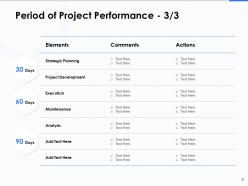
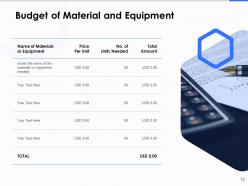
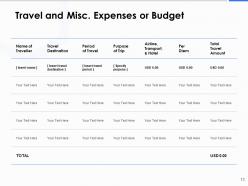
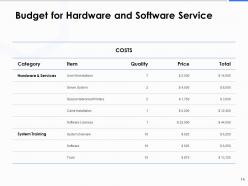
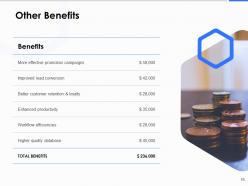
Project cost is a methodology that is used by many organizations to calculate the entire cost and productivity of a particular project. While using this method, companies can concentrate on completing a project within the specified budget. There are several functions of project cost that are included in the readymade proposal and help you fetch new clients. So, provide the anticipated cost of a project to your clients by using our topic-specific Project Cost Proposal PowerPoint Presentation Slides. This engaging slide consists of a table of contents that include objectives of the budget proposal, project brief, project description, revenue forecast, a period of performance, budget summary, and client testimonials. Use our budget cost proposal PowerPoint theme to determine the project task that consists of strategic planning, project development, execution of the project, project maintenance, analysis, and reporting. Take advantage of this creatively designed project cost proposal PPT slide to highlight the names of materials to be used, their price per unit, number of units needed, and their overall cost. Employ our interactive proposal PowerPoint presentation template to showcase the benefits of your services such as effective promotion campaigns, improved lead conversion rates, customer retention & loyalty, enhanced productivity, workflow efficiencies, and higher quality database. The project cost proposal PPT theme allows you to describe the entire cost summary for the project that includes cost element, direct labor, equipment & materials, travel & miscellaneous expense, etc. Let your clients know about the budget for hardware & software services that consist of items like user workstations, server system, secure networked printers, cable installation, and software licenses. Take the help of this visually-attractive proposal PowerPoint presentations and talk about the period of project performance to accomplish different milestones that make your proposal even more noteworthy. Download our ready-to-use project cost proposal PowerPoint presentation slide to land more clients and fulfill their business requirements.
People who downloaded this PowerPoint presentation also viewed the following :
Content of this Powerpoint Presentation
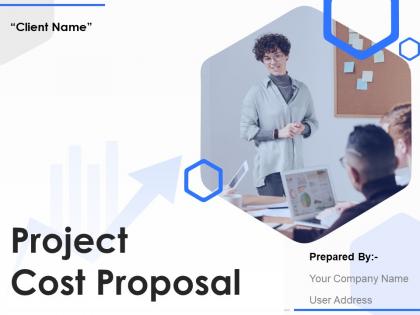
Slide 1: This slide introduces Project Cost Proposal. State Company name, Client name and User address.
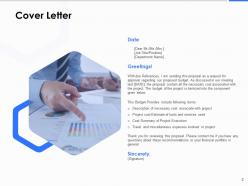
Slide 2: This slide displays Cover Letter.
Slide 3: This slide shows Table of Content.
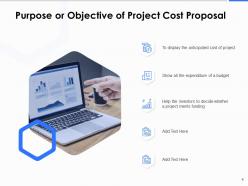
Slide 4: This slide showcases Purpose or Objective of Project Cost Proposal.
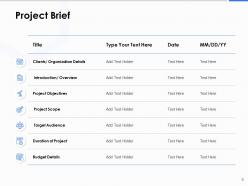
Slide 5: This slide showcases Project Brief.
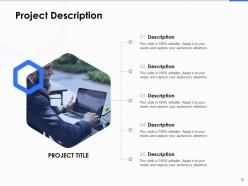
Slide 6: This slide depicts Project Description.
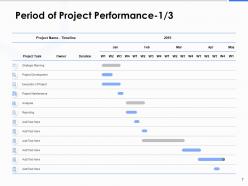
Slide 7: This slide displays Period of Project Performance.
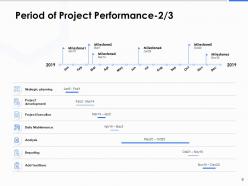
Slide 8: This slide shows Period of Project Performance.
Slide 9: This slide showcases Period of Project Performance.
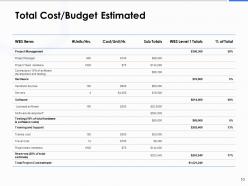
Slide 10: This slide depicts Total Cost/Budget Estimated.
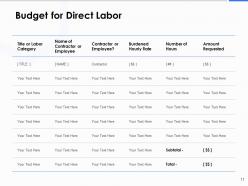
Slide 11: This slide displays Budget for Direct Labor.
Slide 12: This slide describes Budget of Material and Equipment.
Slide 13: This slide shows Travel and Misc. Expenses or Budget.
Slide 14: This slide represents Budget for Hardware and Software Service.
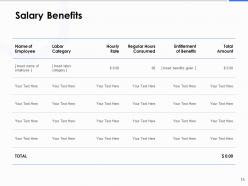
Slide 15: This slide shows Salary Benefits.
Slide 16: This slide depicts Other Benefits
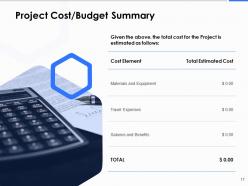
Slide 17: This slide depicts Project Cost/Budget Summary.
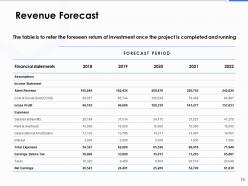
Slide 18: This slide displays Revenue Forecast. The table is to refer the foreseen return of investment once the project is completed and running
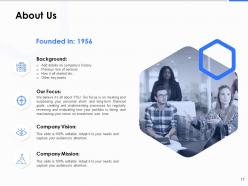
Slide 19: This is About Us slide to showcase Company specifications.
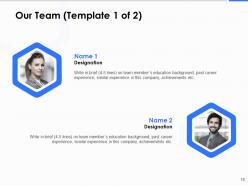
Slide 20: This is Our Team slide with Names and Designations.
Slide 21: This is also Our Team slide with Names and Designations.
Slide 22: This slide displays Client Testimonials.
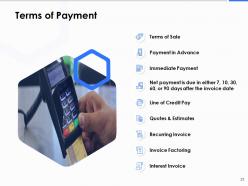
Slide 23: This slide shows Terms of Payment.
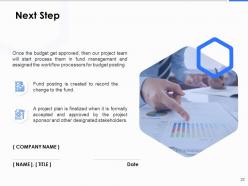
Slide 24: This slide showcases Next Step.
Slide 25: This is Contact Us slide with Address, Email address and Phone number.
Slide 26: This slide is titled as Additional Slides for moving forward.
Slide 27: This is Our Mission slide with Vision, Mission and Goals.
Slide 28: This slide displays Roadmap 3 process.
Slide 29: This slide also Roadmap 4 process.
Slide 30: This slide depicts Roadmap 5 process.
Slide 31: This slide shows Roadmap 6 process.
Slide 32: This slide depicts Roadmap 7 process.
Slide 33: This is 30 60 90 Days Plan slide.
Slide 34: This slide shows Timeline process.
Project cost proposal powerpoint presentation slides with all 34 slides:
Use our Project Cost Proposal Powerpoint Presentation Slides to effectively help you save your valuable time. They are readymade to fit into any presentation structure.

FAQs for Project cost proposal
Honestly, break down your labor costs by specific roles and hourly rates - clients get annoyed when you just say "resources." Include all your material costs with actual quantities and prices, plus any equipment you'll need to rent. Don't forget overhead stuff like office space and utilities. Oh, and always pad it with a contingency - maybe 5-15% depending how messy the project might get. Separate your direct costs from indirect ones clearly. The key is making it super transparent so they can see exactly where their money's going instead of wondering what you're hiding.
Start by listing all your overhead stuff - admin time, utilities, office space, equipment that's depreciating, support staff wages. Basically anything that helps the project but you can't bill directly for. Grab 2-3 similar projects you've done before and see what percentage those indirect costs were compared to direct costs. Those percentages become your starting point. Adjust up or down based on what's different about this project. Oh, and definitely pad it a bit because these costs always end up higher than you think they will. I've learned that the hard way more times than I'd like to admit.
Look, stakeholders are the only ones who really know what you're dealing with. Get them involved early - like, before you even start throwing numbers around. They'll clue you in on all the weird requirements and regulatory stuff that could totally wreck your budget if you miss it. Plus (and this is key) they're way more likely to sign off on costs they actually helped figure out. I learned this the hard way on a project last year. Have them sit in on your scoping sessions. Sure, it's another meeting to coordinate, but trust me - it beats getting blindsided later when they tell you the proposal is completely off base.
Start with the stuff that'll absolutely sink you - payroll, equipment you can't work without, regulations that could shut you down. High-impact things come next, basically anything that messes with your timeline or main deliverables. I always build in extra time for vendor stuff because they're notorious for being late (learned that the hard way). Nice-to-haves? Bottom of the list. Here's what works: ask yourself "what if we skip this?" If it means total failure, boom - top priority. Don't fool yourself into thinking everything's critical when it's not.
Dude, scope creep will kill you if you're not careful. Don't forget the sneaky stuff either - permits, taxes, equipment rentals add up fast. I learned this the hard way on my first big project lol. Never lowball just to get the gig because you'll hate yourself later when you're basically working for free. Be specific with your line items too - vague estimates piss clients off when reality hits. Realistic timelines are huge since rushing always costs more. Throw in a 10-15% buffer for weird stuff that comes up. Trust me, something always does.
Honestly, benchmarking is a game-changer because you're working with real data instead of pulling numbers out of thin air. Look at 3-4 projects that match your scope and tech stack if you can find them. You'll start noticing weird patterns - like how frontend work always seems to blow past estimates by 20%. Integration stuff usually costs way more than you think too. Just make sure you're actually comparing similar projects, not random ones. Oh, and start keeping track of your own project costs now. Future you will thank you when you need better baselines for estimates.
Okay so first thing - get your cost breakdown super detailed. Like, show them exactly where every dollar's going. Then grab some vendor quotes or market research to back up those numbers so they can't say you're just making stuff up. ROI calculations are clutch if you can connect the spending to actual savings or results. Also, comparison shopping works wonders - show what happens if they cheap out or do nothing at all. Risk analysis is solid too since it explains how your budget prevents expensive disasters later. Different people care about different stuff though, so come prepared with multiple angles.
Honestly, just bake the contingency right into your budget upfront - don't try to add it later. I do around 10-20% depending on how messy the project might get. Break it down by what could actually go wrong too (tech issues, delays, scope creep) so people know you're not just making up numbers. Document why you think each thing might happen and what it'd cost. Trust me, when stuff hits the fan (and it will), you'll look like a genius instead of scrambling around asking for more money. Way better than those awkward "so we need another 50k" conversations.
Look, a cost-benefit analysis just shows your project makes financial sense - that the money coming in beats what you're putting out. Stakeholders need those hard numbers to say yes instead of gambling on gut feelings. Executives eat this stuff up because ROI is their favorite language. You're answering "why should we blow budget on this?" before they corner you about it. Plus it helps spot risks early and keeps expectations realistic. Just make sure your math is bulletproof - people will pick apart every number once review time hits. Trust me on that one.
Honestly? Check your project costs monthly at minimum, plus whenever scope changes hit. I made this mistake last year and watched my budget explode - not fun explaining that to leadership lol. Small budget creeps are sneaky and add up way faster than you'd think. Major milestones are obvious review points, but don't forget about team changes or unexpected roadblocks. Those can mess with your numbers quick. Set reminders now or you'll totally forget. And yeah, tell stakeholders about updates right away. Trust me, surprise budget conversations are the worst.
Put the total cost right up front in an executive summary - don't make them hunt for it. Then break everything down by phases or deliverables in a simple table. Honestly, I've watched so many good proposals die because the pricing was buried somewhere random. State your assumptions and what's NOT included at the bottom. Always PDF it so the formatting doesn't get weird. A timeline showing when they'll pay what is super helpful too. Oh, and make your contact info easy to find - you'd be surprised how often people forget that part!
Dude, you'll get way better at cost estimates with the right tech tools. They automate all those tedious calculations and pull from past project data - honestly saves so much time vs doing everything manually. Specialized estimating software is ideal, but even fancy Excel templates work. Real-time pricing updates are clutch too since material costs change constantly. The regional labor stuff gets tricky though - some tools handle that better than others. Basic project management software beats plain spreadsheets any day. Less human error, more accurate numbers. What industry are you in again? That'll help narrow down which tools make sense.
Dude, just be brutally honest with your numbers - don't pad anything or hide fees. I learned this the hard way when a client called me out on some "surprise" costs later. Super awkward. Base everything on real research, not what you think they want to hear. Yeah, including all the potential expenses upfront might make you less competitive, but trust me, it's worth it. Keep notes on where your figures come from so you can back them up. Honestly, some people think lowballing gets them the job, but it usually backfires. Quote what you actually need to do good work.
Definitely add a contingency buffer - like 5-15% for unexpected stuff that'll inevitably pop up. Also throw in escalation clauses for when material costs go nuts (learned this one the hard way when steel prices went absolutely insane on me). Your quotes should have expiration dates too, usually 30-60 days max. For bigger projects, break the costs into phases so you're not stuck with pricing that becomes totally unrealistic later. Oh and document your pricing assumptions upfront - saves you headaches down the road when clients start questioning numbers.
Look, timing is everything here - don't pitch when they're already stressed about money stuff. Lead with the value proposition and connect every major expense directly to outcomes they actually care about. Be upfront about potential risks (they hate getting blindsided later). When they push back, actually listen and be flexible on the smaller things that don't matter as much. Oh, and definitely bring a backup plan that cuts like 10-15% but still hits your main goals. I learned this the hard way - having that Plan B ready makes you look way more reasonable and prepared.
-
Awesome use of colors and designs in product templates.
-
Appreciate the research and its presentable format.
-
Topic best represented with attractive design.
-
Great quality product.
-
Really like the color and design of the presentation.