


Interior Design Project Proposal Powerpoint Presentation Slides





Try Before you Buy Download Free Sample Product
 Impress Your
 Audience
 100%
100% Editable
 Save Hours
 of Time


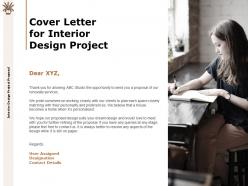
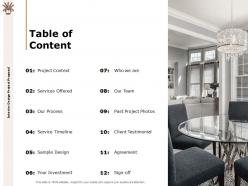
Talk about your advanced skills and bid on new projects from your clients by using our content ready project proposal ppt. You can showcase your expertise and grab the attention of your customers with the help of this visually appealing interior design assignment proposal PPT layout. Use interior design project proposal PowerPoint graphic to explain the services your company offers like flooring, lighting design, fireplace & mantel design, appliance & plumbing fixture selection, custom furniture, space planning & elevation, artwork, kitchen & bath design, etc. Discuss your interior design process in a step-by-step way to impress your client. Gain the confidence of your customers by elaborating on your weekly service timeline procedures that include schedule & budget development, cost estimation, building system evaluation, preliminary space plan & design concepts, final space plan, furniture design, construction, and site observations. Showcase some of your best-implemented interior design projects to your customers and leave a lasting impression on them. The scope of the proposal includes project context, services offered, sample design, past project photos, client testimonials, investment, team members, agreement, etc. You can portray your creative ideas and innovative designs that catch the attention of your users massively. Deliver your simple planning skills that help in meeting the expectations of your clients. Employ this professionally designed interior design project PPT slides and talk briefly about your talent to convince your clients. Discuss the new methods, and technologies provided by you that draw a positive impact on your customers. Present your overall working budget, fees, and other informational things that provide your clients with good knowledge of your company. Included here are some graphics, and icons with which you can make your proposal more attractive to engage your consumers. Uncover the secrets of a perfect interior designer and fulfill the requirements of your clients by downloading our ready-to-use interior design assignment proposal PowerPoint template.
People who downloaded this PowerPoint presentation also viewed the following :
Content of this Powerpoint Presentation
"Creating a meaningful space that fulfills the needs of the inhabitant and optimizes their space is one of our key roles as designers and is essential to our society,” says Lynne Bradley. Previously, interior design was meant for affluent groups, but the mindset is radically changing with time. People have understood the importance of a planned space being more efficient and functional regardless of size. Building a well-designed interior helps in improving a room's functionality for its intended purpose.
Interior design is an essential and influential part of life and dramatically affects our lifestyle. It is all about how you perceive different spaces. Interior design refers to the comprehensive, professional practice of developing an interior environment that helps address, protect, and respond to human needs.
Every interior design project has a unique perspective, which is why choosing the best interior designer is challenging. If you want to make your client’s dream space a reality, bring innovative interior design ideas to your clients. It would be best if you displayed your most successfully executed interior design projects and expertise to your clients.
Interior Design Templates
Our interior design slides are fully customizable and editable to cater to all your requirements regarding interior design projects. These uniquely designed, graphically represented interior design assignment proposal templates are great for explaining your service offerings, such as lighting design, flooring, appliances, fireplace and mantel design, custom furniture, space planning, elevation, and more. So, portray your creative ideas step-by-step and impress your client with confidence.
Let's look at some interior design templates you can try for an outstanding presentation.
Template 1: Project Context of Interior Design Services
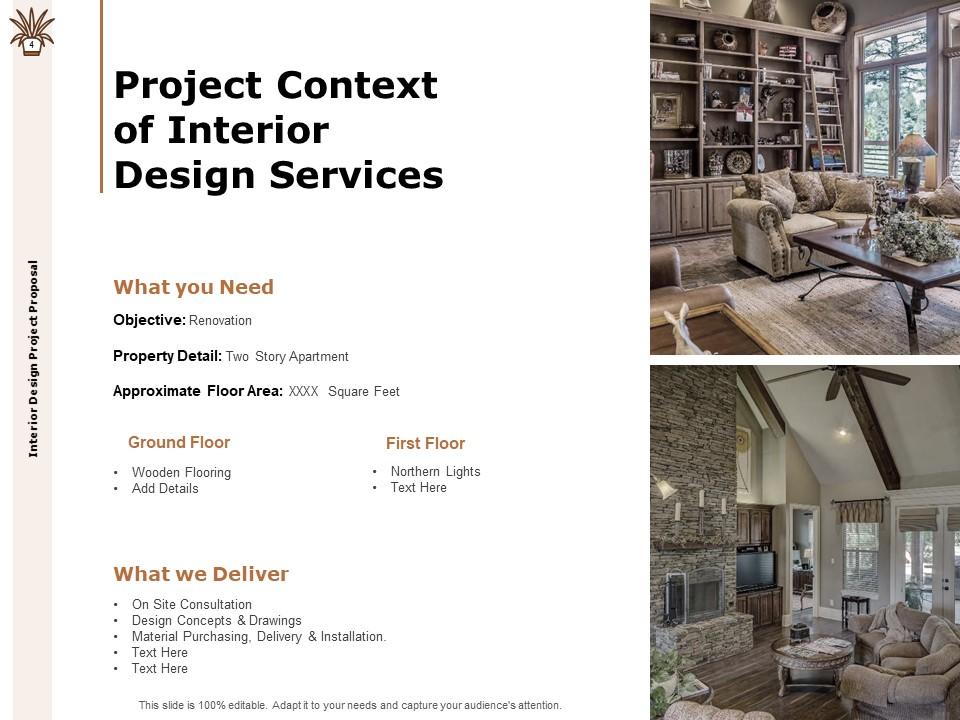
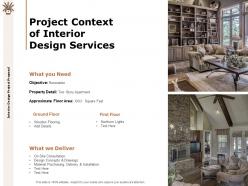
The project context refers to an environment where a project takes place. It comprises both the external and internal environment where a project operates. So, understanding the project context is essential to assess a project and integrate sustainability into projects in progress. This content-ready PPT layout helps to talk about the services you deliver, such as an onsite consultation, design concepts, and drawings, purchase of material, delivery, and installation. Moreover, it also records your client’s requirements precisely for better implementation.
Template 2: Interior Design Services We Offered
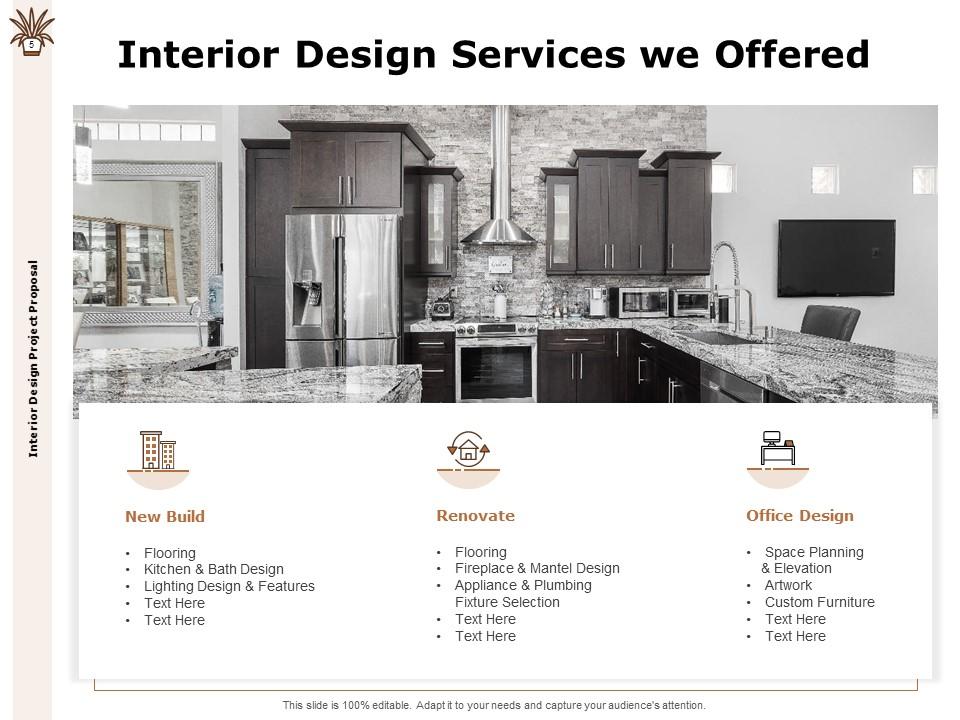
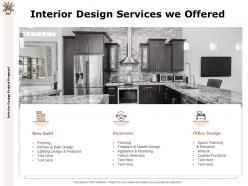
While bidding on new projects from prospective customers and showcasing your skills to them, explaining the excellent services you offer is crucial. Use our Interior Design Services layout to discuss the services your company offers to a client at its best. This well-crafted slide is designed with appropriate visuals to grab the attention of your clients in just a minute. It also depicts services like flooring, kitchen and bath design, appliance and plumbing, furniture and fixtures, artwork, space planning and elevation, and so on. It displays services for newly built, renovation, and office design in separate columns with proper icons.
Template 3: Our Interior Design Process
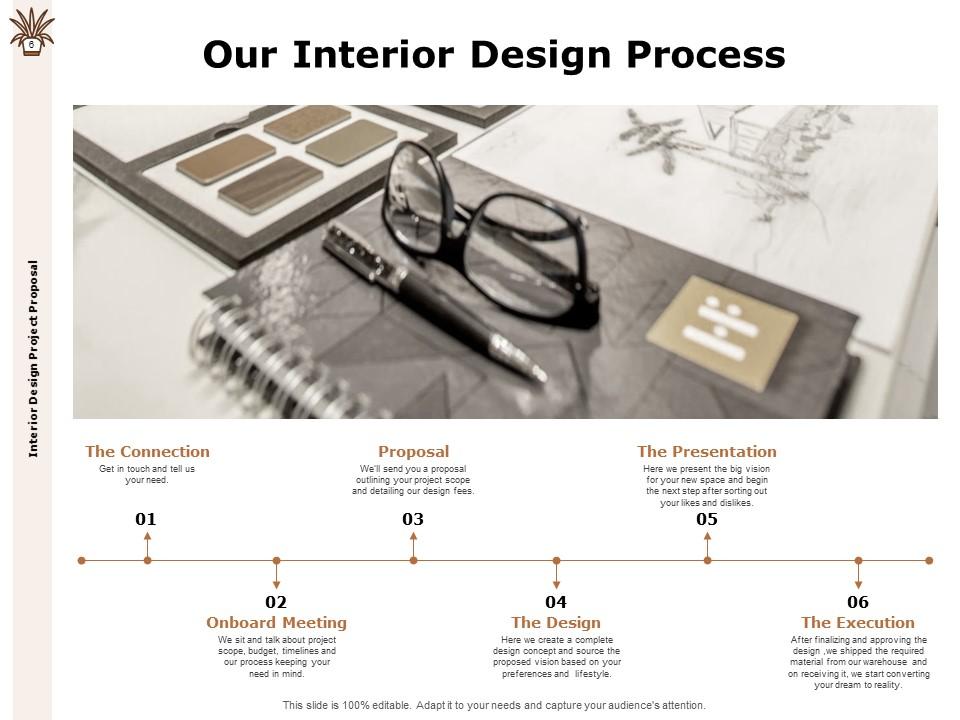
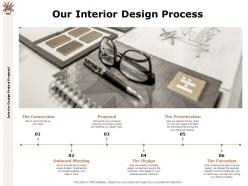
The systematic progression of any project is highly beneficial for its successful accomplishment. Professional interior designers always follow a step-by-step process to complete a project without hassle. You can use our interior design process PPT preset to depict the interior design process chronologically. This PPT preset elucidates the six-stage process in a chart. The first three stages include going through the client’s needs, talking about the project budget, scope, and timeline, and drafting a proposal with details and fees. The remaining three stages clarify the entire design concept, create a presentation after sorting all the likes and dislikes, and finally, the implementation after the client's approval.
Template 4: Service Timeline of Interior Design
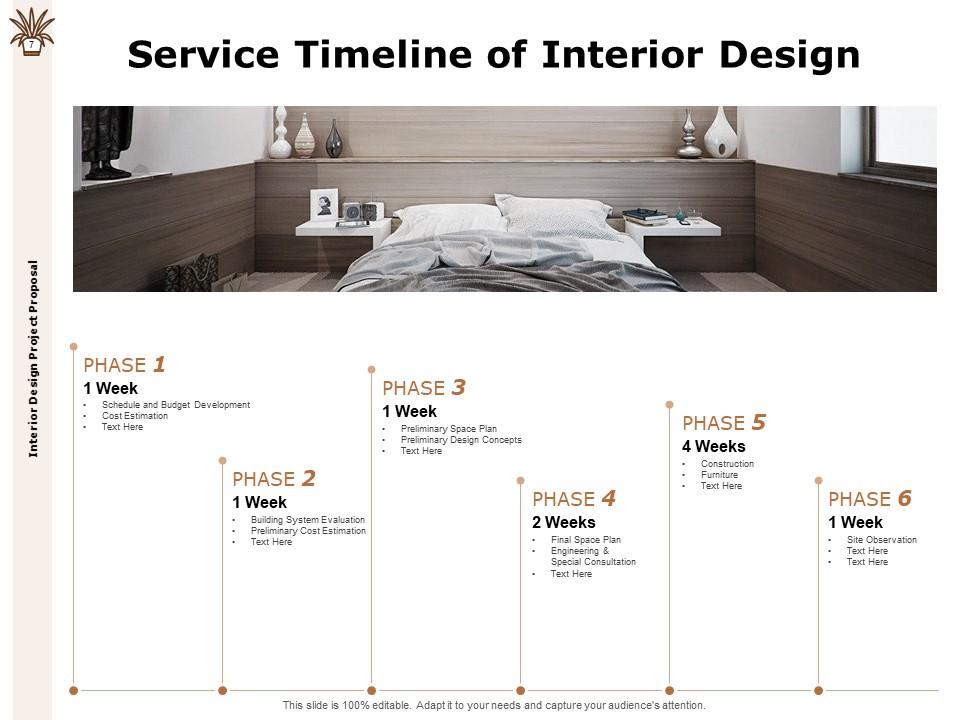
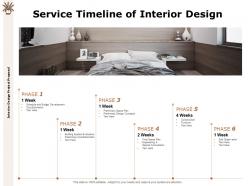
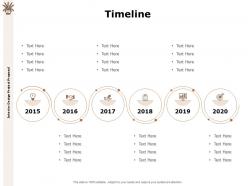
Project timeline can significantly affect the success of your project. It is an essential part of project planning, and it ensures that your project stays on track and meets all the deadlines on time. This PowerPoint presentation depicts the service timeline with six different phases. This informative layout lets customers get an insight into your weekly service timeline procedures, including schedule and budget development, building system evaluation, cost estimation, preliminary space plan and design concepts, final space plan, construction, furniture design, and site observations. Get it now and gain the confidence of your customers.
Template 5: Sample Interior Design
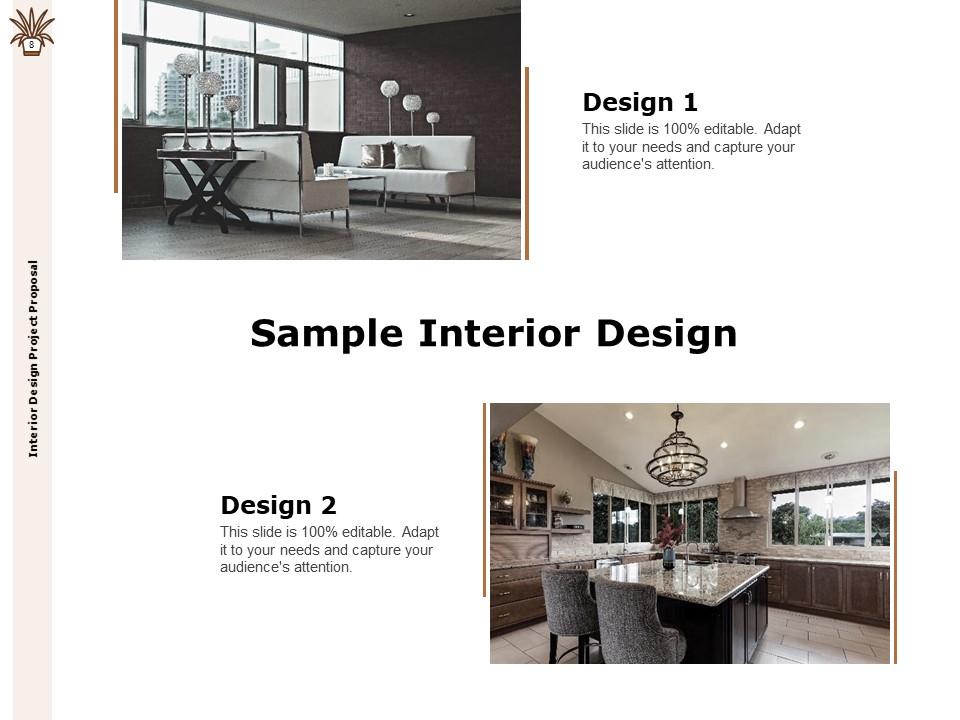
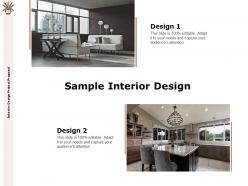
Samples are one of the fundamental things of the interior design process; without them, designing is incomplete. It helps to ensure that the objects they select work well together and are good enough for the intended design. If you are keen to showcase your best-implemented interior design projects to your clients, then SlideTeam’s “Sample Interior Design” PPT layout would be the perfect match. This layout demonstrates your sample designs in the best possible way. Portray your creative ideas and innovative designs to catch the attention of your prospective customers effortlessly with our high-definition, aesthetic PPT slide deck.
Template 6: Investment for Interior Design Project
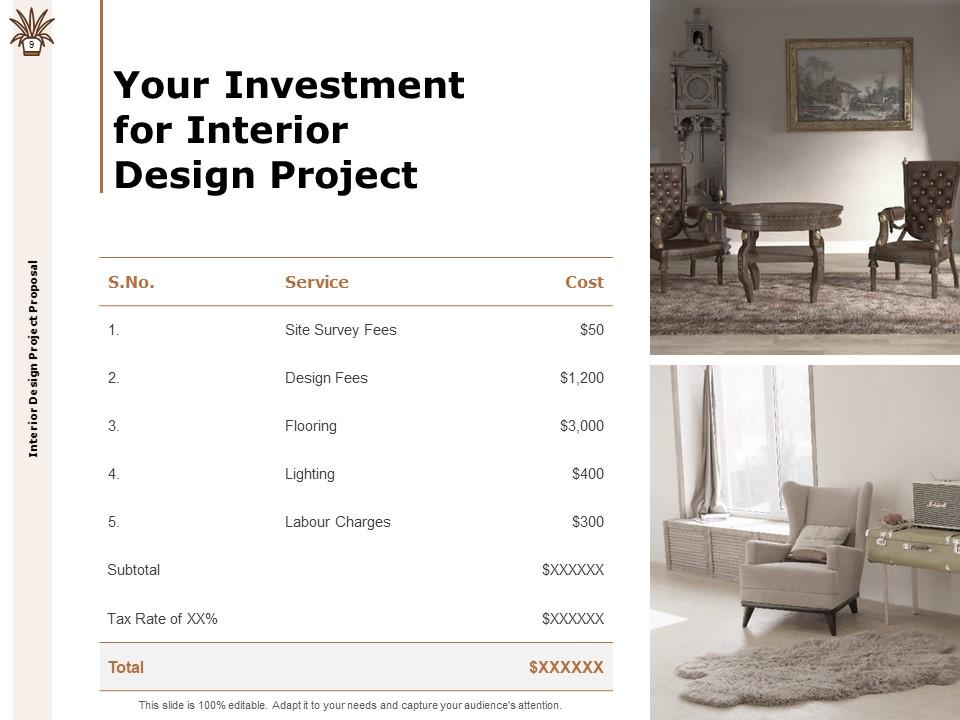
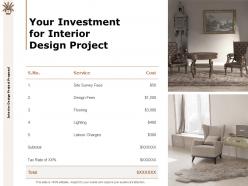
When it comes to investing in an interior design project, most customers become cautious when spending money on space. Expert designers always try to customize the design concept to suit the client's budget. You can use our professionally designed PPT templates with relevant graphics to present your overall working budget, fees, and other information to provide your client with excellent knowledge. This PowerPoint preset helps to highlight the services and their costs, such as site survey fees, design fees, lighting, flooring, and more. Get the slide now, add some superior graphics to it, and make an attractive proposal to engage your clients.
Template 7: Previous Project Photos
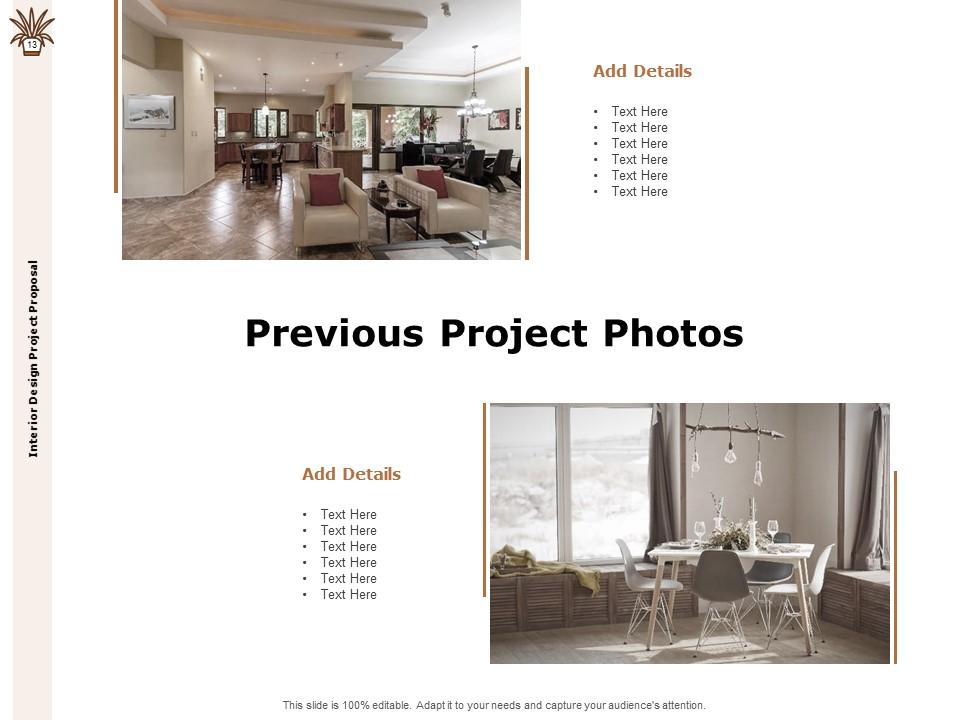
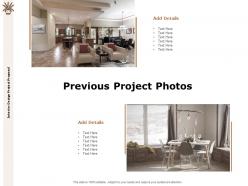
This is another slide showcasing photos of your previous project to entice your prospective customers. It helps to highlight your skills and achievements to your clients and leave a long-lasting impression on them. The scope of this proposal includes past project messages along with all the relevant details needed to help your clients earn their trust in your company.
Template 8: Client Testimonials
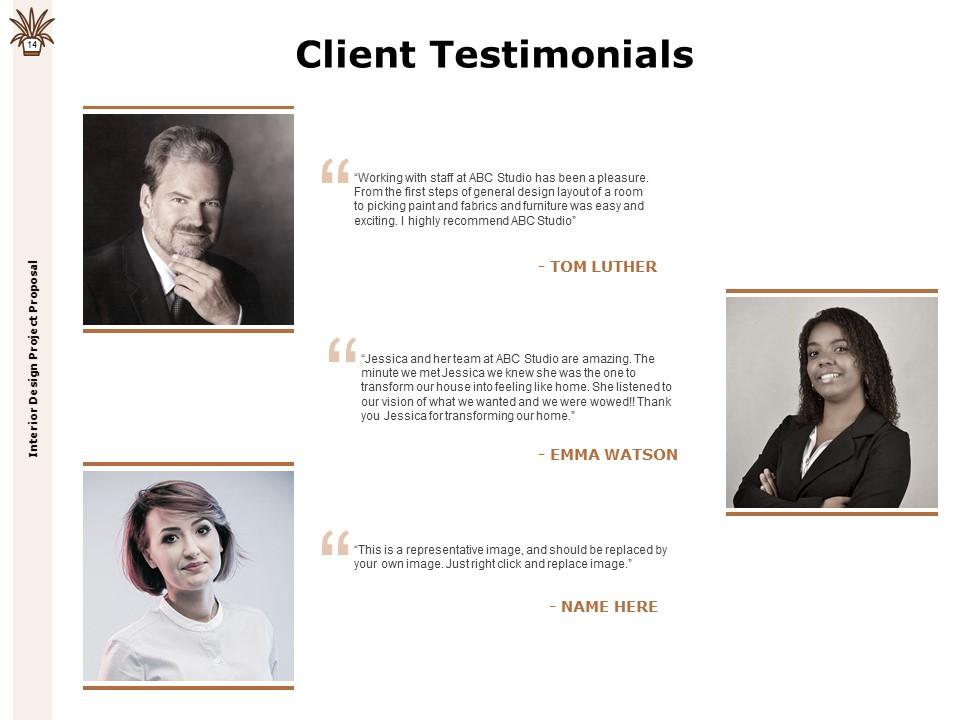
Want to convince your prospective client to choose you over the fierce competition? Then, you must demonstrate how you will resolve their issues. Testimonials play a crucial role in helping prospective customers make informed decisions. A client testimonial is a personal anecdote or a short quote containing the positive experiences of your previous clients regarding your company. Our well-decorated PowerPoint slide showcases the positive experiences of your clients with an added professional touch. Get it now and persuade your customers to affect their purchasing decisions positively.
Template 9: Agreement
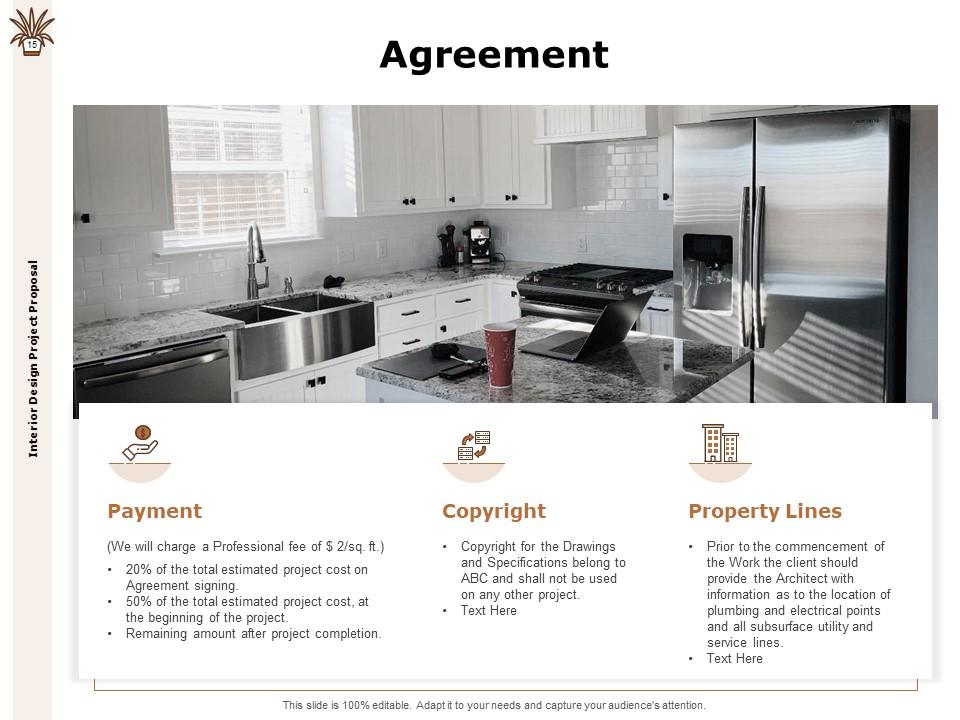
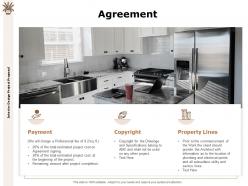
An agreement is an arrangement that is mutually accepted by all the parties involved in a transaction. Introducing our graphically enriched and informative agreement template for mutual understanding of the parties. It shows three elements of the agreement, such as payment, copyright, and property lines, in separate columns, along with a brief depiction. The payment column displays the amount of fees to be paid at different intervals, the copyright section includes rules of the same, and the property lines comprise essential information regarding the plumbing and electrical lines. Download the slide today and present your agreement like a pro.
Template 10: Contact Us
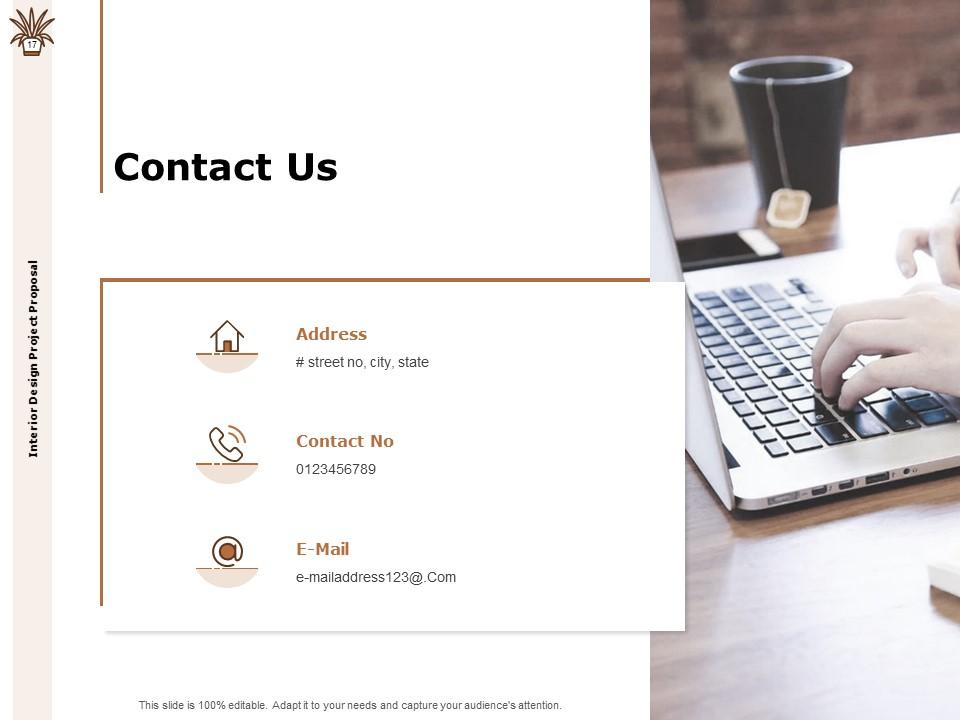
This responsive "Contact Us" template lets potential clients quickly contact you for further information. This nicely decorated slide with an apt background image shows your company's address, contact number, and email address. Get our ready-to-use PPT slide deck to showcase the perfection of a professional interior designer and fulfill your client's needs;
Design a space alongside shaping the experience.
Interior design projects significantly affect everyone’s lives. They define the look of the space, its functionality, and how it will attract the senses. They must also fit the cultures, needs, and lifestyles of the people who inhabit them. Before proceeding with a project, get some outstanding interior design templates. Use SlideTeam's templates to stitch countless expectations together, creating a unique end product that your client feels is their own.
Interior Design Project Proposal Powerpoint Presentation Slides with all 25 slides:
Eliminate any distress with our Interior Design Project Proposal Powerpoint Presentation Slides. Bring back an air of celebration.

FAQs for Interior Design Project Proposal
Cover your project scope and timeline first, then add your design concept with mood boards. Room layouts come next, followed by materials and furniture with pricing. Don't forget your fee structure! Before/after photos from past projects work like magic - clients love seeing transformations. Be super clear about what's included vs. extras because scope creep will bite you. I'd throw in how many revisions they get too. Honestly, the more detailed you are upfront, the fewer headaches you'll have later when things get messy.
Okay so first thing - make a mood board using exactly what they said in your conversations. I literally screenshot our chats because I'll forget the specific words they used later (memory is so unreliable). Pull colors and textures that match their actual language, not what you think works better. Write up how each design element connects to their lifestyle, and use their exact words - if they said "cozy," stick with cozy instead of switching to something fancier. Then do 2-3 visual mockups of the main spaces. Trust me, people need to actually see it, not just imagine it in their heads.
Always bring physical samples AND digital mockups - trust me, screens lie about colors constantly. I made that mistake once when a gorgeous warm beige turned into baby food yellow on the client's MacBook... nightmare. Group everything by room so they can actually picture the whole space together. Mood boards work way better when you show materials in real settings instead of random swatches on white backgrounds. But honestly? Nothing beats letting them touch fabric samples and stone chips in their actual lighting. You'll save yourself so many revisions later.
Break your budget into clear chunks - furniture, labor, materials, plus contingency. Clients want to see where their cash is going. I do a quick summary up top, then get into the nitty-gritty below. Honestly, don't lowball just to land the gig (trust me on this one). Be upfront about what's covered vs. extra costs. If you're not sure on pricing, use ranges like "window treatments: $2,500-$3,500." Always tack on 10-15% for the inevitable curveballs. Oh, and try presenting three different budget tiers when you can - people usually pick the middle option anyway.
Honestly, you've gotta do your homework first - client research is everything. I bombed a few early projects by skipping this step, so trust me on this one. Figure out how they live, what they love aesthetically, their actual budget (not what they wish it was lol), and how they move through their space. A good questionnaire helps, then walk through their place with them. This gives you solid reasons behind every design choice instead of just guessing what looks nice. Without it, you're basically decorating for yourself, not them.
Definitely embed those 3D renderings right into your proposal instead of just tacking them on at the end. The visual impact is crazy good when clients can see exactly what you're pitching. SketchUp or Revit work great for exporting high-res images you can drop in - honestly, even basic before/after mockups do the trick if 3D feels like overkill. Put each rendering right after you describe that space so they can picture it immediately. Oh, and label everything clearly with room names. Trust me, highlight the key design stuff you want them to focus on or they'll miss it completely.
Oh girl, you HAVE to set clear timelines or your projects will become never-ending nightmares. Seriously learned this when a kitchen reno dragged from 3 months to 8 - I wanted to cry. Map out when clients need to make decisions and when they'll get deliverables. It stops them from constantly adding "just one tiny thing" because there's actual structure. Also saves you from looking flaky when everything runs late. Build in extra time though, because something always goes sideways. Stick to your deadlines once you set them or clients won't take you seriously anymore.
Okay so here's what I've learned the hard way - call out the problems right in your proposal. Don't let them blindside you later. Make a whole section about limitations like budget issues or weird structural stuff. Clients actually respect the honesty way more than you'd think. For each roadblock, throw in some backup plans or cheaper alternatives. Tight budget? Break it into phases or swap materials. Oh and definitely build in a contingency plan because trust me, you'll need it. Being upfront like this shows you're not just winging it.
Pictures over paragraphs, trust me. Clients want to see their space transformed, not wade through a design essay. Mood boards and before/after mockups work way better than text blocks. Leave tons of white space so everything can breathe. Always include a timeline graphic - honestly, that's what keeps them up at night anyway. Skip the fancy design speak. "Cozy reading nook" hits different than "intimate literary sanctuary," you know? Break it into clear sections with headings. Give them 2-3 options so they feel like they're actually part of the process instead of just nodding along.
Don't dump your design philosophy in one boring section. Lead with 2-3 sentences about your approach, then weave it through the actual proposal. Show them why you're making specific choices for their space. Say you're into biophilic design - instead of just stating that, explain how you're bringing natural elements into their living room and what it'll do for their daily life. The goal is making your philosophy feel tied to their project, not some generic designer fluff. Nobody wants to read the same pitch you gave the last five clients, you know?
Your proposal needs structural load calcs, electrical/plumbing layouts, fire safety stuff, and accessibility requirements. Don't mess with load-bearing walls without proper support - that's a guaranteed rejection. Current electrical codes are pretty strict too. Fire egress is honestly where most projects die. I've watched people spend months on plans only to get shot down over a blocked exit. Document your lighting and HVAC changes clearly. Any plumbing mods need to be shown as well. Pro tip: schedule a pre-meeting with your building official. They'll catch issues before you waste time on a full submission.
Start with your absolute best 3-4 projects that actually match what they're looking for style and budget-wise. Don't just throw everything at them. For testimonials, skip the generic "she's amazing!" stuff - you want quotes about how you solved actual problems or your process. Before/after shots with a short client quote underneath? That's gold. Way better than walls of text that nobody reads. Just make sure you ask permission first (learned that one the hard way). Timeline, budget, challenges you tackled - include those details. And if you can throw in real numbers like "boosted home value 15%" at the end, do it.
So basically, residential is all about how people actually *live* - their morning routines, kids running around, whether they're messy cooks or whatever. Commercial? That's brand image and making sure employees don't hate coming to work every day. You'll deal with way more bureaucracy on the commercial side though - endless approval chains and budget meetings. Ugh. Switch your vocab too. Say "workspace" instead of "home," talk efficiency over comfort. Your portfolio should match what you're pitching for obviously. Oh and timelines are completely different since you're not just convincing one couple anymore.
Put all the green stuff front and center in your main sections - recycled materials, bamboo flooring, low-VOC paints, that kind of thing. LED lighting is honestly a given these days since it pays for itself anyway. I'd definitely add a whole sustainability section covering your waste reduction plan and green procurement process. Oh, and throw in actual numbers wherever you can - energy savings percentages, carbon footprint reduction, whatever data you've got. Clients eat that up way more than vague eco-friendly promises. Makes the whole proposal feel more legit.
Wait like 3-5 days, then shoot them a quick email - "Hope you got a chance to look over the concepts, let me know if you have questions!" Give it another week after that. Honestly, calling works way better for the second follow-up than email does. People actually like hearing a real voice sometimes. If they need more time, that's cool but ask for a specific date to circle back so you're not just sitting there wondering. Three follow-ups max unless they tell you to keep checking in. Oh and set yourself a reminder to reach out in a few months with new ideas if this doesn't pan out.
No Reviews